





 Portuguese
  English
  Spanish
  3 min of reading
  0 comments


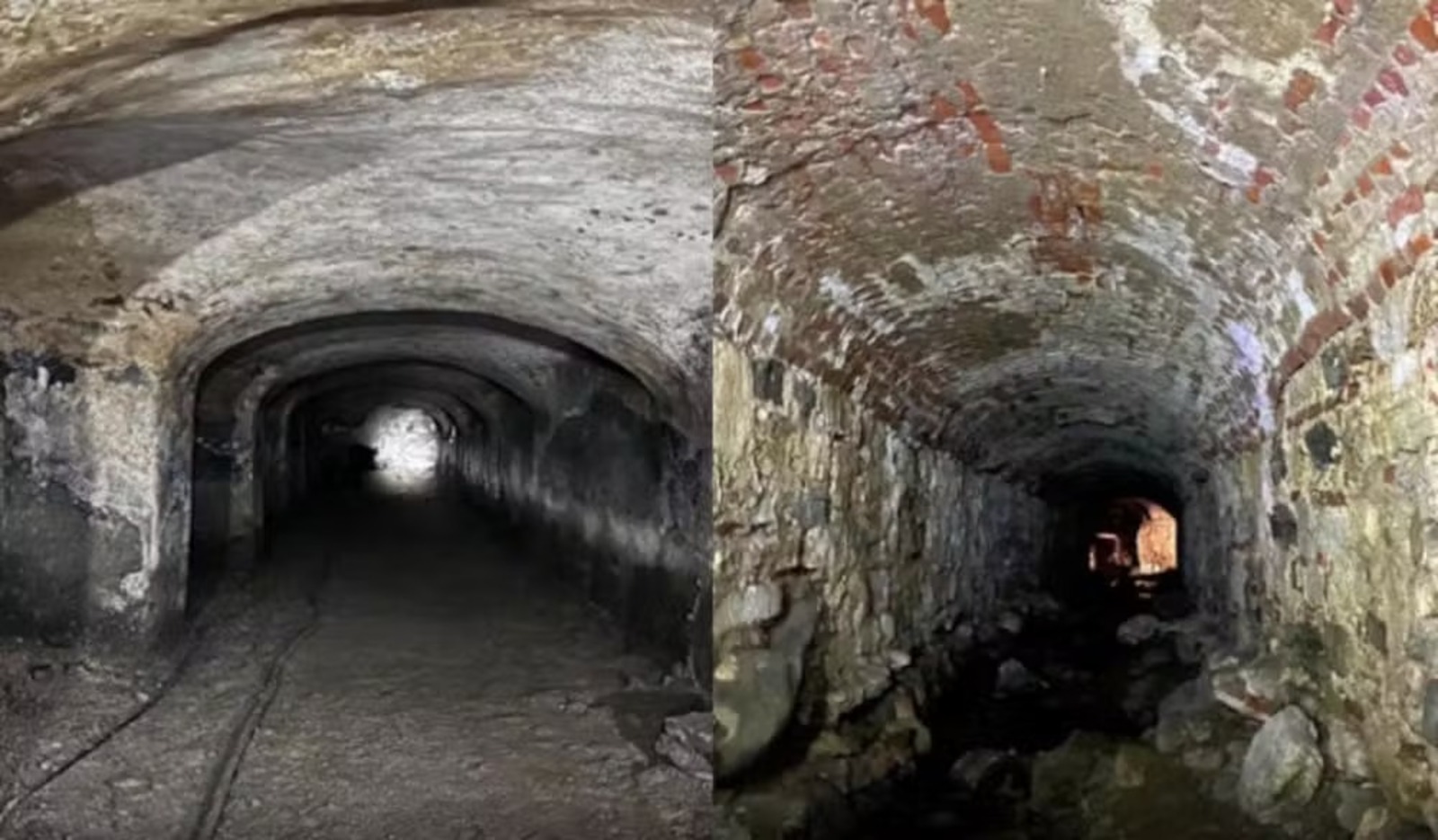
Restoration of Hagia Sophia Identifies 7 Lines of Underground Tunnels Approximately 1,600 Years Old and Removes 1,170 Tons of Sediment During Scientific Project Launched in Istanbul
The Hagia Sophia has returned to the spotlight after a restoration campaign in Istanbul identified seven lines of tunnels approximately 1,600 years old and a hypogeum, removing 1,170 tons of sediment during cleaning and mapping work that is part of a structural preservation scientific program.
The revelation occurred during interventions in the green areas around the historic monument. According to Turkey’s Minister of Culture and Tourism, Mehmet Nuri Ersoy, teams located seven lines of underground tunnels and a burial complex beneath the surface.
In the tunnels, 1,068 tons of sediment were removed. Another 102 tons were taken out in the hypogeum area.
-
Chinese scientists have created plants that glow in the dark using luminescent fungi, and they now say that this technology could illuminate entire cities without spending a dime on electricity.

-
Motorola launched the Signature with a gold seal from DxOMark, tying with the iPhone 17 Pro in camera performance, Snapdragon 8 Gen 5 that surpassed 3 million in benchmarks, and a zoom that impresses even at night.

-
Satellites reveal beneath the Sahara a giant river buried for thousands of kilometers: study shows that the largest hot desert on the planet was once traversed by a river system comparable to the largest on Earth.

-
Scientists have captured something never seen in space: newly born stars are creating gigantic rings of light a thousand times larger than the distance between the Earth and the Sun, and this changes everything we knew about stellar birth.


The data were released by NTV in the context of the restoration actions of the Hagia Sophia.


Scientific Structural Preservation Program
The discovery is part of a comprehensive scientific restoration project aimed at the stability of the Hagia Sophia, built between 532 and 537 AD during the reign of Byzantine Emperor Justinian I.
The program includes digital scanning, structural modeling, and material analysis. The goal is to ensure the long-term conservation of the building based on technical studies and a detailed survey of the underground structures.
The operations involved cleaning, excavation, and systematic mapping, allowing for more precise documentation of the tunnels and expanding knowledge about the infrastructure from the Byzantine period.
Technical Function of the Underground Tunnels
Despite popular narratives linking the Hagia Sophia to secret passages, experts assert that the tunnels have a technical function.
Professor Hasan Fırat Diker explained that the systems were used for ventilation, drainage, and moisture control.
The structures are mainly concentrated near the foundations and gardens. This indicates that they were part of a hydraulic and structural system developed over different historical periods.
Experts emphasize that there is no evidence of escape routes. The purpose was practical and essential for the maintenance of the monument, which has survived for nearly fifteen centuries.
Hydraulic Infrastructure of Byzantine Istanbul
The underground of the Hagia Sophia is part of a broader network of historical hydraulic infrastructure in Istanbul.
During the Byzantine period, the city relied on cisterns, aqueducts, and reservoirs to supply churches, palaces, and neighborhoods.
A preserved example is the Basilica Cistern, located just a few meters from the monument. It demonstrates the scale of the hydraulic solutions developed at the time.
The newly documented tunnels may help researchers understand how drainage and moisture control contributed to the preservation of the Hagia Sophia over the centuries, consolidating technical data about its complex underground structure and its role in the city’s history.
With information from Revista Galileu.






-

Uma pessoa reagiu a isso.