





 Portuguese
  English
  Spanish
  5 min of reading
  0 comments


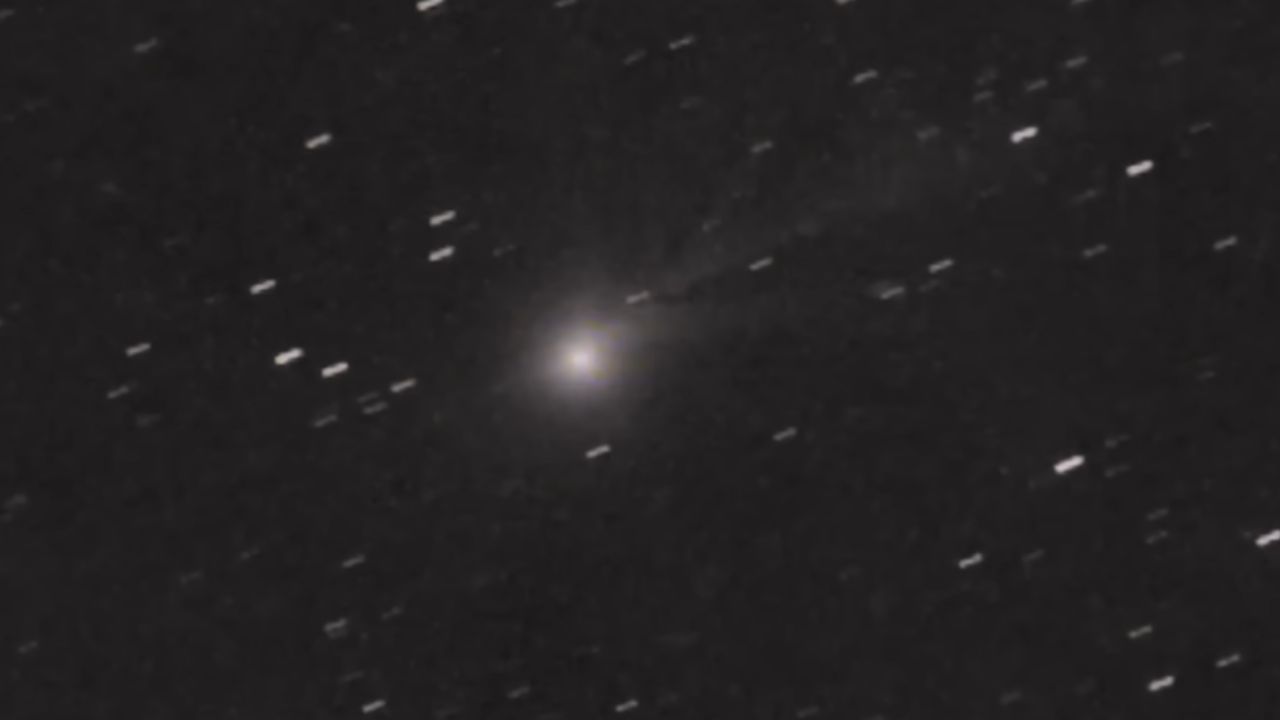
Called C/2025 V1, The New Object Is Detected Without The Typical Comet Tail, Generating Comparisons With The Mysterious 3I/ATLAS And Speculations From Avi Loeb.
A new object is detected crossing the Solar System, adding to the already busy list of cosmic visitors that have intrigued astronomers since the appearance of ‘Oumuamua in 2017. The discovery, detailed by the portal Unknown Facts, occurred on November 2, 2025. Astronomer Gennadiy Borisov, operating at the Margo Observatory in Crimea, was the one who identified the object, which was later named C/2025 V1 Borisov.
What makes this discovery particularly fascinating is its timing and its initial characteristics. Just as happened for a while with the mysterious 3I/ATLAS, this new comet did not present the “coma”, the glowing tail of ice and dust. Its appearance coincided exactly with the period when 3I/ATLAS was hidden behind the Sun, immediately fueling intense debate about the nature of these travelers and whether they could be more than simple frozen rocks.
The Discovery of Gennadiy Borisov
Gennadiy Borisov is no novice in this field; he is the same astronomer who discovered the interstellar object 2I/Borisov in 2019. As reported by Unknown Facts, on the night of November 2, 2025, he noticed something unprecedented in his telescope. It was neither 3I/ATLAS nor 2I/Borisov, nor any other comet previously recorded. It was something new, and its main intriguing feature was the absence of the comet tail.
-
It seems to have come out of a science fiction movie: A Brazilian city where it rains almost every day, recording over 4,000 mm per year, driven by climatic factors — a direct result of its strategic location in the Amazon.

-
The water crisis that could change everything this year has already begun; it’s not just about the climate, it affects technology, raises product prices, and can halt entire companies without warning.

-
A Japanese mason transforms raw granite into small cups and handcrafted utensils, collects giant stones, cuts with precision, and impresses with detailed manufacturing and finishing.

-
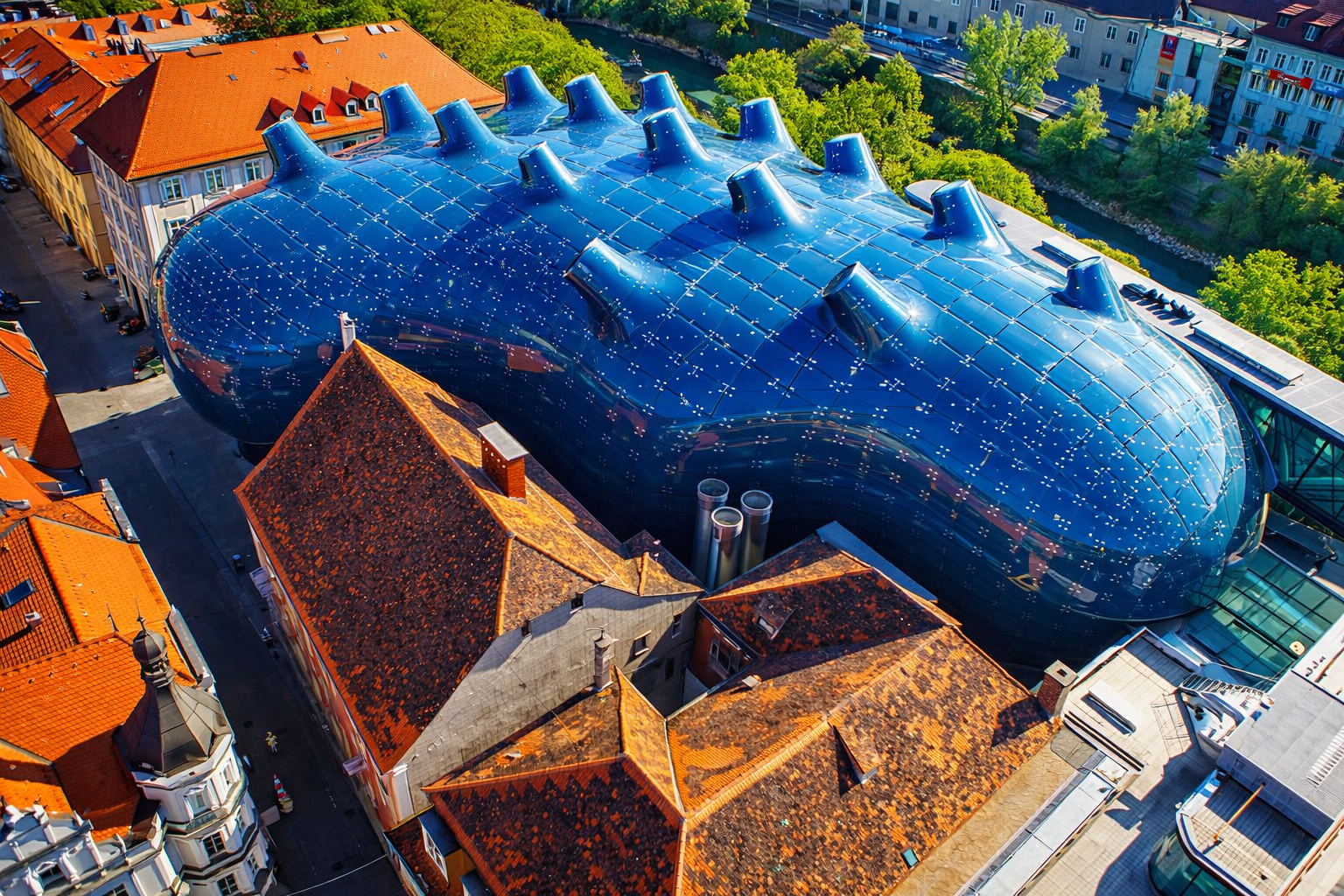
With 1,066 acrylic panels, the building known as the friendly alien is supported by a steel skeleton, has a façade that functions as a giant screen, and impresses the world without any internal columns.

Aware of the sensationalist potential that such discoveries can generate, Borisov acted with scientific caution. He immediately involved more colleagues in the study to validate the observation and clarify all relevant doubts. The goal of serious scientists like him is not to create speculative theories, but to seek recognition for the rigorous work that astronomy demands, a field that often does not receive the attention it deserves from the general public.
What Is C/2025 V1 Borisov?
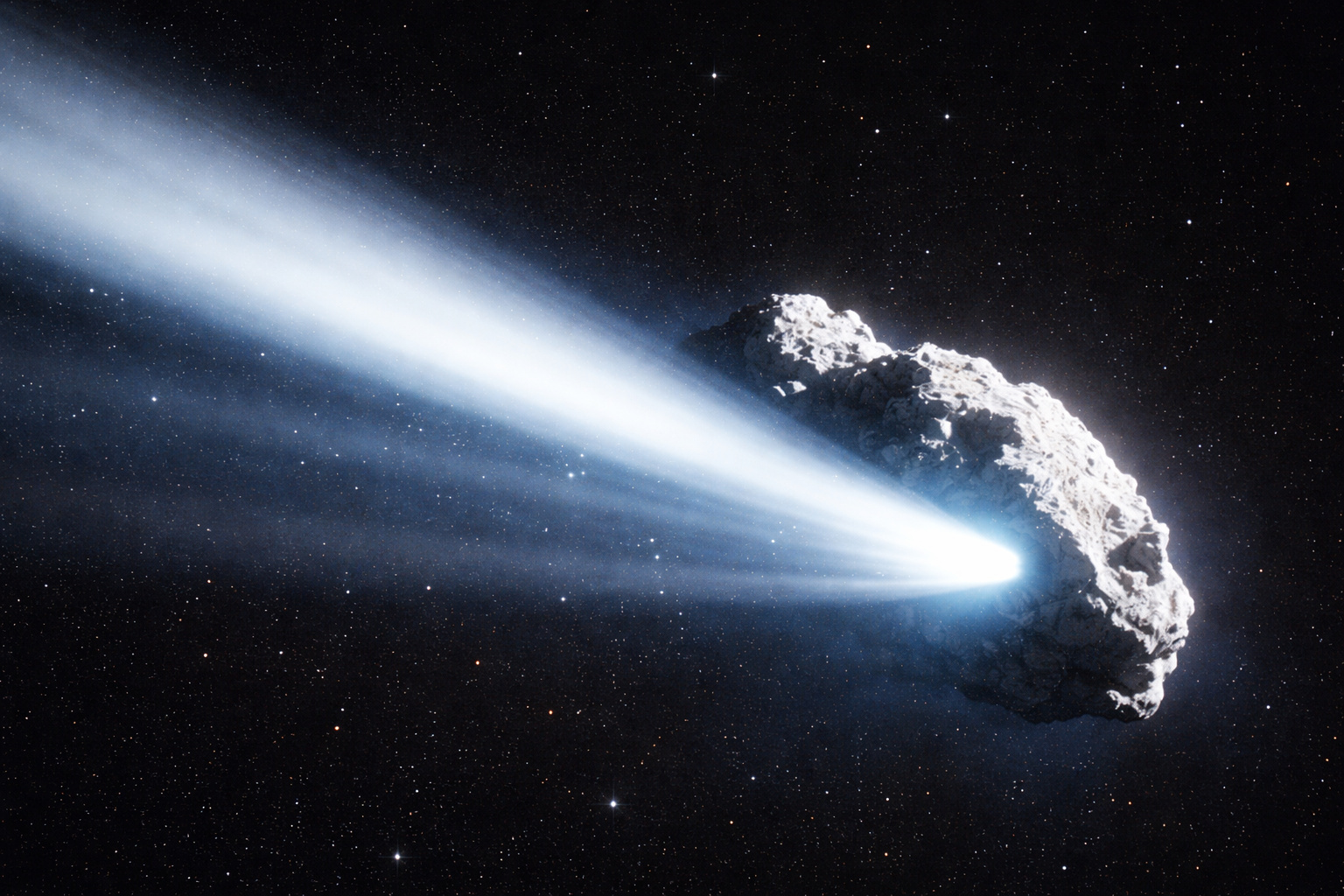
The object, now confirmed and named C/2025 V1 Borisov, was following a silent path. The tail, or “coma,” of comets is formed when the ice and dust from the nucleus are heated by the Sun’s proximity, sublimating and creating the blurred and bright appearance. The initial absence of this phenomenon in the new visitor was what made it so peculiar and linked it to the oddities of 3I/ATLAS.
Just days after Borisov’s alert, astronomers from different parts of the world confirmed the discovery. The comet was real and approaching. Its closest point to Earth (perihelion) was expected to be on November 11, when it passed about 103 million kilometers, nearly 270 times the distance between Earth and the Moon. With an apparent magnitude of 13.8, it was impossible to see with the naked eye, requiring powerful telescopes for observation. For dedicated observers, it appeared discreetly in the constellation Virgo, just before sunrise.
The Shadow of 3I/ATLAS and The Theories of Avi Loeb

The temporal coincidence was the real trigger for speculations. The new object is detected exactly when 3I/ATLAS, famous for its own anomalies, such as unexplained changes in color and speed, was inaccessible behind the Sun. Some news portals, without any scientific support, even suggested that C/2025 V1 could be a kind of “support probe” sent by 3I/ATLAS.
These ideas gained popular traction inspired, in part, by the musings of astrophysicist Avi Loeb from Harvard, known for suggesting that certain interstellar objects, such as ‘Oumuamua, could be alien technologies. According to Unknown Facts, Loeb even described C/2025 V1 as a “quasi-interstellar object”. While the term caused strangeness, it has a technical meaning: it describes an extremely eccentric orbit (very elongated), making it resemble a body coming from outside the Solar System, yet still gravitationally bound to it.
Despite the popular fascination, Loeb himself distanced himself from the bolder hypothesis. He wrote that if the comet does not show signs of non-gravitational propulsion (movements that cannot be explained solely by the Sun’s attraction), there is no reason to believe it is an alien probe. Furthermore, trajectory calculations showed that the minimum distance between 3I/ATLAS and C/2025 V1 was 225 million kilometers, far too distant for any type of real physical relation.
Where Do So Many Cosmic Visitors Come From?
Astronomy is in a unique moment. Since ‘Oumuamua (2017) and 2I/Borisov (2019), through 3I/ATLAS and now C/2025 V1, never have so many new cosmic objects been monitored in such a short period. The Solar System is a crowded place; according to NASA data, we have about 3,650 known comets and 210,000 cataloged asteroids, in addition to moons and trans-Neptunian objects.
The vast majority of comets we know, like the famous Halley’s Comet (which visits us every 76 years), are “periodic.” Others, like the interstellar ones, are unique chances for study. In the case of the new C/2025 V1 Borisov, the scientific consensus is that it is not a spaceship nor is it on a collision course. The most likely and realistic explanation is that it comes from the Oort Cloud, a vast and distant region at the boundaries of the Solar System, filled with billions of fragments of ice and rock, from where many long-period comets originate.
As C/2025 V1 Borisov continues its silent journey, 3I/ATLAS has become visible again after its perihelion (closest point to the Sun) on October 29, displaying once more mysterious changes in its brightness and color.
C/2025 V1 Borisov is yet another reminder of how space continues to be full of surprises. The recent wave of objects with atypical behavior reignites the debate: are we merely observing frozen rocks or, as some speculate, artifacts created by distant intelligences?
Science points to natural origins, such as the Oort Cloud. But what about you? What do you think of this wave of mysterious objects? Do you believe that Avi Loeb’s theories about possible alien technologies are grounded, or is it all just sensationalism? Leave your opinion in the comments; we want to know what you think about these visitors from space.





-

-

-

-

-

12 pessoas reagiram a isso.