





 Portuguese
  English
  Spanish
 5 min of reading
  1 comment


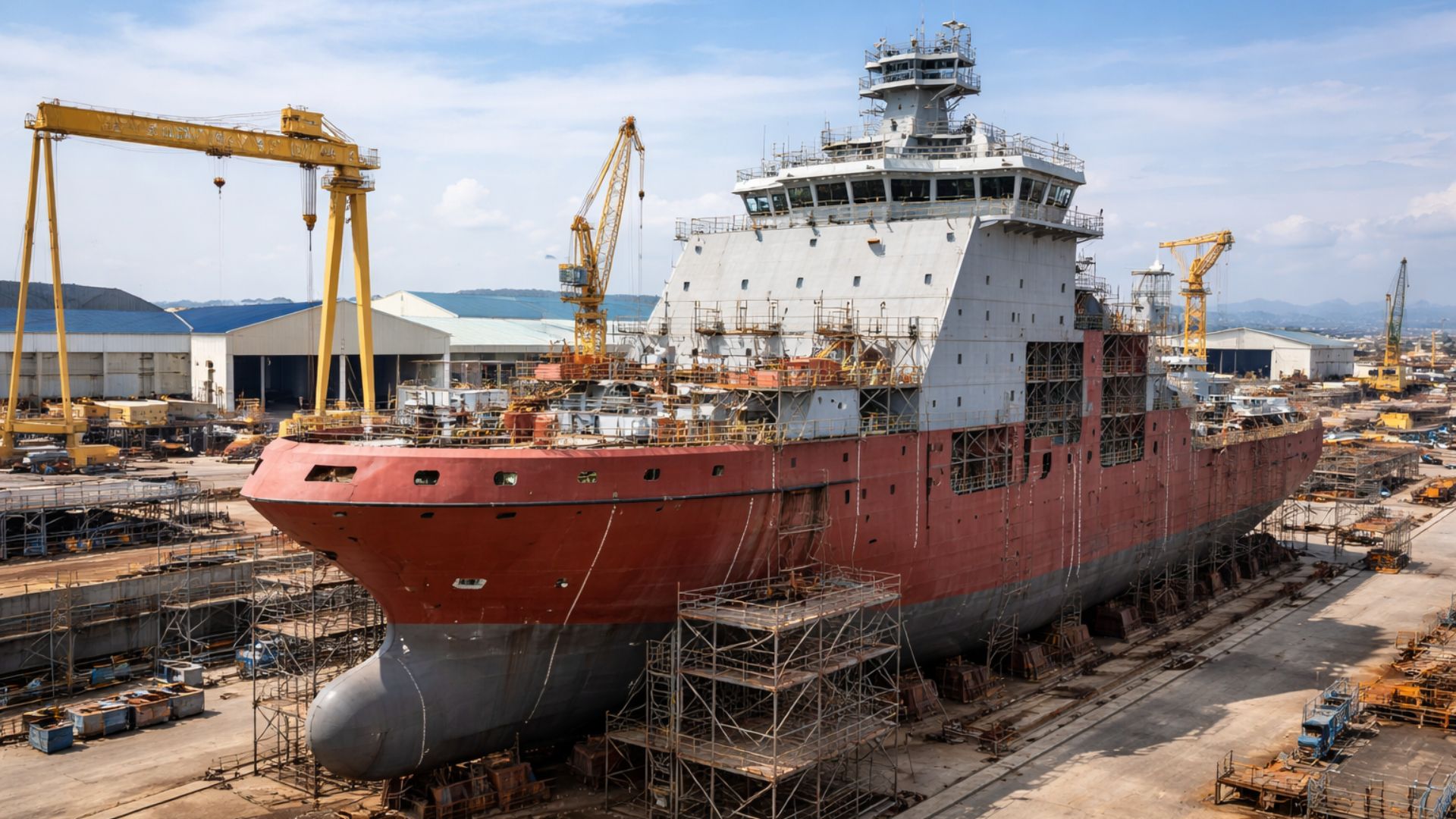


Billion-Dollar Investment Transforms Navegantes Into Strategic Pole of the Naval Industry With Construction of Six Offshore Vessels, Generating Over 1,200 Jobs and Use of Hybrid Technology by 2030.
Navegantes, on the coast of Santa Catarina, is set to receive an investment of R$ 2.2 billion to build six offshore support vessels, a project that foresees the creation of over 1,200 jobs and has scheduled deliveries by December 2030, with financing operationalized by the BNDES.
The announced package aims at the demand from the oil and gas industry and foresees that the vessels will be destined for offshore operations contracted by Petrobras, in a move that seeks to reinforce the local shipbuilding chain and expand the national capacity for logistics support at sea.
At the same time, the proposal includes hybrid technology and systems aimed at energy efficiency, a point presented as central to reducing emissions during operation and aligning the construction of the vessels with the energy transition agenda that has guided recent investments in the sector.
-
Friends have been building a small “town” for 30 years to grow old together, with compact houses, a common area, nature surrounding it, and a collective life project designed for friendship, coexistence, and simplicity.

-
This small town in Germany created its own currency 24 years ago, today it circulates millions per year, is accepted in over 300 stores, and the German government allowed all of this to happen under one condition.

-
Curitiba is shrinking and is expected to lose 97,000 residents by 2050, while inland cities in Paraná such as Sarandi, Araucária, and Toledo are experiencing accelerated growth that is changing the entire state’s map.

-
Tourists were poisoned on Everest in a million-dollar fraud scheme involving helicopters that diverted over $19 million and shocked international authorities.


Construction of Offshore Ships and Impact on the Naval Supply Chain
The six designed vessels are described as offshore support ships, aimed at supporting offshore activities such as supply transport and operational assistance in routines linked to production and logistics at sea, within the oil and gas ecosystem.
Although the contract is destined for Petrobras operations, the announced impact goes beyond the final use of the fleet, as the construction involves suppliers, specialized services, and technical labor, with expected effects on the economy of Navegantes and nearby municipalities.

With the mobilization of the shipyard in the city, the expectation is for the opening of direct and indirect positions throughout the stages of assembly and system integration, in addition to the activation of third-party companies that meet demands for metallurgy, electrical, automation, and logistics services.
Hybrid Technology and Energy Efficiency in the Naval Sector
One of the project’s axes is the adoption of hybrid technology, combining solutions that allow greater energy flexibility during navigation and operation, with the promise of reducing fuel consumption and increasing efficiency in different mission profiles.
In addition, the plan includes flexible fuel systems and energy storage solutions, a set that tends to reinforce the capacity to maintain operations with lower emissions and greater stability, especially during maneuvers and periods of continuous support at sea.
The incorporation of these resources is treated as part of a modernization of the support fleet, a topic that has gained traction as companies seek to adapt vessels to environmental requirements and stricter operational goals in long-term contracts.
Job Creation and Reflections on the Local Economy
The announced estimate is for over 1,200 direct and indirect jobs, with the expectation of rapid impact on the local labor market, given that the shipbuilding chain usually demands hiring in stages, in accordance with the advancement of the schedule.
According to the director of Navship, David Munaretto, part of this movement would start as early as the beginning of execution, with the direct mobilization of workers, which, in his assessment, should quickly reflect in the municipality’s commerce and services.
“There will be six new vessels, the most modern operating in Brazil in this category. From now on, about 600 people should be directly mobilized, with a strong impact on the local economy. It is a project that has the support of the city and that will boost Navegantes,” he stated.
The executive’s statement reinforces the bet on the economic traction potential of the project, especially in a smaller city, where large industrial works tend to alter the dynamics of jobs, income, and demand for services, including areas such as housing and transportation.
Support From the Public Authority and National Projection of the City

At the announcement event, the city hall highlighted the investment as a sign of industrial strengthening and greater visibility for Navegantes, in line with the strategy to consolidate the municipality as a relevant pole of the naval industry in Santa Catarina.
For Mayor Liba Fronza, the initiative combines job generation with productive expansion, while placing the city in a national circuit of projects linked to innovation and modernization of operations aimed at the energy sector.
“In recent years, the city has shown an ability to grow with planning, partnership, and vision for the future. The announcement made today represents job creation, strengthening of the naval industry, and appreciation of our local economy. It is the private initiative investing, with the support of the public authority, and taking the name of Navegantes to the national stage as a reference in innovation, work, and development,” he affirmed.
The municipality’s expectation is that the project will also boost the regional supply chain and strengthen associated services, as shipyards rely on contracts for inputs, components, and maintenance, in addition to technical training in different specialties.
Expected Deliveries by 2030 and Scheduling Challenges
The provided schedule indicates expected deliveries by December 2030, a window that suggests a staggered construction process, with stages of cutting and assembly, system integration, and testing, until the finalization and entry into operation of the vessels.
In this context, the announced challenge is to maintain the pace of execution, ensure labor, and meet technical requirements associated with offshore navigation, including safety and performance standards that are usually required in contracts supporting operations at sea.
With the confirmation of the investment and the start of mobilization, the city will closely monitor the project’s phases and their effects on employment and production, but the main measure of result will come when the vessels are ready to operate: will the promise of modernization be confirmed in practice?









Bom dia Senhores.
Sou Luís Pinto, 75 anos, morador de MACAÉ – RJ, aposentado e com longa experiência no SETOR NAVAL BRASILEIRO, tendo sido formado em TÉCNICO MOTORES DIESEL em 1971 pelo Curso TÉCNICO DE MOTORES DIESEL do EXÉRCITO BRASILEIRO NO RIO DE JANEIRO.
TRABALHEI 20 anos em INDUSTRIAS VILLARES SA, fábrica em SÃO BERNARDO DO CAMPO – SÃO PAULO, na montagem de Motores Marítimos e Estacionários, na Fabrica e em Estaleiros pelo BRASIL, com ajustágens em geral, testes e prova de mar, por todo o Brasil, tendo inclusive dado assistência técnica em Navios no Porto de ITAJAÍ.
Trabalhei durante esses anos em Macae dando Assistencia Tecnica as Plataformas e Rebocadores.
Embora com 75 anos de idade, sou relativamente jovem , bem disposto, comunicativo, e com experiencia Tecnocrata ( Formulacao de ORs, RELATORIOS, CARTOES DE PONTO.
CURSO setimo PERIODO DE FILOSOFIA LICENCIATURA.
Teria satisfacao em um contato profissional com OS SENHORES.
PARABENS POR TAMANHO INVESTIMEMTO ✨️🌟🙌🍾🍾