





 Portuguese
  English
  Spanish
  8 min of reading
  1 comment


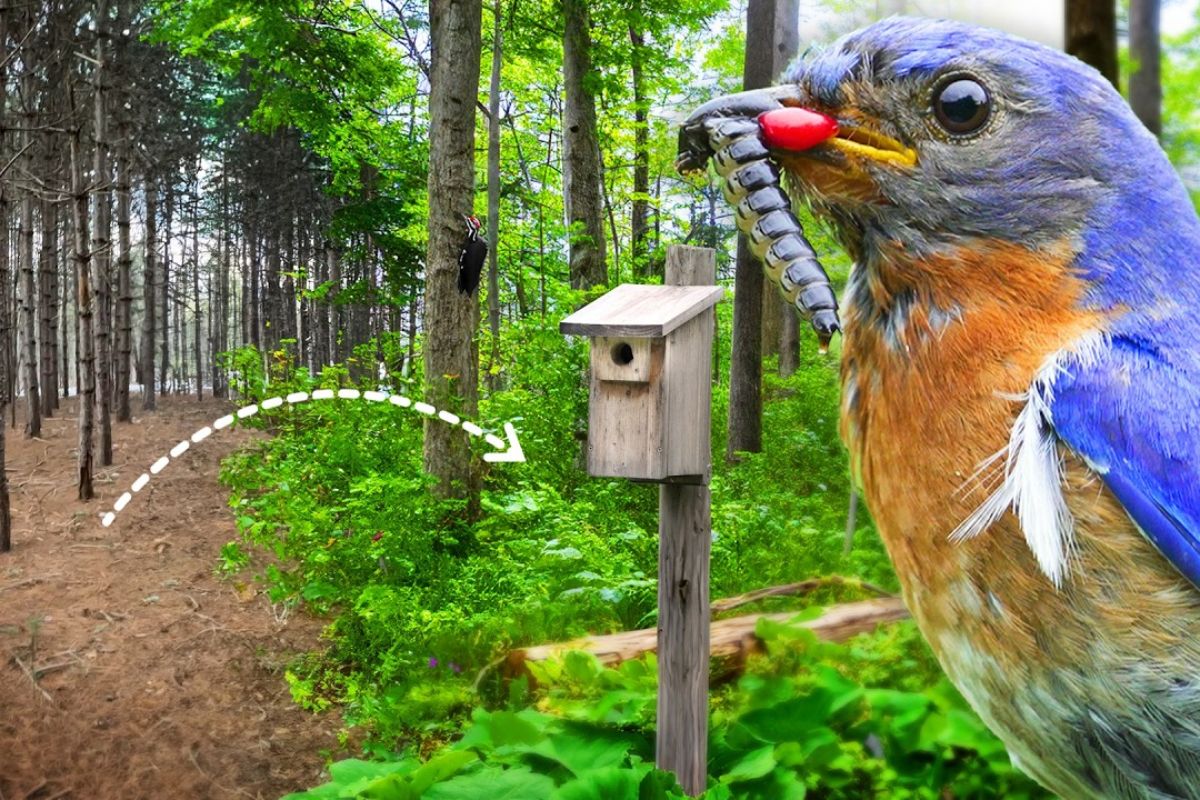


After Thinning, The New Pine Stand And The Temporary Pond, Wildlife Began To Use The Water Edge As A Hunting And Nesting Corridor. Among Meadows With 60 To 70% Invasives And 2,000 Native Seedlings, Cameras Revealed Blue Eggs, Chicks, Feathers And Losses To Predators In A Few Days
The summer was marked by a silent rush within wildlife: available water, more light after thinning, and an explosion of insects created a meeting point where every meter of vegetation began to have real competition for territory, food, and shelter.
The routine of planting and management transformed, in practice, into continuous monitoring of nests and reproductive cycles. What seemed just a temporary pond ended up organizing the behavior of birds, the hunting of insects, and even the choice of nesting boxes at different times of the day.
The Temporary Pond Became A Wildlife Corridor

The sequence started with direct interventions on the property: thinning, planting a pine stand, and constructing a temporary pond. From this point, observation was concentrated on two axes: what the water attracts and what the surrounding vegetation supports.
-
French “ghost” submarine lost in World War II reappears after more than 80 years on the seabed near the coast of Spain.

-
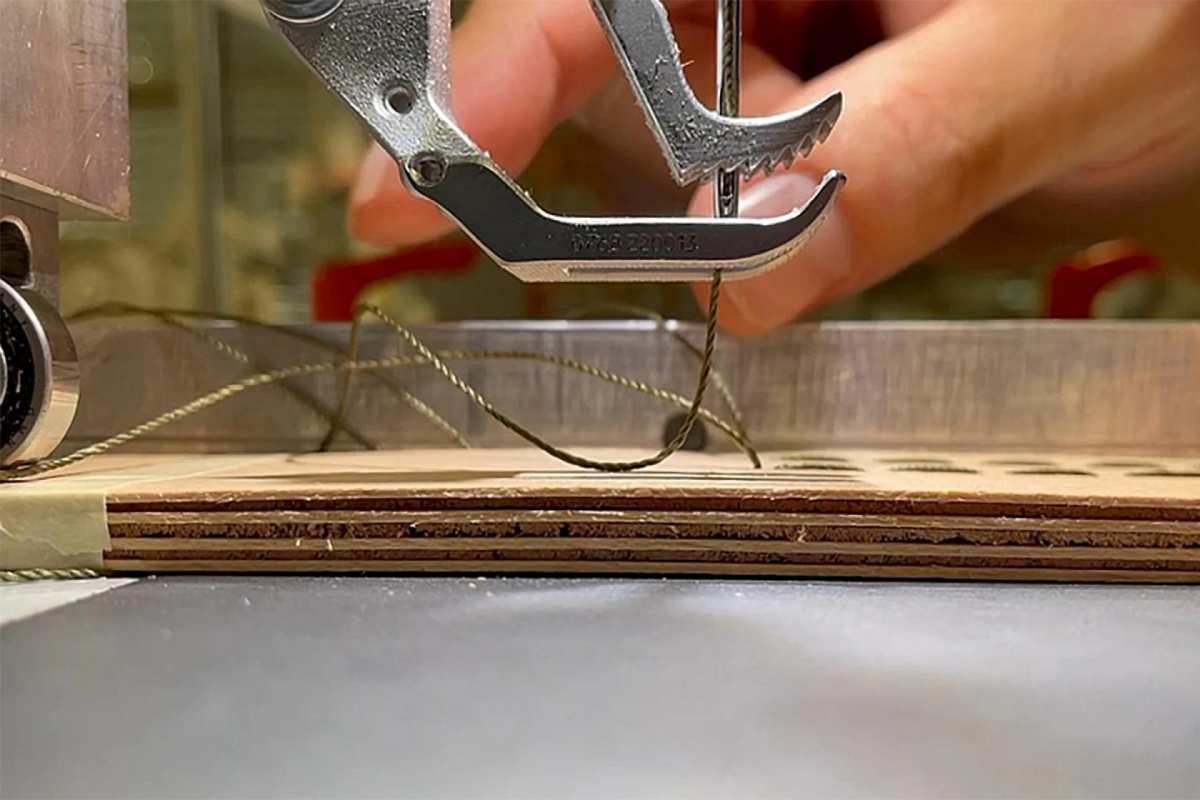
A simple stitch in wood with nylon thread can reduce adhesives, speed up production, and make sheets up to 4 times stronger and 14 times more difficult to break.
-
The gigantic steel shell built to contain Chernobyl for a century has been pierced by a drone, exposing a critical system and creating a hole that could cost over 500 million euros to repair.

-
Brazilian Navy reaches a new level by taking over an airport with a 1,600-meter runway used by 1,800 military personnel and autonomous attack drone testing.


The temporary pond began to function as a magnet for a simple reason: water attracts insects, and insects sustain birds during nesting. But the dynamics do not depend solely on the water layer. The vegetated edge is where wildlife really concentrates, because there is shelter, nesting material, landing spots, and short routes for hunting.
The surrounding vegetation also fulfills relevant technical functions: it improves water quality, reduces erosion, and retains excess nutrients before they reach the water surface. This creates a more stable environment for daily use, especially when bird movement increases with chicks requiring constant feeding.
Nests Everywhere And The Decision Not To Force Management

With more light entering after the first round of cutting, the pine stand became more open, and with that, nests scattered throughout the area. Identification became a careful fieldwork, with a map separating confirmed nests and points where nesting behavior was observed, but with no immediate confirmation of the exact location.
The operational decision was to hold back on the cleaning pace. Avoiding noise and stress in wildlife became a priority, because insisting on doing everything in a single year would mean constant pressure on birds in full reproduction. The result was to spread the remaining work over the next year, preserving the area at the height of the season.
Planting 2,000 Natives And The Effect On Wildlife

The replanting of the front of the property was guided by a technical choice: prioritizing native species of the region, especially those that did not exist there or existed in low quantities. The logic is one of ecological efficiency: plants that evolved alongside local fauna tend to provide pollen, nectar, fruits, and nuts that are more suitable at the right timing, reinforcing the food chain.
The scale was large. Among purchased seedlings, plants grown from seeds, and internal transplants, the total reached around 2,000 plants. Even so, the initial visual perception can be misleading: a few hundred seedlings in a meadow may seem few, because it will take time for them to grow and fill the space.
In the front meadow, the assessment was straightforward: about 60 to 70% of the lawn was composed of non-native or invasive grasses and herbs. The response was to reverse the trend over time, planting native wildflower seedlings throughout the meadow and repeating the reinforcement each spring until the dominance of invasives was transformed into a more productive mosaic.
Divided Pine Stand, Understory And The War Against Invasives

The pine stand was treated in two operational sections. In the “easy” part, where the pine stand transitions to mixed forest, the understory already had natural infiltration of plants, and the effort was more about complementing, including canopy trees like oaks.
In the “difficult” part, almost nothing grew except for invasives. The plan was to fill gaps with trees and shrubs and, in parallel, to sow wildflowers to advance while the trees mature. The main risk was the Johnsongrass, described as an extremely competitive invasive and present everywhere, including in the new pine stand created in early spring.
The combat occurred on two fronts. The first was manual removal: a whole day pulling Johnsongrass from the pine meadow and replacing it with native seedlings. The second was to use aggressive natives as a tool, with species like common milkweed and goldenrods to compete better. The practical goal was to reduce the impact, without promising total elimination, because absolute control was treated as unfeasible.
Blue Eggs, White Eggs And The Tight Clock Of Nests
During monitoring, the female Eastern Meadowlark appeared brooding three bright blue eggs. At the same time, the female Eastern Phoebe built several cup-shaped nests before choosing a spot under the patio to lay her first egg.
The reproductive behavior followed a clear pattern: at first, the female does not spend much time in the nest and only starts real incubation when the clutch is complete. She lays one egg per day until the nest is filled with five shiny white eggs. In the following two weeks, the main responsibility is hers, while the male watches and occasionally appears to bring food.
In parallel, eggs of the American Robin hatched, and the feeding rhythm turned into a biological production line: both parents working all day, with meals every few minutes. The small chicks remain almost invisible in the nest, and overcrowding was seen as part of the process, as there is a physical limit to “internal disputes” before the moment to leave the nest.
Disputes For Boxes, Schedules And The Detail Of Feathers
The area also became a stage for disputes over nesting boxes. Tree Swallows were seen inspecting one box every morning, while Chickadees took an interest in the same box in the afternoon. For about a week, the two species “switched off” unknowingly, until the Chickadees migrated to a box made specifically for them and the Tree Swallows finally “moved in”.
The process of preparing the Tree Swallow nest included grasses, leaves, and then as many feathers as possible. Feathers are so crucial that they ended up covering the view of the eggs in one camera. In another nest, there was a better view of six eggs, but soon they were also covered in feathers, reinforcing the pattern.
The presence of feathers was linked to remains of prey left by Cooper’s Hawks, creating an indirect flow of available nesting material in the environment.
Eastern Phoebe, Efficient Hunting And A Loss In Minutes
Under the eave, the female Eastern Phoebe experienced the peak of the cycle: the first chick broke the shell, then the eggs hatched over the course of 48 hours, until there were five chicks with their heads appearing. She brooded for about two weeks and, in the first days, also took on guarding the chicks while the male collected food.
The hunting behavior was described as extremely efficient, typical of flycatchers: perching, observing, shooting into the air, and capturing insects. This efficiency accelerated the growth of the chicks, but the season also recorded an environmental shock: a heat wave, with five chicks crowded in a nest lined with moss, increasing thermal stress.
On the first night the female did not sleep in the nest, came the harsh turn. A rat found access and killed all the Phoebe chicks. The practical conclusion was direct: there was no way to make that location truly predator-proof. The couple returned to the garage, higher and safer, and repurposed a nearly finished nest, with final touches before the new clutch.
The second clutch was smaller and faster: four eggs, in an advanced stage of the season, with priority to incubate as soon as possible. The management response was to create more perches, placing tall branches around meadows and ponds to increase hunting points.
Blue Birds, Grasshoppers And The Peak Of Wildlife
The Eastern Bluebirds began to use the new perches and also needed to restart a clutch. The original nest would have been in another spot, but, due to the time of year, there would be no time for the first brood to fledge, suggesting nest raiding.
With the rotation of cameras, it was possible to see chicks again in the Tree Swallow nest, with six pink chicks moving. In another nest, the confirmation was of chicks about a week old, and the brood size also appeared as six, considered healthy for the species.
The period of greatest activity was described as the peak of the reserve: several parents hunting for food, chicks coming into the world, and others already requiring constant feeding. The exit from the nest became a stage observed by attraction, with adults circulating with their mouths full of insects to pull the chicks out.
With no Tree Swallows around, attention turned to the bluebirds, with an important detail about diet: before they flew, the parents began to focus on larger grasshoppers, abundant around the lakes and meadows, directly connecting the role of the temporary pond in providing prey.
In the end, multiple species had already left their nests, including bluebirds, Red-Crowned Sparrows, Song Sparrows, and Junco chicks, officially marking the chick season.
The End Of The Season And The Migration On The Horizon
The last nest mentioned as pending was that of the Eastern Phoebe, high under the eave of the garage, with constant feeding for several weeks. A behavioral detail reinforced identification of young: even at a young age, a small bird repeated the typical tail-wagging movement of the Phoebe, signaling learning and inheritance of motor pattern.
The season was described as imperfect, but persistent. Among losses and fresh starts, the final outcome was the successful raising of four chicks for a couple, with the reading that this chance existed because previous attempts had failed.
As summer progressed toward its end, the outlook points to preparation for a long and dangerous autumn migration. The expectation is that, with learned skills and a bit of luck, the next spring will bring back the song of these birds to the area, now with a more favorable scenario of native plants and an active corridor around the water.
What, in your opinion, was the factor that most transformed wildlife there: the temporary pond, the planting of natives, or the opening of light in the pine stand?








Muchas publicidad y no lo leí por eso