





 Portuguese
  English
  Spanish
  6 min of reading
  4 comments


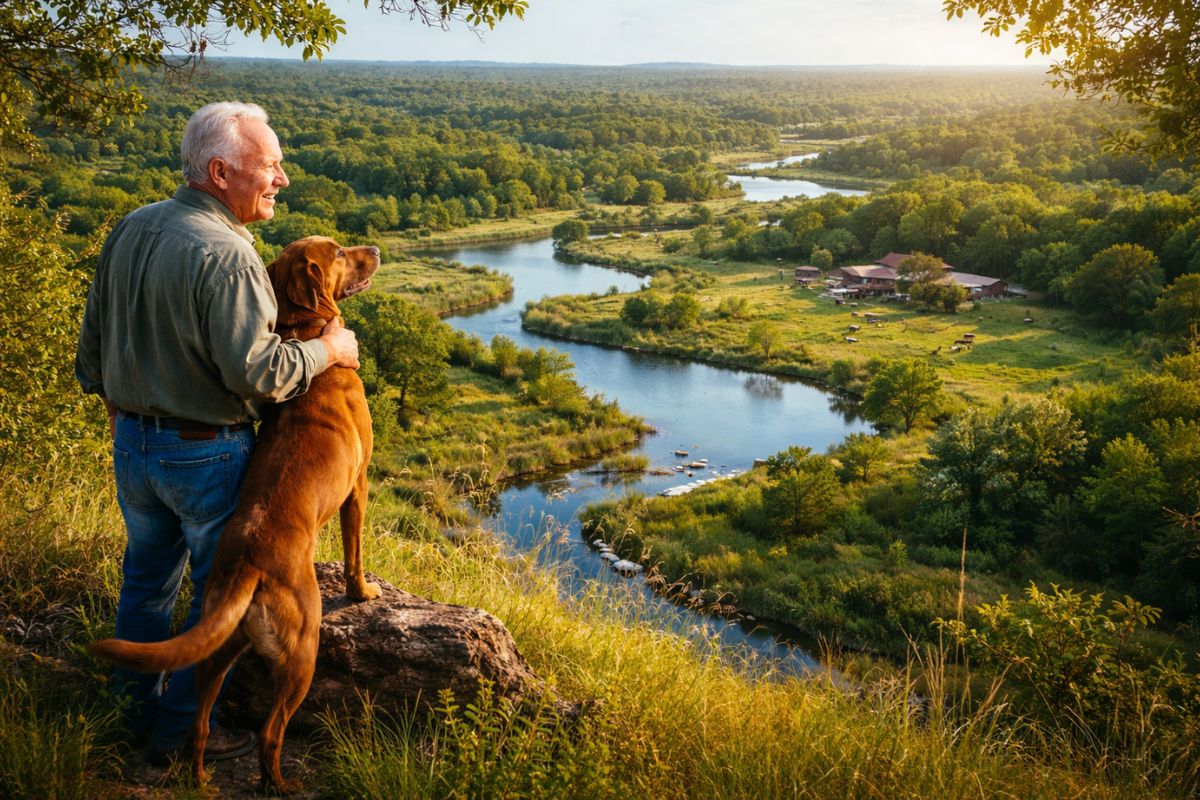


In Hill Country, Tycoon J. David Bamberger Bought 5,500 Acres Ruined by Overgrazing and Bet on Native Grasses, Management, and Invasive Species Removal. After Failing at Seven Deep Wells, He Saw Springs Return, the Miller Creek Gain Flow Toward Austin, and the Avifauna Jump to 213 Species in Decades.
Tycoon J. David Bamberger did not arrive in Hill Country, Texas, seeking the perfect ranch: he did the opposite and bought what he considered the worst pasture in Blanco County, a degraded, eroded area taken over by poor management over time.
Instead of insisting on the more common route of drilling more wells and hoping for a generous aquifer, he bet on a slow, technical process based on rebuilding the soil to allow water to return to the surface, transforming 5,500 acres into a living laboratory of restoration.
When Seven 150-Meter Wells Became the Limit of the “Shortcut”

Before the turnaround, there was a direct attempt to “solve it with technology”: the owner drilled seven artesian wells around the ranch, each 150 meters deep, and didn’t find a single drop. The detail is important because it exposes a common trap in dry regions: believing that water is just a matter of digging deeper.
-
Friends have been building a small “town” for 30 years to grow old together, with compact houses, a common area, nature surrounding it, and a collective life project designed for friendship, coexistence, and simplicity.

-
This small town in Germany created its own currency 24 years ago, today it circulates millions per year, is accepted in over 300 stores, and the German government allowed all of this to happen under one condition.

-
Curitiba is shrinking and is expected to lose 97,000 residents by 2050, while inland cities in Paraná such as Sarandi, Araucária, and Toledo are experiencing accelerated growth that is changing the entire state’s map.

-
Tourists were poisoned on Everest in a million-dollar fraud scheme involving helicopters that diverted over $19 million and shocked international authorities.


When the result is zero, the discussion changes levels. In slope and sensitive basin areas, water may even exist in the system but out of the practical reach of that point — or without sufficient recharge to sustain flows. The absence of water in the well does not mean just “lack of water,” but a broken hydrological cycle, where rain runs off quickly, the soil does not hold, infiltration drops, and the springs disappear.
The Tycoon’s Choice: Restore the Soil First, Then the Water

In 1969, the tycoon who had made a fortune as an executive of the Church’s Chicken chain bought the initial area of 3,000 acres and, over the years, completed the property to form the 5,500-acre (2,225 hectares) reserve, named “Selah.”
The starting point of the work was to assume that the central problem was not “opening paths for the water,” but “returning capacity to the land to receive the water.”
This involves very concrete decisions: removal of invasive species, significant reduction of Ashe juniper, and replanting of native grasses.
Grasses are more than just “grass”: when well managed, they function as a biological infrastructure that protects the soil, increases roughness, reduces erosion, improves infiltration, and enhances water recharge in slopes. Water was not “created”; it was retained, infiltrated, and returned to the system as the habitat began to approach its original state.
Constant Springs and a Creek That Does Not Get Stuck Inside the Fence

As restoration progressed, previously absent springs began to flow constantly. The main spring now produces an average of 11.36 liters per minute, a volume sufficient to supply three homes and the mentioned domestic and agricultural routines on-site, in addition to supporting the operations of the center on the property.
The overflow from this spring, combined with other smaller springs and outcroppings, forms the headwaters of the Miller Creek. It flows to the Pedernales River, then to the Colorado River, connecting to Austin’s surface water supply, 96 kilometers away.
When a spring reappears, it does not “only benefit the ranch”: it reorganizes the basin, from the tops of the slopes to the watercourse that serves people far away.
Reservoirs, Spring Channelization, and the Dry Spell Test
Surface water also changed scale: after the restoration process, there are now 27 reservoirs (ponds and small lakes) and numerous springs, with eleven artesian springs channeled for domestic use or for livestock.
This type of work, in itself, does not explain the “before and after”; it functions as a consequence of a scenario where water returns to stay on the land.
The most revealing data appears under difficult conditions. The Miller Creek has stretches that flow year-round, except during extreme droughts, and still, the most important springs, which supply four homes, the visitor center, and two cabins, have never dried up since the habitat restoration.
In other words, the system does not rely only on “good years”: it gained structural resilience, even though the region also faces frequent and prolonged droughts.
Biodiversity Responds: From Less Than 50 Birds to 213 Documented Species

The return of water and vegetation is not measured only in green. Birds, being good environmental indicators, help “read” what the habitat can support.
The first surveys, conducted about 45 years ago, recorded fewer than 50 species. Today, the list reaches 213 species, suggesting a strong change in food supply, shelter, and structural diversity of the environment.
The larger fauna also reflected the process. Deer harvested over 40 years ago had an average carcass weight of 25 kg (55 pounds), associated with low food diversity and impoverished territory. Currently, males reach an average of 52 kg (115 pounds), with a record of 70.76 kg (156 pounds) in 2013. When the diet improves because the habitat improves, the animal’s body becomes an indicator as eloquent as any graph.
Grazing, Cattle, and the Decision to Stop When the Weather Tightened
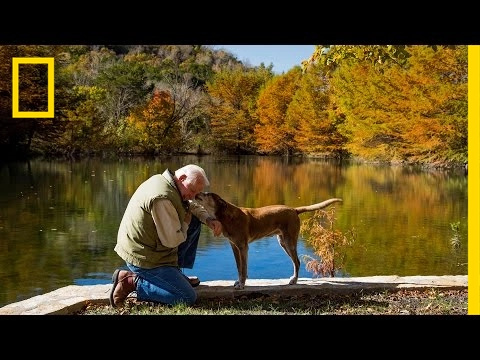

The story of cattle in the area is useful because it shows that restoration is not synonymous with “producing more at any cost.”
In 1969, with the cover dominated by Ashe juniper, soil conservation technicians indicated a capacity of one animal per 41 acres (one cow or six goats). After management and recovery, in years of good rain, the estimate became one animal per 21 acres.
However, the management itself recognized the limits imposed by the recent climate. Faced with frequent and prolonged droughts, in December 2011, the decision was made to remove all cows and goats for an indefinite period.
This breaks the easy narrative of the “permanent miracle”: the system improves, but it remains subject to the rainfall regime, and management needs to adapt without “eating the soil’s future.
Selah as a Replicated Model: Team, Method, and People Circulating
Although the tycoon is the most well-known face, the work gained substance with professionals and employees who sustained decades of management: farm engineer, cattle manager, wildlife manager, and arborist appear as operational pillars of this type of transformation. In long-term projects, the continuity of practice is as valuable as the initial idea, because restoration does not happen in a season.
The property also became a space for exchange: for over three decades, it hosted meetings of environmental groups, school field trips, and environmental management workshops for thousands of participants. The average cited is around 3,000 visitors a year, including school programs, group visits, and workshops with landowners.
When knowledge circulates, restoration ceases to be an isolated case and becomes regional repertoire, and this is how a method begins to be replicated beyond the fence.
The “Insane” That Requires Time: 25 Years to See the Vision Turn into Landscape
The trajectory reinforces a somewhat uncomfortable aspect: the tycoon took over 25 years of work, trial, error, and persistence to bring the area closer to its original habitat.
The path included facing invasive plants, erosion, historical degradation, and conventional ideas that, in practice, kept the bad cycle of water running away too quickly.
Even the chosen name “Selah” carries this notion of pause and observation: stop, look around, and reflect on what you see.
The phrase attributed to him functions as the survival rule of the project: “Do not initiate an action that you are not willing or able to sustain.” In restoration, what determines the outcome is not the grand gesture at the beginning, but the discipline to maintain management when the excitement fades.
The case of the tycoon in Hill Country shows a powerful inversion: when the underground did not respond to the wells, the answer was to treat the soil as infrastructure, and with native grasses, invasive removal, and consistent management, water reappeared in springs, reservoirs, and in a creek that connects to Austin.
The same story also reminds that climate and drought continue to impose limits, requiring hard and adaptive decisions.
If you had land where the water “disappeared,” what path would seem most sensible to you: insist on drilling deeper and deeper or invest years in recovering soil and vegetation for rain to return? And, looking at your region, where do you think restoration would make the most real difference: on the ranch, in the city, or in the entire basin?










Enquanto muitos empresários gananciosos destroem as florestas retirando árvores centenárias para fazer pasto de ****,em outro país esse senhor com sua boa vontade e muita luta,recupera lugares secos trazendo de volta a natureza com seu esplendor e exuberância e essa conscientização é somente para pessoas fortes e altruístas.
Excelente se todos fizeram assim aí a natureza agradece .Se o homem refletisse melhor a terra seria melhor.Porque o Arquiteto Divino que fez o planeta sempre está certo e tem razão.
A missão deste homem foi mudar a natureza para MELHOR!