





 Portuguese
  English
  Spanish
  6 min of reading
  0 comments


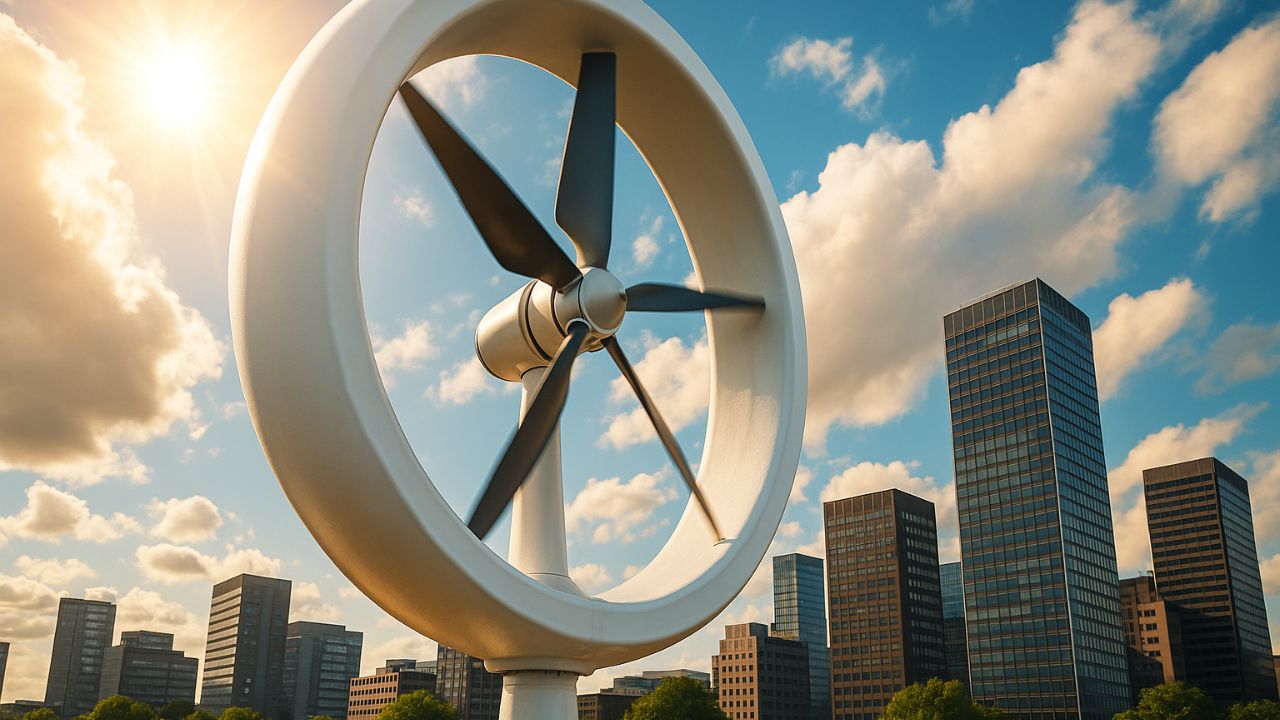
The New O-Shaped Wind Turbine Promises to Capture Wind from All Directions, Generate Energy on Balconies and Roofs, and Reach the Market Between 2026 and 2027 at a Competitive Price.
The concept of a wind turbine often brings to mind those giants with enormous blades in open fields, far from cities. But a British startup decided to turn that concept upside down and created a O-shaped wind turbine, nearly spherical, specifically designed for the most challenging setting of all: the chaotic wind of urban centers.
According to the creators, this circular wind turbine was designed to capture wind from all directions, function on facades, roofs, and balconies, generate between 100 and 400 W in residential versions, reach the market between 2026 and 2027, and cost between 500 and 1000 euros per unit. The proposal is to make room for microgeneration of wind energy in cities, something that currently hardly exists.
O-Shaped Wind Turbine: What Is This Wind Turbine
The so-called O-shaped wind turbine, known as the O-Wind Turbine, originates from a simple yet powerful idea: what if the chaotic wind, which today is considered “noise,” became useful energy.
-
April begins with above-average heat and irregular rains in Brazil as El Niño warms the Pacific and exceeds 80% probability for the second half of 2026, with a risk of frost in the mountains and a winter that may repeat the extremes of 2023.

-
A barrier made with hair strands is used to clean the Guanabara Bay and employs simple technology to contain oil and waste.

-
The oceans are darkening all over the planet – what is happening?
-
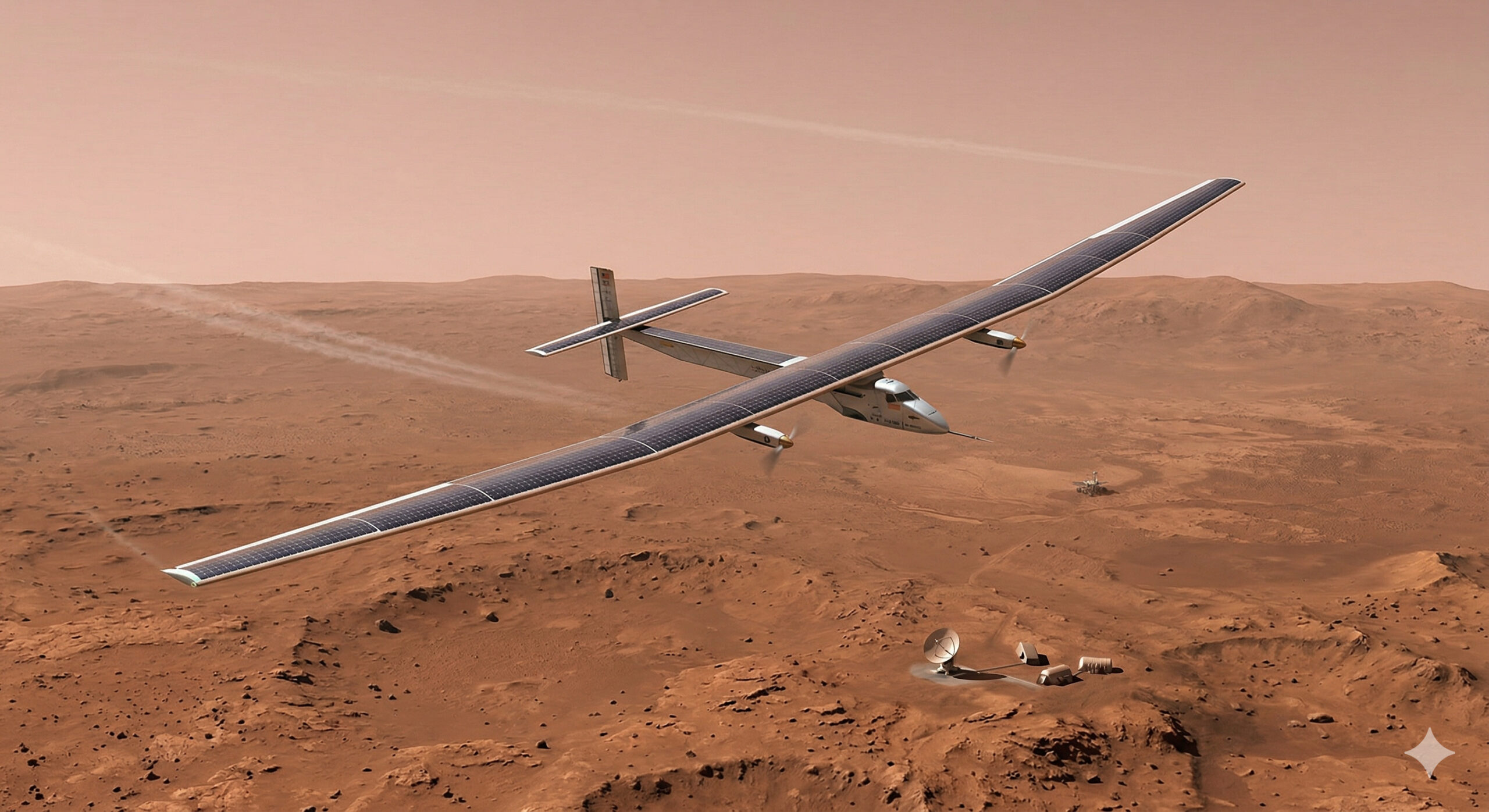
An engineer designs a solar plane to fly on Mars at an altitude of 1,000 meters and a speed of 300 km/h, covering 16,000 kilometers in a Martian year, 900 times the distance traveled by the Ingenuity helicopter in three years on the planet before experiencing a rotor failure, and NASA is already funding the feasibility study.

It was developed by engineers who began the project at Lancaster University in the UK. Unlike traditional turbines, the structure is a nearly spherical disc, like a slightly flattened ball, filled with asymmetrical openings all over the surface.
These slits and openings were positioned strategically so that, no matter where the wind comes from, it creates pressure differences inside the wind turbine and forces the body to rotate around its own axis. Instead of relying on “neat and aligned” wind, this wind turbine was designed to take advantage of the disorganized wind of the cities.
Why Traditional Wind Turbines Struggle in Cities


To understand why this O-shaped wind turbine is so different, it is worth remembering how current turbines work.
Horizontal axis turbines, the famous HAWTs, work like a fan in reverse. Wind pushes the blades, which rotate on a horizontal axis connected to the generator. They are very efficient in open areas with strong, constant wind coming almost always from the same direction.
In cities, however, the wind hits buildings, hills, overpasses, changes direction, accelerates and decelerates all the time. These whirlwinds cause horizontal axis turbines to lose efficiency and become unviable in urban environments.
To try to solve this, vertical axis turbines, or VAWTs, were developed. They spin around a vertical axis, like a top, and can capture wind coming from more than one direction without needing to align. Still, when the wind is very irregular and violent, efficiency drops significantly and aerodynamic losses increase.
The result is that both horizontal turbines and many vertical turbines were designed for “tamed winds,” predictable, and not for the true aerial chaos of large cities.
How the Wind Turbine That Likes Chaotic Wind Works
The great insight of the O-shaped wind turbine is precisely to invert this logic. Instead of fighting against urban turbulence, it uses that behavior to its advantage.
The spherical structure with asymmetrical openings creates unequal pressure and suction areas when the wind passes. This makes the wind turbine rotate around a fixed axis in three dimensions without depending on a single direction of wind.
In practice, this means that:
- The wind turbine does not need to align with the wind to function
- It can rotate in different directions, capturing horizontal, vertical, or diagonal wind
- It can convert chaotic winds into predictable and usable energy
According to the company, the wind turbine can be connected to intelligent inverters and controllers, directly powering a residence, charging batteries, or even helping to support the local electrical grid in hybrid systems.
Compact Size and Installation on Balconies, Roofs, and Facades
Another important differential of this wind turbine is its size and method of installation. Instead of tall towers and enormous blades, the current prototype has about 1 meter in diameter, with a compact design.
This allows the wind turbine to be installed in:
- Apartment balconies
- Roofs of houses and buildings
- Facades in areas of accelerated wind
- Urban structures that are currently not used to generate energy
The promise is low noise, reduced visual impact, and friendlier integration with the urban environment, something that traditional wind turbines rarely manage to offer in densely populated areas.
Additionally, the startup’s idea is to map the so-called High Energy Potential Spots, which are locations where, due to the way wind is channeled by buildings, overpasses, or hills, wind speed can be up to three times greater and power up to seven times greater than in open areas.
It is precisely at these strategic points that an O-shaped wind turbine can make a significant difference, especially when multiple units are combined.
Efficiency, Power, and Use of the Wind Turbine in Daily Life
In controlled tests, the O-Wind Turbine has shown the capacity to convert about 30 percent of the kinetic energy of the wind into usable electricity, a significant figure for a wind turbine of this size.
In current prototypes, with approximately 1 meter in diameter, the estimated generation in locations with winds between 8 and 12 meters per second is 100 to 400 continuous watts. This is sufficient to:
- Power lighting in a property
- Supply part of the consumption of electronic devices
- Assist in charging residential batteries
The company is also working on larger versions intended for commercial and industrial applications, with an expected generation of 1 to 3 kW per unit in suitable environments. In all cases, actual performance directly depends on the intensity and quality of the wind at each location.
Crowdfunding, Estimated Price, and Launch Forecast
After years of laboratory development, the company responsible for the O-shaped wind turbine launched a round of crowdfunding on a crowdfunding platform.
Among the points already disclosed are:
- Initial shares starting at 16 euros per investor
- Goal of about 400 thousand euros to enable production at scale
- Projected market valuation around 5 million euros
- Focus on pilot units, material improvement, and partnerships with municipalities and developers
The startup’s forecast is that the wind turbine will reach the market between 2026 and 2027. The estimated price per unit is in the range of 500 to 1000 euros, considered competitive given the generation potential, low maintenance, and an expected lifespan of over 20 years.
There are also developments of larger modular versions, intended for rooftops of buildings and hybrid systems that combine solar energy, wind turbines, and battery storage.
What This Wind Turbine Can Change in the Future of Cities
If the promises of performance, cost, and durability are confirmed, this O-shaped wind turbine could open a new chapter in urban wind energy microgeneration.
Instead of relying solely on large wind farms far from centers, it would be possible to scatter small wind turbine units at strategic points in cities, taking advantage of the wind that today is ignored or treated as a problem.
More than just a design curiosity, the proposal aims to transform facades, balconies, and urban structures into energy assets, helping to reduce electricity bills, increase local autonomy, and complement existing photovoltaic systems.
In the end, the big question is not just whether the technology works, but whether it will be adopted on a large enough scale to make a difference in the energy matrix of cities.
And now I want to know from you: if the price and efficiency are confirmed, would you install an O-shaped wind turbine in your home or building to generate energy in cities?







-

Uma pessoa reagiu a isso.