





 Portuguese
  English
  Spanish
  4 min of reading
  0 comments



Largest High-Security Prison in the World: ADX Florence Has Concrete Cells, 24-Hour Surveillance, Extreme Isolation, and Zero Escapes Since 1994.
Located in Colorado, United States, ADX Florence is widely recognized as the most secure penitentiary on the planet. Inaugurated in 1994, it was designed to house individuals classified by authorities as extremely high risk, including perpetrators of terrorist attacks, leaders of criminal organizations, and prisoners considered extremely dangerous or influential. According to the Bureau of Prisons, there has never been a recorded escape since its opening, which has contributed to its reputation as the maximum-security fortress of the American penitentiary system.
Structure of the World’s Most Secure Prison Was Designed for Total Control
ADX Florence occupies about 37 acres in the Rocky Mountain region. Every aspect of the complex was designed to eliminate risks.
Individual cells are approximately 75 square feet and are constructed of solid concrete, with electronically controlled reinforced doors. Furniture such as beds, tables, and benches is molded into the concrete itself, preventing any possible manipulation.
-
Friends have been building a small “town” for 30 years to grow old together, with compact houses, a common area, nature surrounding it, and a collective life project designed for friendship, coexistence, and simplicity.

-
This small town in Germany created its own currency 24 years ago, today it circulates millions per year, is accepted in over 300 stores, and the German government allowed all of this to happen under one condition.

-
Curitiba is shrinking and is expected to lose 97,000 residents by 2050, while inland cities in Paraná such as Sarandi, Araucária, and Toledo are experiencing accelerated growth that is changing the entire state’s map.

-
Tourists were poisoned on Everest in a million-dollar fraud scheme involving helicopters that diverted over $19 million and shocked international authorities.

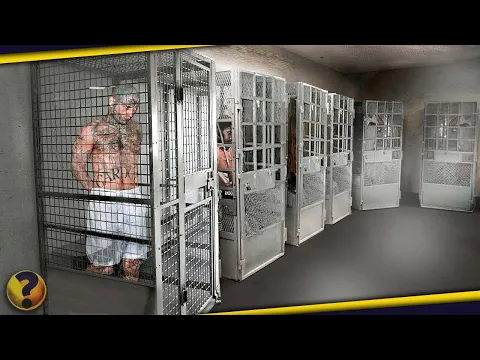

The windows are narrow, positioned to prevent direct sight of the exterior, a feature that reduces the inmate’s perception of their geographic location and the external dynamics.
Angled corridors avoid blind spots, and the environments follow maximum containment architecture standards. Access control is remote, with layers of security that include sensors, electronic doors, detectors, and stringent surveillance.
Permanent Surveillance and Strict Protocols
The internal environment operates under a continuous surveillance system. Cameras and audio devices monitor movements and sounds, and teams of correctional officers circulate on an enhanced schedule. According to federal guidelines, inmates spend about 23 hours a day in their cells, with one hour of outdoor exercise in enclosed areas with high walls, without contact with other inmates.
Each movement follows specific protocols. Meals are delivered through openings in the reinforced doors, and personal hygiene occurs under monitoring. The routines are structured to prevent unauthorized communication and minimize physical interactions.

Who Has Been There
The federal unit houses or has housed inmates deemed high risk by U.S. authorities, including:
- Ted Kaczynski — Unabomber
- Ramzi Yousef — responsible for the 1993 World Trade Center bombing
- Dzhokhar Tsarnaev — convicted for the Boston Marathon bombing
- Members of international terrorist cells
- Leaders of cartels and prominent figures in organized crime
The presence of these names reinforces the strategic role of the unit within the federal security policy of the U.S.
Differentiated Regime and “Supermax” Classification
ADX Florence falls under the supermax category, which represents the highest level of prison security in the United States. Unlike traditional maximum-security facilities, this regime prioritizes operational isolation and decisive control over routines and movement.
According to official documents, the structural goal is to prevent illicit communication, possible external operations, and any form of escape or internal mobilization attempts.
Technology and Multilayer Barriers
The complex features multiple physical and technological barriers, including:
- Double walls and fences with sensors
- Armed surveillance towers
- Fields of view without blind spots
- Multi-stage automatic gates
- Redundant electronic systems
The prison perimeter is complemented by its location: a remote area, surrounded by rugged terrain and harsh weather, which adds a natural level of containment.
Medical and Behavioral Protocols
Even with intensive isolation, federal standards require monitoring of the physical and psychological health of inmates, with periodic assessments, access to consultations, and regular evaluations.
The American prison policy provides for a regime transition in cases of proven adaptation over long periods of good behavior, although this occurs rarely within ADX.
Other countries have similarly classified units as ultra-high security, such as Belmarsh (United Kingdom), Evin (Iran), La Santé (France), and maximum security units in Brazil and Israel, yet ADX Florence remains an international reference in total containment penitentiary architecture, according to publications from the Bureau of Prisons and comparative security analyses conducted by international bodies and researchers in criminal policy.
A Landmark of the U.S. Penal System
The prison became a landmark in the evolution of modern penitentiary systems aimed at combating transnational and terrorist organizations.
Its construction occurred at a historical moment of legislative hardening, expansion of the federal security system, and response to terrorist attacks on American soil in the late 20th century.
Today, it remains the most stringent confinement center in the United States, operating with maximum restriction and security protocols considered a reference in the country.










-

-

3 pessoas reagiram a isso.