





 Portuguese
  English
  Spanish
  5 min of reading
  2 comments


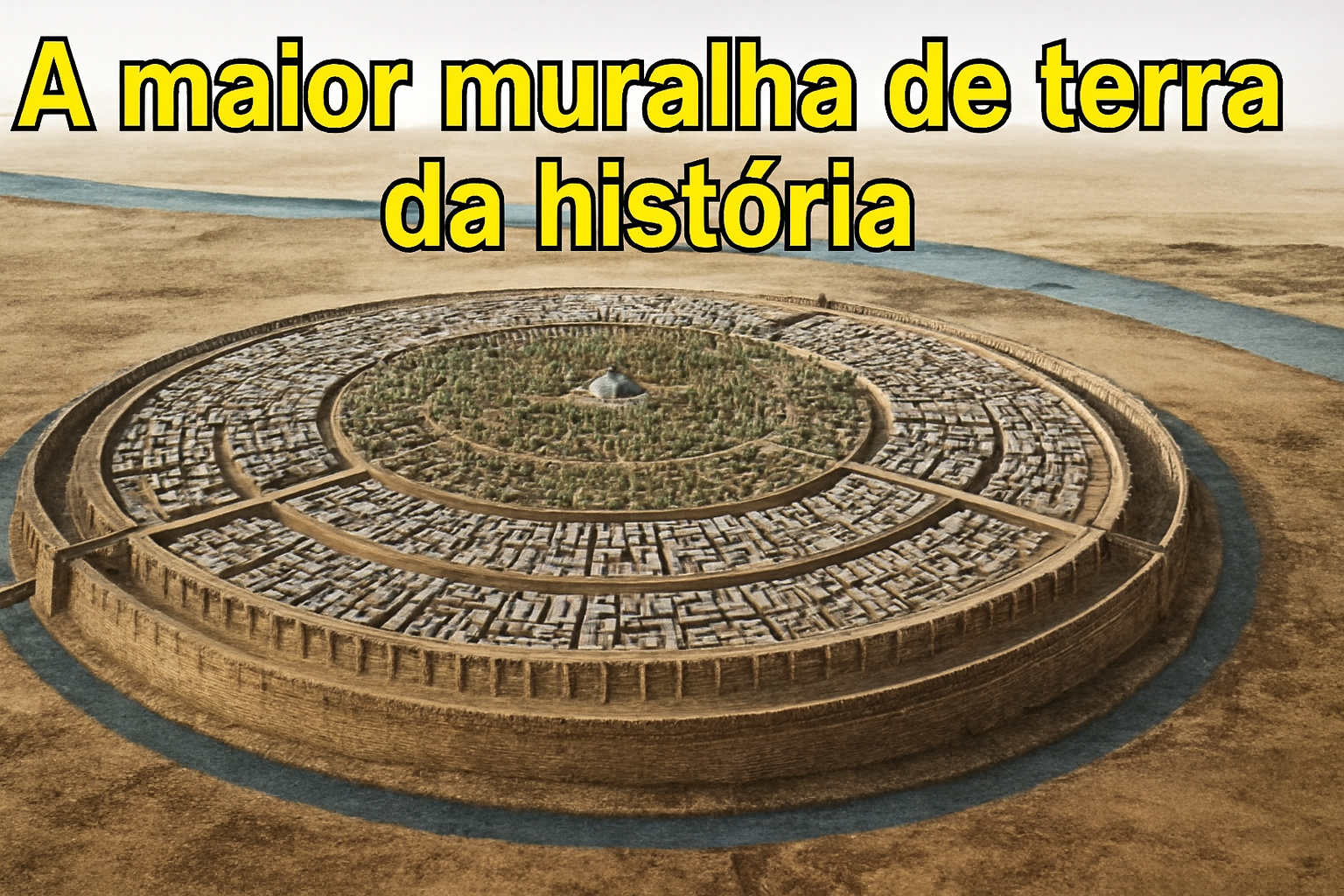


The Walls of Benin, in Africa, Sum About 16,000 Km in Walls and Moats of Compacted Earth and Form the Largest Structure of Its Kind in History.
When it comes to great walls, almost all popular imagination goes directly to Asia. But there is an even more surprising work in constructive concept and territorial scale that remains little known outside the academic world: the Walls of Benin, erected in what is now southern Nigeria by the ancient Benin Empire.
Adding all the segments of walls, moats, and defensive earthworks scattered throughout the region, historical and archaeological studies point to about 16,000 kilometers of total length — a number that makes this work the largest fortification system ever built exclusively with compacted earth in the history of humanity. And the most impressive part: all of this was built more than a thousand years ago, without quarried stone on a large scale, without steel, without concrete, and without machines.
A Defensive System That Was Not a Single Wall, but a Colossal Network
Unlike the image of a continuous wall like the Chinese, the Walls of Benin formed a articulated network of territorial defense. The system consisted of:
-
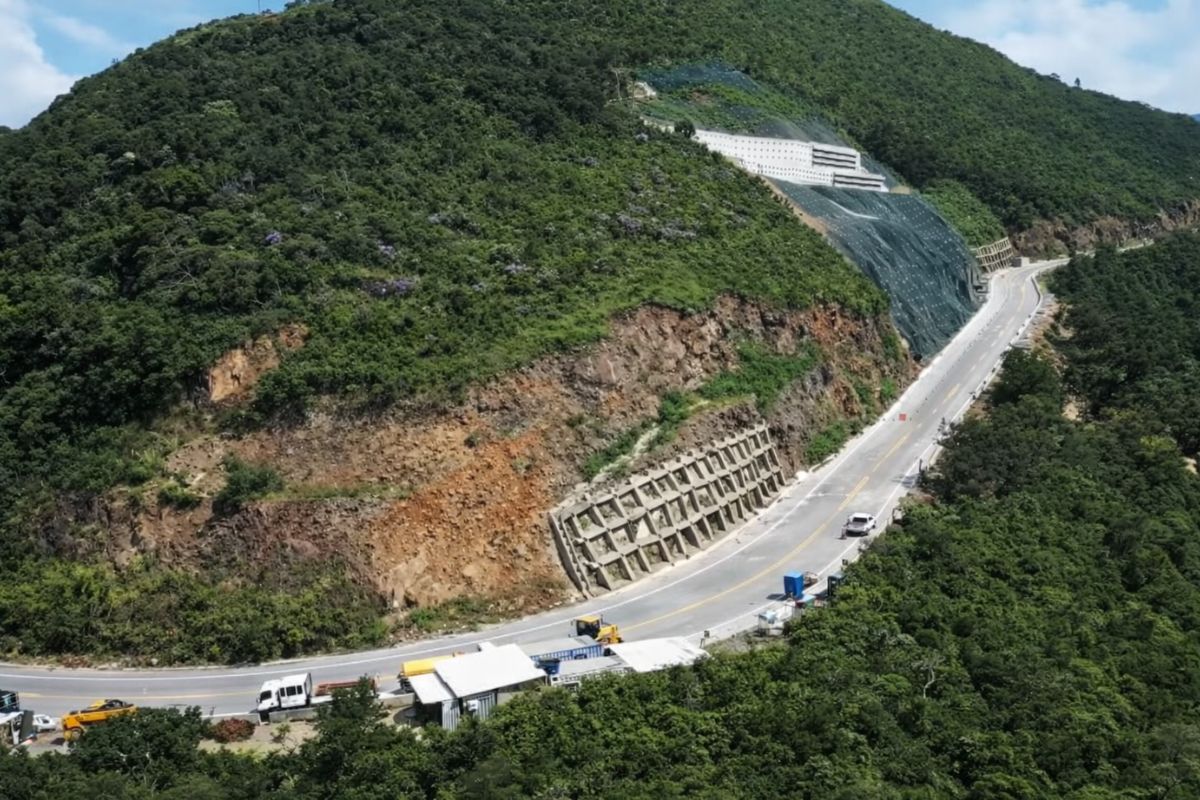
The section of Serra da Rocinha on BR-285 is now open in Timbé do Sul: 50 m tensioned curtains and top-down technique stabilize the slope, with a stairway duct controlling the water.
-
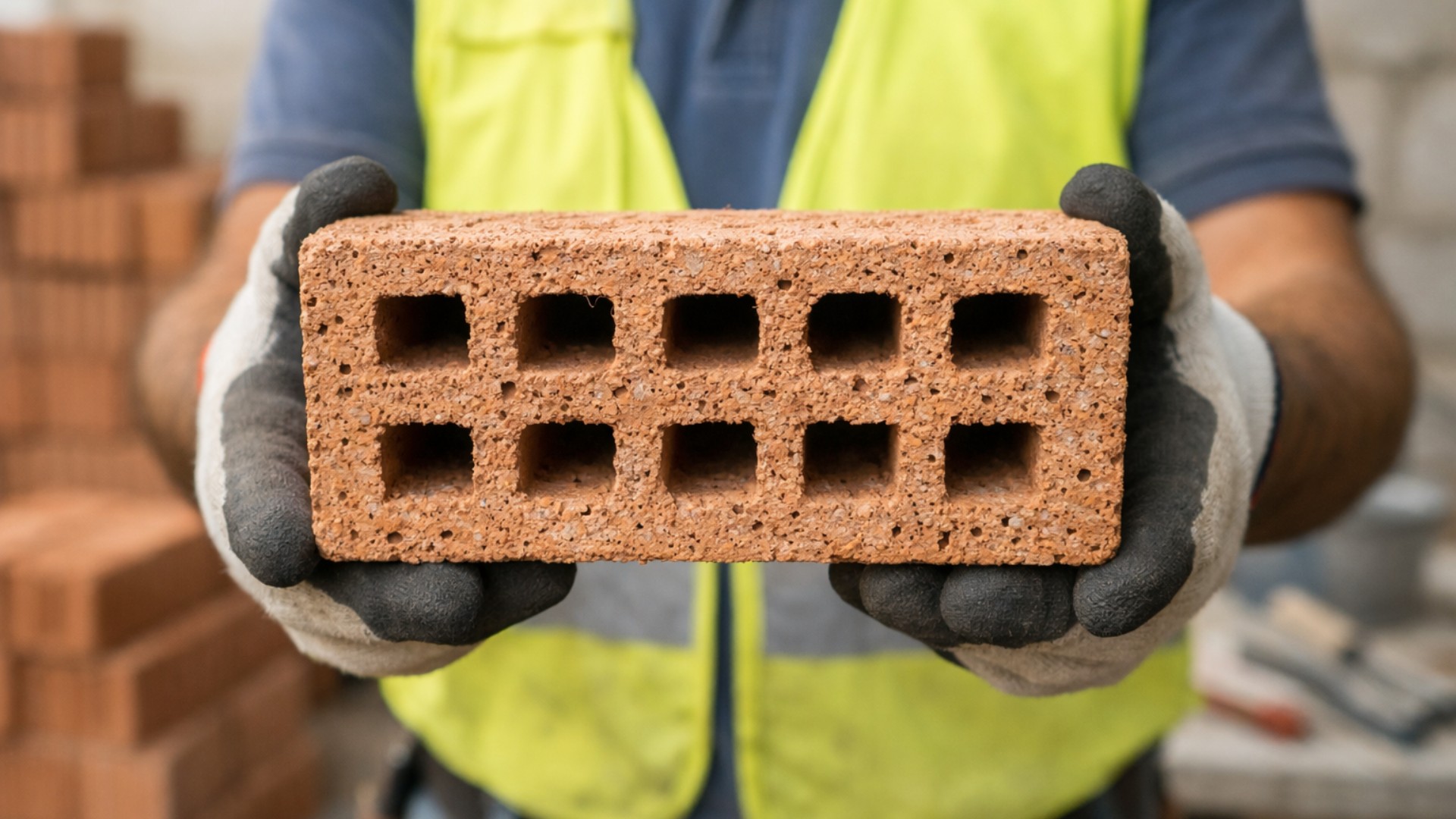
Scientists use sawdust mixed with clay to create a lighter brick, promising efficient thermal insulation and impressing by transforming waste into a solution for construction.
-
With a DNA shape, this bridge in Singapore draws attention in modern architecture and surprises tourists by transforming a simple crossing into an unforgettable visual experience in the urban heart.

-
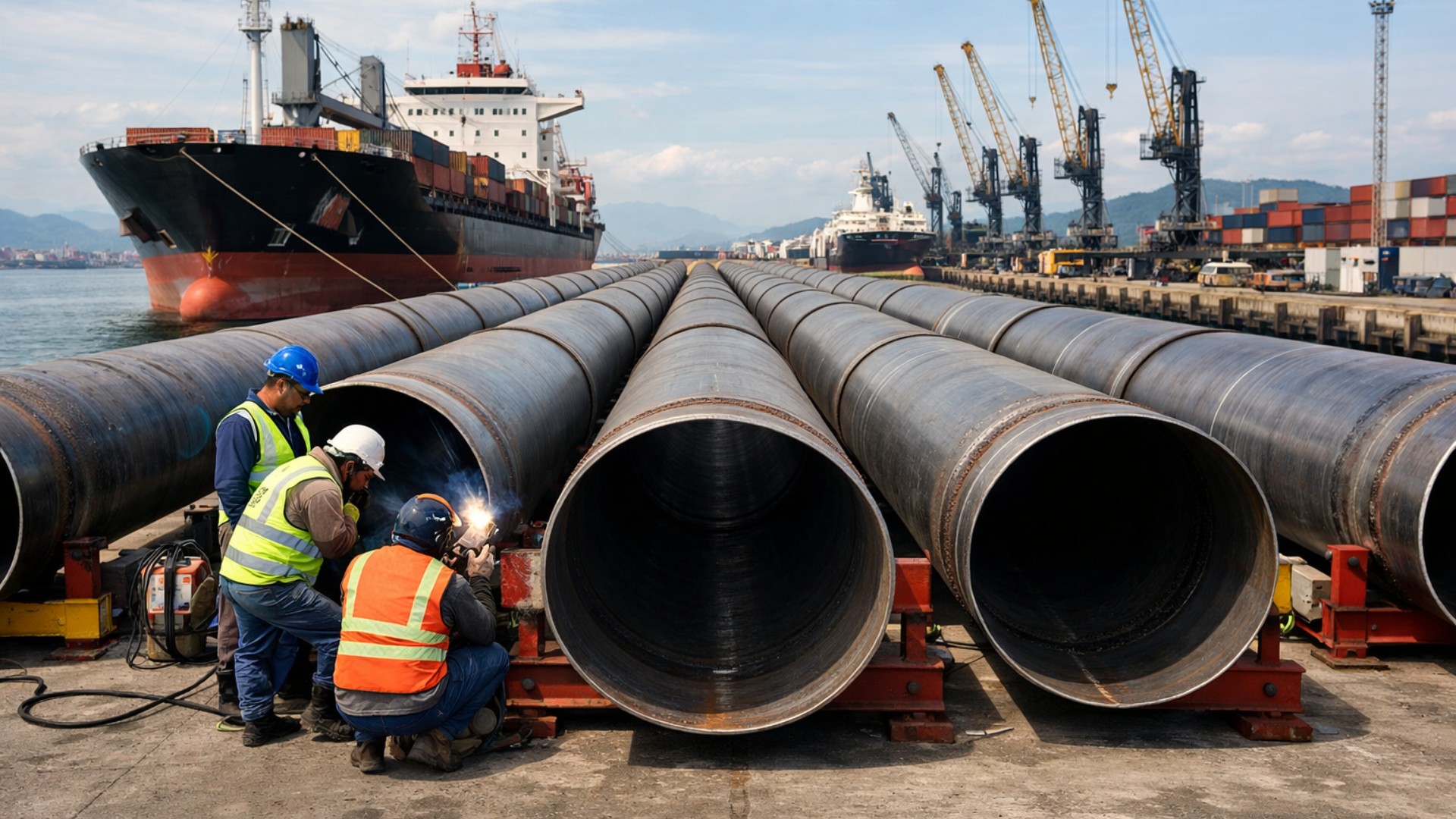
Giant underwater pipeline begins to take shape with a R$ 134.7 million project at the Port of Santos: the 1.7 km structure uses 12-meter and 700 mm pipes to supply water to 450,000 people in Guarujá.

- compacted earth walls,
- deep moats dug by hand,
- elevated earthworks,
- fortified gates,
- divisions surrounding cities, villages, farmland, and trade routes.
When all these elements are added together, we reach the impressive number of up to 16,000 km of interconnected defensive structures, spread across a vast area of the former empire. This scale was not built all at once. It expanded over centuries, following the political, economic, and military growth of Benin.


Compacted Earth: The Central Technology of the Work
The base material of the entire structure was compacted earth — a technique known today as rammed earth. The method consists of:
- stacking layers of soil,
- moistening,
- manually compacting,
- repeating the process until reaching great heights and thicknesses.
The result is extremely dense walls, resistant to erosion and capable of remaining structural for centuries when well-maintained. In some historical sections, the walls reached several meters in height and were wide enough for guards to circulate.
This technological choice was not improvised. It was engineering adapted to the climate, soil, and local material availability.
A Handmade Work by Entire Generations
No part of this system was made with machines. All the work involved:
- manual excavation of the moats,
- human transport of tons of soil,
- compaction done with simple tools,
- shaping of the earthworks,
- periodic maintenance over centuries.
In other words, it is a multigenerational work, which spanned different reigns and historical periods, always being expanded, reinforced, and adapted as the territory of the empire expanded.
In terms of accumulated human effort, archaeologists classify the Benin complex as one of the largest mobilizations of labor in pre-colonial Africa.
What the Walls Were For: Defense, Power, and Territorial Control
The fortifications of Benin served not only military functions. They were also:
- instruments of social control,
- mechanisms of urban delimitation,
- protection of strategic agricultural areas,
- barriers against external invasions,
- and physical symbols of the empire’s power.
The walled cities functioned as administrative and commercial centers, while the outer moats created almost impassable natural barriers in land attacks. In practice, whoever dominated these walls dominated the territory.
The Impact of Colonial Destruction and Historical Erasure
A large part of the system was destroyed at the end of the 19th century, especially after the British punitive expedition of 1897, when:
- cities were burned,
- entire sections of walls were dismantled,
- moats were filled in,
- historical artifacts were looted and taken to Europe.
This explains why today much of the Walls of Benin is only known through:
- archaeological remains,
- fragmented maps,
- historical accounts,
- spot excavations.
Even so, what remains is still enough to prove the absurd scale of the original work.

Why There Is Still Scientific Debate About the 16,000 Km
The number of about 16,000 km refers to the sum of all urban, rural sections, moats, and defensive branches. It appears in:
- studies compiled by the British Museum,
- works of archaeologist Patrick Darling,
- academic publications on African fortifications,
- modern reinterpretations of colonial historical records.
However, modern archaeology maintains a cautious technical posture because:
- a large part of the structures was destroyed,
- there is no continuous complete satellite mapping with field validation of all sections,
- many segments were moats and earthworks, not continuous vertical walls.
Even so, despite the margin of variation, the consensus is clear: this is the largest defensive system ever built exclusively with compacted earth in the history of humanity.
How This Work Compares to the Great Wall of China
The comparison arises naturally but needs to be made correctly:
- The Great Wall of China has about 21,196 km when all dynasties and branches are summed.
- The Walls of Benin do not exceed this total in continuous lines.
- However, no other work in the world has reached such a large size using only compacted earth and African manual techniques.
In other words: Benin does not surpass China in absolute kilometers but surpasses the entire world in compacted earth engineering on a continental scale.
Why This Work Is Still So Little Known Outside Africa
There are three main reasons:
- Colonial Erasure: the physical destruction came along with historical erasure;
- Little International Exposure: ancient African engineering is rarely taught in global curriculums;
- Absence of a Preserved Monumental Tourist Structure like Petra or Machu Picchu.
The result is that millions of people know about walls in Europe and Asia but are completely unaware that Africa built the largest fortification work in earth in human history.
A Colossus Made of Soil That Changed the Destiny of an Empire
The Walls of Benin were not just an engineering feat. They shaped:
- the territorial expansion of the empire,
- urban organization,
- commercial security,
- and the very political survival of the region for centuries.
Even partially destroyed, the system still surprises archaeologists with the volume of material moved, the territorial scale, and the sophistication of defensive solutions made only with soil, water, and human strength.









Uma História impressionante e que todos deveriam conhecer.
Parabéns pela publicação e divulgação.
Obrigado… Muitíssimo obrigado!!!
Deveriam refazer este sistema viário, para que fosse explorado turisticamente