





 Portuguese
  English
  Spanish
  6 min of reading
  0 comments


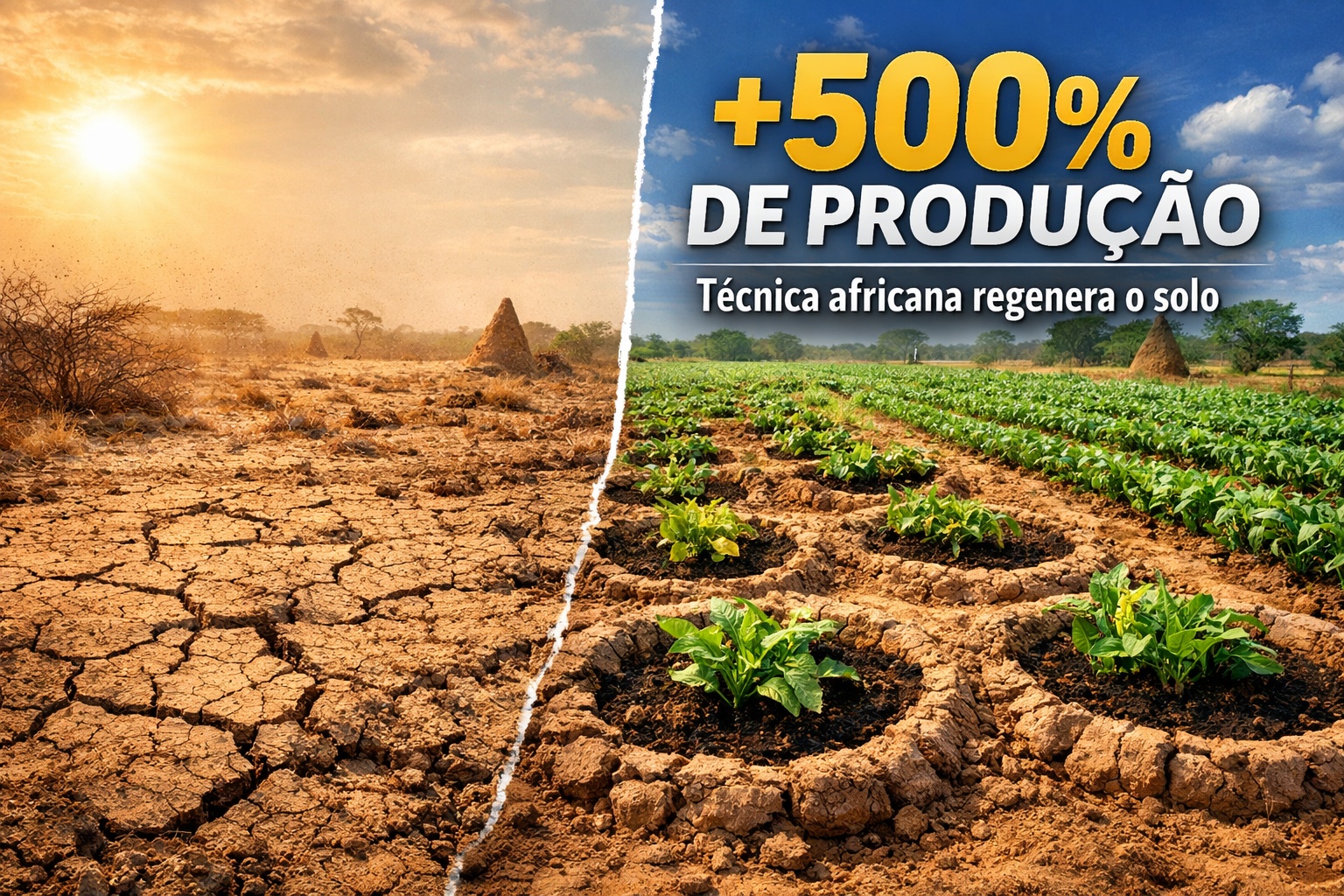
Zaï Technique Uses Pits with Manure and Termite Action to Regenerate Soils in the Sahel, Increase Production by Up to 500%, and Recover Areas Previously Considered Unproductive.
In the heart of the African Sahel, where the soil arrived too late, farmers in Burkina Faso discovered an improvised alliance: termites. The Zaï technique, which involves digging small pits in arid ground and filling them with manure, attracts these creatures that tunnel through the durable soil, allowing rainwater to infiltrate instead of running off. The results amaze even agricultural experts: production events of up to 500% in lands that were once considered lost forever, reducing the labor time from 380 to 50 hours per hectare with mechanization, and recovering 40 km² of degraded land just in Niger.
The Soil That Seemed Dead
The Sahel is a stretch of arid land that crosses Africa from east to west, at the southern edge of the Sahara Desert. In Burkina Faso, Niger, and Mali, the hot and unpredictable climate combines with decades of intensive land use to create a devastating problem: the formation of a hard crust on the surface of the land, locally called Zippélé.
This crust acts as an impermeable layer that prevents rainwater from entering the soil. When it rains, rather than nourishing plant roots, the water simply runs off the surface, carrying away the last remaining nutrients.
-
The sugar-energy sector advances with agricultural technology, but agricultural productivity still raises concerns.

-
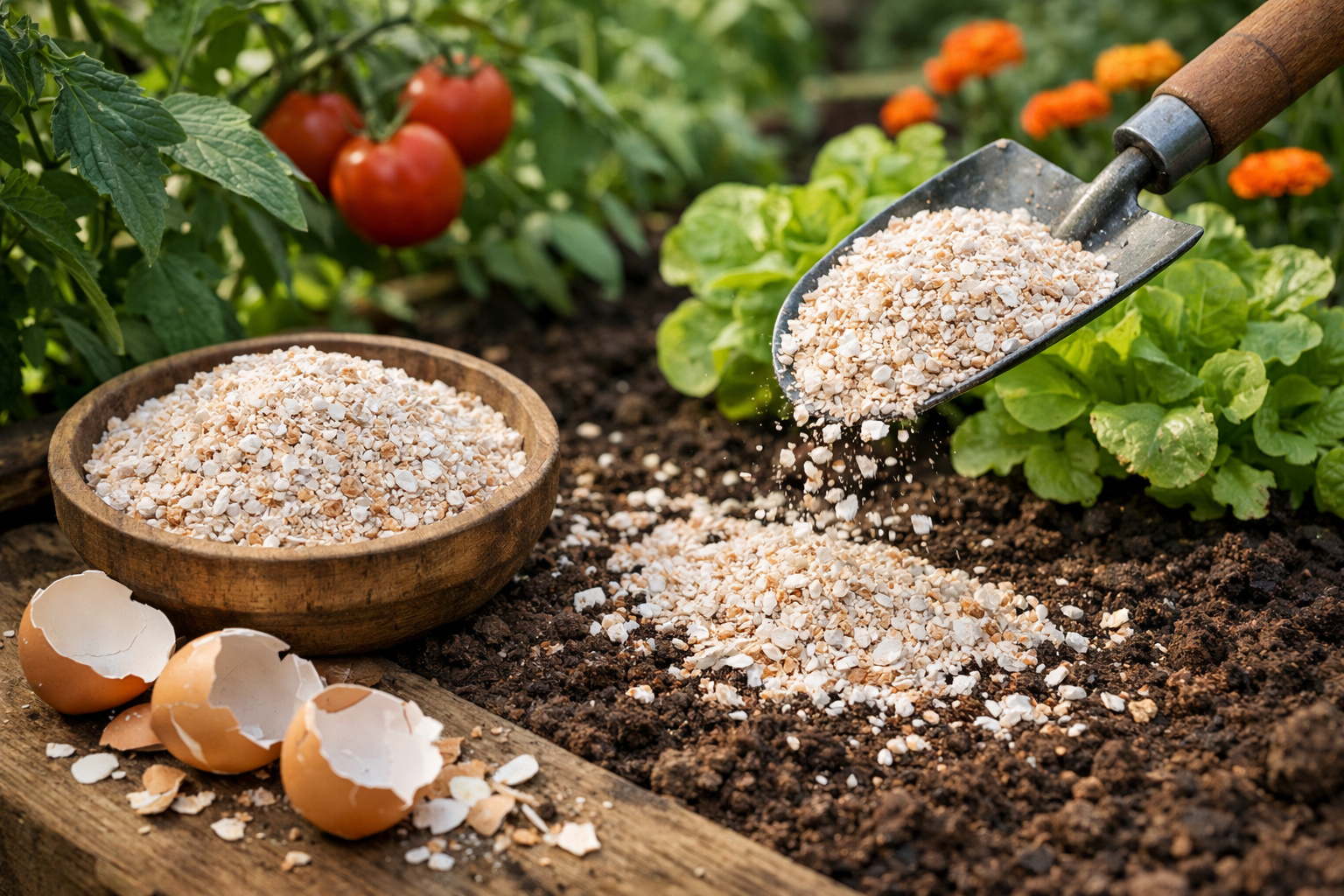
The eggshell that almost everyone throws away is made up of about 95% calcium carbonate and can help enrich the soil when crushed, slowly releasing nutrients and being reused in home gardens and vegetable patches.
-
This farm in the United States does not use sunlight, does not use soil, and produces 500 times more food per square meter than traditional agriculture: the secret lies in 42,000 LEDs, hydroponics, and a system that recycles even the heat from the lamps.

-
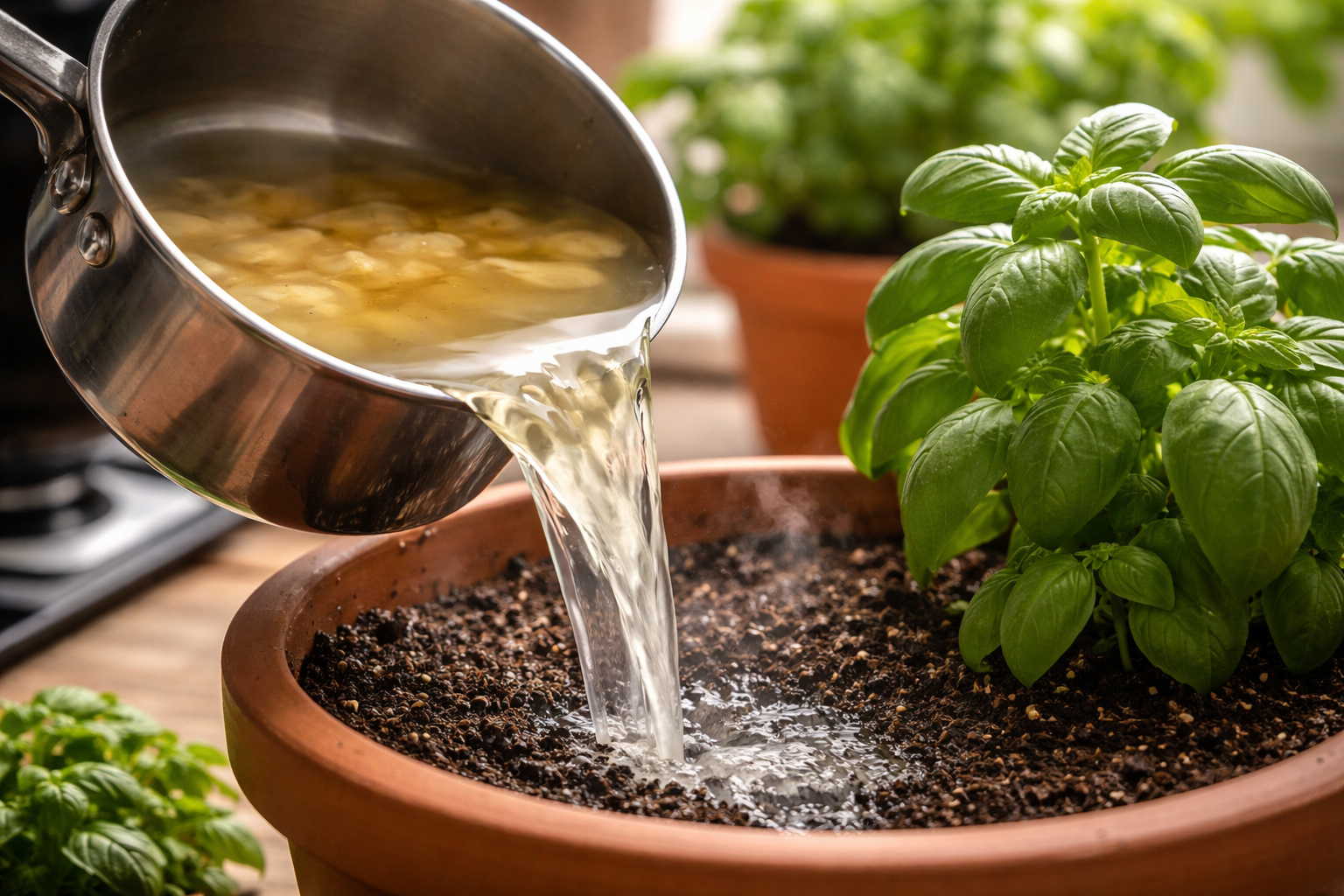
The water that almost everyone throws away after cooking potatoes carries nutrients released during the preparation and can be reused to help in the development of plants when used correctly at the base of gardens and pots, at no additional cost and without changing the routine.

During the 1970s and 1980s, major droughts devastated the Sahel. Entire farms were abandoned. Whole families migrated to cities in search of survival. The soil no longer produced anything. It was in this context that farmers in northern Burkina Faso began experimenting with and refining an ancient technique that had fallen into disuse: Zaï.
How It Works: Pits, Manure, and Termites
The logic behind Zaï is simple, but the result is revolutionary. During the dry season, when the soil is hard and the heat is intense, farmers dig small pits 20 to 30 centimeters wide and 10 to 20 centimeters deep, spaced about 60 to 80 centimeters apart. Each pit receives a portion of animal manure or organic compost.


This is where the unlikely ally comes in: the manure attracts termites. These insects, usually seen as pests, become the greatest builders of the opera.
The termites excavate a network of fine tunnels around each pit, breaking up the compact crust of the soil. When the first rains arrive in June, the water no longer runs off the surface: it falls right into the pits and infiltrates through the tunnels opened by the termites, reaching the roots of the seeds that were planted in the center of each pit.
The pits also function as small catchment basins. The soil removed to form each pit is deposited at the lower edge, creating a small barrier that retains even more water. The manure inside decomposes slowly, releasing nutrients right in the root zone. The soil that seemed dead begins to breathe again.
The Numbers That Prove the Effectiveness of the African Technique
The data collected in Burkina Faso is compelling. In sorghum fields, production without the Zaï system ranged from 319 to 642 kg per hectare on degraded land.
With Zaï applied, production skyrocketed to between 975 and 1,600 kg per hectare, according to studies published in the journal Frontiers in Sustainable Food Systems. In more favorable cases, production reaches 500% compared to conventional crops on the same degraded land.
In Niger, the technique was combined with stone lines to combat erosion and recover 40 km² of land considered unfit for cultivation.
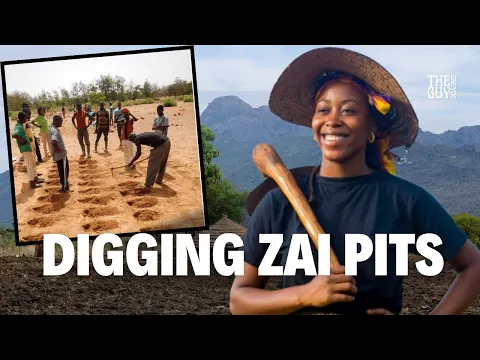
In Burkina Faso, researchers from the Institute for Environment and Agricultural Research (INERA) and NGOs such as Solibam are developing a mechanized version of the process: instead of digging each pit manually with a short hoe, an animal-drawn implement creates crossed furrows where seeds are planted at the intersections.
With this mechanization, labor time decreased from 380 hours per hectare to just 50 hours, making the technique viable on a much larger scale.
A study by INERA showed that mechanized Zaï sorghum produced a positive income of up to 165,000 CFA francs per hectare, a significant amount in regions previously unqualified for production. The technique also works with corn, cotton, watermelon, and vegetable crops such as eggplant.
The Man Who Stopped the Desert
No figure better symbolizes the potential of Zaï than Yacouba Sawadogo, a farmer from northern Burkina Faso who became internationally known as the man who stopped the desert.
Since the 1980s, Sawadogo improved the traditional Zaï with a crucial innovation: he slightly increased the size of the pits and ensured that each one was prepared with manure and organic compost before the rains.
While his neighbors abandoned the land, Sawadogo kept digging. Over time, his farm transformed into a dense forest of nearly 20 hectares in a region that until then was thought incapable of supporting trees. He won the Right Livelihood Award in 2018, a Swedish prize considered the alternative Nobel, for his contribution to sustainable development. His story was documented in the film The Man Who Stopped the Desert, aired on Channel 4 in the UK.
From the Dry Season to the Continent
An important feature of Zaï is that the digging work is done during the dry season, when farmers traditionally have nothing to do. This transforms the period of inactivity into productive time, spreading the effort throughout the year instead of concentrating everything in the short rainy season.
Once rediscovered in Burkina Faso, Zaï quickly spread to Mali, Senegal, Niger, and Kenya. In each country, the technique gained local adaptations: in Niger it is called Tassa; in Senegal, the mayor of Ndiob distributed mechanical drills to speed up the creation of the pits.
In pepper-growing regions of Senegal, recycled tires are used to concentrate fertilizer and water at the base of the plants, following the same principle of Zaï.
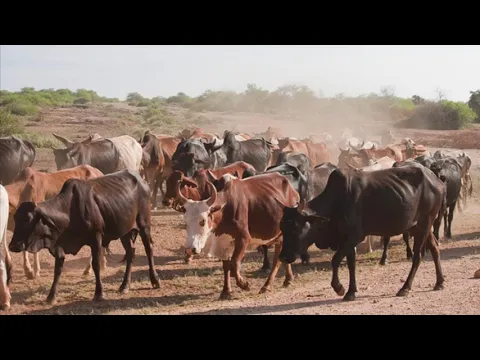
Since 1982, teams from the International Center for Agricultural Research for Development (CIRAD) have been working in the Yatenga region of Burkina Faso, documenting and improving the system.
The World Economic Forum has published analyses on the technique as one of the most promising metrics for adapting African agriculture to climate changes.
Challenges and Limits of the Technique
Despite the impressive results, Zaï has real limitations. The manual version has required over 300 hours of work per hectare, a heavy burden for subsistence farmers who work alone or with family.
The heat of the dry season has made the digging particularly exhausting. Furthermore, each pit has a lifespan of only one to two years: after this period, it needs to be re-dug in the same location for the capture to continue functioning and the organic matter to be renewed.

The availability of manure can also be an obstacle in regions where animal husbandry is scarce. In very sandy soils or with slopes greater than 3%, the technique loses effectiveness. When annual precipitation exceeds 800 mm, the pits can fill up and harm plants instead of helping them.
Researchers at INERA are testing a partial replacement of organic compost with microdoses of mineral fertilizers, which would reduce costs and expand access to the technique. They are also studying combinations of grains like sorghum with legumes like cowpea within the same pits, increasing production diversity and nitrogen fixation in the soil.
A Connection from the Past to the Future
The history of Zaï reveals something that modern agriculture often overlooks: the knowledge accumulated over centuries of living with a challenging environment can be more valuable than the priciest imported technologies.
Farmers in the Sahel, without access to laboratories or universities, are developing a system that scientists around the world are now studying and recommending.
In a world where climate changes have made the soil increasingly unpredictable, where extreme droughts and irregular rains threaten the food security of millions of people, a simple 20-centimeter pit dug with a hoe in the cracked ground of the Sahel offers a response that no satellite or drone has been able to surpass: work with nature, not against it. And if you need help, call the termites.









Seja o primeiro a reagir!