





 Portuguese
  English
  Spanish
  4 min of reading
  0 comments


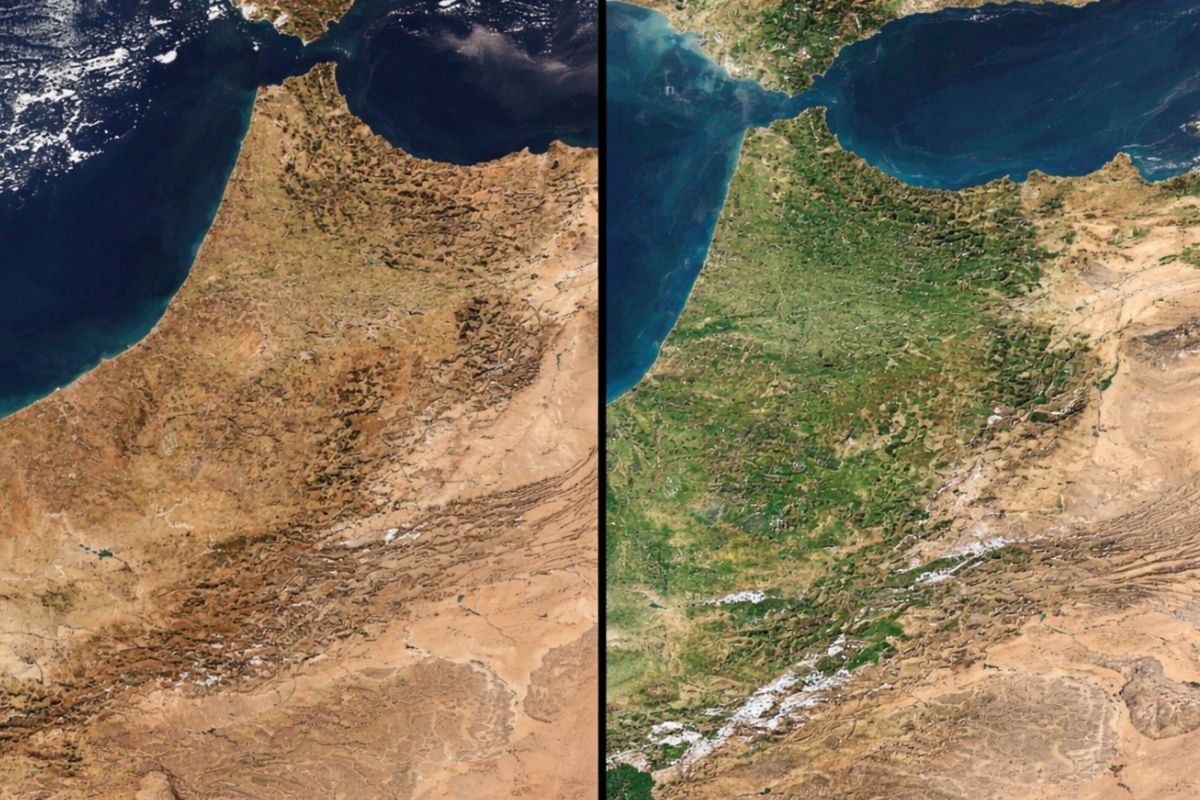
The Rains In Morocco Changed The Country’s Landscape, Raised Reservoir Levels, Eased A Seven-Year Drought, And Created A Distinct Scenario So Different That The Transformation Became Visible Even In Satellite Images.
The rains that hit Morocco in the first months of 2026 marked a rare turnaround for a country that had been facing a long period of water scarcity. After seven years of severe drought, water returned with enough strength to alter the landscape, recover areas of vegetation, and breathe new life into the supply.
The impact of these rains was so great that the change could be perceived even from space. Satellite images recorded the contrast between the dry landscape observed in February 2025 and the much broader green cover seen a year later, showing how water transformed northern Morocco in a relatively short period.
Rains Change The Landscape And End The Drought Cycle
The sequence of rains in the first two months of 2026 led Moroccan authorities to declare the end of a drought that had plagued the country for seven years. This period severely affected agriculture and livestock, making the arrival of the rainy season a relief for various sectors.
-
Scientists find about 1 million giant live eggs hatching in an active underwater volcano, discover a natural furnace on the ocean floor, and reveal one of the most unlikely nurseries ever seen in the ocean.
-
Scientists launched a bait camera to the bottom of the Pacific Ocean and saw something that no one expected.

-
Is a smart plug worth it in a regular home? What does it offer: turns on and off via smartphone, creates routines by schedule, prevents forgotten devices, sometimes monitors consumption, and improves habits without renovation or miracles.

-
Airbus and Mercedes take the G-Class to the skies: the ACH145 helicopter priced at R$ 78 million debuts in São Paulo, unit goes to Brazilian, AMG cabin, 5-blade rotor, and a 2-year wait.


According to the data presented, the accumulated volume reached 360 millimeters in early February 2026. This total was 54% above the average of the last 30 years and 215% above the amount recorded in 2025, indicating a significant change in the recent behavior of the climate in the country.
The Green Returned And Became Visible From Space
One of the most striking effects of the rains was the change in vegetation cover. Images captured by the Copernicus Sentinel-3 satellite showed northeastern Morocco with a remarkable difference between February 2025 and February 2026.
In the older image, drought dominated almost the entire observed area. A year later, the scene was different, with extensive and much more intense vegetation, creating a green carpet visible from space. This record became one of the clearest proofs of the impact of the rains on the country’s surface.
Full Reservoirs Give Breath To The Supply
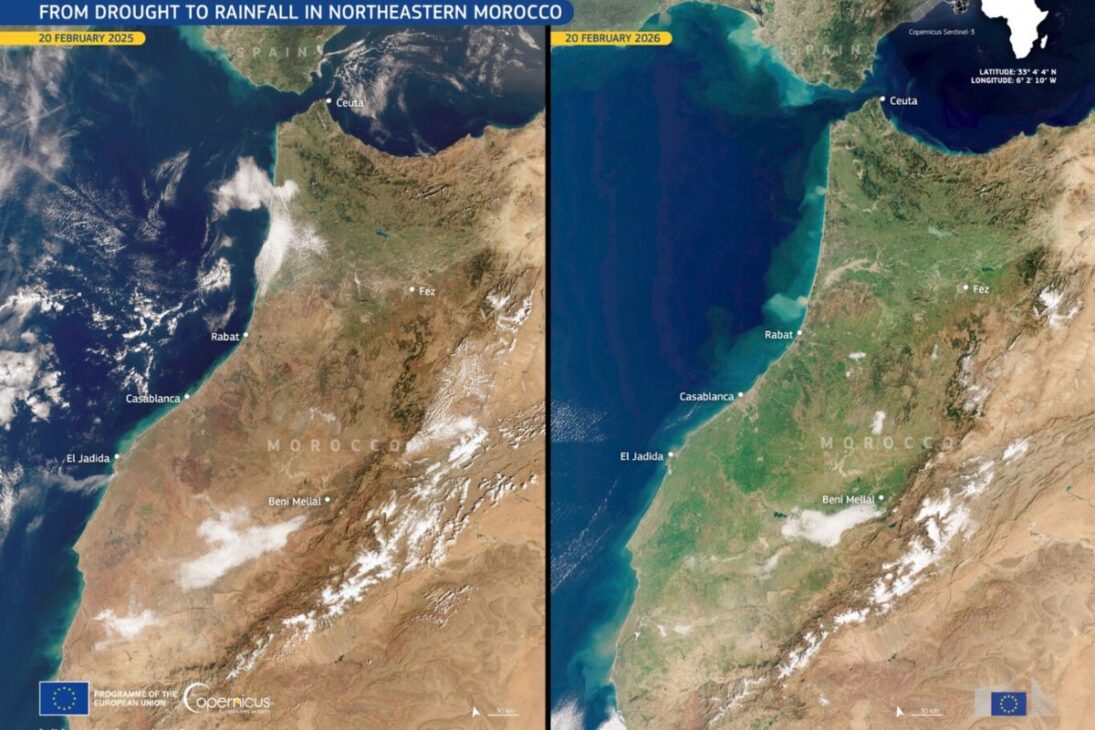
In addition to changing the landscape, the rains also reinforced Morocco’s water security. According to the information from the data set, the Minister of Equipment and Water, Nizar Baraka, stated that this new scenario could guarantee the country up to three years of drinking water.
The reservoirs reached 70.7% of total capacity, a level not seen in Morocco since 2018. The available water resources reached 11.8 billion cubic meters on February 20 of this year, representing an increase of approximately 155% compared to the same period in 2025.
Water Relief Came Along With Pressure On Rivers And Structures
Despite the positive effect, the rains also brought challenges. The same volume that helped fill reservoirs and recover green areas caused flooding events, as occurred in the Loukkos River basin.
According to the data set, the flow reached nearly 3,200 cubic meters per second, which required controlled and preventive water releases by the authorities. In other words, water brought relief but also increased pressure on the country’s water infrastructure.
Impact Goes Beyond The Landscape And Affects The Economy And Production
The rains do not only affect the appearance of Morocco. The effect also hits the water economy, urban consumption, agricultural activity, and even generation in hydropower plants. After years of drought, the recovery of reservoirs increases the country’s capacity to respond on several fronts.
This helps explain why the episode was received as an important turning point. More than just making the country green again, the rains altered the availability of water at a critical moment for supply and production.
Morocco Lives A Before And After After The Rains
What happened in Morocco in the first months of 2026 was more than an above-average rainy period. The rains changed the reading of the territory, alleviated a prolonged water crisis, and produced a rare contrast between two consecutive years observed by satellite.
After seven years of drought, the country saw rivers rise, reservoirs fill, and vegetation reappear on a large scale. The result was a concrete transformation, visible in the soil, in the stored water, and even in images taken from space.
In your opinion, do these rains represent a lasting recovery for Morocco, or could they be just a temporary relief after years of drought?





-

-

-

4 pessoas reagiram a isso.