





 Portuguese
  English
  Spanish
  4 min of reading
  0 comments


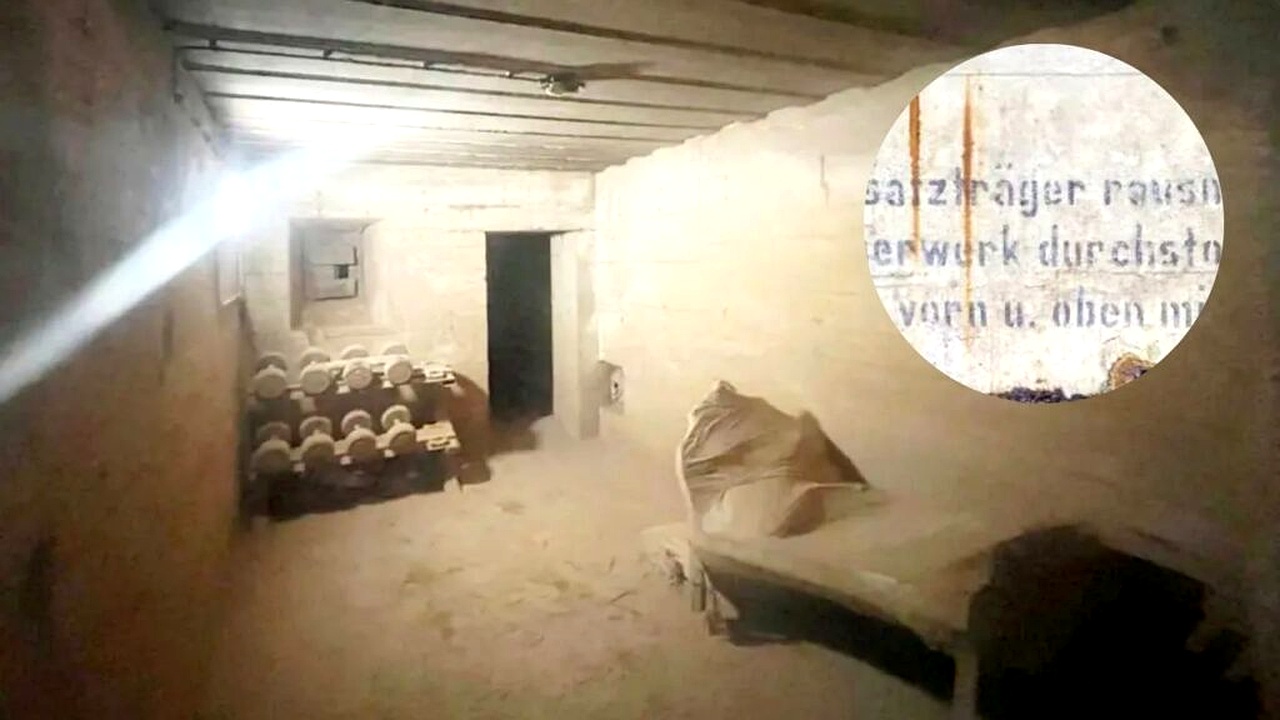
Home Renovation in the Channel Islands Reveals Nazi Bunker, Underground Tunnels, and Atlantic Wall Structures Hidden Since World War II.
In 2023, an apparently simple renovation in a private residence on the Channel Islands unexpectedly opened a window into World War II. During the renovation of the floors and external walls, workers found reinforced concrete that was out of the ordinary for residential structures. What began as a technical curiosity soon revealed an underground military complex built by German forces between 1940 and 1945, a period when the archipelago was the only British territory occupied by the Nazis.
The discovery was not an isolated or folkloric case. It fits into a well-documented historical context: the Channel Islands were transformed into one of the most fortified areas of the Atlantic Wall, the defensive system that extended for thousands of kilometers along the occupied European coast. It is estimated that up to 10% of all the concrete used by the Germans in the Atlantic Wall was poured only on these islands, a disproportionate volume for such a small territory.
A Fortress Built Beneath Houses, Roads, and Fields
During the German occupation, Guernsey, Jersey, Alderney, and Sark received hundreds of bunkers, casemates, artillery positions, and kilometers of tunnels carved directly into the rock.
-
Friends have been building a small “town” for 30 years to grow old together, with compact houses, a common area, nature surrounding it, and a collective life project designed for friendship, coexistence, and simplicity.

-
This small town in Germany created its own currency 24 years ago, today it circulates millions per year, is accepted in over 300 stores, and the German government allowed all of this to happen under one condition.

-
Curitiba is shrinking and is expected to lose 97,000 residents by 2050, while inland cities in Paraná such as Sarandi, Araucária, and Toledo are experiencing accelerated growth that is changing the entire state’s map.

-
Tourists were poisoned on Everest in a million-dollar fraud scheme involving helicopters that diverted over $19 million and shocked international authorities.


Many of these structures were deliberately buried or disguised after the end of the war, repurposed as house foundations, walls, roads, or simply sealed and forgotten.
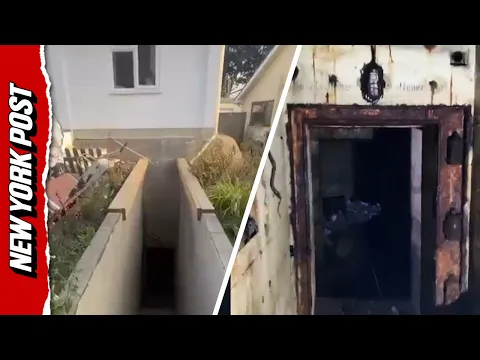

In the specific case of the renovated residence, structural analysis revealed walls of concrete more than two meters thick, reinforced with steel and positioned at typical defensive bunker angles.
Below the floor, a sealed access led to a manually dug tunnel, wide enough for the passage of soldiers and equipment, with ventilation systems still recognizable.
These tunnels were not improvisations. Many of them were part of larger networks, connecting ammunition depots, barracks, command posts, and coastal firing positions.
Some known underground complexes on the islands exceed hundreds of meters in length and were designed to withstand intense naval and aerial bombardments.
Forced Labor, Extreme Engineering, and Strategic Priority
The construction of these fortifications involved thousands of forced laborers, including prisoners of war and civilians deported from occupied countries. On islands like Alderney, labor camps operated under brutal conditions, leaving a human legacy as heavy as that of concrete and steel.
From a military perspective, the German obsession with the Channel Islands had a clear logic. Although they were not decisive operationally, they had enormous symbolic and propaganda value. Hitler ordered them to be defended “to the last man,” turning the archipelago into a laboratory for extreme defensive engineering.
This explains why military structures still emerge today beneath backyards, garages, and ordinary houses. Many modern residences were built directly over old German positions, without the owners knowing the true nature of the foundations supporting their properties.
Recurring Discoveries and Hidden Historical Heritage
Cases like this are not rare in the Channel Islands. Over the past few decades, renovations, agricultural excavations, and infrastructure work have revealed intact command rooms, sealed ammunition depots, collapsed tunnels, and even military equipment preserved by isolation and lack of oxygen.
In some cases, the spaces have been converted into museums. In others, they remain closed for safety reasons, as many structures pose risks of collapse or contain hazardous materials left over from the war.
Still, each new discovery reinforces the notion that a significant part of the German occupation remains literally buried beneath modern everyday life.
The Impact on Owners and Local Authorities
When such a structure is found on private property, historical preservation laws come into play.
Local authorities and experts assess the heritage value of the find and determine whether it should be preserved, documented, or, in rare cases, removed. This can directly affect renovations, property value, and future use of the area.

In the case of the renovated house, the discovery attracted historians and military engineers, interested both in the structural integrity and the historical potential of the bunker.
The property, once ordinary, has come to be included in an informal map of German occupation sites, expanding the understanding of how the archipelago was nearly completely militarized.
A Past That Insists on Emerging
More than 80 years after the end of World War II, the Channel Islands continue to reveal physical scars from a period when they were isolated, occupied, and transformed into a defensive stronghold disproportionate to their real strategic importance.
Each bunker discovered beneath an ordinary house reinforces the scale of the German effort and the depth of the marks left by the occupation.
The episode shows that, in certain regions of Europe, the past is not just in books or museums. It remains incorporated into the soil, the walls, and the foundations of houses where people live ordinary lives, often without imagining that just a few meters below lies one of the more concrete and silent faces of 20th-century history.










-

-

-

-

4 pessoas reagiram a isso.