





 Portuguese
  English
  Spanish
  7 min of reading
  0 comments


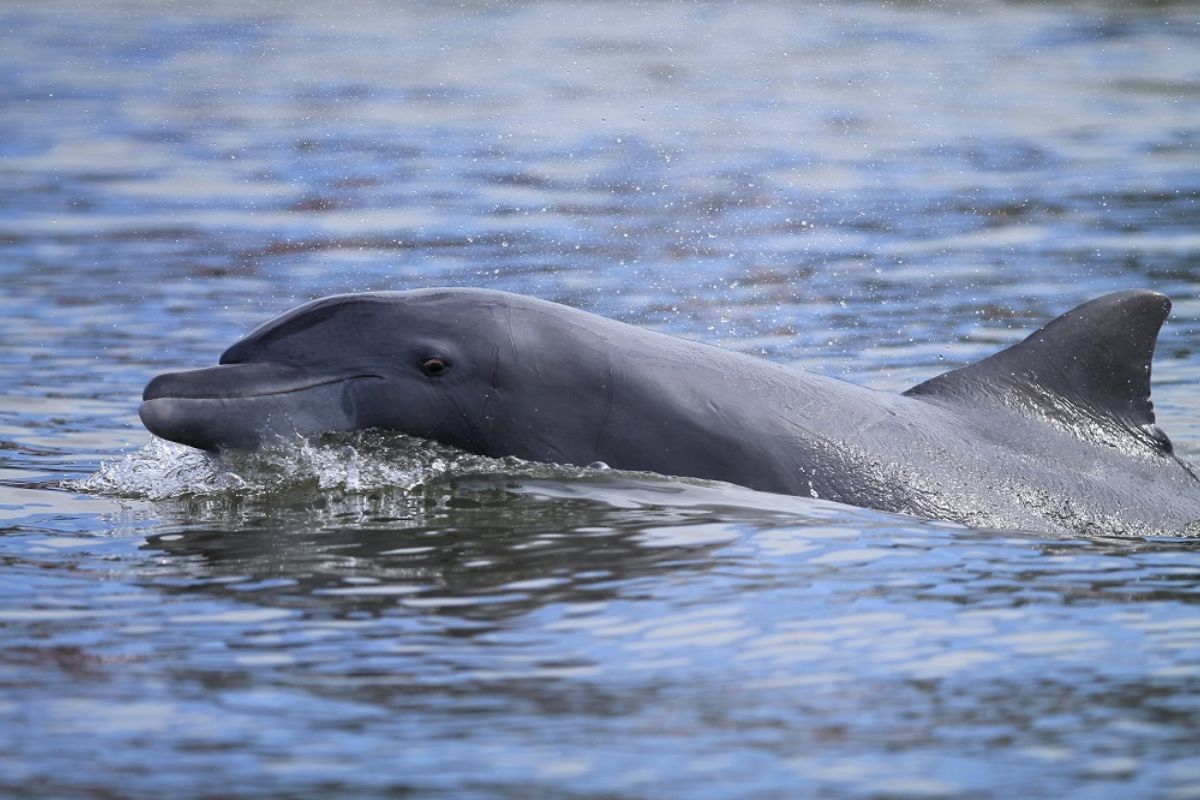
After Two Decades Without Constant Records, Lahille Dolphins Return to Share the Araranguá River with Artisanal Fishermen, Restart Traditional Cooperative Fishing, Attract Researchers from Unesc for Intensive Monitoring and Raise Hypotheses About Coastal Routes, Vessel Noise and Environmental Changes Along the Summer and Autumn
The return of the Lahille dolphins to the Araranguá River, in the far south of Santa Catarina, brings back one of the most unique interactions between marine fauna and human communities in the country. After nearly 20 years without regular appearances, the animals resumed their coexistence with local fishermen and revitalized cooperative fishing in the Barra do Rio Araranguá, in a scenario where the species is officially classified as endangered.
While the community celebrates the reunion, teams from the University of Southern Santa Catarina monitor each approach between dolphins and artisanal boats. In just over a year of systematic observations, researchers have logged more than a hundred field outings, cataloged individuals, documented behavior patterns and are trying to answer a central question: what led these Lahille dolphins to return to occupy an environment that had been abandoned for so long?
Tradition Resumed Between Dolphins and Fishermen in the Far South of Santa Catarina

In the Barra do Rio Araranguá, cooperative fishing is neither a legend nor a folkloric resource for tourists. Veteran fishermen recall that, decades ago, the Lahille dolphins would spend entire days following the canoes, surrounding schools of fish and indicating the exact moment to cast the net.
-
Archaeologists discover in China a 5,000-year-old tomb with over 350 artifacts, nearly 200 jades, and signs of intentional destruction, in a discovery that could be the gateway to a lost prehistoric kingdom.

-
A vacuum robot with a five-axis mechanical arm capable of picking up objects from the floor, avoiding obstacles in real time, and continuing to clean on its own inaugurates a new generation of appliances that see, think, and act within the home.

-
Geographers redefine the Brazilian relief and confirm the presence of mountains in 14 states with a new system that changes historical criteria and alters the way the territory is classified.
-
At a depth of 3,800 meters in the Atlantic, scientists have discovered a “lost city” with white towers up to 60 meters tall that has been active for over 120,000 years without relying on volcanoes.

The return of the animals, identified by the community since the summer of 2021, has revived this collective memory and brought back a routine that many believed to be over.
The account of Osvaldo dos Passos Vieira, a fisherman with over 50 years of experience, summarizes the symbolic weight of the relationship. He states he began fishing “with the dolphins” at the age of 12 and affirms that the animals were treated as “family members” by the locals.
When the Lahille dolphins reappeared in the Araranguá River, the reaction he described was one of “pure joy,” an expression that helps gauge the social impact of this cooperation on the daily life of the fishing community.
How Cooperative Fishing with Lahille Dolphins Works in Practice

From an operational standpoint, cooperative fishing relies on fine synchronization between humans and dolphins. The Lahille dolphins encircle schools of fish, compress the fish into shallower areas or closer to the banks, and in this movement, indicate to the fishermen the perfect moment to cast the net.
What gets caught becomes human capture. What escapes serves as food for the dolphins, in an arrangement where all seem to benefit.
This interaction requires careful reading of the signals on the river’s surface. Fishermen observe changes in the movement of the Lahille dolphins, small variations in how they swim and position themselves in relation to schools of fish.
The dolphins seem to tolerate the proximity of the boats and adjust their movement according to the presence of the nets.
It is a type of cooperation that depends on repetition, memory, and individual recognition between humans and cetaceans, which is now being frequently observed in the region.
Scientific Monitoring and Individual Identification in the Araranguá River
Since September 2024, the presence of the Lahille dolphins in the Araranguá River has been systematically monitored by Unesc teams.
More than 100 field outings have been recorded, using fixed observation points, high-resolution cameras, and drones to document the animals’ movements in different sections of the estuary. The aim is to turn an empirical reemergence into a consistent historical series.
The identification of individuals follows a protocol established in coastal cetacean research. Each Lahille dolphin is recognized by marks, cuts, and scars on its dorsal fin, which serve as a kind of biological “fingerprint.”
Researcher Nadine Saraiva de Souza, from the Botos do Araranguá project, explains that this visual mapping allows tracking which animals return more frequently, how long they stay in the area, and how they distribute along the river’s course.
These data help determine whether the phenomenon is an isolated occurrence or part of a trend of recolonization.
Hypotheses for the Return of an Endangered Species to the Araranguá
Scientists avoid simple answers to complex phenomena, but some hypotheses are already guiding fieldwork. One of the main lines of investigation considers that the Lahille dolphins may be seeking less busy areas during the period of greatest nautical pressure along the coast, especially during summer.
Regions with less boat traffic tend to offer lower levels of underwater noise and less collision risk.
Another line of inquiry analyzes the possible connection between the Araranguá River and other traditional areas where the species occurs, such as Laguna, in Santa Catarina, and Torres, in Rio Grande do Sul.
Researchers consider it plausible that some individuals move between these points, using the coastal zone as a corridor and the Araranguá as a seasonal use area.
If this dynamic is confirmed, the Lahille dolphins that are currently participating in cooperative fishing with Santa Catarina fishermen may be part of the same contingent that traverses different environments along Brazil’s southern coast.
Environmental Pressures, Endangered Species and the Importance of Continuous Recording
The endangered status of the Lahille dolphins, scientifically recognized as Tursiops gephyreus and included in risk of extinction lists, adds a layer of urgency to the monitoring.
Each individual identified in the Araranguá River represents a significant fraction of a population that is already considered small and vulnerable to cumulative impacts, such as pollution, accidental captures, and habitat alterations.
In this context, recording when the dolphins arrive, how long they stay, and how they behave is no longer just scientific curiosity but becomes a central component of any conservation strategy.
The reemergence at the Barra do Rio Araranguá helps map routes, environmental preferences, and critical interaction points between the Lahille dolphins and fishing activity, providing input for management policies that reduce conflicts and risks for the species.
Community Participation in the Cooperation and Monitoring Network
The return of the Lahille dolphins mobilizes not only university laboratories and environmental institutions. Fishermen, locals, tourists, lifeguards, and surfers have been integrated into an informal alert network, sending photos and videos of sightings along the southern coast of Santa Catarina.
This flow of spontaneous information expands the reach of the monitoring and partially compensates for the limitations of small teams over a vast stretch of coastline.
The project coordinator, Rodrigo Machado, highlights that each record received through messaging apps helps confirm presence, movements, and activity times of the animals.
The project’s contact phone serves as a direct channel between researchers and the community, allowing an occasional sighting of Lahille dolphins on the beach to quickly transform into georeferenced data and cataloged images. It is a form of applied science that explicitly relies on local engagement.
Cooperation, Cultural Identity and the Future of Artisanal Fishing
Beyond graphs and spreadsheets, the return of the Lahille dolphins reopens a debate about cultural identity and the future of artisanal fishing in the far south of Santa Catarina.
The cooperation between animals and fishermen has always represented a symbolic differential for the region, serving as a local hallmark and at the same time as an indicator of the environmental quality of the estuary.
When a fisherman claims that the dolphins “fished all day for us,” it encapsulates the mutual dependence between human activity and the presence of the species.
The permanence of the Lahille dolphins in the Araranguá River is likely to depend on the maintenance of a minimally preserved environment, clear rules for aquatic space use, and a delicate balance between economic exploitation of fishing resources and conservation of a population already classified as endangered.
What Model of Coexistence Will the Araranguá River Adopt?
The reemergence of the Lahille dolphins in the Araranguá River places the region at a discreet yet decisive crossroads.
On one hand, cooperative fishing reinforces the importance of the species for the income of families that have depended on the river for decades.
On the other hand, the fact that this is an endangered population imposes clear limits on the type of pressure the environment can withstand without further collapse.
In a scenario where researchers intensify monitoring and the community resumes daily coexistence with the animals, the lingering question is straightforward: in your opinion, what should weigh more in local decisions from now on, the protection of the Lahille dolphins or the expansion of traditional fishing activity, and what kind of concrete rule do you consider fair to ensure both at the same time?







Seja o primeiro a reagir!