





 Portuguese
  English
  Spanish
  4 min of reading
  1 comment


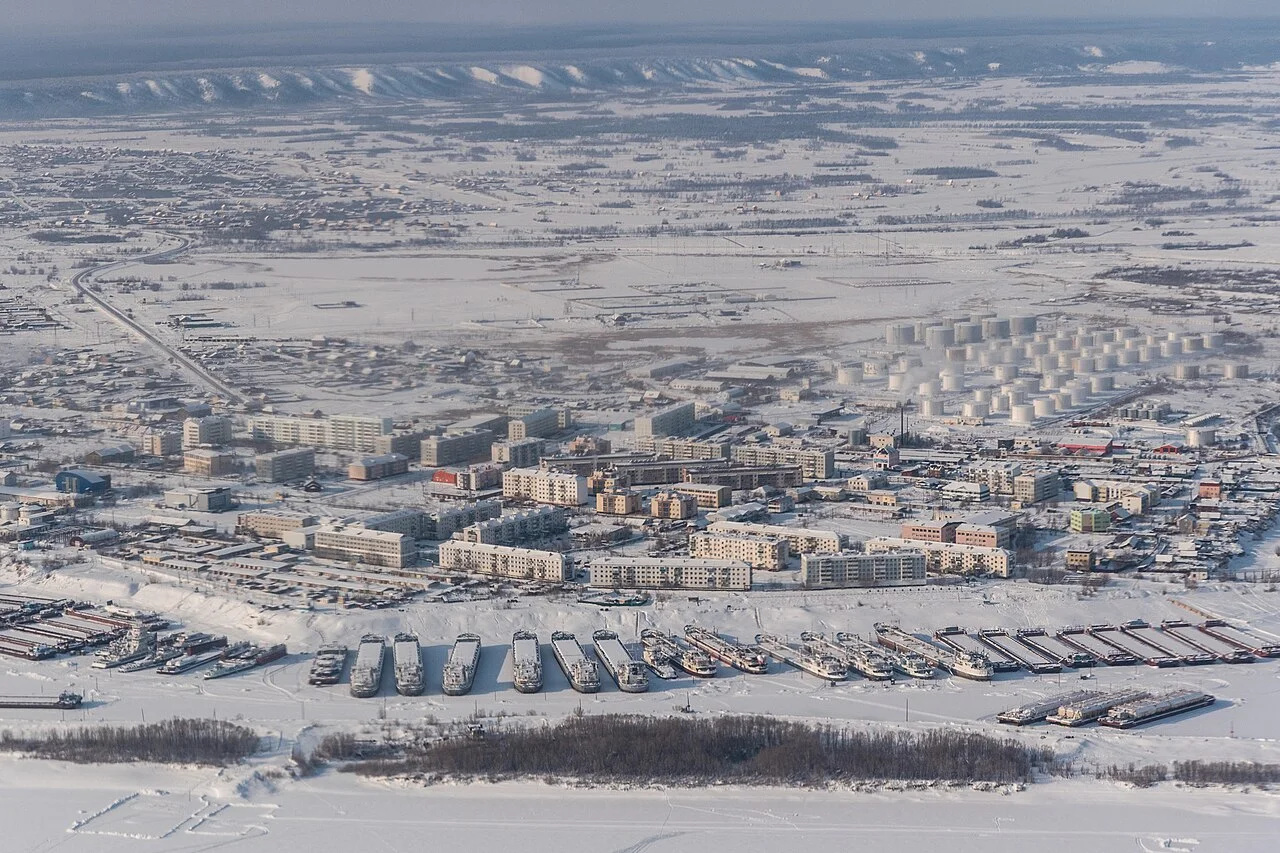


Yakutsk Airport Operates on Deep Permafrost, Faces Thawing Soil, Constant Settlements, and Extreme Temperatures of Up to −50 °C.
Yakutsk Airport is one of the rare cases where airport engineering must deal not only with wind, ice, and snow, but with an even more complex problem: the soil is never stable. Built on one of the largest continuous permafrost areas on the planet, the airport operates over layers of permanently frozen soil that can exceed 300 meters in depth, in a region where simply thawing a few centimeters is enough to deform entire runways.
There, the challenge is not to avoid the cold, but to prevent heat from destroying the infrastructure’s foundation.
What Is Permafrost and Why Does It Threaten Airports
Permafrost is soil that remains frozen for at least two consecutive years. In Yakutsk, in eastern Siberia, it has existed for thousands of years and supports entire cities.
-
Friends have been building a small “town” for 30 years to grow old together, with compact houses, a common area, nature surrounding it, and a collective life project designed for friendship, coexistence, and simplicity.

-
This small town in Germany created its own currency 24 years ago, today it circulates millions per year, is accepted in over 300 stores, and the German government allowed all of this to happen under one condition.

-
Curitiba is shrinking and is expected to lose 97,000 residents by 2050, while inland cities in Paraná such as Sarandi, Araucária, and Toledo are experiencing accelerated growth that is changing the entire state’s map.

-
Tourists were poisoned on Everest in a million-dollar fraud scheme involving helicopters that diverted over $19 million and shocked international authorities.


The problem is that this frozen soil acts like a “temporary rock”: when it stays cold, it is rigid; when it warms up, it loses strength rapidly.


In an airport, where runways need to maintain minimal leveling tolerances, any partial thawing generates differential settlements, undulations, and cracks that are dangerous for flight operations.
An Airport Operating at −50 °C
Yakutsk is considered one of the coldest cities in the world. In winter, temperatures frequently reach −40 °C to −50 °C, while in summer, they can exceed 30 °C. This extreme variation creates a continuous cycle of freezing and thawing in the surface layers of the soil.
This phenomenon causes seasonal ground movements, forcing the airport to perform constant maintenance on runways, taxiways, and operational areas.
Long Runways on Moving Soil
Yakutsk Airport operates with a main runway approximately 3,600 meters long, designed for large aircraft.
Maintaining this length perfectly leveled over soil that expands and contracts with temperature is a permanent challenge.
Unlike airports on rocky soil, where the base remains practically unchanged for decades, in Yakutsk, stability is temporary and needs to be continuously corrected.
Techniques Used to Keep the Soil Frozen
The solution was not to try to “tame” the permafrost, but to preserve it frozen. Local engineering utilizes insulating layers, natural ventilation systems under the pavement, and elevated structures at critical points to reduce the transfer of heat from the surface to the soil.
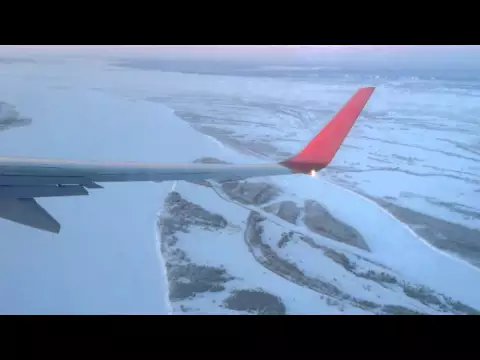
In some areas of the city, buildings and infrastructures use deep pilings that keep heat away from the permafrost. At the airport, the focus is on the thermal control of the pavement and efficient drainage, avoiding water infiltration that accelerates thawing.
Climate Change Increases Structural Risk
The current biggest enemy of Yakutsk Airport is not winter, but gradual climate warming. The increase in average temperature shortens the period of deep freezing and intensifies surface thawing during the summer.
This causes corrections, once sporadic, to become more frequent. Sections of the runway need to be leveled, reinforced, or resurfaced to maintain the safety standards required by civil aviation.
In Yakutsk, the work is never considered “finished.” Thermal sensors, geotechnical inspections, and frequent measurements are part of the airport’s operational routine. The infrastructure is treated as a living system, responding to the environment and requiring continuous adjustments.
This operational model transforms maintenance into a permanent cost, incorporated into the normal operation of the airport.
Why Not Relocate the Airport
Despite the challenges, relocating the airport would be economically unfeasible. Yakutsk relies on air transport for much of the year when roads become impractical.
Additionally, the entire regional territory is over permafrost, which means any new airport would face similar problems.

The solution, therefore, is to coexist with the frozen soil — and its gradual thawing.
A Real Laboratory of Engineering in Extreme Climate
Yakutsk Airport has practically become a living laboratory of engineering in cold regions. Techniques developed there are studied by engineers working in other areas of permafrost, including Canada, Alaska, and northern Scandinavia.
The airport shows that, in certain places on the planet, infrastructure only exists because it accepts that the ground is unreliable.
When the Biggest Challenge Is Beneath Your Feet
Unlike airports threatened by tides or storms, Yakutsk faces an invisible enemy: soil that slowly loses its rigidity.
Operating over deep permafrost, with extreme temperatures and thawing cycles, requires engineering that does not seek absolute stability, but continuous adaptation.
In the end, Yakutsk Airport proves that, in some parts of the world, flying safely depends less on the sky and much more on what happens silently beneath the runway.










hiya bob