





 Portuguese
  English
  Spanish
  4 min of reading
  0 comments


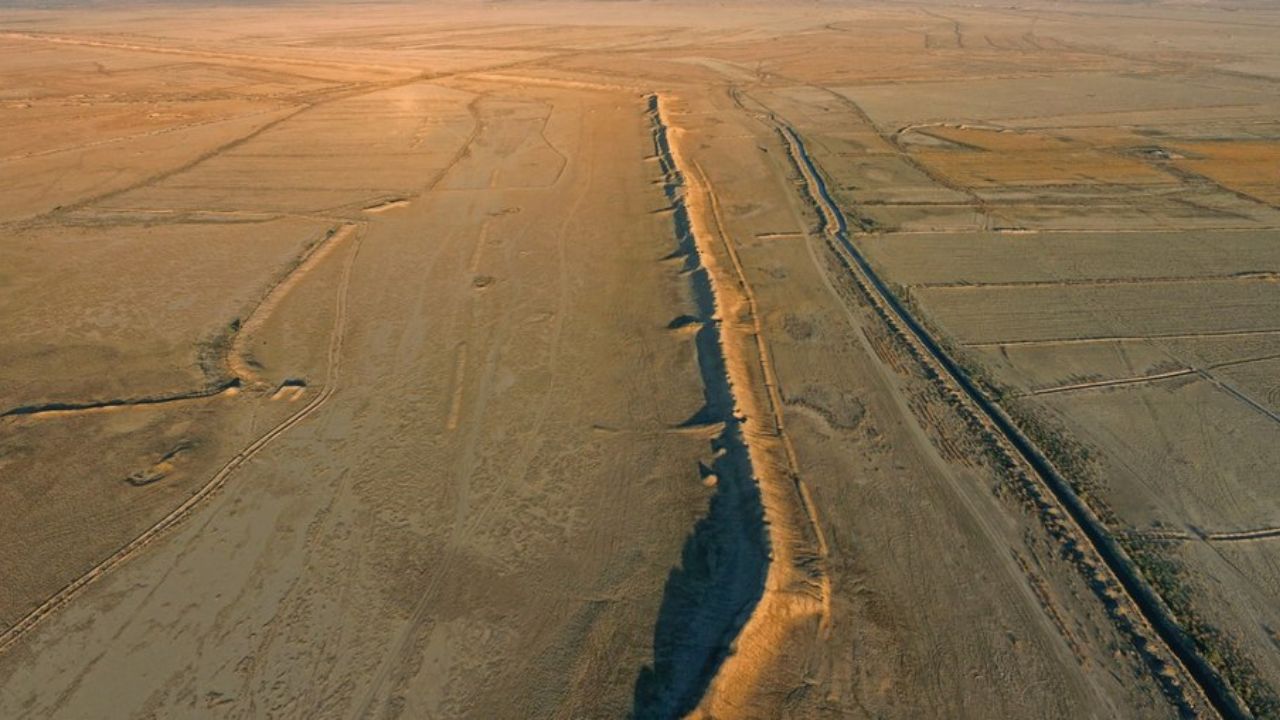
In Southern Iraq, A Team Supported by the University of Constanta Identified by Drones and Magnetometry a City Founded in the 4th Century B.C., Near the Border with Iran, Which May Have Been an Alexandria with a 1 Kilometer Wall and a Central Role in Ancient Trade for Over 550 Years.
Alexander the Great was not only known for his military conquests. He also founded dozens of cities called Alexandria, spread across his empire.
The most famous is in Egypt. But others have disappeared, changed names, or remained forgotten beneath the sand and time.
Now, one of these cities may be coming back on the map. And the setting is southern Mesopotamia, in present-day Iraq.
-
Friends have been building a small “town” for 30 years to grow old together, with compact houses, a common area, nature surrounding it, and a collective life project designed for friendship, coexistence, and simplicity.

-
This small town in Germany created its own currency 24 years ago, today it circulates millions per year, is accepted in over 300 stores, and the German government allowed all of this to happen under one condition.

-
Curitiba is shrinking and is expected to lose 97,000 residents by 2050, while inland cities in Paraná such as Sarandi, Araucária, and Toledo are experiencing accelerated growth that is changing the entire state’s map.

-
Tourists were poisoned on Everest in a million-dollar fraud scheme involving helicopters that diverted over $19 million and shocked international authorities.

The Site of Jebel Khayabber and the 1 Kilometer Wall That Raised Suspicions
The location has been known since the 1960s. At Jebel Khayabber, archaeologists had identified an ancient wall about 1 kilometer long and 8 meters high.
The hypothesis that the remains of an Alexandria might be there has always existed, but the area is hard to access. The site is just 15 kilometers from the border with Iran.
Additionally, the area was a battlefield during the Iran-Iraq war in the 1980s. For years, this hindered new investigations.

Drones and Cesium Magnetometer Revealed an Enormous City Beneath the Ground
Only in 2014 did foreign expeditions return to the region. Even so, the work was limited by security issues, as extremist groups still controlled parts of northern Iraq and Syria.
It was with the use of drones and geophysical techniques that the scenario changed. The researchers applied mapping with a cesium magnetometer to analyze the subsoil.
What appeared impressed the team. The layout of an organized urban grid emerged, with streets, blocks, houses, temples, workshops, ports, canals, and irrigation systems.
Some of the blocks identified are among the largest known from antiquity.
Strategic Port City Near the Ancient Coast of the Persian Gulf
In the 4th century B.C., when it was likely founded, the city was much closer to the sea than it is today.
It was positioned near the confluence of the Tigris and Karun rivers, in an area that was once coastal along the Persian Gulf.
This strategic location suggests a clear port function. The city connected the open sea to the river systems leading into the heart of Mesopotamia.
According to the researchers, the situation was similar to the famous Alexandria on the Nile in Egypt.

From Alexandria to Charax Spasinou, the Metropolis That Survived for Over 550 Years
Even after Alexander’s death, the city remained significant.
Inscriptions from the Roman era mention a city called Charax Spasinou or Charax Maishan in the same region.
The estimate is that it functioned as one of the main centers of long-distance trade in antiquity for over 550 years.
The peak occurred during a period that has been little explored by historical research, which helps explain why it remained off the academic radar for so long.

Credit: Stefan Hauser / Open access.
Change in the Course of the Tigris River May Have Signaled the End in the 3rd Century A.D.
The city’s disappearance likely occurred around the 3rd century A.D.
The most accepted explanation is linked to the change in the course of the Tigris River to the west.
As a result, the city lost its strategic position on the riverbank and ceased to be a key point in northern Gulf trade.
Without direct access to river and sea routes, its main function disappeared. And with it, the city itself.
The rediscovery of this possible Alexandria shows how natural changes can alter the fate of major urban centers and reveals that entire chapters of antiquity are still waiting to be uncovered.
Do you believe that other cities founded by Alexander may still be hidden beneath the soil of the Middle East? Share your thoughts in the comments.










-

-

-

-

-

10 pessoas reagiram a isso.