





 Portuguese
  English
  Spanish
  4 min of reading
  4 comments





Hong Kong Uses Seawater in Flushes Since the 1950s, Serves Up to 85% of the Population and Saves About 320 Million m³ of Potable Water Annually
While most major cities use treated potable water for sanitary flushes, Hong Kong adopted a structurally different approach back in the 20th century. Since the late 1950s, the territory has operated a dedicated seawater network for sanitary use, creating one of the most unique urban water management systems in the world.
Today, about 80% to 85% of the population is serviced by this parallel infrastructure, which provides approximately 320 million cubic meters of seawater annually, significantly reducing pressure on freshwater reservoirs. The model turned a geographical limitation into a permanent strategy for water security.
How the Seawater System Works in Hong Kong
The system is managed by the Water Supplies Department, the agency responsible for water management in the territory. Hong Kong maintains two completely separate networks:
-
Friends have been building a small “town” for 30 years to grow old together, with compact houses, a common area, nature surrounding it, and a collective life project designed for friendship, coexistence, and simplicity.

-
This small town in Germany created its own currency 24 years ago, today it circulates millions per year, is accepted in over 300 stores, and the German government allowed all of this to happen under one condition.

-
Curitiba is shrinking and is expected to lose 97,000 residents by 2050, while inland cities in Paraná such as Sarandi, Araucária, and Toledo are experiencing accelerated growth that is changing the entire state’s map.

-
Tourists were poisoned on Everest in a million-dollar fraud scheme involving helicopters that diverted over $19 million and shocked international authorities.

- Potable Water Network
- Dedicated Sanitary Flush Network with Seawater
Seawater is drawn directly from the coast, goes through basic filtration and disinfection, and is pumped into dedicated reservoirs before following an independent network of pipelines. Currently, the infrastructure includes:
- Over 1,600 kilometers of dedicated pipelines
- Dedicated pumping stations
- Separate reservoirs
- Independent pressure control system


The physical separation of the networks is the key element that ensures sanitary safety and large-scale operational viability.
Saving 320 Million m³ Annually: Impact on Urban Consumption
According to official government data from Hong Kong, the use of seawater accounts for about 20% of the total water consumption in the territory.
This means that one-fifth of urban water demand does not rely on treated freshwater. In practical terms, the volume saved is equivalent to hundreds of thousands of Olympic-sized swimming pools annually.
This saving reduces:
- Dependence on water imports from mainland China
- Pressure on local reservoirs
- Costs of treating potable water
In a region with high population density and limited natural resources, this strategy has a continuous structural impact.
The Water Crisis of the 1950s That Originated the Model
The adoption of the system was not initially motivated by environmental concerns, but by strategic necessity.
In the 1950s, Hong Kong faced severe supply crises, with rationing periods that limited freshwater supply to just a few hours per day. The territory has:
- Limited geographical area
- Few natural reservoirs
- Accelerated population growth
- Partial dependence on imported water from the Dongjiang River
Faced with this scenario, the government decided to implement a permanent solution: to utilize the abundant resource available, the sea.
The first seawater network was installed in 1958, and the system was gradually expanded as the city grew.
Corrosion Engineering: The Technical Challenge of Seawater
Using seawater in urban networks presents complex technical challenges. Salt accelerates corrosion processes and degradation of metallic materials.
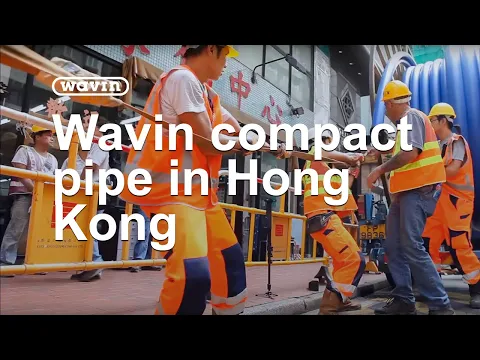
To enable the system, solutions such as:
- Corrosion-resistant materials for piping
- Special internal coatings
- Pumps designed for high salinity
- Continuous preventive maintenance
The initial cost of the infrastructure is high. However, the longevity of the system — which has been operating for over six decades — demonstrates its viability when planned from the urban base.
Why Other Coastal Cities Did Not Copy the Model?
Despite being surrounded by the sea, most coastal cities do not use seawater for sanitary flushes.
The implementation depends on specific structural factors:
- Urban planning from early phases
- Ability to install a dual network
- Long-term public investment
- Population density that justifies the scale
In established cities, the need to open streets to install a second network would make the project economically unfeasible.
Hong Kong implemented the system during periods of intense urban expansion, which facilitated its consolidation.
Environmental Impact and Strategic Water Management
Sanitary flushes represent a significant portion of domestic potable water consumption. By replacing freshwater with seawater for this purpose, Hong Kong:
- Preserves limited water resources
- Reduces treatment costs
- Minimizes vulnerability to drought
- Gains greater structural water security
The model demonstrates that not all water used in urban settings needs to meet drinking water standards.
In a global scenario of climate change and increasing water scarcity, the strategy is often cited in discussions on urban resilience.
Hong Kong Operates the Largest Urban Seawater System in the World
Few places on the planet use seawater on a large scale for sanitary flushes. Hong Kong is recognized as the largest functional system of its kind ever implemented.
The model serves millions of people daily and continues to operate steadily after more than 60 years. The city transformed an abundant resource into a permanent structural solution, drastically reducing potable water consumption for non-essential purposes.
In a world where freshwater scarcity is becoming increasingly frequent, Hong Kong’s system remains one of the most emblematic examples of urban adaptation based on engineering and long-term planning.










Finally someone is using their brain!! Fresh drinking water is the most precious thing we have and we shouldn’t be using it for flushing toilets or fracking oil!!!! I thought if this and asked why no one does it!!! I guess someone does! Hong Kong:)🙏
Why can’t you use river water aswell for the same use as it will serve the same purpose as well too just that it will have to be purified a bit as well use irrigation water on the farms for the same use then as there is no difference at all as use rain water for drinking as China is saving money that way as well too
Gostei de saber que Hong Kong utiliza água do mar em descargas sanitária. Só nao foi informado se esta água da descarga sanitária e tratada para retornar ao mar, espero que sim, para cumprir ciclo completo.
É só ver dos satélites se aparece algum “manchão preto” no mar. Huehueh