





 Portuguese
  English
  Spanish
  3 min of reading
  58 comments


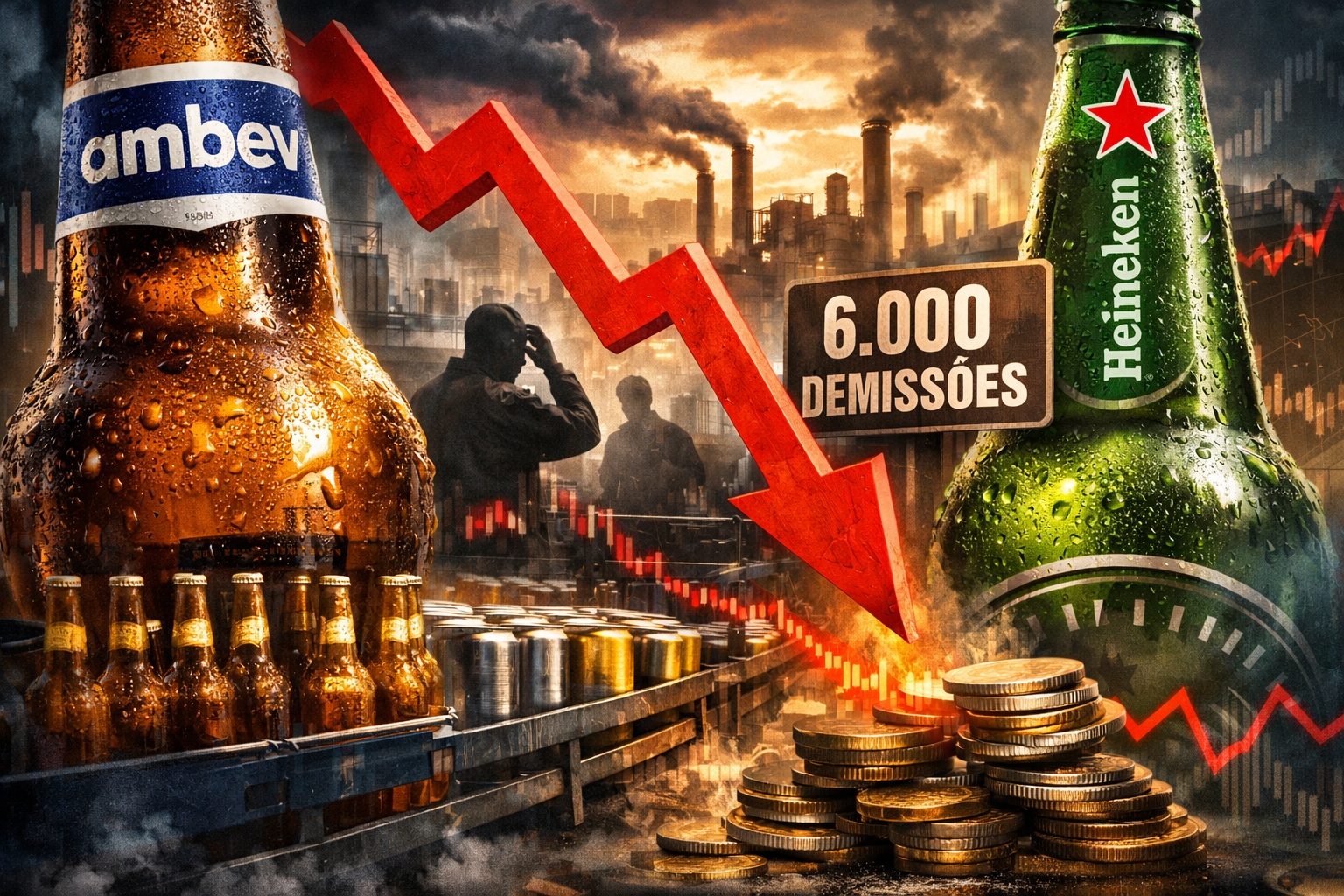


Ambev Recorded Cumulative Decline of 4.5% in Beer Volume in 2025 Due to Unfavorable Climate, Maintaining Revenue of R$ 88.2 Billion and Provoking Strategic Reaction in the Beverage Market. Heineken Also Sees Its Sales Plummet and Beverage Market Enters Alert.
What seemed like just a market fluctuation has turned into an alert for the entire industry. In 2025, climate change directly impacted beer consumption in Brazil.
For the first time, the sector felt an effect of this magnitude associated with the weather. The combination of a longer and more intense winter significantly reduced sales volume.
Even in a traditionally warm country with a strong culture of beverage consumption, the scenario changed. And the numbers show that the impact was real.
-
The government requests the Federal Revenue Service for a new system to automate the income tax declaration, reducing errors, time, and bureaucracy for millions of Brazilians.

-
Pix in installments, international Pix, and contactless payment without internet: the Central Bank revealed the new features coming to the tool that is already used by almost every adult in Brazil.

-
Mercado Livre has just started selling medications with delivery in up to three hours to your door, and this move could completely change the way Brazilians buy medicines on a daily basis.

-
In Dubai, rising tensions from the war in the Middle East are causing super-rich individuals to leave the Gulf and direct their fortunes to a new financial refuge in Asia.




More Severe Weather and La Niña Changed Consumer Behavior
The cumulative decline of 4.5% in the total sales volume of the beer category was attributed to the La Niña phenomenon. The winter became longer and more intense than usual.
The effect was direct on consumption. Lower temperatures reduce outdoor gatherings, decrease events, and change socialization habits.
The detail that caught the most attention was the public recognition of the climate impact on the category’s performance. It was the first time that the company observed an effect of this magnitude caused by the weather.
Revenue of R$ 88.2 Billion Remained Stable Despite Volume Retraction
Even with the reduction in sales volume, the net revenue for the year reached R$ 88.2 billion. The decline was 1.4% compared to the previous year.
The result reveals an important contrast. They sold less in quantity but managed to preserve revenue.
This balance occurred because there was significant growth in two strategic segments. The premium category grew by 17% and the non-alcoholic category recorded an increase of nearly 30%.
The movement helped to compensate for the decline of traditional beers.
Premium and Non-Alcoholic Segments Gain Strength and Expand Margins
Amidst the crisis in overall volume, the premium and non-alcoholic segments showed strength. These products have higher added value and contribute to higher margins.
The strategy reinforces revenue management and expands alternatives within the portfolio. A more complete portfolio allows acting in different consumption segments.
At the same time, the company maintains confidence in the core, the more accessible traditional beers. In a country where a large part of the population relies on a minimum wage, the entry-level product continues to play a central role.
There is also a cyclical turnover among traditional brands in Brazil. Regions that previously consumed one brand now switch to another, showing that the market is dynamic.
Decline in Consumption Is a Global Trend and Is Not Restricted to Brazil
The decline in sales did not happen only in Brazil. In Germany, beer consumption fell by 6% in 2025, the worst result since the beginning of the historical series in 1993.
The second largest brewery in the world, Heineken, also faced difficulties. The company announced 6,000 layoffs and revised its profit expectations downward.
Additionally, data from the Voice of the Consumer Health and Nutrition Survey 2025 by Euromonitor indicates that 53% of respondents globally say they are trying to reduce or stop drinking. In Brazil, the index reaches 56%.
The numbers reveal a significant behavioral change that goes beyond climate.
Expectations for 2026 Focus on Events and Greater Socialization
Despite the challenging scenario in 2025, expectations for 2026 are more positive. Events like Carnival and the FIFA World Cup, which will have favorable time zones for the company’s markets, are seen as drivers.
The outlook is for more socialization opportunities throughout the year. There is also the expectation of several long holidays in Brazil.
The combination of major events and a favorable calendar may help in the recovery of consumption.
The impact of climate change on the beer sector has shown that even established markets can feel unexpected effects. The 4.5% decline in volume, even with revenue of R$ 88.2 billion, reveals a new scenario for the industry, where climate, behavior, and strategy go hand in hand.
And you, have you reduced your beer consumption in recent months due to the weather? Share with us in the comments.









Preço mesmo, no bares, até distribuidoras que tinha Preço melhor que lanchonete tá vendendo praticamente igual
Fazer uma nova publicidade com personagem propaganda com alcance para geração z que as demais gerações foram influenciadas pelo garoto propaganda insubstituível Zeca pagodinho que já merecia uma cerveja com sua logomarca
Não é questão do clima a queda nas vedas das bebidas alcoólica. As novas gerações o foco é mais vida saudável academia e alimentação o próprio governo do Estado Unidos mudaram a sua postura e não aceitam mais mentiras de produtos industrializados que geram obesidade e vários problemas de saúde. A única saída são produtos com mais qualidade voltados ao público fitness água mineral, barra de cereais, energéticos etc…