





 Portuguese
  English
  Spanish
  4 min of reading
  5 comments


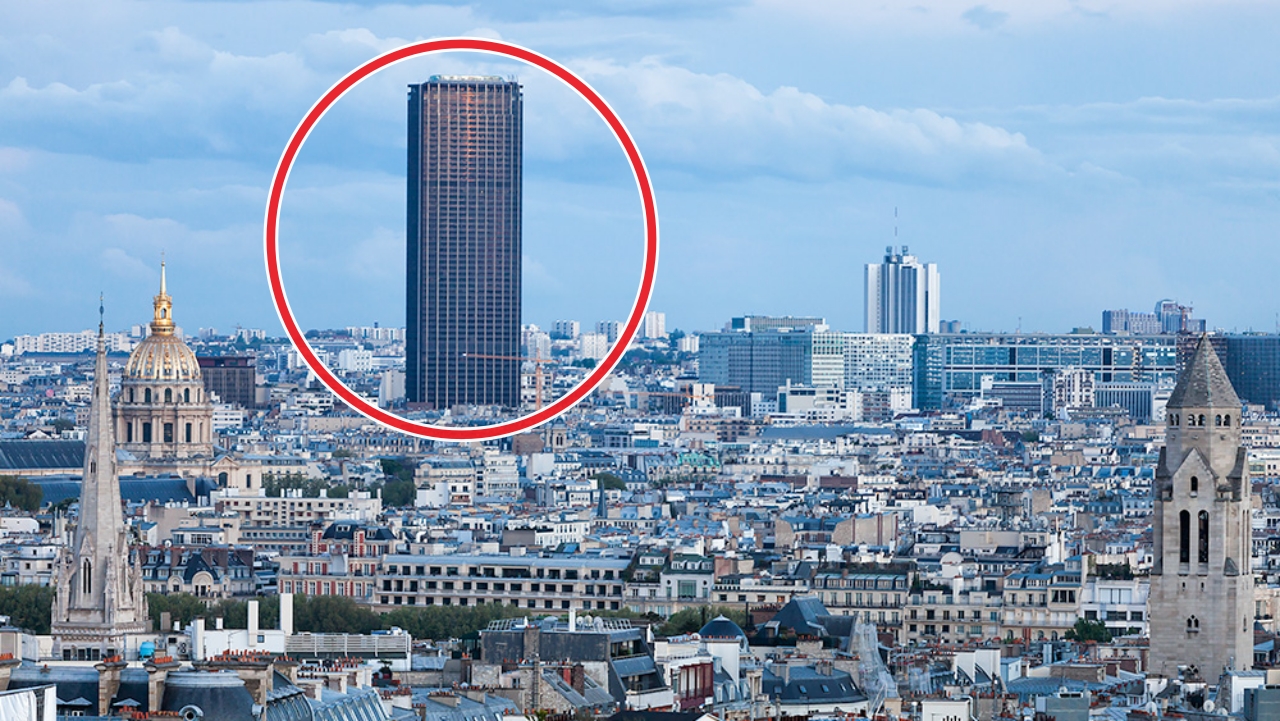


Goodbye Torre Montparnasse! In Paris, architects from Nouvelle AOM approved a €300 million renovation of the 210-meter tower to reduce its visual impact on the historical center, triggering debate among experts and catching the attention of residents and urban authorities.
For over 50 years, a 210-meter building has controversially dominated the Paris skyline. The Torre Montparnasse, inaugurated in 1973, became a symbol of an urban experiment that many Parisians would prefer to forget.
The only skyscraper within the historical center of the French capital, the building contrasts with the traditional scenery of low constructions and limestone facades that mark the city’s identity.
Now, after decades of criticism, the city has decided not to demolish the tower. Instead, it approved a radical plan to transform it almost completely.
-
Friends have been building a small “town” for 30 years to grow old together, with compact houses, a common area, nature surrounding it, and a collective life project designed for friendship, coexistence, and simplicity.

-
This small town in Germany created its own currency 24 years ago, today it circulates millions per year, is accepted in over 300 stores, and the German government allowed all of this to happen under one condition.

-
Curitiba is shrinking and is expected to lose 97,000 residents by 2050, while inland cities in Paraná such as Sarandi, Araucária, and Toledo are experiencing accelerated growth that is changing the entire state’s map.

-
Tourists were poisoned on Everest in a million-dollar fraud scheme involving helicopters that diverted over $19 million and shocked international authorities.


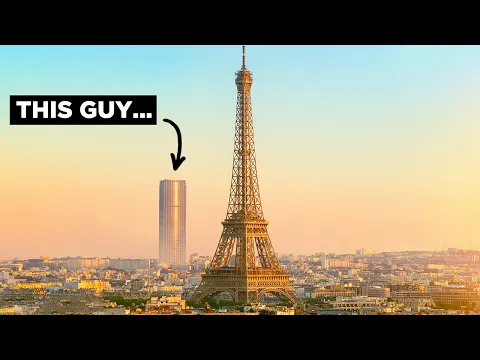

The 210-Meter Building That Changed Paris’ Urban Regulations
When completed in the early 1970s, the Torre Montparnasse broke with everything that defined the architectural standard of Paris.
More than six times the height of the six- and seven-story Haussmannian buildings surrounding it, it began to interfere with iconic views of the city, such as the Eiffel Tower, Les Invalides, and the Champs Élysées.
The reaction was immediate.
Public dissatisfaction was so strong that just four years after its inauguration, in 1977, the French government imposed a height limit of 25 meters for buildings in the city center. In practice, skyscrapers were prohibited in the historic area.
The impact of this decision still shapes the Parisian skyline today.
The Maine Montparnasse Plan That Tried to Modernize the French Capital
In the 1950s, Paris faced structural difficulties. A significant portion of the buildings were aging, overcrowded, and poorly adapted to a transforming economy.
While cities like New York and London invested in verticalization, the French capital maintained small-scale workshops, studios, and commercial spaces.
The Montparnasse station area was chosen for an ambitious experiment.
In 1959, then-government official Edgard Pisani introduced the Maine Montparnasse plan, divided into four phases. The project envisioned new housing, a shopping center, the reconstruction of the station, and an office tower that would serve as a visual landmark.
The goal was to attract workers back to the center and show that Paris could compete with large global centers.
What seemed like a symbol of modernity ended up becoming a target for rejection.
Challenging Engineering: 56 Piles at 60 Meters and Metro Passing Under the Base
Building the tower wasn’t simple.
One of the busiest lines of the Paris Metro, Line 6, passed directly beneath the chosen site.
The solution was bold: to raise the skyscraper directly over the tunnel, distributing the weight to both sides.
For this, the tunnel received reinforcements with concrete walls and beams capable of supporting tens of thousands of tons.
In total, 56 deep piles were driven down to 60 meters to reach a stable clay layer, as the soil had been weakened by centuries of limestone extraction.
More than 12,000 cubic meters of concrete, over a quarter of the total used in the construction, remained buried underground.
During construction, techniques considered innovative at the time were applied, such as continuous casting of the concrete core, allowing for growth of about 30 centimeters per day.
From a technical standpoint, it was a success. From a public standpoint, a disaster.
Limit of 25 Meters and Concentration of Skyscrapers Outside the Historical Center
After the imposition of the 25-meter limit in 1977, no other tall buildings were erected in the historical center.
Subsequent attempts to relax the rules faced political and public resistance, as happened with the Tour Triangle project.
Verticalization ended up concentrated in the La Défense business district, about nine kilometers from the center and beyond the peripheral ring road.
The Torre Montparnasse remained isolated, literally and symbolically.
€300 Million Renovation Aims to Make the Tower Almost Disappear
In 2017, the Paris city hall approved a renovation estimated at €300 million, developed by the architectural collective Nouvelle AOM.
The proposal is to radically transform the building.
The tower will be reduced to its main structure and steel frame. The dark facade will be replaced with transparent glass panels. Suspended gardens will be integrated into the structure to soften the visual impact.
Natural ventilation has also been incorporated into the project. External openings were planned to harness strong winds at great heights.
The intention is not to turn it into a new architectural icon, but rather to diminish its visual presence in the urban landscape.
Construction is expected to begin in 2026.
Experts point out that this intervention could represent a historical reconciliation between Paris and its only central skyscraper. Others question whether the renovation will erase an important chapter of the post-war period.
The outcome is still uncertain. But, for the first time in half a century, the city is attempting to solve the problem not through demolition, but through transformation.
Paris has decided that, instead of celebrating its most controversial tower, perhaps it is better to make it almost invisible.
This case shows how a single construction can alter laws, influence generations, and redefine the skyline of one of the most well-known cities in the world. Do you believe the renovation will change residents’ perceptions?










Eu acho melhor demolir ele de vez e construir outro no lugar depois com uma estrutura mais adequada para o ambiente e tamanho novo do prédio.
Coitado do prédio 🏢 depois de 50 anos vai diminuir de tamanho oxi… Estou com pena dele primeiro porque autorizaram a construção dele no centro da cidade deveriam ter pensado que ele cortaria a vista da cidade que tem vários edifícios baixos para nao estragar a vista da cidade. Quem construiu o edifício não pensou na vista da cidade e nem o porque todos os edifício são baixos na cidade.
Não, o melhor e menos dispendioso será demolir totalmente o prédio.