





 Portuguese
  English
  Spanish
  4 min of reading
  0 comments


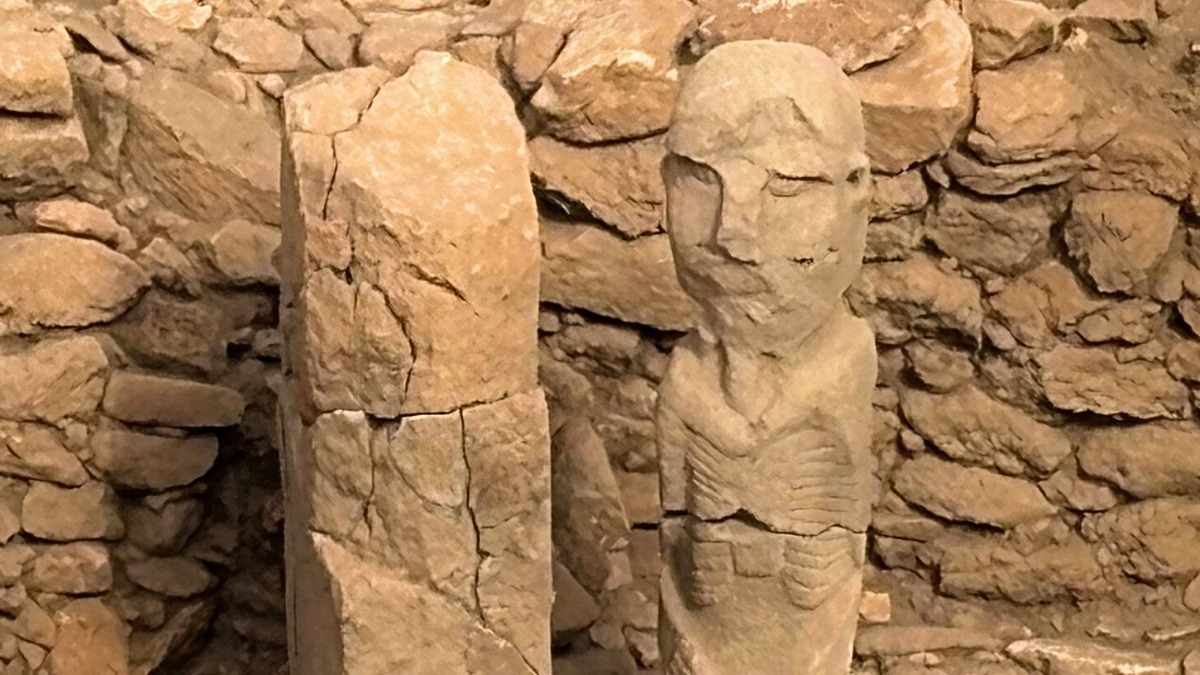
The Discovery Of A Stone Figurine With Stitched Lips In Karahan Tepe, Southeastern Turkey, Adds To Other 11,000-Year-Old Finds And Reinforces Evidence Of Complex Symbolic, Ritual Systems And Advanced Social Organization In The Earliest Sedentary Communities Of The Neolithic
A Figurine made of stone with stitched lips, dated to about 11,000 years ago, was found at the archaeological site of Karahan Tepe, in southeastern Turkey, alongside stone-carved faces and a black serpentine bead, revealing new data about beliefs, rituals, and the transition to sedentary life in the Neolithic.
Figurine And Other Finds Expand The Neolithic Symbolic Set
The Figurine is part of a group of recent discoveries made in the hills overlooking the plains of southeastern Turkey. Among the objects are human sculptures in stone, carved faces, and a black serpentine bead with expressive features on both sides.
These archaeological finds offer direct clues about the belief systems and ritual practices of communities that lived around 11,000 years ago. The recurrence of the human figure in the found objects reinforces the centrality of the body and human experience during this period.
-
Motorola launched the Signature with a gold seal from DxOMark, tying with the iPhone 17 Pro in camera performance, Snapdragon 8 Gen 5 that surpassed 3 million in benchmarks, and a zoom that impresses even at night.

-
Satellites reveal beneath the Sahara a giant river buried for thousands of kilometers: study shows that the largest hot desert on the planet was once traversed by a river system comparable to the largest on Earth.

-
Scientists have captured something never seen in space: newly born stars are creating gigantic rings of light a thousand times larger than the distance between the Earth and the Sun, and this changes everything we knew about stellar birth.

-
Geologists find traces of a continent that disappeared 155 million years ago after separating from Australia and reveal that it did not sink, but broke into fragments scattered across Southeast Asia.

According to the archaeologists, the increase in the number of human sculptures is associated with the process of sedentarization.
The Figurine, with its stitched lips, stands out for its symbolic complexity and technical care in its execution.
Sedentary Life And Centrality Of The Human Figure
For Necmi Karul, the archaeologist in charge of the excavations at Karahan Tepe, the growth in the number of human sculptures reflects a profound change in the communities’ relationship with their environment. As sedentary life solidified, the human figure came to occupy a central position in the symbolic universe.
Karul points out that this transformation marks a gradual distancing from nature. One example cited is a human face carved on a T-shaped pillar found at the site, which reinforces the emphasis on human representation.
The Figurine with stitched lips fits into this broader context, in which human experience becomes the focus of symbolic expressions, indicating structural social and cultural changes.
Project Stone Hills And The Regional Context
The excavations at Karahan Tepe are part of the “Stone Hills” project, an initiative supported by the Turkish government and launched in 2020. The project involves 12 archaeological sites in the province of Sanliurfa, described by Minister of Culture Nuri Ersoy as the Neolithic capital of the world.
Among the included sites is Göbekli Tepe, recognized as a UNESCO World Heritage site and known for housing the oldest megalithic structures in Upper Mesopotamia. Excavations at this site began in 1995, under the leadership of German archaeologist Klaus Schmidt.
The set of sites in the project allows for comparisons of different cultural expressions from the same period. While Karahan Tepe presents strong human symbolism, Göbekli Tepe is marked by the predominance of animal images.
New Data And Limits Of Archaeological Interpretation
Lee Clare from the German Archaeological Institute states that the discoveries on display at the visitor center of Karahan Tepe challenge traditional narratives about the transition from nomadic societies to permanent settlements. Each excavated building offers a glimpse into individual life in the Neolithic.
According to Clare, the absence of written records limits interpretations. The sculptures and the Figurine date from a period before writing, making it impossible to accurately identify who or what they represented.
Still, the growing volume of data obtained in the last five years allows for statistical analyses and significant comparisons between the sites. These studies help to understand the contexts in which the sculptures appear and their possible symbolic functions.
Social Organization And The Emergence Of Hierarchies
According to Karul, settlements began to emerge after the last Ice Age, when environmental changes created more fertile conditions. This allowed people to feed themselves without relying exclusively on constant hunting, favoring population growth.
With the stabilization of the communities, new social dynamics emerged. Clare highlights that the production of surpluses led to economic differences, with the first signs of social hierarchy observable in the archaeological record.
Emre Guldogan from Istanbul University and Chief Archaeologist at Sefer Tepe states that Karahan Tepe and the Stone Hills project reveal a highly organized society with belief structures and its own symbolic world, refuting the idea of a primitive Neolithic.
Cultural Impact And Growing Tourist Interest
The archaeological discoveries have also increased interest in a region previously known mainly for its association with the prophet Abraham, a central figure in Judaism, Christianity, and Islam. Historically, local tourism was predominantly religious.
According to tour guide Yakup Bedlek, the emergence of new archaeological zones has attracted a more diverse audience. The Figurine and other finds have contributed to repositioning the region as a hub of scientific and cultural interest.
As excavations continue, each new discovery raises new questions about the people behind these creations. Even with inevitable gaps, the sites in southeastern Turkey continue to transform the understanding of the Neolithic and its complex societies.








-

-

-

3 pessoas reagiram a isso.