





 Portuguese
  English
  Spanish
  4 min of reading
  0 comments


Descriptions of Men Up to 2.59 Meters Appear in Egyptian Documents, Align Ancient Maps, and Keep the Debate Alive Over the Meaning of These Records
An Egyptian document stored in the British Museum has returned to the spotlight. The Papyrus Anastasi I is considered a piece that can support an ancient discussion about tall people in the past.
The text contains a report attributed to the scribe Hori and situates the scene in a canyon in Canaan. The practical consequence is clear: when an ancient record sets measurements and territories, it repositions the conversation about human presence and regional dominance.
Letter from Scribe Hori Points to a Canyon in Canaan
The papyrus is described as a literary text from the Nineteenth Dynasty and is dated to the 13th century B.C.. In the content, Hori narrates a meeting with Shasu warriors in a narrow stretch of the path.
-
Motorola launched the Signature with a gold seal from DxOMark, tying with the iPhone 17 Pro in camera performance, Snapdragon 8 Gen 5 that surpassed 3 million in benchmarks, and a zoom that impresses even at night.

-
Satellites reveal beneath the Sahara a giant river buried for thousands of kilometers: study shows that the largest hot desert on the planet was once traversed by a river system comparable to the largest on Earth.

-
Scientists have captured something never seen in space: newly born stars are creating gigantic rings of light a thousand times larger than the distance between the Earth and the Sun, and this changes everything we knew about stellar birth.

-
Geologists find traces of a continent that disappeared 155 million years ago after separating from Australia and reveal that it did not sink, but broke into fragments scattered across Southeast Asia.

The passage states that the location would be infested with Shasu and describes some of them as fierce. The scene is constructed as a warning of danger, emphasizing threat and control of passage.

Egyptian Measurement Transforms Report Into Height Up to 2.59 Meters
The most striking point is the reference to four or five cubits from the top of the head to the feet. With the royal Egyptian cubit estimated at 52.45 cm, this leads to a range of 2.03 to 2.59 meters.
This type of measurement changes the weight of the narrative. It is not merely a literary image because it places human scale and suggests a significant physical difference in a territorial dispute scenario.
Shasu Come to Light Due to Presence and Circulation in Southern Levant
The Shasu appear as little-known groups associated with the southern Levant. The text links them to areas such as Philistia, Canaan, and Transjordan, regions that also appear in ancient traditions about tall peoples.
The strategic reading comes from geography. Those who control corridors, valleys, and routes control pressure and influence, and the description of larger warriors reinforces the element of intimidation.
Parallels with Og and the Refaim Expand Regional Connection
The discussion also draws the account closer to figures like Og, cited as the last king of the Refaim in Deuteronomy 3:11. Another reference comes from a Canaanite tablet from Ugarit, dated around 1200 B.C., which mentions “Rapiu, King of Eternity” linked to “Ashtarat” and “Edrei.”
These names are associated with cities seen as domains of Og in Joshua 13:12. When texts and places converge, the theme gains new momentum and alters the reading of occupation and power in the region.
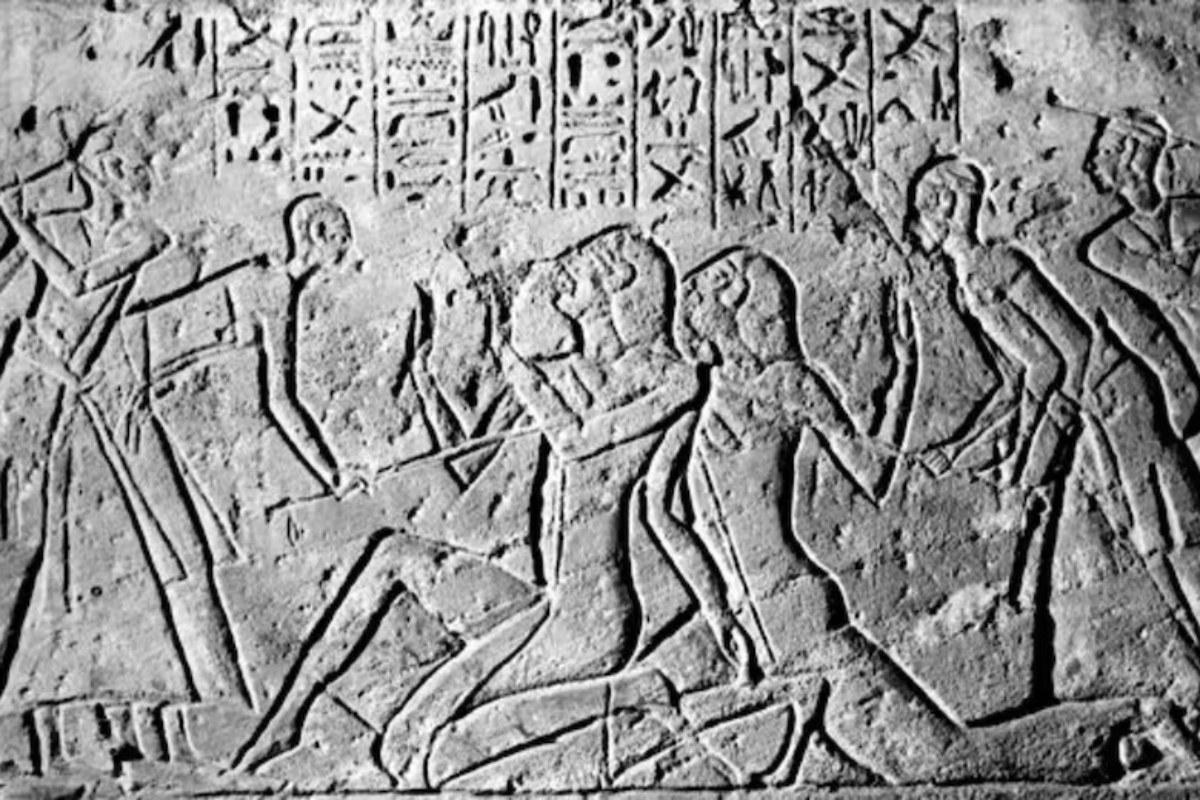
Relief of Ramses II Reinforces Image of Shasu Above Normal
Another element cited is a relief of Ramses II depicting battles near Qadesh, around 1274 B.C.. The representation shows two captured Shasu spies with sizes above the ordinary.
The idea is that it would not be a glorification of the pharaoh, but rather a more realistic scene of the enemy. In terms of narrative pressure, the image serves as a marker of threat on the regional chessboard.

Execution Texts Mention Iy Aneq and Echo Biblical Traditions
The so-called Execution Texts of the second millennium B.C. also appear, citing the Iy Aneq as people considered of large stature. The proposed association is with the Anakim, mentioned in Numbers 13:33, when the account states that the observers felt like “grasshoppers.”
According to LA NACION, an Argentine national newspaper, the combination of papyrus, reliefs, and tablets within the same timeframe and space keeps the discussion alive about the historical meaning of these descriptions.
Divided Reading Between Literal Description and Rhetorical War Device
Not everyone accepts the literal interpretation. Some experts see these records as a form of conflict language, using extraordinary dimensions to invoke fear and reinforce victories.
Nonetheless, the coincidence of period and territory sustains interest. When multiple traces point to the same scenario, the debate becomes less folkloric and more contested.
The discussion does not provide a definitive proof. But it places measures, names, and ancient maps on the same line of tension, reinforcing the idea of presence and dispute in strategic routes.
In the end, what remains is the impact on regional interpretation. The way this account fits into the Levant changes the lens on influence and pressure, altering the strategic reading.







-

-

-

-

-

-

14 pessoas reagiram a isso.