





 Portuguese
  English
  Spanish
  4 min of reading
  0 comments


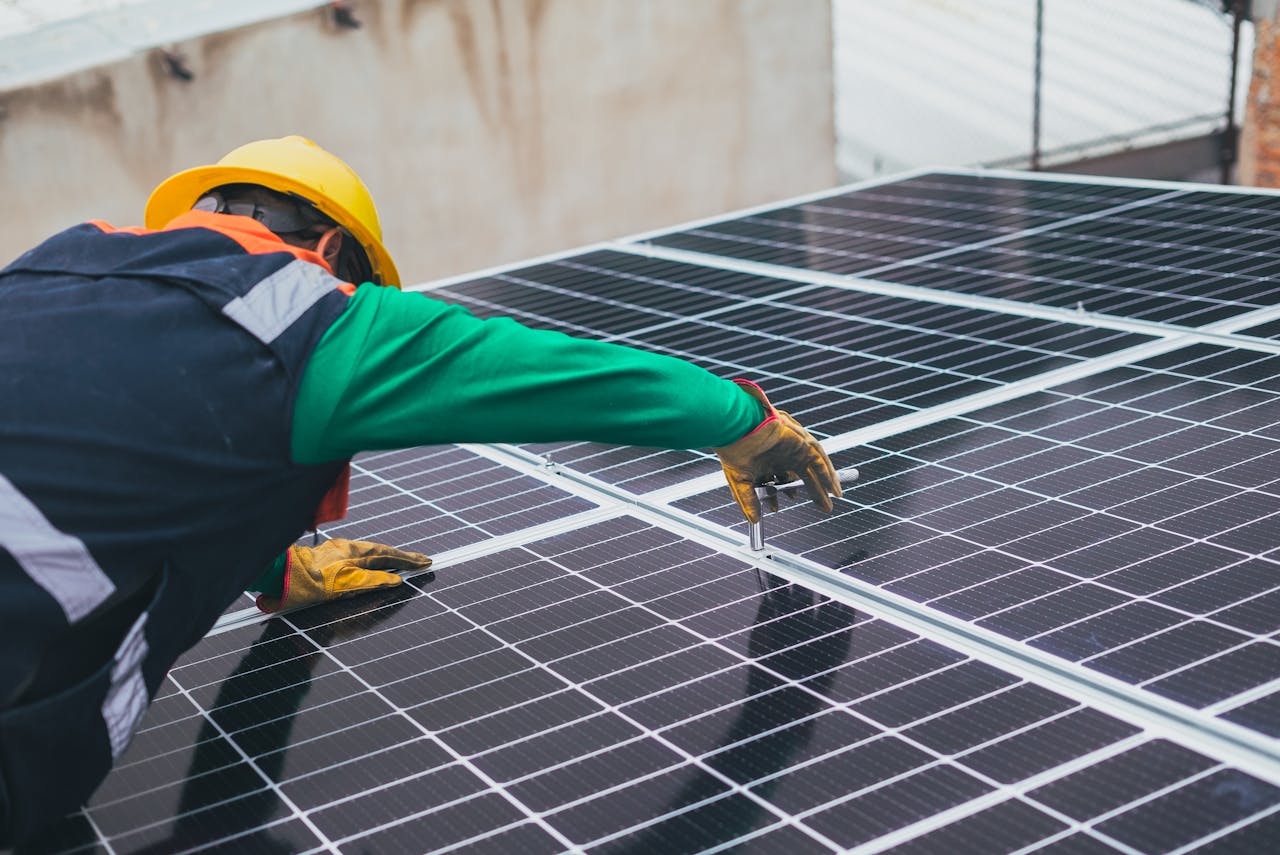
For The First Time, Solar And Wind Energy Together Produced More Electricity Than Coal In The USA. A Symbolic Moment Signifying A Historical Turn In The American Energy Matrix. See The Data
The power grid of the United States experienced a historic milestone in 2024. For the first time, solar and wind energy generated more electricity than coal. The data was released by the energy think tank Ember. It shows a significant change in the American energy matrix, after decades of coal dominance.
For many years, coal was the backbone of electricity production in the country. It powered factories, homes, and fueled economic growth. But in 2024, coal energy generation dropped to just 15%.
Meanwhile, solar and wind sources combined reached 17%. An unprecedented conversion, marking the continuous decline of one of the most traditional fossil sources.
-
The Brazilian state accelerates industrial competitiveness with a focus on the extraction of strategic minerals to boost the energy transition in Goiás.
-
A Canadian retiree creates a hydroelectric system on a real river, generating energy continuously throughout the day and demonstrating how the power of water can supply a house with stability even in a simple structure.

-
Petrobras reaffirms its commitment to the market and ensures that it will carry out the energy transition safely to maintain national sovereignty.

-
Researchers discover a possible hydrogen deposit of up to 46 million tons beneath an ancient coal basin, and the volume could exceed half of the entire global production.

A New Energy Era
The change is not exclusive to the United States. The International Energy Agency (IEA) stated that the world is entering the so-called Electricity Era. According to the agency, the use of coal, oil, and gas is still significant, but renewable sources are gaining traction and replacing fossil fuels.
This movement is visible in various parts of the world. OECD countries, like the USA and members of the European Union, are accelerating their energy transition. The United Kingdom, for instance, has ended the use of its last coal plant.
The European Union saw solar and wind energy eliminate fossil fuels for the first time. In the first half of 2024, these clean sources generated 30% of the bloc’s electricity, compared to 27% from fossil fuels.
Constant Advancement
In the United States, the advancement of renewable energies has been consistent throughout the year. From January to November, solar and wind energy produced more electricity than coal. In March and April, wind energy alone surpassed coal.
The difference in volume is also impressive: 90 terawatt-hours (TWh) more compared to the same period the previous year. Enough to power 9 million homes.
According to Dave Jones, chief analyst at Ember, this growth is not momentary. He highlights that solar energy added more generation capacity than natural gas in 2024. And batteries, he says, will ensure that solar energy grows even faster and more economically in the coming years.
The Role Of Batteries
Storage has always been a challenge for renewable energies. Since production depends on sunlight and wind, it’s necessary to find ways to store this energy for later use. Now, this is becoming viable due to falling battery prices.
An example is the case of lithium iron phosphate (LFP) batteries. They did not use expensive materials like cobalt or nickel and have seen a significant drop in cost. In India, the price fell from US$ 450 per kilowatt-hour (kWh) in 2021 to around US$ 200/kWh in 2024.
Projections indicate that by 2030, grid-scale storage capacity is expected to grow tenfold. This means that for every 6 megawatts (MW) of installed renewable energy, 1 MW of battery will be added.
Investments are also increasing. India has already auctioned 16 gigawatt-hours (GWh) in batteries, with 211 megawatt-hours (MWh) operational. In the European Union, capacity doubled in one year, reaching 16 GW.
Batteries will ensure the stability of energy supply, even during periods of low solar or wind production.
Political Obstacles For Renewable Energies
The trajectory of renewable energies has not been free of obstacles. During the Trump administration, there were funding cuts, delays in federal approvals, and tariffs that hindered new projects.
These measures had an impact, but they did not succeed in halting the sector’s progress. Market forces maintained the growth pace, even in an adverse political climate.
According to Timothy Fox of ClearView Energy Partners, project developers think long-term. He states that with this horizon, it is difficult to justify building a new coal plant today.
Government Support And Future Goals
The landscape changed with the Inflation Reduction Act, passed in 2022. The law gave new momentum to clean energies, offering incentives and tax credits. At the same time, several American states adopted ambitious goals for energy transition.
More than 20 states, such as Minnesota, North Carolina, and Nebraska, require all electricity to come from clean sources by 2050, or even earlier.
This combination of public policies, falls in technology prices, and climate change pressure accelerates the transformation of the U.S. energy matrix.
In 2024, coal recorded its lowest share in electricity generation in the United States. Solar and wind energy, in turn, reached a new level. The numbers confirm: renewable sources are not just growing. They are updating the traditional ones.
This movement marks the end of an era and the beginning of another. Clean electricity, supported by storage technologies, is shaping the future of energy. And even with the challenges, the trend points to an increasingly sustainable and decentralized system.
With information from ZME Science.








Seja o primeiro a reagir!