





 Portuguese
  English
  Spanish
  4 min of reading
  0 comments


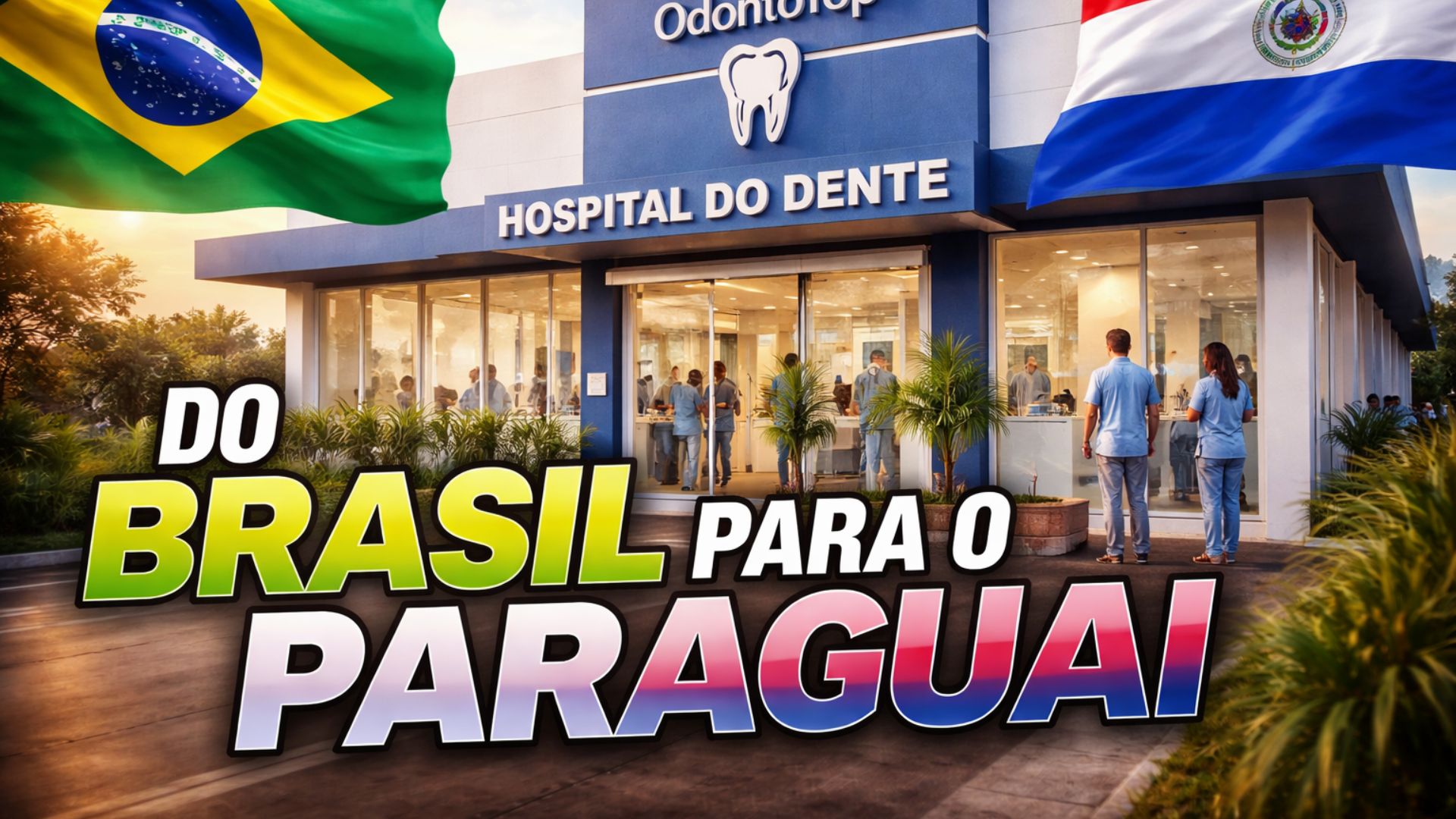
International Expansion Brings Santa Catarina’s Dental Care Model to Paraguay and Marks a New Phase of Growth for the Network, Which Bets on a Concentrated Structure, Million-Dollar Investment, and Regional Strategy to Increase Revenue and Presence Outside Brazil.
OdontoTop, a Santa Catarina dental network, has opened its first operation outside Brazil in Paraguay by bringing to Santa Rita a format the company calls “Dental Hospital,” with services concentrated in a single location and designed for exams, imaging diagnosis, and surgical procedures.
This move marks the brand’s international debut and positions the neighboring country as a starting point for expansion in Latin America.
Located in Santa Rita, in the Alto Paraná department, the unit was announced as the first step in the franchisor’s internationalization plan.
-
Friends have been building a small “town” for 30 years to grow old together, with compact houses, a common area, nature surrounding it, and a collective life project designed for friendship, coexistence, and simplicity.

-
This small town in Germany created its own currency 24 years ago, today it circulates millions per year, is accepted in over 300 stores, and the German government allowed all of this to happen under one condition.

-
Curitiba is shrinking and is expected to lose 97,000 residents by 2050, while inland cities in Paraná such as Sarandi, Araucária, and Toledo are experiencing accelerated growth that is changing the entire state’s map.

-
Tourists were poisoned on Everest in a million-dollar fraud scheme involving helicopters that diverted over $19 million and shocked international authorities.


The operation received an investment of R$ 2 million and was presented with the expectation of billing around R$ 400 thousand per month, according to information disclosed by the company in interviews with business outlets.
The space was described as 250 square meters, six offices, and capacity for up to 100 appointments per day.
The model’s proposal is to reduce the fragmentation of dental care by bringing together stages that, in many cases, require travel between clinics, laboratories, and imaging centers, in addition to depending on the schedules of different professionals.
Dental Hospital and Concentrated Service Structure
The company was founded in Maravilha, in western Santa Catarina, and adopted the franchising system starting in 2019.

In reports published in the economic press, OdontoTop stated that it has reached 80 units operating in Brazil and began to present the inauguration in Paraguay as a turning point: from a national network to a project with regional presence.
The plan was linked to revenue growth that the company attributes to physical expansion and the maturing of its management model.
OdontoTop reported having closed 2025 with revenue of R$ 297 million and projected to reach R$ 350 million in 2026, with the new phase of expansion and the opening of the international unit.
Why Paraguay Came on the Network’s Radar
For the company, the choice of Paraguay was not by chance.
Data collected by the network from its own service in Brazil indicated a recurring flow of foreign patients in units close to borders, with an emphasis on Argentinians and Paraguayans, in addition to the record of over 2 thousand Argentinians treated over time.
The company described this history as evidence of cross-border demand for dental services and as an argument to bring the model to a market where there was already demand.
Another point mentioned by OdontoTop was the interaction with Paraguayan dental professionals at an industry event in Brazil, CIOSP, where Paraguayan dentists became acquainted with the network’s structure and reported not seeing anything similar in the local market.
From this contact, the project gained priority and began to follow a schedule that the company claims was designed over two years of planning, culminating in a construction completed in about six months.
Santa Rita as the Gateway to Latin America
The selected city, according to the network, offers conditions aligned with the public it says it already serves in border regions.

Santa Rita has a community of Brazilians linked to agribusiness and possesses an economic dynamic that attracts investments and services, a factor pointed out in interviews by the company as relevant for implementing the first “Dental Hospital” outside Brazil.
However, internationalization required operational adjustments.
The company reported that it needed to adjust contracts, communication, and financial routines for the local reality, including billing practices in a country where the dollar is widely used.
Additionally, the process involved adjustments related to legislation, sanitary approvals, and professional requirements, described by the network as stages with specific validations at each phase.
Growth of Brazilian Franchising Abroad
OdontoTop’s strategy fits into a broader environment of Brazilian companies looking beyond the country.
A survey mentioned in reports about the expansion, conducted by Fundação Dom Cabral in partnership with ApexBrasil, indicated that 68.9% of Brazilian companies planned to enter new markets in the next two years, positioning Paraguay among the most remembered destinations for international operations, driven by logistical proximity and the business environment.
In OdontoTop’s case, the franchise model also appears as a pillar to support growth without losing standardization as the company claims to have structured a replicable concept with service processes and infrastructure that seek uniformity.
The brand argues that the verticalization of services, combined with the digitization of processes, helps maintain quality standards and operational efficiency, especially when the service involves more complex procedures and higher volume.
The arrival in Paraguay simultaneously exposes a trend of regionalization of Brazilian brands and a curiosity that transcends borders: the transformation of local services into exportable formats, promising scalability and maintenance of standards.
By choosing to start in a neighboring country and in a city with a strong presence of Brazilians, the network builds on a corridor of demand already observed in practice while testing the operation of the “Dental Hospital” in a different regulatory and cultural environment.
In your view, when taking a health model to another country, what matters more for success: the demand from foreign patients, the standardization of care, or the ability to operate efficiently in a new regulatory environment?









-

-

-

-

-

-

39 pessoas reagiram a isso.