





 Portuguese
  English
  Spanish
  3 min of reading
  11 comments





TST Guarantees Job Security for Those Who Can Prove Psychological Illness Related to Work, Even Without a 15-Day Leave or Sick Leave from INSS.
The Labor Court took an important step in recognizing psychological illnesses related to work. In 2025, the Superior Labor Court (TST) established the binding thesis in Repetitive Theme 125, determining that the job security provided for in Art. 118 of Law No. 8,213/1991 no longer depends on absence from work for more than 15 days or receipt of accident-based sick leave from INSS.
This means that if a worker can prove they suffer from a psychological illness caused or aggravated by the work environment, they will be entitled to temporary job security for up to 12 months after medical discharge, even without going through the traditional process of formal leave.
How It Worked Before the Decision

Until the change, for a worker to be entitled to accident-related job security, it was necessary to:
-
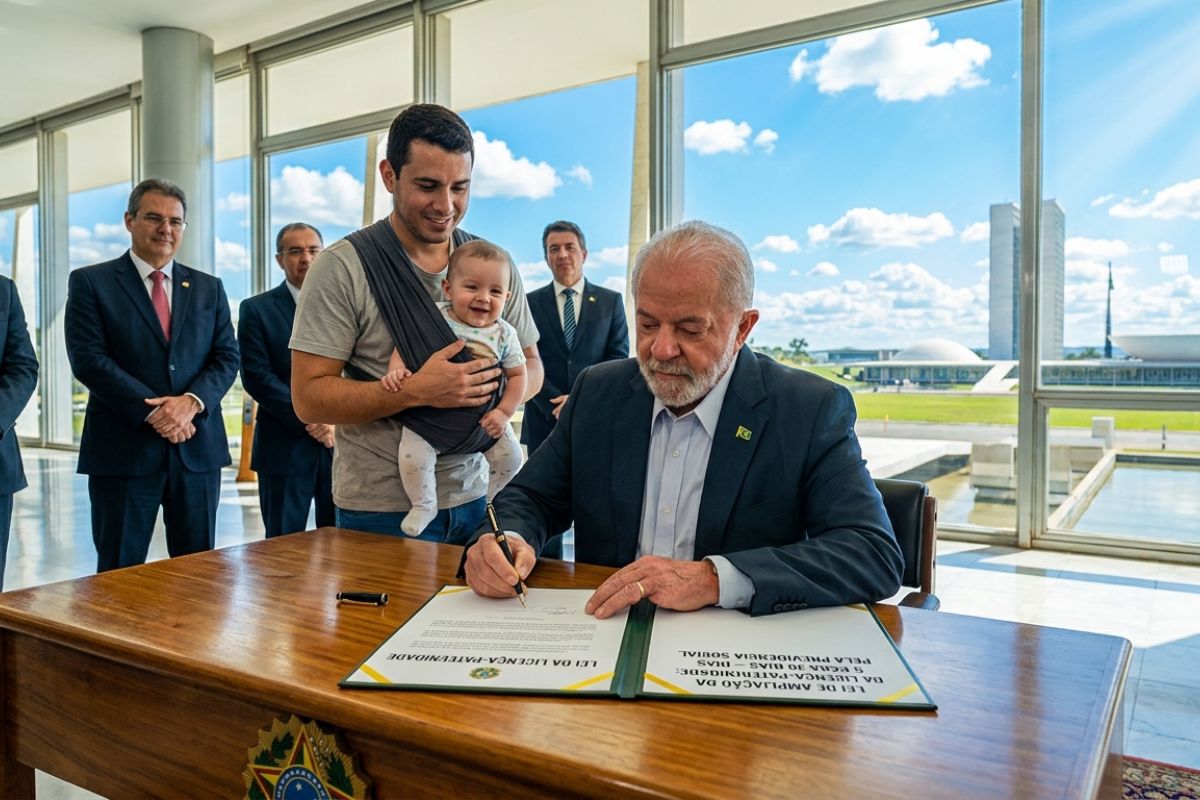
Government enacts new law: paternity leave increases from 5 to 20 days with gradual increases until 2029, and Social Security pays the paternity salary; companies no longer bear the absence cost, estimated at R$ 5.4 billion.
-
End of the 1-hour lunch break in the CLT? Current labor law maintains the break, allows for negotiated reductions, and defines rules for working hours and home office in Brazil.

-
Employee Fired After Accumulating 114 Days of Medical Leave in One Year, Labor Court Upholds Company’s Decision

-
Employee Fired While Treating Depression Wins in Court and Vale Is Required to Rehire Him Following Decision Based on the CLT and INSS Benefits


- be absent from work for more than 15 days;
- obtain accident-based sick leave (code B91) from INSS;
- prove the causal link between the illness and the work.
In practice, many employees with anxiety disorders, depression, and burnout syndrome were negatively affected, as they did not take long absences or had their benefit requests denied by INSS. The result was dismissal without job security, even with medical reports confirming the relationship between the illness and the work environment.
What Changes for Workers
With the new thesis established by TST, it is enough for the employee to present consistent medical evidence of the link between the psychological illness and the work. The judge may recognize the job security, ensuring the worker the right to keep the job or receive equivalent compensation if they have already been dismissed.
Labor law specialists believe that the decision represents a significant expansion of protection for mental health in the corporate environment.
Experts Analyze the Impact of the Measure
According to labor law professor Valdete Souto Severo (UFRGS), the decision “brings to the center of the debate the importance of mental health, which has long been neglected in labor relations.”
Labor lawyer Sérgio Schwartzman, a partner at a firm specializing in business cases, emphasizes that “companies will need to invest more in mental health programs and burnout prevention, as the courts recognize that psychological damage is as serious as physical damage.”
Increase in Psychological Illnesses at Work
According to the International Labor Organization (ILO) and the World Health Organization (WHO), mental health issues are already one of the leading causes of absenteeism globally.
In Brazil, the Ministry of Health identified a significant increase in diagnoses of anxiety disorders and depression related to work following the pandemic.
The burnout syndrome, recognized by WHO in 2022 as an occupational disease, also appears among the main reasons for labor lawsuits in recent years.
Repercussions for Companies
The TST decision is expected to directly impact human resources management. Companies will need to enhance corporate mental health programs, invest in psychological support channels, and adopt practices to prevent moral harassment and work overload.
This is not just about avoiding legal penalties but ensuring healthy environments that reduce the incidence of psychological illnesses. The Justice has made it clear that companies’ responsibilities go beyond physical integrity: they also include the emotional well-being of their workers.
Expanded Protection and Recognition of Mental Health
The understanding established by TST marks a watershed in Labor Justice. Accident-related job security, previously restricted to those undergoing long absences and receiving welfare benefits, now also applies to workers with psychological illnesses that are proven to be related to their employment.
This decision not only guarantees greater legal security to employees but also places mental health at the center of labor relations.
As Professor Valdete Severo said, “the message is clear: psychological suffering is also a workplace accident and deserves the same protection under the law.”
Brazil is thus taking a fundamental step in combating the precariousness of mental health at work—recognizing that it is not possible to speak of labor dignity without emotional balance.










Pelo amor de Deus!
Só quem passa por isso (e não são poucos), conhece essa dor. É preciso entender que a humilhação precisa parar. Ninguém tem o direito de assediar o outro. Isso é desumano e precisa de fiscalização e punição.
O problema é que tratam as empresas como se todas fossem multinacionais, quero ver uma micro empresa que rala pra sobreviver nesse país caótico bancar uma situação dessa, acorda Brasil,estamos destruindo a criatividade e ei empreendedorismo enquanto China e EUA fortalecem as MPE, quem deve bancar isso para a MPEs é o Governo.
É só a empresa pequena ter um ambiente de trabalho saudável… sem assédio moral e sexual, por exemplo!
Pelo seu comentário, parece que as empresas pequenas teriam justificativa para adoecer um empregado!
Meu Deus! Então vc entende que empresa pequena pode?
Micro empresa ou multinacional se respeita seu colaborador e é justo, não precisa bancar estabilidade ou o que quer que seja. Quem faz certo não teme, nem paga por isso, nem na justiça dos homens, nem muito menos na de Deus
Sou professora da rede municipal e estadual de Ensino Médio e infelizmente estou com transtorno de ansiedade e depressão leve com dores de cabeça diária, pressão alta e pré diagnosticada com síndrome de Burnout. Sinto medo em ter que lidar com o desrespeito dos alunos e hostilidade no ambiente escolar nos dias atuais. É insano.
Eu trabalhei 8 na prefeitura da minha cidade tirei férias uma vez ,nao renovei contrato em 2022 estou com ansiedade depressão, não é fácil me isolei nao procurei mais direitos hoje estou doente e desamparada !
Ainda está em tempo. Busque um advogado especializado.