





 Portuguese
  English
  Spanish
  4 min of reading
  0 comments


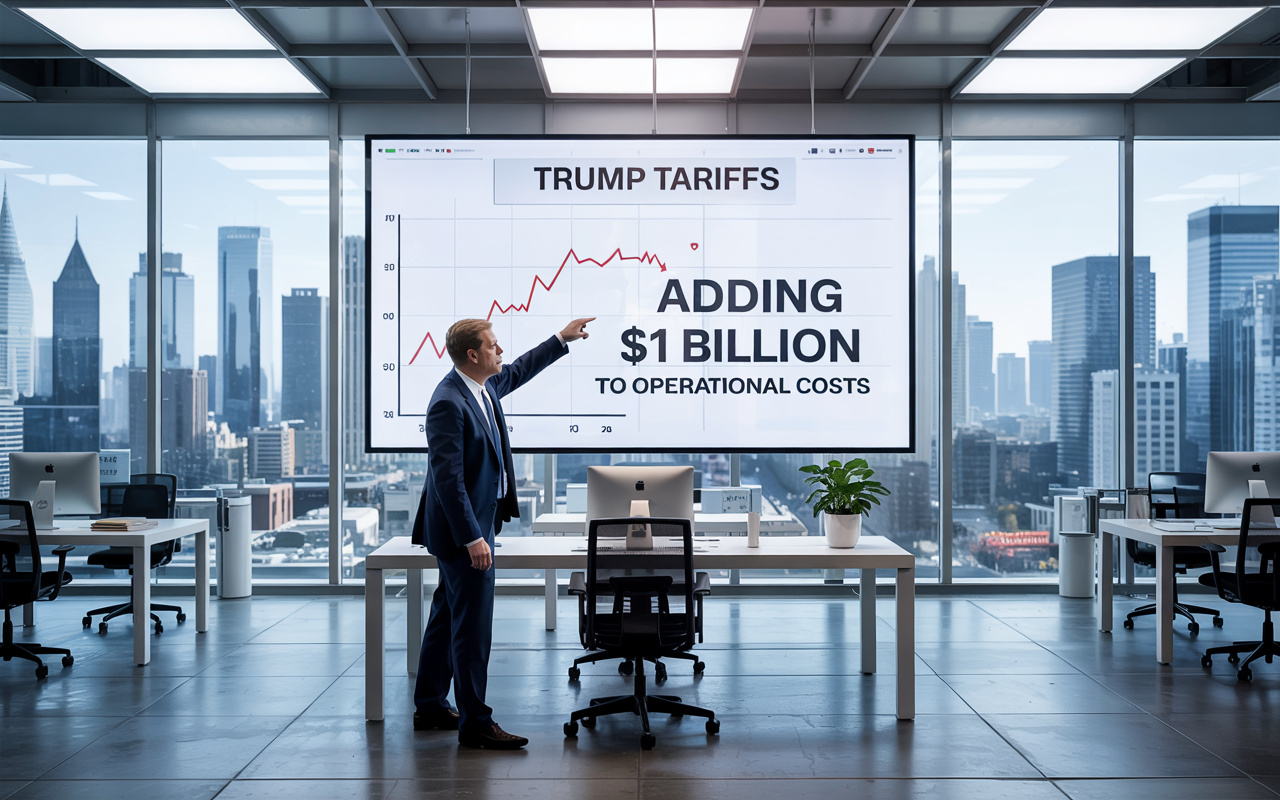
Apple Says Trump Tariffs Could Add Over US$ 1 Billion to Costs and Pressure iPhone Prices. Tim Cook Acknowledges Impact on Operations and Calls for Changes in Trade Policy.
Apple has once again raised alarms in the technology sector and financial markets by stating that the tariffs imposed by U.S. President Donald Trump could add over US$ 1 billion to its operating costs in the September quarter. The statement was made by CEO Tim Cook during a earnings conference call and raises an inevitable question: consumers may foot the bill, with increased prices for iPhones and other brand products.
According to Cook, Apple already shelled out US$ 800 million in tariffs just in the June quarter, slightly down from the previously projected US$ 900 million. Still, the company estimates that the total could reach US$ 1.1 billion in the coming months if the U.S. government’s trade measures remain or are expanded.
Apple Claims U.S. Tariffs: Direct Impact on Production Costs
The tariffs imposed by Trump directly affect Apple because most of its production is concentrated in Asian countries. The company manufactures most of the iPhones sold in the U.S. in India, while the production of Macs, iPads, and Apple Watches mainly comes from Vietnam.
-
With a cost per shot close to zero, the DragonFire laser could change naval warfare in 2027 and provide British ships with nearly unlimited defense against drones.

-
A British startup creates tires that generate electricity in electric vehicles when passing over potholes, speed bumps, and cracks.

-
Scientists have created robots made with living cells that have their own nervous system, swim on their own, explore the environment, and self-organize without any genetic engineering, and now they want to do the same with human cells.

-
Students create a solar-powered ambulance that operates without a plug, without fuel, and still keeps medical equipment running in remote areas.

The problem is that these supply chains remain subject to tariffs under the International Emergency Economic Powers Act (IEEPA), which took effect earlier this year and increased the cost of importing electronic devices into the U.S.
Cook explained that these broad rates affect all Apple products and indicated that the situation may worsen: Trump has already threatened to impose even heavier tariffs if the company does not transfer a significant portion of its production to U.S. territory.
Extra Cost for Apple: US$ 1 Billion More in Expenses
Apple’s new calculation indicates that if the tariffs remain or are expanded, the company will have to contend with an increase of US$ 1.1 billion in costs in the September quarter. This amount adds to the US$ 800 million already paid in the June quarter, bringing the total spent on tariffs to nearly US$ 2 billion in just six months.
Despite this scenario, Apple reported a 10% growth in its quarterly revenue, reaching US$ 94 billion between April and June, driven by strong sales of iPhones and Macs. However, analysts suggest that this performance may not be sufficient to absorb the impacts of additional tariffs without passing part of the cost onto consumers.
Trump Tariff Impacts Apple: iPhone Prices May Rise
Tim Cook’s statement left investors and consumers attentive to a sensitive point: the price of products. With tariff pressure, production costs rise, and companies must decide whether to absorb the expense or pass it on to the market.
Experts believe that if tariffs remain at high levels, Apple may opt to raise the prices of iPhones, iPads, and Macs in the U.S. to protect its profit margin — and this trend could spill over to other markets, including Brazil, where Apple products are already among the most expensive in the world.
Apple Trade Policy: The Pressure to Manufacture in the U.S.
The tension surrounding tariffs is directly linked to Donald Trump’s policy to encourage domestic production.
The president has already made it clear that he expects giants like Apple to move part of their assembly lines to the U.S., or face even heavier tariffs.
Although Apple has already diversified some production to India and Vietnam, most of its suppliers and logistical partners are still in Asia, which makes a drastic change in the short term challenging.
Revenue Up, But Uncertainty Looms
Despite rising costs, Apple managed to report a 10% revenue growth in the quarter, totaling US$ 94 billion. The positive performance was driven by strong sales of iPhones and Macs, which remain among the company’s most profitable products.
However, Tim Cook acknowledged that the outlook for the coming months depends on external variables, such as tariffs and trade negotiations between the U.S. and its partners. “There are many factors that can change, including tariffs,” said the CEO, suggesting that Apple is closely monitoring every move by the Trump administration.
Trump Tariffs Could Redefine Apple Prices and Strategies
The revelation that tariffs have already cost US$ 800 million in the June quarter and could add another US$ 1.1 billion by September puts pressure on Apple and consumers. The company will have to decide whether to absorb the loss or increase prices on products like the iPhone, a scenario that could directly impact demand.
In addition, there is increasing pressure for Apple to move part of its production to the U.S., something complex and costly, but which could reduce dependence on Asian supply chains and mitigate tariff impacts in the long run.
For now, the only certainty is that tariffs continue to be a key piece on Apple’s chessboard — and could not only define the price of the next iPhone but also the direction of the brand’s production policy in the coming years.









Seja o primeiro a reagir!