





 Portuguese
  English
  Spanish
  3 min of reading
  7 comments


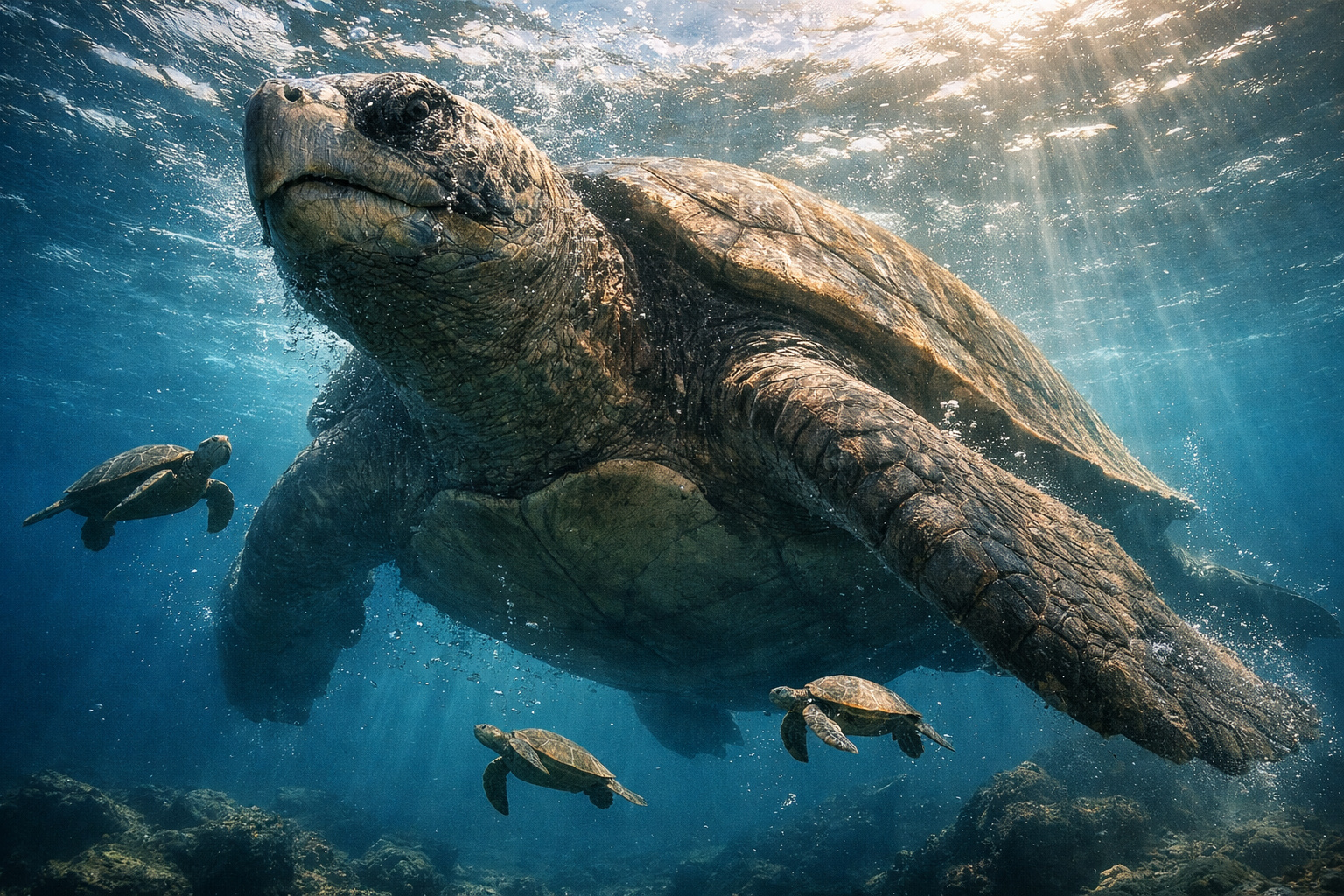


Archelon Was The Largest Turtle Ever Documented: Up To 4.6 Meters Long And 3.5 Tons, A Marine Colossus From The Late Cretaceous Period.
Long before any human walked the Earth, a colossal chelonian dominated the planet’s shallow seas. Archelon ischyros, an extinct marine turtle from the Late Cretaceous, redefined all known limits for the chelonian group. Its size finds no parallel even among the largest living turtles today. Archelon was not just “large”: it was a true prehistoric colossus, comparable in mass to modern vehicles and in length to small boats.
When And Where Archelon Lived
Archelon inhabited the oceans about 70 to 75 million years ago, during a time when vast areas of what is now North America were covered by a shallow sea known as the Western Interior Seaway. This warm and life-rich marine environment provided ideal conditions for the growth of large animals.
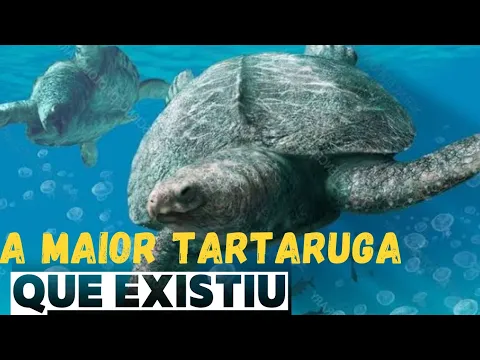

The most important fossils of Archelon have been found mainly in areas that today correspond to the United States, such as South Dakota and Kansas, regions that at the time were completely submerged.
-
While the world looks at oil, the war with Iran is already disrupting helium supply from Qatar, affecting car and iPhone chips, threatening AI expansion, and putting pressure on aluminum packaging at the highest value in four years.

-
Global warming will expose a treasure hidden under the ice of Antarctica and may spark an international dispute over gold and valuable minerals.

-
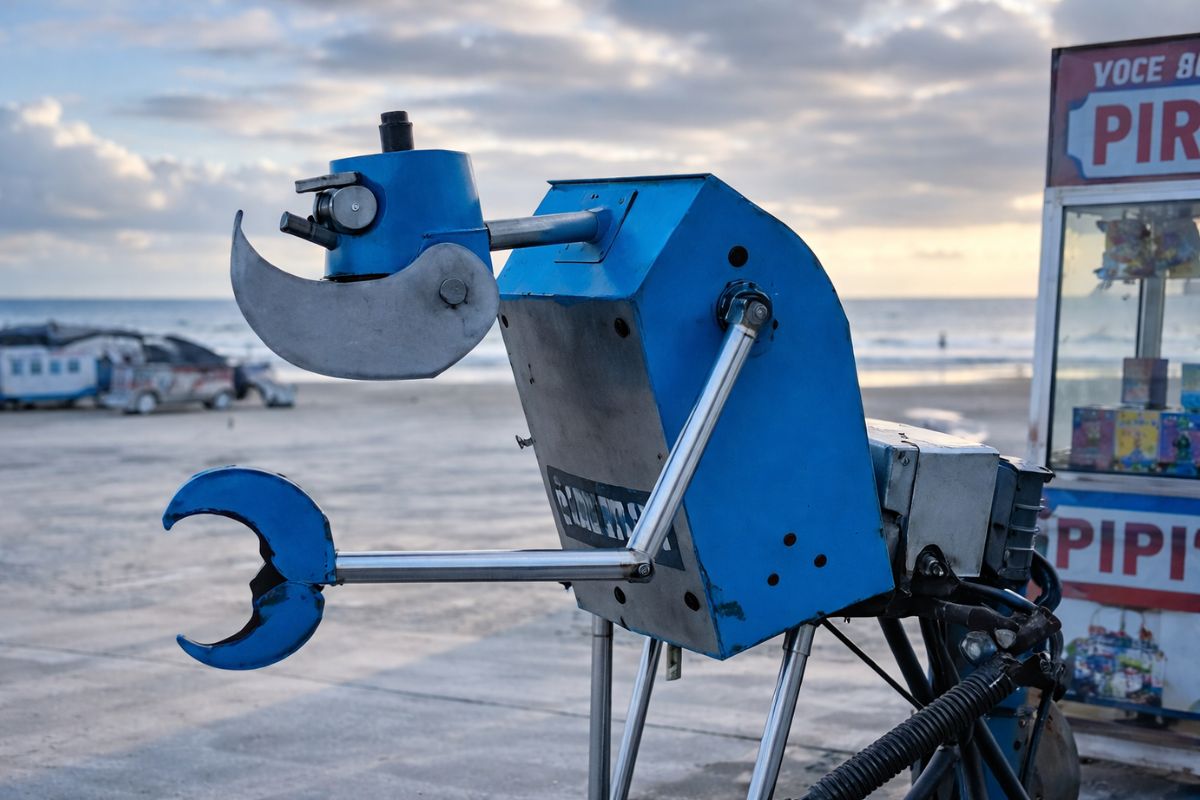
A street vendor from Praia Grande built a robot made of scrap from scooters and washing machines that pulls his popcorn cart on the beach, emits sounds, and interacts with customers, becoming an attraction on the coast of São Paulo.
-
The specifications of the Xiaomi 18 Pro Max have been leaked, and the highlight is a dual 200 MP camera with a new 22-nanometer technology that promises to consume less energy and capture details in shadows and bright areas using LOFIC HDR.


Dimensions That Challenge Any Modern Reference
The largest fossils attributed to Archelon indicate an animal approximately 4.6 meters from head to tail. The estimated weight ranges between 2.2 and 3.5 tons, depending on the body reconstruction adopted by researchers.

For direct comparison, the leatherback turtle, the largest living turtle today, rarely exceeds 2 meters in length and weighs around 400 to 500 kg in extreme cases. Archelon was therefore several times larger than any known modern chelonian.
A Different Anatomy From Modern Turtles
Although resembling a giant marine turtle, Archelon had quite distinct anatomical characteristics. Its shell was not completely rigid like that of modern turtles. Instead, it had a more open structure, with robust bones forming a sort of internal framework, covered by strong tissue.
This anatomy allowed for reduced structural weight without compromising size, favoring a gigantic body adapted to ocean life. Its flippers were wide and powerful, indicating a great capacity for movement in open water.
What Archelon Ate
Studies suggest that Archelon primarily fed on soft-bodied marine organisms, such as jellyfish, mollusks, and other invertebrates. Its jaws were wide and strong, but lacked teeth, following the chelonian pattern.
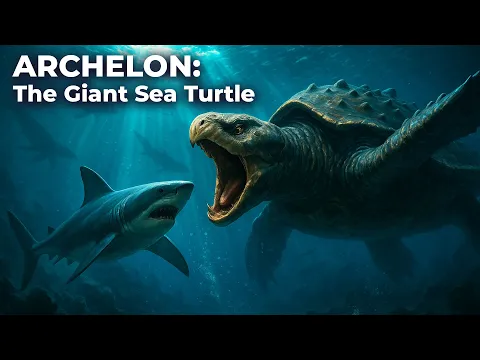
The large size provided a clear advantage: few predators of the time would be able to attack a fully developed adult. Only large mosasaurs or giant sharks from the Cretaceous could pose a real threat.
Why Archelon Reached This Extreme Size
The gigantism of Archelon is directly linked to environmental factors of the period: warmer and more stable seas, high food availability, low competition with other large chelonians, and the absence of human pressures. This set allowed some lineages to evolve to physical limits that today seem impossible.
Why Are There No Turtles This Size Today
After the mass extinction at the end of the Cretaceous, which eliminated non-avian dinosaurs and numerous marine species, the oceans changed drastically. Climate, food chains, and ecological competition underwent profound transformations.

The turtles that survived followed more conservative evolutionary paths, with large sizes, but much smaller than those of Archelon. Moreover, modern human pressure makes it practically unfeasible for marine animals of that size to emerge again.
Archelon Is Not A Myth, It Is A Documented Fossil
Unlike exaggerated accounts of giant animals, Archelon is known from real fossils, studied by paleontologists for over a century. Its remains are preserved in museums and continue to be a scientific reference when it comes to gigantism among marine reptiles. It represents the maximum proven limit that a turtle has ever reached in the history of the Earth.
Archelon was not just the largest turtle ever recorded. It symbolizes an era when the oceans were dominated by gigantic creatures, many of which will never have modern equivalents. Its disappearance marks the end of an extreme chapter in marine evolution.
While today the largest living turtle struggles for survival in increasingly hostile seas, Archelon remains a fossilized reminder of how far nature has already gone.








I have one tortoise & 1 turtle
Bro is Maturin
The Largest Snake was Vasuki not Titanaboa