





 Portuguese
  English
  Spanish
  4 min of reading
  0 comments


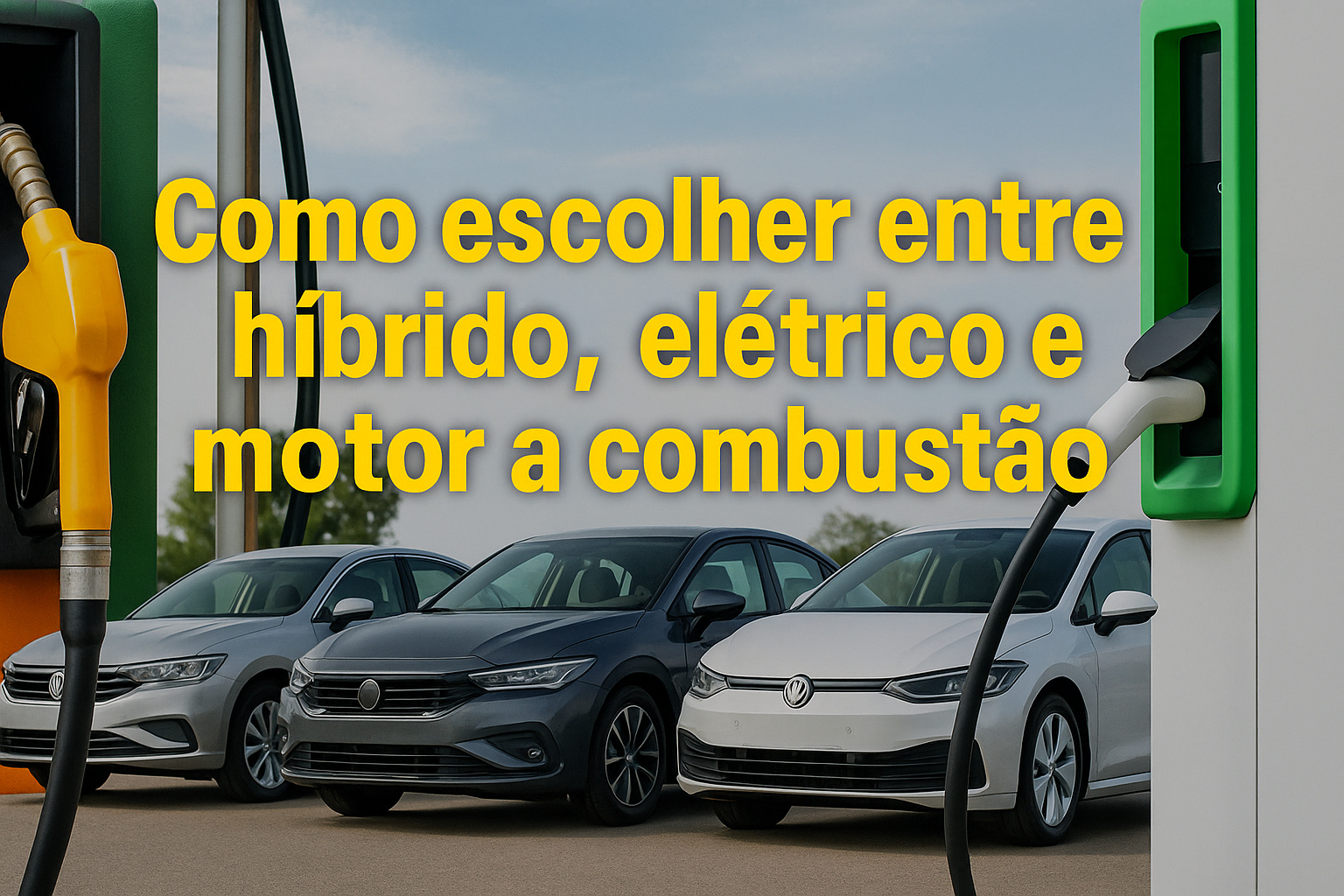
Overview of the Brazilian Automotive Market: The Starting Point for Your Decision
If you are considering changing your vehicle, the first step is to understand the national scenario. Today, cars with a flex combustion engine — which use gasoline or ethanol — still represent the vast majority of sales in the country, accounting for about 92% of all light vehicles sold.
Nevertheless, the market is beginning to change. The number of electric cars and hybrid cars has been steadily increasing, driven by the pursuit of efficiency, sustainability, and the advancement of charging infrastructure. In 2024, Brazil registered around 119 thousand electrified vehicles sold, and projections indicate an average annual growth of over 20% by 2033.
Market studies also indicate that by 2030, sales of electric and hybrid vehicles could surpass those of models powered exclusively by combustion, marking an important transition for Brazilian mobility. This movement reflects not only a technological change but also an economic one: with tax incentives, rising fossil fuel costs, and stricter environmental policies, the profile of the Brazilian consumer is rapidly evolving.
-
Ford Fiesta, a car loved by Brazilians, may return: project involves partnership with Renault, over 400 km of range, versions above 220 hp, and five new models

-
Military uses cardboard to approve Jeep in vehicle inspection in Japan after failing due to a difference of only 3 centimeters

-
Owner of Siena 2007 shows how to clean yellowed and cracked headlights
-
Electric car in 2026? Simulation of BYD Dolphin Mini shows financing with a down payment of R$ 83,993


Clear Comparison: Combustion vs. Hybrid vs. Electric
| Vehicle Type | Main Advantages | What to Evaluate Carefully |
| Combustion Engine (Gasoline/Ethanol) | Lower initial price, established fueling network, simple maintenance | Higher consumption and emissions; may lose future value |
| Hybrid Car | Combines electric and combustion engines, greater range, lower urban consumption | Higher price and hybrid maintenance costs may be greater |
| Electric Car | Zero local emissions, lower cost per km, quiet driving | Depends on charging; higher initial price and range varies |
The choice directly depends on your usage profile. Those who make short trips and have access to a plug at home tend to benefit more from an electric car. Meanwhile, those who mix city and highway driving may prefer the hybrid car, which alternates between electric and combustion engines. For those who prioritize initial cost and practicality, the flex engine remains unbeatable, especially with ethanol, which has a lower environmental impact and strong presence in Brazil.
Total Cost of Ownership: What Matters in the Long Run
The purchase price is only part of the equation. The total cost of ownership (TCO) includes fuel, energy, maintenance, insurance, and resale.
- Electric Car: Costs less per kilometer since electricity prices are usually lower than gasoline. It has fewer moving parts in the engine, which reduces maintenance.
- Hybrid Car: Balances consumption and range but may have more expensive service costs.
- Combustion: Wide network of parts and service centers, but higher monthly fuel costs.
The practical rule still applies: ethanol is cost-effective when it is up to 70% of the price of gasoline. Additionally, hybrid and electric vehicles often come with extended warranties for batteries, which helps minimize long-term risks.
Range, Charging, and Infrastructure
- Electric: Ideal for those with a charging location. Real range varies between 250 km and 500 km, depending on the model and driving mode. With fast chargers, 80% of the battery can be replenished in about 30 minutes.
- Hybrid: Doesn’t depend on a plug, as it recharges through motion and braking. The total range (tank + battery) easily reaches 800–1000 km.
- Combustion: Still the most practical for long trips, with a range of 600 to 900 km and refueling in minutes.
In Brazil, the number of charging points is growing rapidly, but the distribution is still uneven. The Southeast and South regions concentrate the majority, while the North and Northeast are advancing at a slower pace. This should be considered before making a purchase.
Environmental Impact and Use of Biofuels
Electric cars eliminate local emissions, but the total impact depends on the source of energy. In Brazil, the electricity matrix is predominantly renewable, which favors usage. Hybrid cars reduce consumption by up to 30% in cities.
However, ethanol is still a national asset. Produced from sugarcane, it has a carbon footprint up to 80% lower than gasoline, making flex cars a more sustainable option than purely combustion models from other countries.
The Technical Future of Engines: Batteries, Biofuels, and Thermal Efficiency
The decision between electric car, hybrid car, and combustion engine also involves what lies ahead. In electric vehicles, the evolution is in the batteries. Energy density grows about 7% per year, and solid-state batteries are expected to offer double the current range and charging up to 70% faster.
In hybrids, automakers are improving the integration between the electric and combustion engines. Today, Atkinson or Miller cycle engines achieve thermal efficiency above 40%, something that was unthinkable a few years ago in street cars. This means less fuel and fewer emissions for the same performance.
Meanwhile, the combustion engine remains strong, but with a focus on advanced biofuels. Second-generation ethanol (E2G) and green diesel (HVO) are realities that reduce emissions without radically changing the vehicle. Brazil has a privileged position: it can balance electric mobility and the use of renewable fuels while maintaining energy independence and competitive prices.
And you, reader: which of these technologies fits your life today, and which do you think will dominate the streets of Brazil in 2030?
Leave your opinion in the comments.








Be the first to react!