





 Portuguese
  English
  Spanish
  4 min of reading
  0 comments


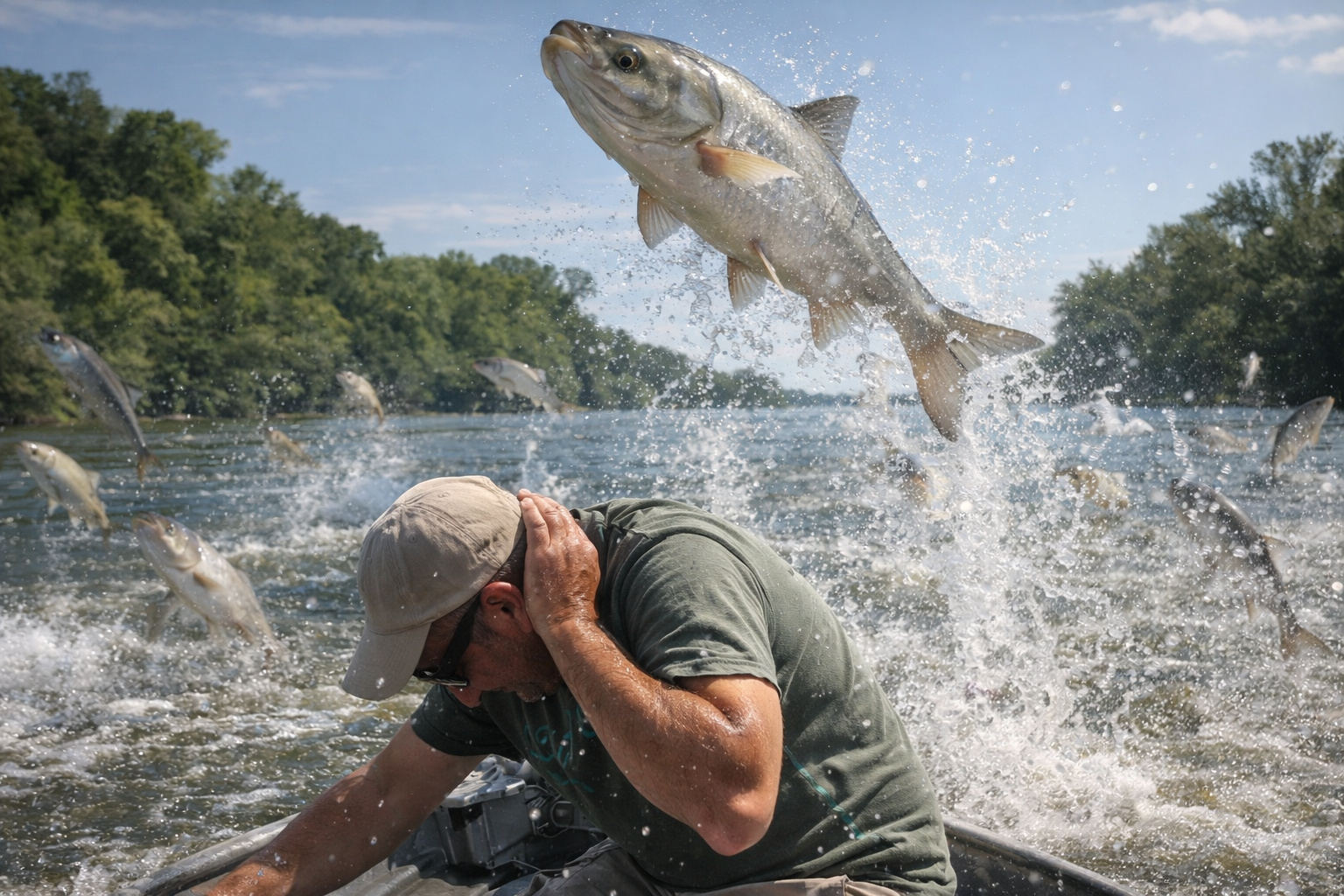
Introduced for Biological Control, the Silver Carp Has Spread Across the USA, Jumps Up to 3 Meters, Hits Fishermen and Threatens Entire Ecosystems by Dominating Rivers Like the Mississippi.
In the 1970s, environmental authorities in the United States authorized the importation of Asian carp as an “ecological” solution to help clean out ponds and dams in the southern part of the country. The promise was simple: the fish would filter algae, reduce organic matter, and improve water quality. The problem arose when floods broke through ponds and the carp escaped into the Mississippi River system. From that point on, what was a solution turned into an uncontrolled biological invasion.
The most emblematic species of this ecological collapse is the silver carp (Hypophthalmichthys molitrix) — a filter-feeding fish that grows rapidly, reproduces on a large scale, and exhibits a behavior that is as strange as it is dangerous: it jumps out of the water when startled. And it is not a small jump. There are consistent reports of up to 3 meters in height and dozens of kilos of fish being thrown with force, transforming the animal into a living projectile capable of injuring fishermen, breaking glasses, hitting children, knocking people out of boats, and causing collisions.
This peculiar behavior earned the species worldwide fame and motivated research by the US Geological Survey (USGS) and American universities on its ecological and social impact.
-
A British startup creates tires that generate electricity in electric vehicles when passing over potholes, speed bumps, and cracks.

-
Scientists have created robots made with living cells that have their own nervous system, swim on their own, explore the environment, and self-organize without any genetic engineering, and now they want to do the same with human cells.

-
Students create a solar-powered ambulance that operates without a plug, without fuel, and still keeps medical equipment running in remote areas.

-
French “ghost” submarine lost in World War II reappears after more than 80 years on the seabed near the coast of Spain.


Jumps of 3 Meters and Boat Accidents
The mechanism is known: when exposed to the noise of motors, waves from navigators, or underwater sounds, the silver carp reacts with panic. The result is dozens of fish jumping simultaneously, creating a scene that fishermen describe as “a battlefield.” There have been cases of fishermen hospitalized with fractures in their faces, arms, and ribs after being hit by fish at high speeds.
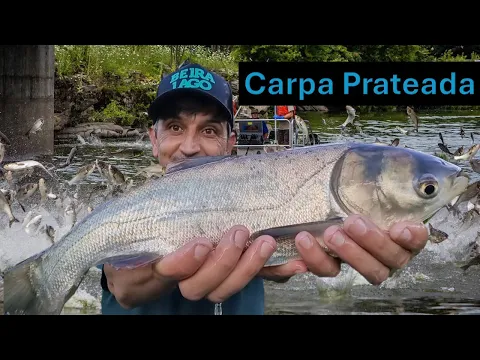

Reports from the US Coast Guard describe episodes in which motorboats become inoperable after direct impacts on the steering wheel, the dashboard, or the pilots. In sporting competitions, there have been serious injuries: deep cuts, trauma, and concussions.
A Plague That Dominates the Food Chain
If the behavior is bizarre, the ecological impact is even more severe. The silver carp is a voracious filter feeder, consuming phytoplankton and zooplankton — the base of the food chain in tropical and temperate rivers. When plankton disappears, native fish that depend on it to survive collapse.
Research published in Biological Invasions and monitoring by the USGS show that, in some stretches of the Mississippi, up to 90% of the fish biomass is composed of Asian carp, leaving native species like bass, catfish, and sturgeons without enough food to maintain healthy populations.
In addition, the silver carp reproduces explosively: the female releases hundreds of thousands of eggs per season, which are fertilized in moving waters. The result is a population dynamics that is difficult to control and almost impossible to eradicate in open rivers.
The Threat to the Largest Freshwater System in the USA
The real fear of the United States is another: the arrival of the silver carp in the Great Lakes, the largest freshwater system in the world by surface volume, the basis of a billion-dollar fishing industry and a key ecosystem for water and energy supply in the country.
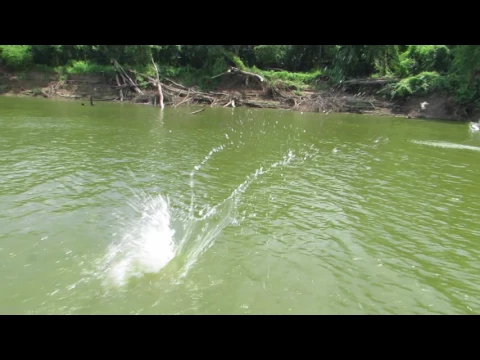
If the silver carp establishes itself permanently in the lakes, the impact would be:
- Ecological, replacing native species and filtering plankton;
- Economic, affecting commercial and sport fishing;
- Social, harming tourism and navigation;
- Structural, affecting supply chains and public services.
To avoid this, the US Army Corps of Engineers is investing billions of dollars in electric barriers, bubble systems, sonar, underwater lighting, and even studies on “biological control” — all to prevent the carp from advancing.
How the USA Tries to Contain the Catastrophe
The war against Asian carp involves multiple tactics:
- Electric Barriers: Create electric fields in channels, paralyzing or repelling fish;
- Subsidized Commercial Fishing: Encourages mass culling to reduce populations;
- Environmental DNA Monitoring (eDNA): Allows tracking the presence of carp over long distances;
- Studies on Industrial Use: Investigates uses for meat, feed, and composting;
- Consumption Campaigns: Some states are trying to change the fish’s name to encourage human consumption.
Even with all efforts, populations continue to grow and expand. States such as Illinois, Kentucky, Missouri, and Tennessee already coexist with silver carp as a permanent part of the altered ecosystem.
A Biological, Social, and Economic Phenomenon
Unlike other invasive species, the silver carp combines:
- High Ecological Impact
- Large Biomass
- Accelerated Reproduction
- Direct Interaction with Humans
- Real Physical Risk
- Extreme Difficulty of Control
This combination makes the animal one of the most serious cases of modern biological invasion in the United States.
And at the center of this story is a fish that no one expected to jump 3 meters in the air, hit people, knock down children, break jaws, and at the same time threaten entire ecosystems of the largest country in the world.
The silver carp (Hypophthalmichthys molitrix) has proven that an invasion can come silently, by the thousands, beneath the water — until the day it starts jumping over the boat.






-

-

-

-

6 pessoas reagiram a isso.