





 Portuguese
  English
  Spanish
  4 min of reading
  2 comments


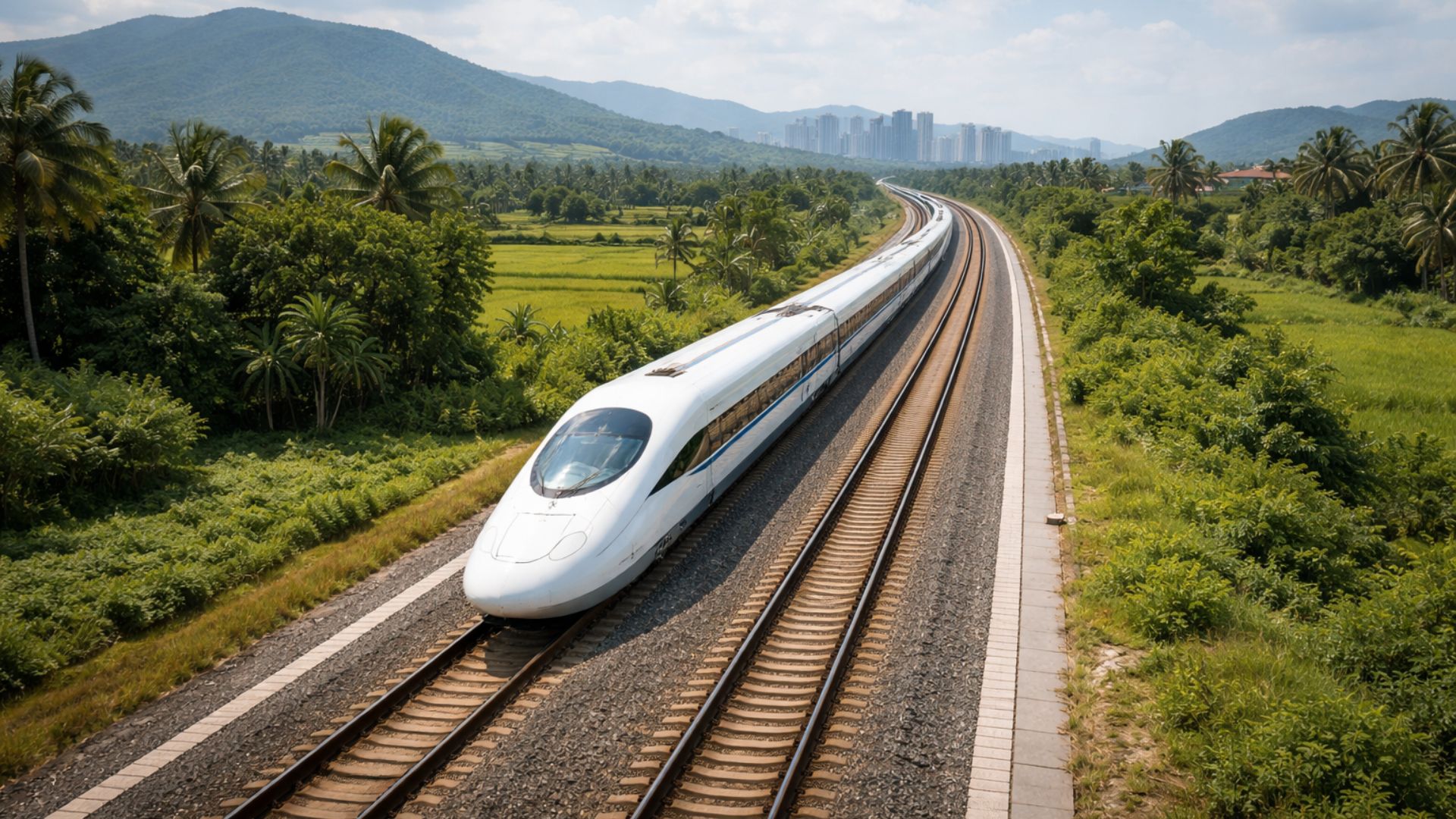


Billion-Dollar North–South High-Speed Rail Plan Places Vietnam Before a 1,541 km Project with Trains of Up to 350 km/h and a Goal to Operate by 2035, Requiring Decisions on Financing, Governance, and Fiscal Impact Amid Industrial Expansion and Record Exports.
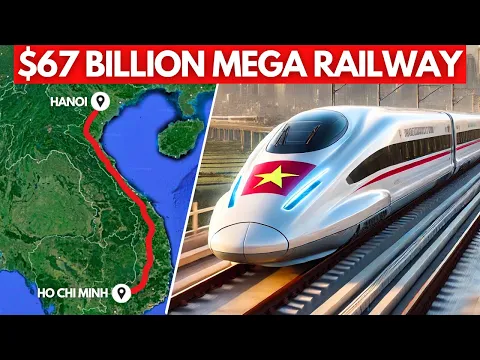
Vietnam has advanced with the plan to build the North–South high-speed railway, a project estimated at US$ 67 billion and set to connect Hanoi to Ho Chi Minh City over 1,541 kilometers, with trains running at up to 350 km/h and projected operations starting in 2035.
The initiative was approved by the Vietnamese Parliament on November 30, 2024, according to official statements reproduced by the international press, and began to guide the preparation schedule for the actual start of works to occur by the end of 2026.
North–South Railway and High-Speed Transport Between Hanoi and Ho Chi Minh City
According to the proposed layout, the railway starts from the Hanoi region and ends in Ho Chi Minh City, crossing 20 provinces and cities, with the stated goal of reducing dependence on congested highways and the air bridge that currently concentrates a large part of travel.
-
Friends have been building a small “town” for 30 years to grow old together, with compact houses, a common area, nature surrounding it, and a collective life project designed for friendship, coexistence, and simplicity.

-
This small town in Germany created its own currency 24 years ago, today it circulates millions per year, is accepted in over 300 stores, and the German government allowed all of this to happen under one condition.

-
Curitiba is shrinking and is expected to lose 97,000 residents by 2050, while inland cities in Paraná such as Sarandi, Araucária, and Toledo are experiencing accelerated growth that is changing the entire state’s map.

-
Tourists were poisoned on Everest in a million-dollar fraud scheme involving helicopters that diverted over $19 million and shocked international authorities.


The design speed is treated as a central element because it alters the travel time, with estimates released by local outlets indicating that the journey could drop from over a day on a conventional train to something close to five hours.
Meanwhile, the government presents the project as a response to logistical bottlenecks that increase the cost of transporting goods and restrict worker mobility between industrial hubs, ports, and consumption centers that have spread along the North–South corridor.
The proposal also includes standard gauge railway infrastructure and double track, with a broad set of passenger stations and support terminals, designed to create a national backbone and reorganize connections with urban systems.
Funding for the Railway and Long-Term Fiscal Risks


The investment size has become the most sensitive point of the internal debate, as it requires stable funding sources and clear rules for hiring, expropriations, guarantees, and any subsidies that may extend for decades.
Documents and public statements on the model discuss a combination of state resources with private participation, in arrangements that tend to resemble public-private partnerships, precisely due to the risk profile and the volume of capital required.
Government bodies have drawn attention to the fiscal impact of large loans, government guarantees, and financial support mechanisms, as commitments made now may strain the budget for several economic cycles.
Feasibility studies cited in Vietnamese reports indicate that direct commercial returns may be limited at the start of operations, as revenue from fares may not fully cover operational and financial costs in the initial phases of service.
Still, the official justification presents the project as a strategic investment, focusing on productivity gains and territorial integration, rather than treating it solely as a venture that needs to pay off quickly in cash flow.
Vietnam’s Economic Growth and Pressure for Infrastructure
The discussion takes place at a time when Vietnam has consolidated sustained economic transformation, driven by reforms initiated in the late 1980s, which combined state planning, trade opening, and gradual incentives for the private sector.
In the latest indicators from international organizations, the Vietnamese economy has reached a level close to half a trillion dollars in nominal value, with IMF estimates indicating a GDP of around US$ 511 billion in the most current readings.
This advancement has been accompanied by an industrial expansion that has repositioned the country in global production chains, with a strong presence of electronics, textiles, footwear, and component assembly, sectors that rely on predictable logistics and competitive costs.
Furthermore, the trade balance has become a pillar of the model, and data compiled by institutions and market reports indicate that Vietnamese exports surpassed US$ 400 billion in 2024, reinforcing the centrality of transportation in the strategy.
On the other hand, rapid growth has increased pressure on airports, roads, and urban corridors, and authorities have begun advocating for infrastructure to scale up to prevent the cost of congestion from becoming a structural brake.
Timeline Until 2035 and Challenges in Delivering the High-Speed Train
If the schedule is maintained, the country will join the group of nations with a national high-speed network, with potential impacts on work commutes, domestic tourism, service distribution, and reorganization of investments along the route.
The official assessment is that the railway corridor can bring regional markets closer together, stimulate production chains in provinces outside major centers, and reduce internal asymmetries by facilitating the movement of people and integration between industrial zones.
At the same time, execution depends on decisions regarding hiring, governance, land release, and financial model, issues that tend to concentrate the greatest risks of delay and cost overruns in infrastructure megaprojects.
With the North–South railway positioned as the centerpiece of planning, the debate now turns to Vietnam’s ability to reconcile execution speed, fiscal control, and transparency, without losing sight of the goal of operating the system by 2035.
Will the promise of logistical and economic transformation withstand the test of cost, expropriations, financing, and timely delivery, or will the project end up redefining priorities even before the trains start running?









Eita, será que vai sair primeiro que o TAV são Paulo Rio!!??..
Essa ferrovia ligando São Paulo ao Rio de Janeiro, pode até sair do papel, caso o Governador atual de SP, seja eleito a Pres. do Brasil em 2030.