





 Portuguese
  English
  Spanish
  4 min of reading
  3 comments


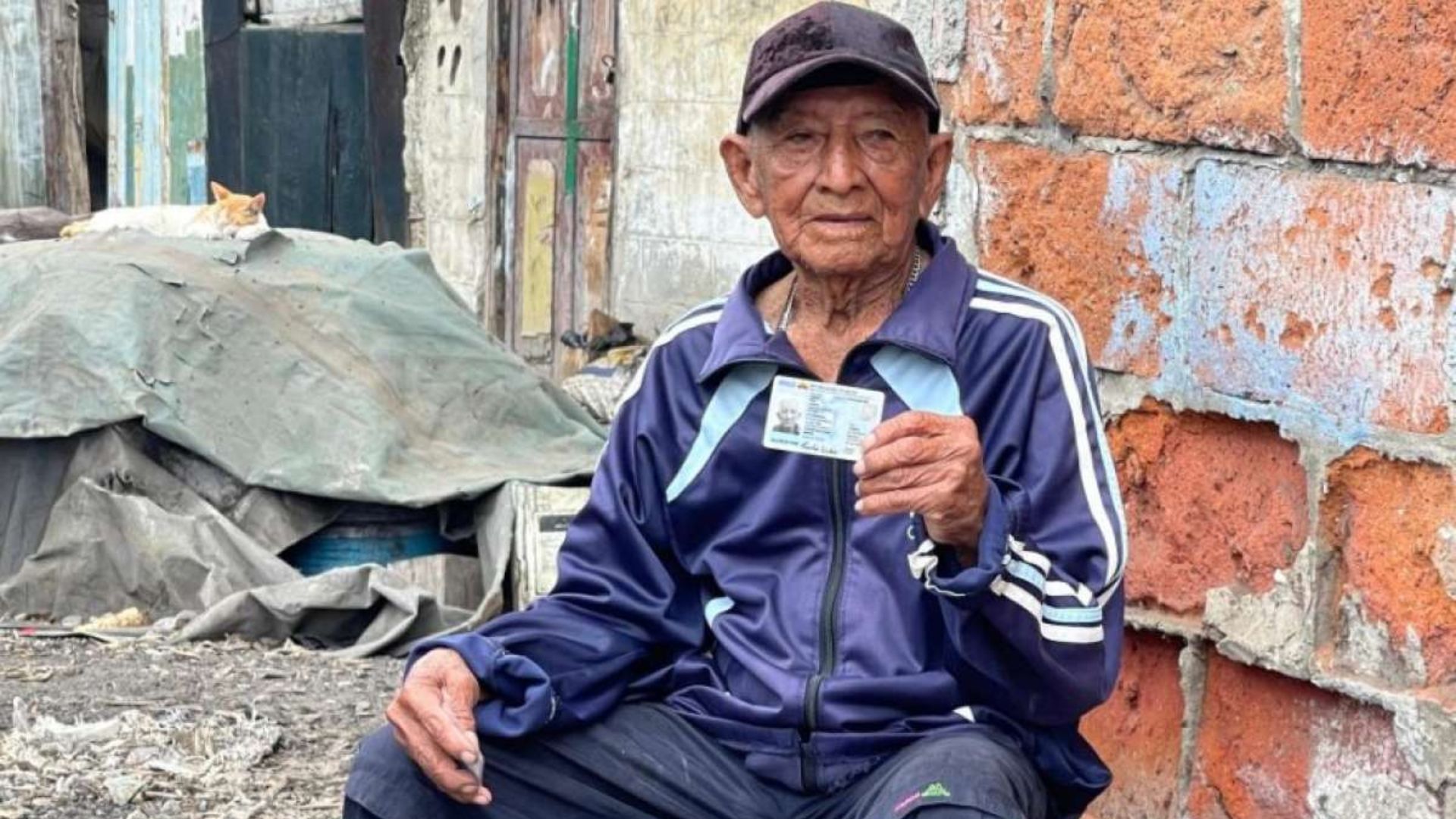


Birth Registration In 1902 And Homage In Guayaquil Place Carlos Lindao At The Center Of A Dispute For Evidence Of Longevity, While International Validation Requires Documents From Various Stages Of Life And Independent Checks To Transform A Local Data Into A World Recognized Record.
Carlos Alberto Lindao Vera, a resident of Puerto El Morro in Guayas province, Ecuador, is trying to officially prove that he is 123 years old after presenting an identity card documenting his birth on October 17, 1902, still without validation from Guinness World Records.
The story gained attention after local and international media began to cite the intention to take the case to super-longevity verifiers, a mandatory step to transform a domestic civil registration into a world-recognized record.
In December 2025, the Municipal Council of Guayaquil held a public tribute to Lindao and mentioned the age attributed to him, reinforcing the symbolic character of the elderly figure for the city, but without that equating to international certification.
-
Luxurious mansion in Rio valued at up to R$ 40 million has already impressed international celebrities and belongs to a well-known Globo presenter.

-
Friends have been building a small “town” for 30 years to grow old together, with compact houses, a common area, nature surrounding it, and a collective life project designed for friendship, coexistence, and simplicity.

-
This small town in Germany created its own currency 24 years ago, today it circulates millions per year, is accepted in over 300 stores, and the German government allowed all of this to happen under one condition.

-
Curitiba is shrinking and is expected to lose 97,000 residents by 2050, while inland cities in Paraná such as Sarandi, Araucária, and Toledo are experiencing accelerated growth that is changing the entire state’s map.


Although family members and municipal authorities treat the date of the document as a sufficient indication, organizations that verify extreme ages often require an extensive documentary trail, with records from different stages of life confirming identity and historical continuity.

ID Card From 1902 And What Circulated About The Case
The ID card presented by Lindao, reproduced in reports, supports the central point of the case by indicating the year 1902, a milestone that, if confirmed, would place him well above the publicly verified ages for living men.
Born in Puerto El Morro and associated with work in estuarine and mangrove areas, Lindao is described by Ecuadorian publications as someone who preserves autonomy in daily life, an element frequently highlighted in longevity reports, although it does not replace documentary evidence.
In addition to the numerical impact, the public narrative also incorporates memories attributed to the elder, such as having lived through both World Wars and witnessed man’s arrival on the Moon, references that help to contextualize the claim.
In an interview published in Ecuador, Lindao expressed a family wish that accompanies the recent visibility, saying “May my son come. That is the only thing I lack to fulfill. Let him see that I am still alive.”
Guinness Rules And Super-Longevity Verification
In the Guinness World Records system, the validation of a record depends on the submission of evidence according to the guidelines and rules of the organization itself, with requirements varying by category, but always including documentation and formal testimonies submitted for analysis.

This is because extreme ages concentrate known risks of inconsistencies, such as typos, name changes, gaps in old files, and discrepancies among local databases, problems that tend to grow as the original date of birth moves further away.
In cases of supercentenarians, independent verifiers typically seek consistency among childhood, youth, and adult life records, cross-referencing information to demonstrate that the present person is the same as the one appearing in documents issued decades earlier.
By this standard, the modern ID functions as a starting point but rarely as final proof, since a current document may have been issued based on late declarations, administrative reconstitutions, or transcripts subject to historical errors.
Path To Prove Extreme Age With Old Documents
When the claim exceeds 120 years, the verification usually shifts to an archival work that requires locating old records and reconstructing the individual’s timeline, in a process that tends to be slower than circulation on social networks.
Even in countries with a consolidated civil registration structure, documents from the early 20th century may be in physical books with uneven preservation, in institutions that have changed names or jurisdictions, or in collections far from where the person lives today.
In this scenario, the distance between public tribute and world record becomes clear, as the municipal tribute can rely on community recognition and available documents, while international certification depends on independent and standardized checks.
At the same time, reports that followed the case highlighted that, by the end of 2025, there was no public record of validation from Guinness for Lindao, nor evidence that the international certification process had been completed.
The Public Debate About Evidence And Age Records
Attention on Lindao grows because stories of longevity spark immediate curiosity, but the decisive step is less narrative and more administrative, as the proof accepted internationally needs to sustain the same date throughout an entire life.
As long as a documentary chain is not considered robust by specialized verifiers, the case tends to remain a claim supported by local documents and community recognition, without official record status, despite its widespread repercussion.
As a result, the public discussion ends up shifting from the number printed on the document to the method of verification, in a debate about how different countries and distinct civil systems can be compared under a single, transparent, and verifiable criterion.








Tudo mentira esse sujeito aí deve tá com documento errado ..pode ver que é nordestino. La pessoal erra muito na hora de registrar . Se ele tiver 120 anos eu tenho 300 anos ..
BuRRocracia exagerada impera sempre!
Esse cuidado todo é porque na maioria das vezes que aparecem pessoas tendo 120, 130, 170 anos são fraude. Minha sogra mesmo tem 83 anos, mas um erro de segunda via colocou o nascimento dela em 1921. Sempre que vai ao médico tem que ficar explicando