





 Portuguese
  English
  Spanish
  4 min of reading
  0 comments


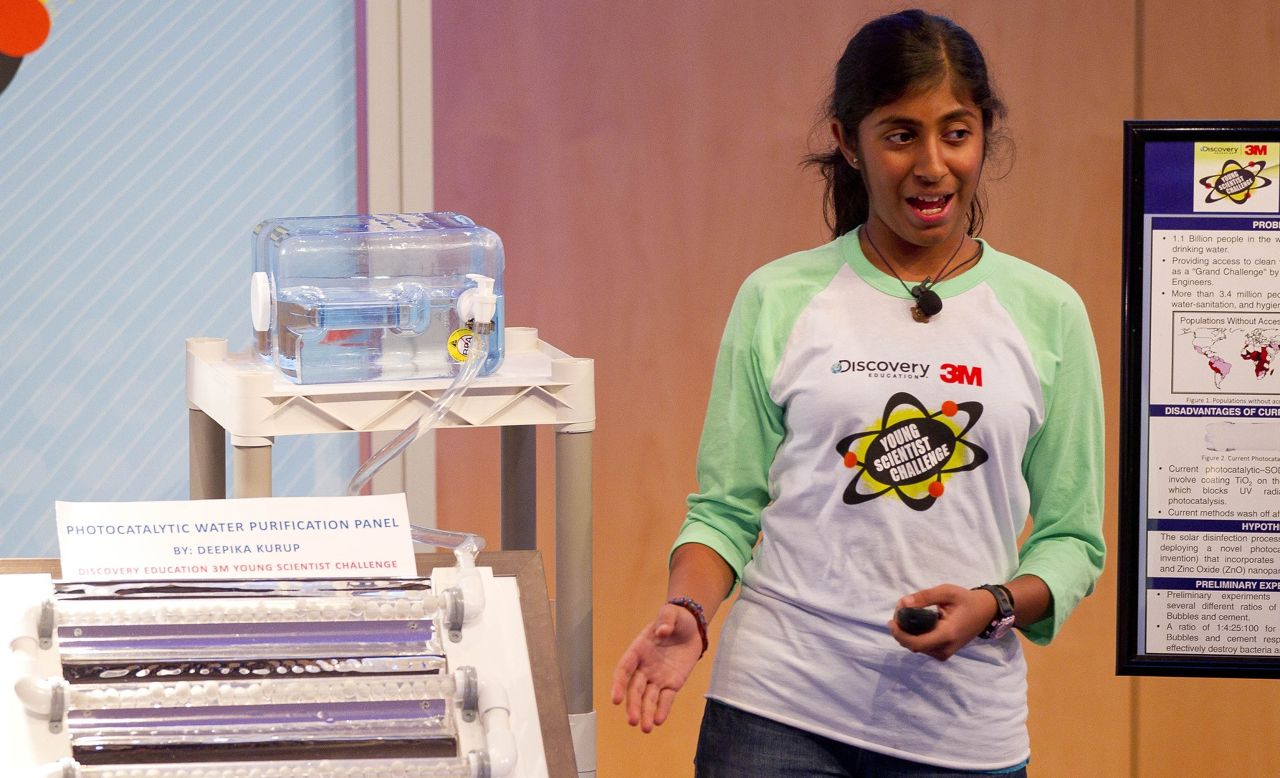
At 17 Years Old, Deepika Kurup Developed a Solar-Powered Water Purifier Capable of Eliminating Bacteria, Won International Awards, and Inspired Solutions for the Global Water Crisis.
In 2012, in the United States, more precisely in the state of New Hampshire, a high school student caught the attention of the international scientific community by presenting a simple, accessible, and science-based solution to one of the planet’s biggest problems: the lack of access to clean drinking water. The name behind the innovation is Deepika Kurup, then 17 years old, whose research was presented and awarded at major science fairs, including nationally and internationally recognized competitions.
The project gained traction after being validated at high-level student scientific events and subsequently reported by outlets such as CBS News, NPR, and Scientific American, highlighting the technology’s potential for use in vulnerable regions of the world.
The Global Problem of Contaminated Water That Motivated the Project
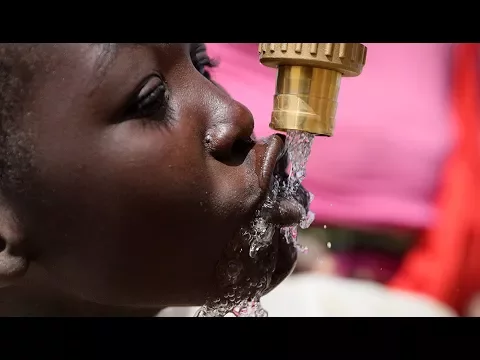

According to data from the World Health Organization (WHO) and UNICEF, around 2 billion people consume water contaminated by dangerous microorganisms, such as coliform bacteria and pathogens that cause serious diseases.
-
Motorola launched the Signature with a gold seal from DxOMark, tying with the iPhone 17 Pro in camera performance, Snapdragon 8 Gen 5 that surpassed 3 million in benchmarks, and a zoom that impresses even at night.

-
Satellites reveal beneath the Sahara a giant river buried for thousands of kilometers: study shows that the largest hot desert on the planet was once traversed by a river system comparable to the largest on Earth.

-
Scientists have captured something never seen in space: newly born stars are creating gigantic rings of light a thousand times larger than the distance between the Earth and the Sun, and this changes everything we knew about stellar birth.

-
Geologists find traces of a continent that disappeared 155 million years ago after separating from Australia and reveal that it did not sink, but broke into fragments scattered across Southeast Asia.

The consumption of unsafe water is associated with millions of annual cases of diarrhea, cholera, and intestinal infections, especially in rural and marginalized communities in Africa, Asia, and Latin America.
Most available solutions rely on electrical infrastructure, chemicals, or expensive filtration systems, which are unfeasible in areas without basic sanitation or continuous access to energy. Faced with this scenario, Deepika decided to seek an alternative based on solar energy, which is abundant in the regions most affected by the scarcity of clean drinking water.
How the Solar-Powered Water Purifier Works
The system developed by Deepika Kurup combines widely studied scientific principles applied in an integrated way in a single low-cost device. Its operation is based on three main steps:
First, the water goes through a physical filtration process that removes solid particles and sediments. Then, the liquid is exposed to ultraviolet (UV) radiation from the sun, known for its ability to inactivate bacteria, viruses, and other microorganisms. Finally, the system uses materials with photocatalytic properties that accelerate chemical reactions capable of destroying the cellular structures of pathogens present in the water.
In tests conducted during science fairs and academic demonstrations, the purifier showed a reduction of close to 100% in detectable bacteria, including fecal coliforms, without the need for electricity or chlorine addition.
Scientific Validation and International Recognition
The innovation earned Deepika Kurup various recognitions in prestigious student science competitions in the United States. Her work was evaluated by panels composed of university professors, researchers, and environmental science experts, who highlighted the practical applicability of the solution.

Outlets such as CBS News published detailed reports on the tests conducted, while NPR addressed the social impact of the invention. The magazine Scientific American cited the project as an example of clean technology developed by youth with real application potential in developing countries.
Potential for Application in Areas Without Access to Electricity
One of the main differentiators of the solar purifier is its independence from complex infrastructure. By using only solar energy, the system can be applied in isolated communities, rural villages, areas affected by natural disasters, and regions where electrical grids are nonexistent or unstable.

Water resource experts highlight that solar-based purification technologies are considered strategic by humanitarian organizations because they reduce logistical costs and increase the autonomy of the populations served.
On a small scale, solutions like this can serve families; on a community scale, they can be adapted for schools, health posts, and community centers.
Technical Limitations and Scalability Challenges
Despite the promising results, Deepika Kurup’s project also highlighted common challenges for early-stage scientific innovations.
The main limitation is in industrial scalability, as transforming an academic prototype into a globally distributed product requires investments, health certifications, and partnerships with manufacturers.
Another point raised by researchers is the need for community education for the correct use of the equipment, ensuring proper maintenance and continuous efficiency. Furthermore, dependence on sunlight may reduce performance in regions with low sunlight during certain times of the year.
Nevertheless, the project is seen as a solid foundation for developing more robust and adaptable solutions.
The Educational and Scientific Impact of the Initiative
After the success of the project, Deepika Kurup pursued an academic career in the scientific field, entering university programs in the United States. Her journey has been cited in initiatives to promote education in STEM (Science, Technology, Engineering, and Mathematics), especially among young people and girls interested in applying science to real-world problems.
Educational institutions and organizations focused on social innovation began using the case as an example of how scientific research, even at the student level, can create a global impact when directed at concrete societal needs.
Why This Story Stands Out on the Global Stage
The case of Deepika Kurup brings together rare elements in a single narrative: validated scientific innovation, low cost, direct social impact, and international recognition.
In a world where the water crisis is likely to worsen with climate change and population growth, decentralized and sustainable solutions are becoming increasingly relevant.
More than a one-off invention, the project symbolizes a scientific approach tailored to the reality of billions of people who still rely on unsafe sources of water for survival.







-

-

-

-

-

-

21 pessoas reagiram a isso.