





 Portuguese
  English
  Spanish
  4 min of reading
  0 comments


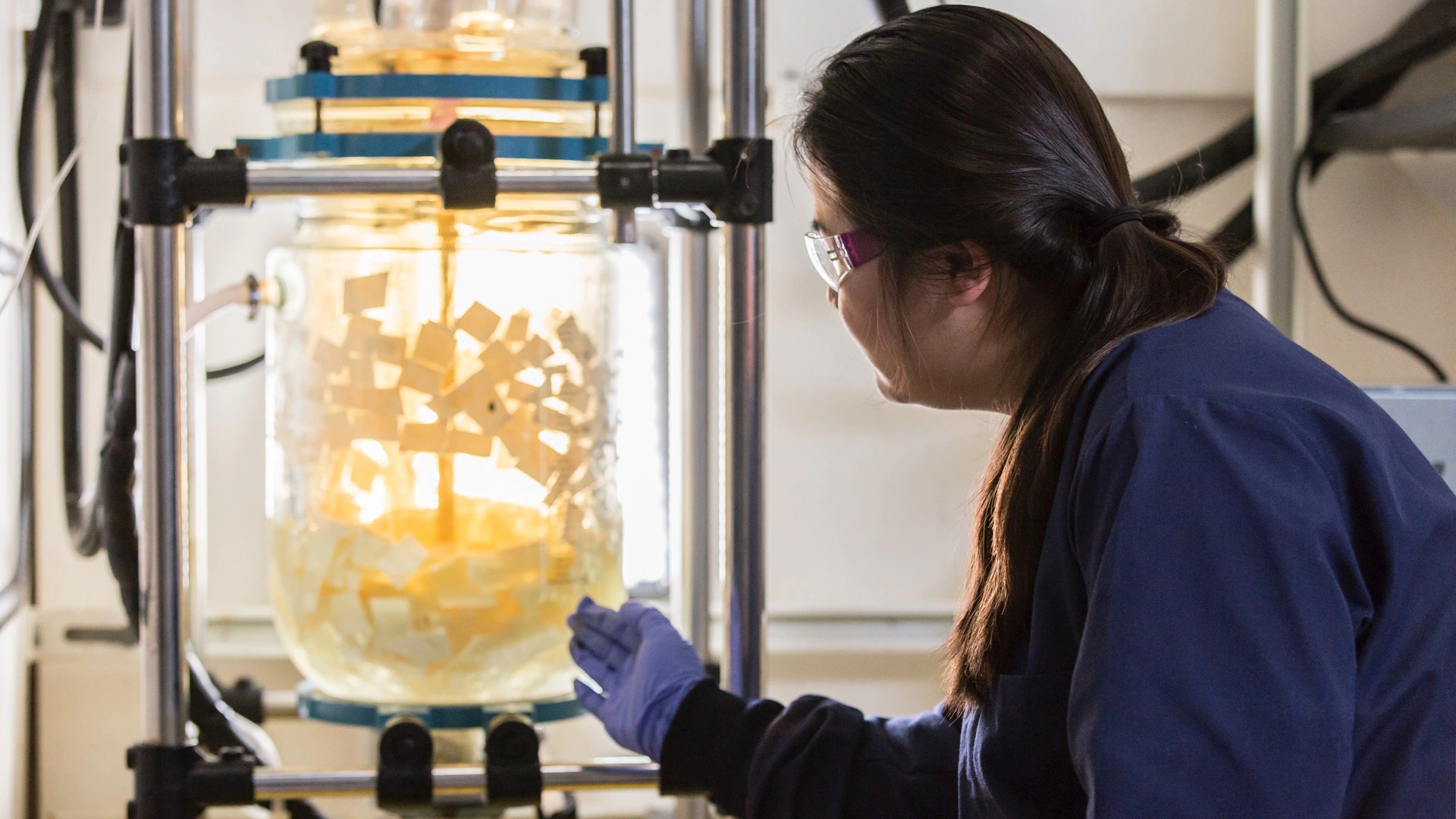
Young Canadian Turned Agricultural Waste Into Biodegradable Bioplastics at the Beginning of Her Career, and With an Innovative Company, She Now Leads Technology That Promises to Remodel Global Recycling.
In Vancouver, Canada, entrepreneur Miranda Wang has built a trajectory that started as a school project and evolved into one of the most watched initiatives in the field of sustainable materials. At 19 years old, still a university student, Wang was already emerging by developing unprecedented approaches to tackle one of today’s biggest environmental problems: the accumulation of plastic and agricultural waste by transforming them into biodegradable materials with commercial and environmental potential.
Wang’s journey began as a shock at the enormity of plastic pollution, a global issue where only a fraction of the produced plastics is effectively recycled, according to data from environmental organizations and the industry. Her first scientific foray was to seek solutions to convert what many considered “waste” into resources, an idea that would later become the foundation of her company.
From Vancouver to International Competitions: The Genesis of the Project
Wang’s journey took shape when, still in high school, she observed the volume of waste accumulated in garbage transfer stations in Vancouver, leading her to conclude that conventional recycling would not solve the plastic problem alone.
-
Motorola launched the Signature with a gold seal from DxOMark, tying with the iPhone 17 Pro in camera performance, Snapdragon 8 Gen 5 that surpassed 3 million in benchmarks, and a zoom that impresses even at night.

-
Satellites reveal beneath the Sahara a giant river buried for thousands of kilometers: study shows that the largest hot desert on the planet was once traversed by a river system comparable to the largest on Earth.

-
Scientists have captured something never seen in space: newly born stars are creating gigantic rings of light a thousand times larger than the distance between the Earth and the Sun, and this changes everything we knew about stellar birth.

-
Geologists find traces of a continent that disappeared 155 million years ago after separating from Australia and reveal that it did not sink, but broke into fragments scattered across Southeast Asia.

Motivated, she teamed up with colleague Jeanny Yao to test new technological possibilities for reuse.
Although the initial attempts considered biological approaches with bacteria capable of degrading plastic compounds, the turning point was applying chemical and engineering principles to convert plastic waste and agricultural raw materials into bioplastics and higher value-added products.
The work earned international recognition early on: Wang participated in scientific competitions and was featured at events like TED with her innovative ideas, which propelled her career development and solidified her interest in large-scale environmental solutions.
Novoloop and the Technology That Changes the Economy of Plastics
After strengthening the initial project, Wang co-founded the company Novoloop (originally called BioCellection), a startup focused on creating industrial processes that transform hard-to-recycle or unrecyclable plastics into materials with commercial applications.
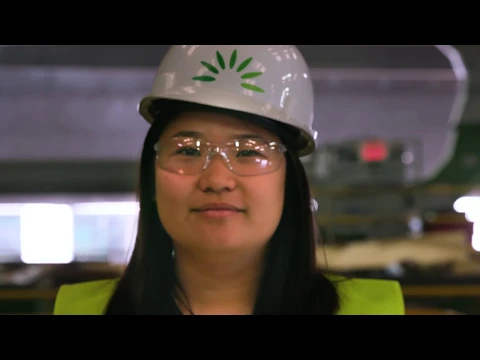

Among these techniques are those related to the conversion of agricultural and plastic waste into reusable and potentially biodegradable compounds, giving new life to what would be discarded.
Although the specific transformation of rice husks and vegetable scraps into biodegradable bioplastics is documented in independent academic research as an excellent field of study — for example, in works exploring biodegradable films derived from flour and rice husk — Wang and Yao’s trajectory is more directly linked to the conversion of plastic waste into valuable chemicals and materials through advanced upcycling processes.
The highlight of Novoloop lies in its ability to transform polyethylene and other problematic polymers into useful products, which can replace virgin materials derived from fossil fuels, an innovation that saves natural resources and reduces the environmental impact of traditional plastic production.
Global Recognition and Impact of the Technology
Wang’s innovation caught the attention of international institutions and organizations. She was one of the winners of the prestigious Young Champions of the Earth award from the United Nations Environment Program, which recognizes young leaders with transformative projects in the environmental field.
In addition, both Forbes and other renowned publications highlighted Wang and her co-founder among the most promising names on the 30 Under 30 in Social Entrepreneurship list, in recognition of how their solutions address complex environmental problems and offer viable economic pathways for the industry.
Wang’s company also attracted interest and investment from private and public sources in initiatives aimed at expanding its technologies and integrating them into existing production systems, highlighting the confidence that markets and institutions place in the approach developed by these young scientists.
Environmental Implications and Technological Agenda
The technology driven by Wang represents an important step towards a circular economy for plastics, a concept that seeks to keep materials in continuous use, preventing large volumes of waste from ending up in landfills, rivers, or oceans.
The relevance of this approach is reflected in the fact that billions of tons of plastics are produced each year, of which only a small fraction is effectively recycled. By converting waste into new high-value products, Novoloop and similar initiatives encourage industries to reduce the use of virgin materials and treat waste as a resource, not as a problem.
The Future of Bioplastics and Sustainable Innovation
Although there is still a long way to go between emerging technologies and their mass adoption, Wang’s work points to new ways of dealing with the global plastic problem. With adequate funding, industrial partnerships, and advancements in production processes, these methods can become fundamental components of more sustainable industrial ecosystems.
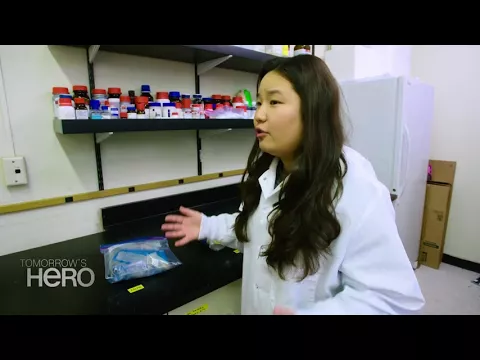
The role of young people like Wang and Yao highlights that creative solutions grounded in rigorous science can come from educational contexts and small projects — but have real global impact, influencing industrial policies and production chains.
In summary, Miranda Wang’s case exemplifies not only a technical innovation but a paradigm shift in how society views plastic waste and agricultural raw materials, paving the way for a more sustainable future.








-

-

2 pessoas reagiram a isso.