





 Portuguese
  English
  Spanish
  5 min of reading
  7 comments


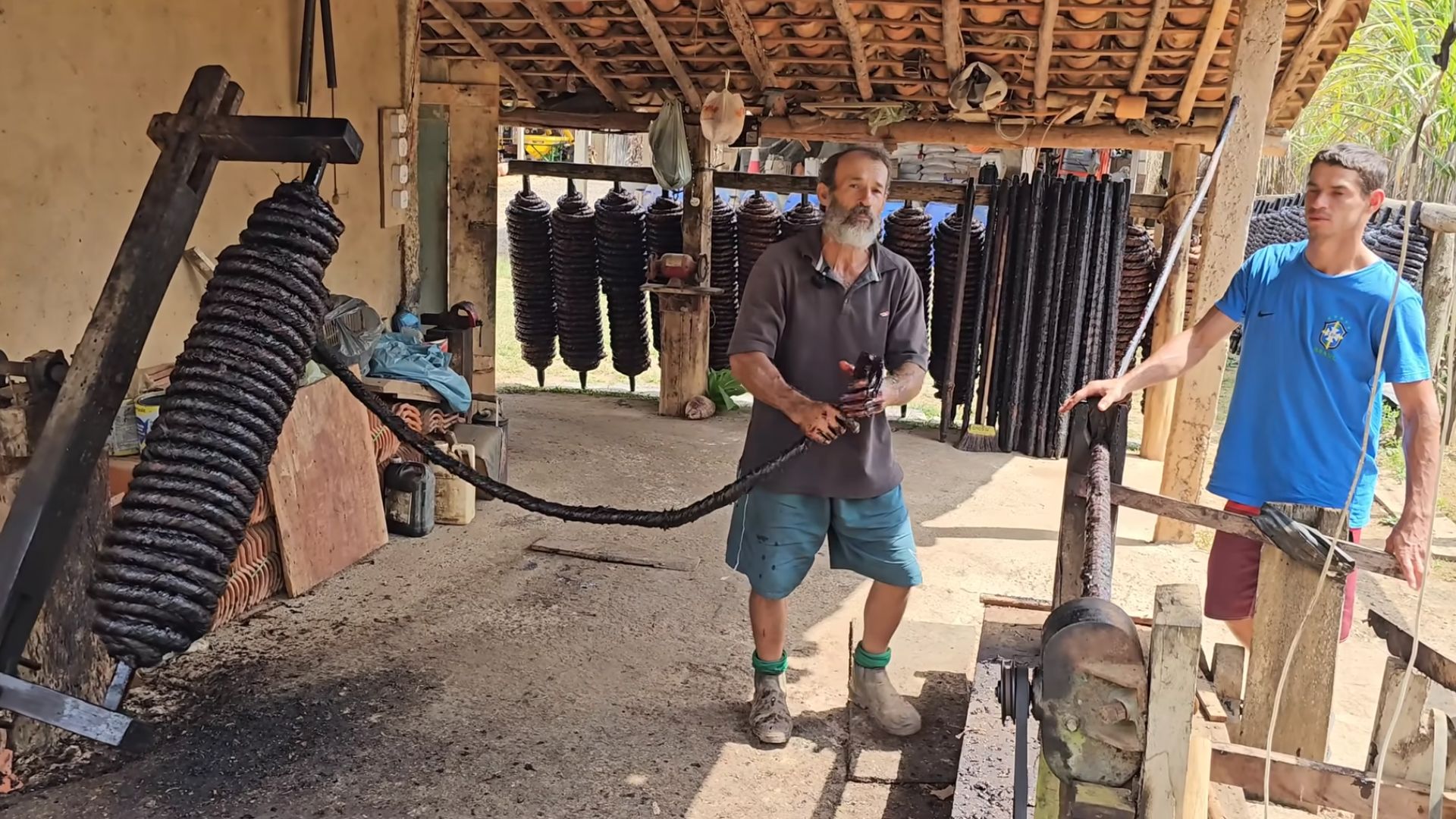


Minas Gerais Farmer Recalls Childhood On The Farm, Details The Artisanal Tobacco Process And Shows How Family Tradition Remains Alive In The Zona da Mata Of Minas Gerais.
The work routine accompanying Mr. Luiz, a 59-year-old farmer, began in childhood.
According to his account in a video published by Paulo Medeiros on the Paulo Medeiros YouTube channel, contact with the farm started early, even before he turned ten, when he was already helping with tobacco plantations to supplement the family income.
The tradition has remained over the decades and today is kept alive with the support of his children, who participate in the cultivation in Rio Pomba, in the Zona da Mata of Minas Gerais.
-
The water that almost everyone throws away after cooking potatoes carries nutrients released during the preparation and can be reused to help in the development of plants when used correctly at the base of gardens and pots, at no additional cost and without changing the routine.

-
The sea water temperature rose from 28 to 34 degrees in Santa Catarina and killed up to 90% of the oysters: producers who planted over 1 million seeds lost practically everything and say that if it happens again, production is doomed to end.

-
An Indian tree that grows in the Brazilian Northeast produces an oil capable of acting against more than 200 species of pests and interrupting the insect cycle, gaining ground as a natural alternative in soybean, cotton, and vegetable crops.
-
The rise in oil prices in the Middle East is already affecting Brazilian sugar: mills in the Central-South are seeing their margins shrink just as ethanol gains strength.


Child Labor On The Farm And The Beginning Of Rural Life
As he mentioned in the video, Mr. Luiz started working around the age of eight.
“I must have been around eight, maybe even younger,” he recalled, explaining that working on the farm was part of the daily life of many families in the region.

He emphasized that, unlike other children, he never had an interest in school and preferred to dedicate his time to work in the fields.
“I liked to work,” he said, remembering that working with tobacco has always been one of the main regional activities.
According to the farmer, there were more producers in the past than there are today.
Today, he estimates that only four families in the local community continue to cultivate tobacco traditionally.
Tobacco Cultivation: Routine, Care And Manual Techniques
In the video, Mr. Luiz details the process that requires daily dedication.
As he highlighted, planting occurs between February and April, and the first harvest usually comes about 90 days later.
The work is manual from start to finish, from harvesting the leaves in the field to drying them in the shade and rolling the sticks known as “tobacco sticks”.
He explained that, contrary to what some might think, the tobacco does not receive coloring.
The dark color arises naturally, resulting from the combination of the plant’s own honey and small amounts of water applied during the “rolling” stage, when the leaves are wrapped.

“There are no products whatsoever. Just tobacco and water,” he emphasized.
Mr. Luiz also mentioned that the tobacco needs to be handled every day.
“You have to turn it every day,” he stated, referring to the process of turning the ropes to ensure even drying.
If this daily care is neglected, he explained that the material can mold, sour, or spoil.
The Strength Of Family In Maintaining Tradition
The sons Douglas and Thiago appear in the video working alongside their father.
According to him, one of them lives on the property and the other visits daily to help, even while maintaining his own activities.
“I try to teach, but they are already teaching me too,” he said jokingly, expressing pride in seeing that the young ones learn and adapt methods over time.

For him, keeping the family united around agriculture is a source of satisfaction.
“We are happy to see that the children have followed the right path,” he commented, remembering that working in the fields, although hard, also teaches discipline and responsibility.
Risks, Accidents And Challenges Faced In The Field
The producer noted that, although cultivation is routine, it is not without dangers.
During the video by Paulo Medeiros, he recounted an episode where a machine almost caught his arm.
“Every job has its risks. We have to try to avoid them,” he reported.
The tobacco can also suffer losses due to climatic factors, such as hail, as well as pests like caterpillars and fungi.

“Not everything is joy; you have to keep an eye out,” he explained.
Still, he said he has been lucky in recent years, without significant losses.
Who Buys The Tobacco And How Marketing Works
As reported by Mr. Luiz, sales are mainly made to buyers from neighboring towns, such as Ubá, Tocantins, and Piraúba.
Many already know the product and return every year.
The farmer stated that he sells both the tobacco rolled in the “stick” and the cleaned and prepared version, depending on each customer’s preference.
He also explained that tobacco from the region is considered strong, and therefore many consumers prefer to mix it with lighter varieties.

“If smoked pure, many people can’t handle it,” he said, highlighting that the producer himself does not smoke and has never been interested in the habit.
Garden, Animal Husbandry And Subsistence Production
Although tobacco is the main source of income during the harvest season, Mr. Luiz maintains other crops for personal consumption.
He plants lettuce, kale, beet, cabbage, jilo, and cauliflower.
He even planted orapro-nobis, a plant that, as he mentioned in the video, has been recommended by doctors for its health benefits.
“It’s great for health,” he stated.
He also raises chickens and pigs, an activity that complements the family’s diet and occasionally allows for some sales.
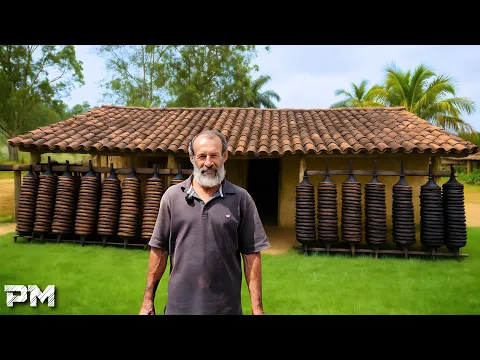

The organization of the property stands out in the video, showcasing chicken coops, gardens, and areas for raising animals in full operation.
Identity With The Land And The Pride Of Living Off The Earth
At the end of the recording, Mr. Luiz told Paulo Medeiros that he never thought of leaving the farm.
“I like everything here,” he stated.
For him, the meaning of his journey lies in working, preserving tradition, and seeing his children following honest paths.
The farmer also emphasized the pride of living off the land, stating that, although he does not consume what he produces, it is tobacco that sustains his home and provides for his family.
“We truly live off the land.,” he concluded.
From Mr. Luiz’s story, told in the video produced by Paulo Medeiros, arises a reflection on how many other trajectories like his remain invisible, even silently sustaining a large part of what reaches Brazilian tables.







Moro em Rio Pardo -RS
Adorei em ver a produção do fumo em corda
Quando eu era criança eu ajudava minha família no plantio e na colheita e até fazer as cordas de fumo . Depois fui estudar na cidade hoje sou professora aposentado com
,73 anos!
Horrível esse site pq vc num consegue ler de tantos anúncios
Vdd, isso deveria ser proibido 😡