





 Portuguese
  English
  Spanish
  5 min of reading
  1 comment


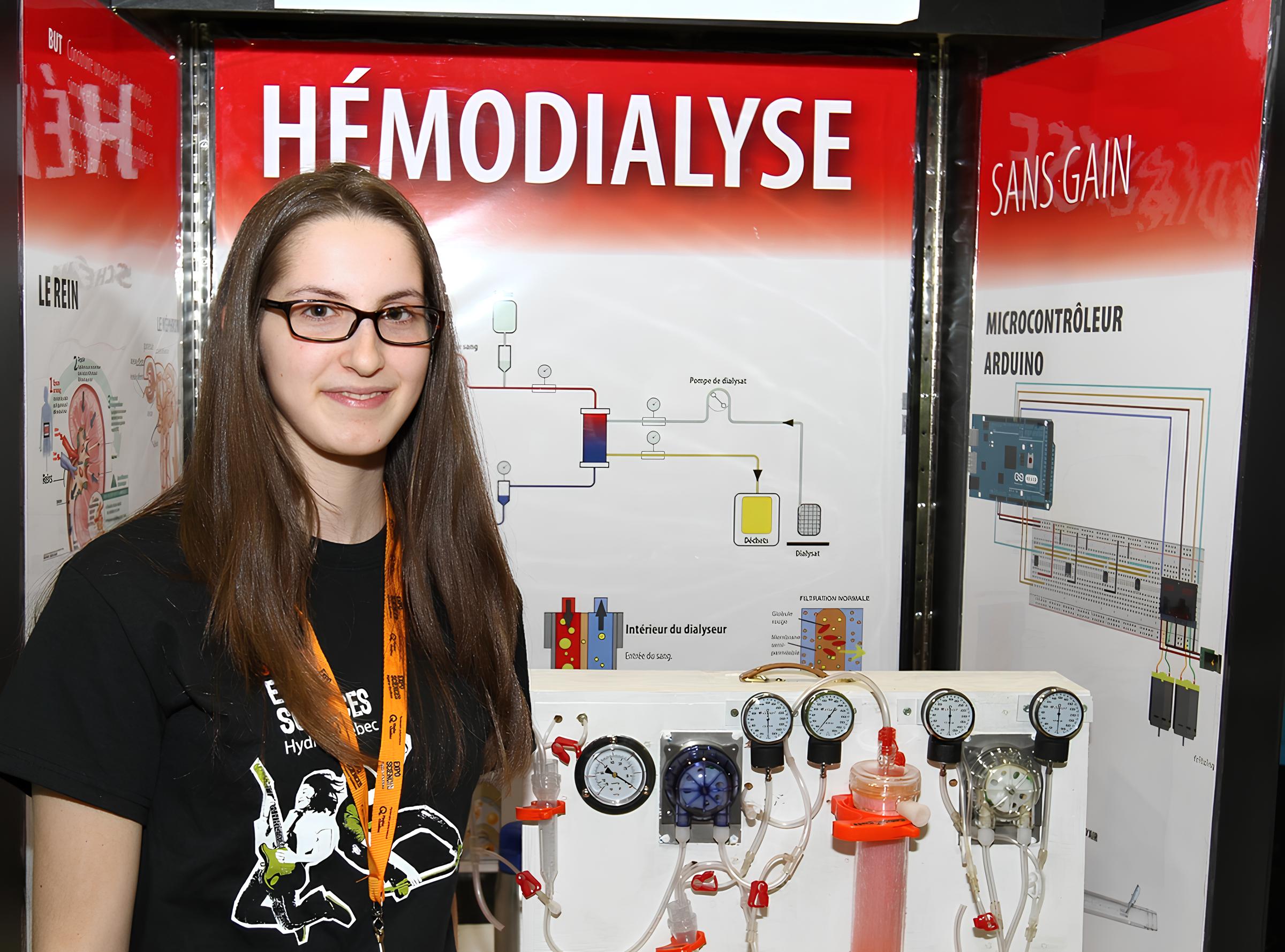


At 17, A Canadian Student Created A Portable Hemodialysis Machine 60 Times Cheaper Than Hospital Models, Attracting Scientists’ Attention.
Few imagine that an idea born within the room of a teenager could challenge one of the most expensive and restricted monopolies of modern medicine. The Canadian Anya Pogharian, then only 17 years old in mid-2015, developed a functional prototype of a portable hemodialysis machine, costing around US$ 600, a value up to 60 times less than conventional equipment, which exceeds US$ 30,000.
The invention caught the attention of scientists and biomedical engineers from around the world, who began to see it as a landmark innovation in the fight to democratize renal treatment.
According to Fortune magazine and the portal Mental Floss, the project earned Anya scientific awards and international recognition for combining design simplicity, low cost, and efficacy in a system that, although still experimental, could transform the future of global nephrology.
-
Scientists find about 1 million giant live eggs hatching in an active underwater volcano, discover a natural furnace on the ocean floor, and reveal one of the most unlikely nurseries ever seen in the ocean.
-
Scientists launched a bait camera to the bottom of the Pacific Ocean and saw something that no one expected.
-
Is a smart plug worth it in a regular home? What does it offer: turns on and off via smartphone, creates routines by schedule, prevents forgotten devices, sometimes monitors consumption, and improves habits without renovation or miracles.
-
Airbus and Mercedes take the G-Class to the skies: the ACH145 helicopter priced at R$ 78 million debuts in São Paulo, unit goes to Brazilian, AMG cabin, 5-blade rotor, and a 2-year wait.


The Beginning: From A Voluntary Experience To Invention
It all started when Anya decided to volunteer at a hemodialysis unit in the city of Montreal, Canada. There, she witnessed up close the exhausting routine of patients who rely on the machine to survive: sessions of up to four hours, three times a week, tethered to large, expensive equipment restricted to hospitals.
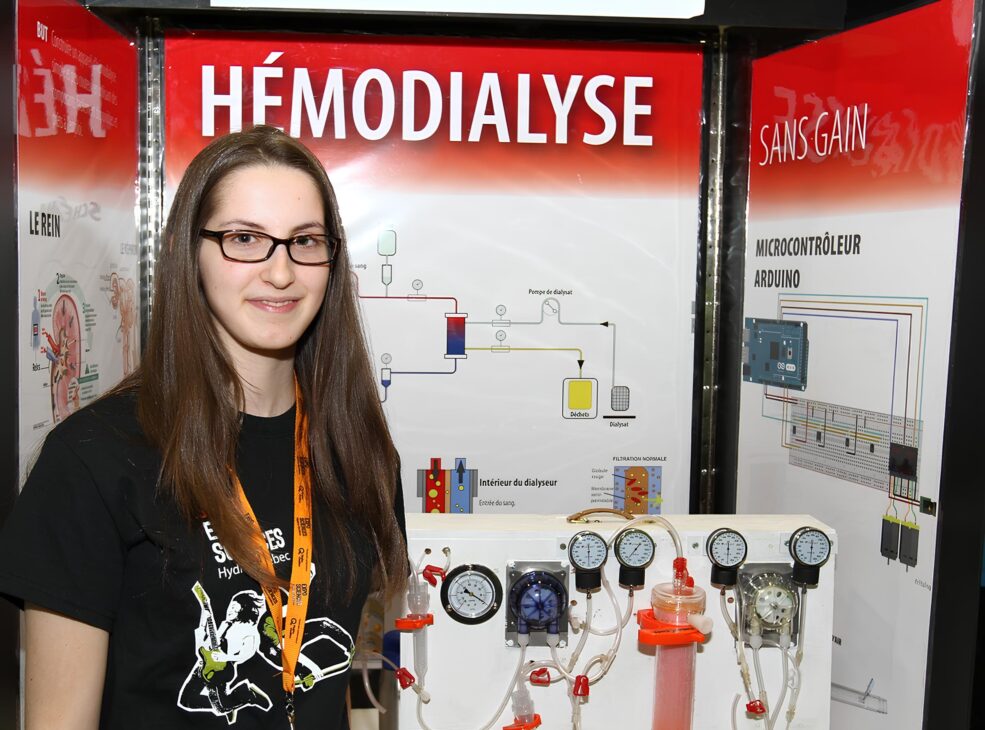
“I realized that many patients do not have easy access to treatment. Some need to travel long distances, and others simply cannot afford the costs. This motivated me to seek an accessible alternative,” the young woman said in an interview with Fortune.
Determined, she spent over 300 hours studying how conventional machines work, analyzing technical manuals and industrial diagrams. From this, she began to assemble a low-cost and easy-to-maintain model, using repurposed components and simple market parts.
The Operation Of The Portable Hemodialysis Machine
Anya’s proposal was simple and ambitious: to create a machine capable of filtering four liters of blood in about 25 minutes, a significantly shorter time than a traditional hospital session.
According to Home Dialysis Basics, the teenager built the prototype with fluid pumps, activated carbon filters, valves, and sensors connected to a microcontroller, which automatically regulates blood flow and the purity level of the dialysate solution.


Although it has not yet been tested on human patients, the machine showed efficiency in laboratory tests, filtering simulated blood solutions with precision similar to that of professional equipment.
The great differentiator, in addition to the cost, is its portability. The model is compact and light enough to fit in a small suitcase, which could allow for distance-supervised home treatments.
The Medical And Social Impact Of The Invention
According to data from the World Health Organization (WHO), over 10% of the global population suffers from some degree of chronic kidney disease, and about 3 million people undergo dialysis regularly.
The problem is that, in low-resource countries, access to treatment is limited or non-existent due to the high cost of equipment and supplies.
In this scenario, the creation of a low-cost machine represents more than an innovation: it is hope for millions of patients.
The Canadian nephrologist Dr. Jason Rioux, consulted by the local press, stated that “an accessible and portable system like Anya’s could be a game changer in preventive and emergency medicine, especially in underserved areas.”
Moreover, the invention reignited the debate about the role of youth in scientific research. Various institutions have begun citing Anya’s case as an example of how curiosity and access to technical knowledge can create real impact even outside large laboratories.
Recognition And Future Challenges
The prototype earned the young woman awards at science fairs and an invitation to present the project at medical technology congresses.
Mental Floss highlighted that Anya designed the machine in just four months, working in her spare time, with minimal supervision from specialists. She was even invited by university laboratories to enhance the system, making it safer and compliant with health standards.
Despite the success, experts emphasize that the road to clinical application is long. The machine would need to undergo clinical trials, biosafety testing, regulatory approval, and international medical certifications before being used on real patients. Nonetheless, Anya’s achievement already places her among the most promising names in young biomedical innovation.
What Happened To The Young Woman Who Created The Portable Hemodialysis Machine
In 2015, the Canadian Anya Pogharian, then 17 years old, drew global attention by developing a prototype of a low-cost portable hemodialysis machine, estimated at around US$ 500, up to 60 times cheaper than conventional equipment, which can cost above US$ 30,000.
Inspired by her experience as a volunteer in a dialysis clinic, she created the project “Dialysave,” which managed to filter four liters of blood in 25 minutes during lab tests at Héma-Québec, exceeding expectations for a student experiment.
After the repercussion, Anya continued to improve the prototype and sought partnerships to validate the equipment. However, the project faced regulatory and technical barriers typical of the medical field — such as the need for certifications, clinical trials, and high industrialization costs — and never reached the commercial phase.
So far, there are no records of “Dialysave” being approved by regulatory bodies or launched on the market. Reports indicate that the project was partially incorporated by a startup called Encapcell Technologies, which is now inactive.
Currently, Anya continues her studies and remains a symbol of youth innovation in health, but the device remains as an experimental prototype, with no authorized clinical use.
A Symbol Of Accessible Innovation
Anya Pogharian’s story transcends the field of medicine. She represents the power of accessible innovation, made with purpose and ingenuity, at a time when medical technology faces pressure for costs and sustainability. Her invention also challenges the traditional research model, showing that transformative ideas can arise outside universities and large corporations.
“I just wanted to help people live better,” Anya said when asked about what motivated her.
Even without launching the product commercially, her initiative already inspires hundreds of young inventors around the world and raises a necessary discussion about how science can be more inclusive and humane.
The portable hemodialysis prototype created by Anya Pogharian is not just a scientific curiosity but a milestone in the democratization of modern medicine. At just 15 years old, she showed that empathy and technical knowledge can walk hand in hand and that innovation can come from the most unexpected places.
If approved and scaled, the project has the potential to save millions of lives in countries with fragile health systems, making renal treatment as accessible as simple household equipment.
Until then, Anya’s achievement remains one of the most inspiring stories of the new generation of inventors, a reminder that great revolutions can be born from those still learning about the world.







Dez anos nao foram suficientes para que essa invenção seja usada? Isso cheira à podridão que há na industria farmacêutica