





 Portuguese
  English
  Spanish
  7 min of reading
  1 comment


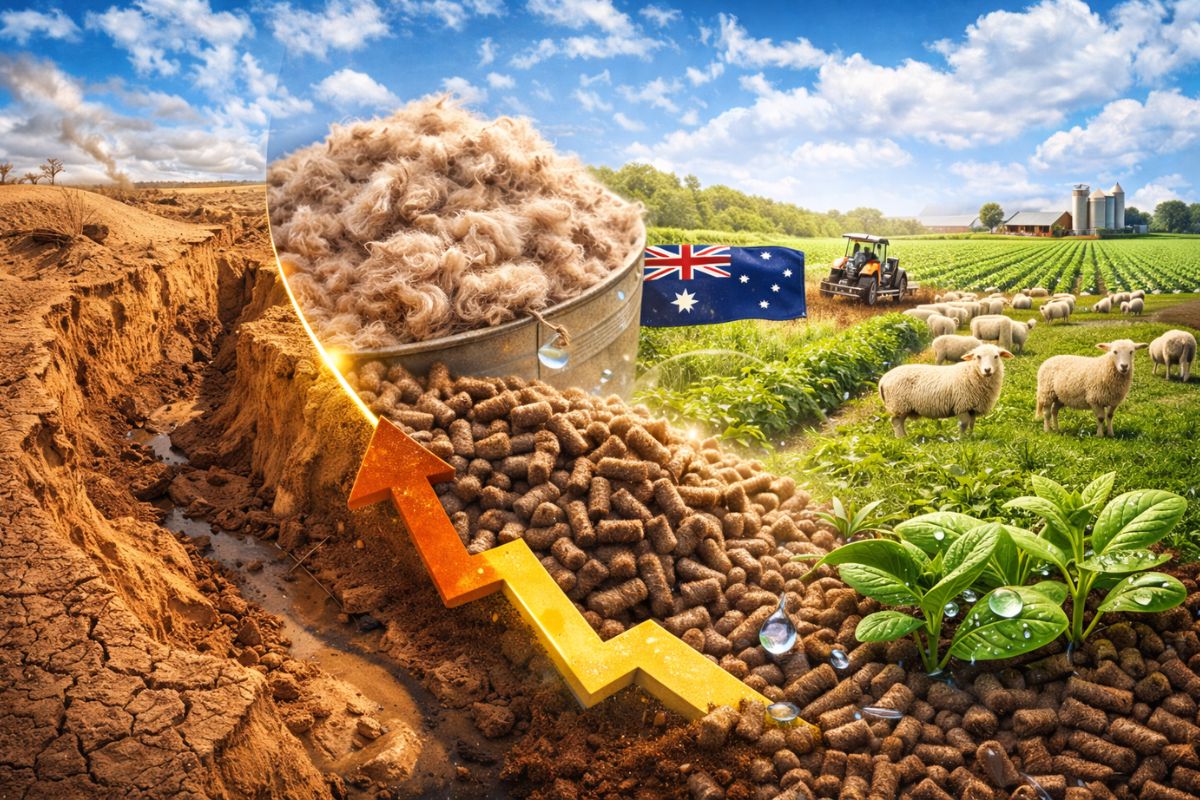


While Australia Loses Millions Of Hectares To Erosion And Sees The Soil Turn To Red Dust, Wool Pellets That Recover Soils, Reduce Losses And Retain Water Are Creating A New Sustainable Industry To Keep Farms Alive.
Australia is an agricultural powerhouse that turns over tens of billions of dollars a year feeding the world, but at the same time its soil is collapsing. Every year, about 4 million hectares of fertile land die, carried away by the wind, in a silent process that transforms productive fields into red dust. In regions like New South Wales, the soil has already lost more than 60% of its organic matter, has ceased to function as a sponge, and has started to behave like loose dust. In this collapse scenario, an unlikely solution has emerged from forgotten waste on farms: wool pellets that recover soils, reduce losses, and give life back to the land.
For decades, mountains of dirty, low-quality wool piled up in sheds. They were unsuitable for the textile industry, costly to dispose of, and took 3 to 5 years to decompose. By looking at these fibers not as waste, but as biological material, scientists discovered that wool can retain up to twice its own weight in water, swell within the soil, and create micro-bubbles of air. In field tests, a simple layer of wool reduced surface evaporation by about 35% and increased soil microbial activity by between 30% and 50%, showing that this scrap could transform into agricultural technology that recovers soils, reduces losses, and maintains moisture where everything used to crack and dry out.
A Giant Barn With The Floor Disintegrating
Australia spans hundreds of millions of hectares and has always been treated as the great barn of the Southern Hemisphere. But behind the crops and the herds lies a silent war against erosion. In some areas, dust storms remove up to 1.8 tons of soil per hectare per year, as if invisible trucks carry fertility into the ocean day after day.
-
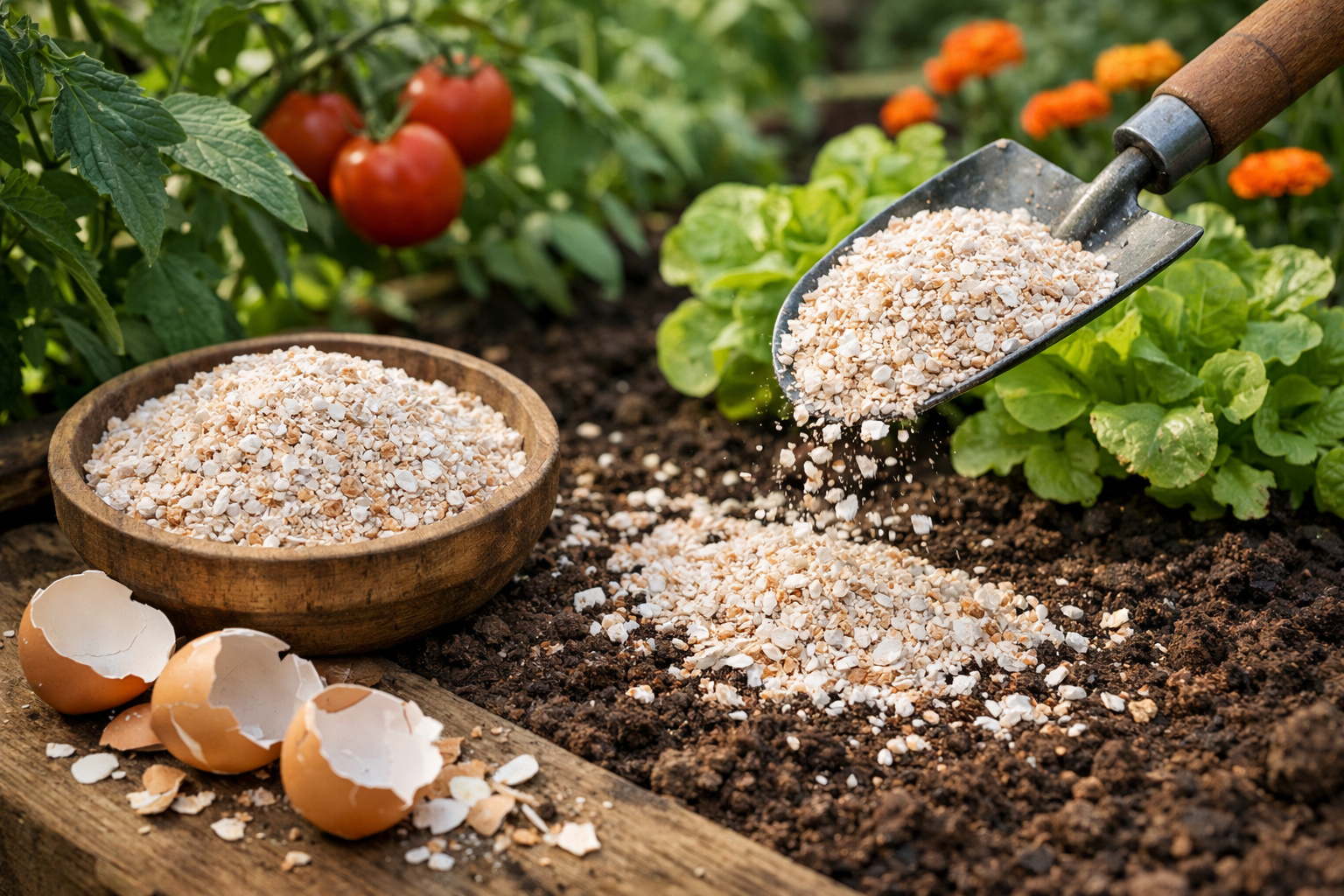
The eggshell that almost everyone throws away is made up of about 95% calcium carbonate and can help enrich the soil when crushed, slowly releasing nutrients and being reused in home gardens and vegetable patches.
-
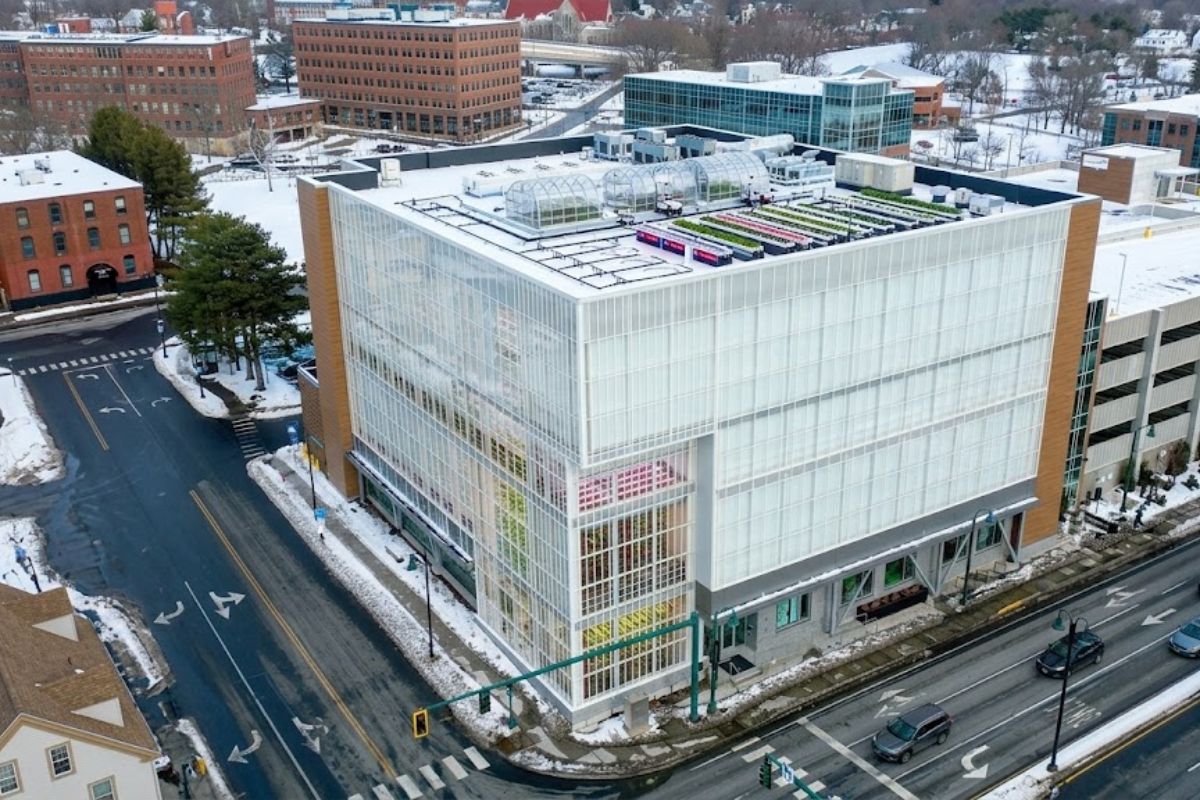
This farm in the United States does not use sunlight, does not use soil, and produces 500 times more food per square meter than traditional agriculture: the secret lies in 42,000 LEDs, hydroponics, and a system that recycles even the heat from the lamps.
-
The water that almost everyone throws away after cooking potatoes carries nutrients released during the preparation and can be reused to help in the development of plants when used correctly at the base of gardens and pots, at no additional cost and without changing the routine.

-
The sea water temperature rose from 28 to 34 degrees in Santa Catarina and killed up to 90% of the oysters: producers who planted over 1 million seeds lost practically everything and say that if it happens again, production is doomed to end.


Today, about 6 million hectares are in the red zone, classified as at extreme risk of erosion, while another 3.2 million collapse due to water degradation. Families in regions like Queensland are abandoning farms they have cultivated for generations because the soil simply stopped holding water.
The land cracked, dried, and died, and all the agricultural infrastructure built over decades started shaking on ground that literally turns to dust.
Wool Too Dirty To Become Clothing, Perfect To Become Agricultural Technology

While the soil cried for help, the wool industry was experiencing its own crisis. Australia, which was once synonymous with white gold from the Merino sheep, saw global demand drop, prices plummet, and factories close. Still, the sheep kept producing. The result was an accumulation of about 200 thousand tons of low-quality wool per year, dirty wool, short, full of debris, with no textile value and difficult to dispose of.
Burning this wool is expensive and environmentally problematic. Burying it is not simple. So it stays there, giant piles rotting in the sun and rain, while just a few meters away, the soil is starving for water, carbon, and structure. The turning point came when researchers decided to look at the wool fiber under the microscope, instead of just at the bale.
They discovered that each strand is a small piece of natural engineering, coated with keratin scales that intelligently absorb and release moisture. Wool can retain between 1.5 and 2 times its weight in water and when it swells in the soil, it creates spaces for air to circulate.
In compacted soil, this physical change means making way for water to enter, for roots to breathe, and for microbial life to start functioning again.
From Field Tests To The Pellet That Recovers Soils, Reduces Losses
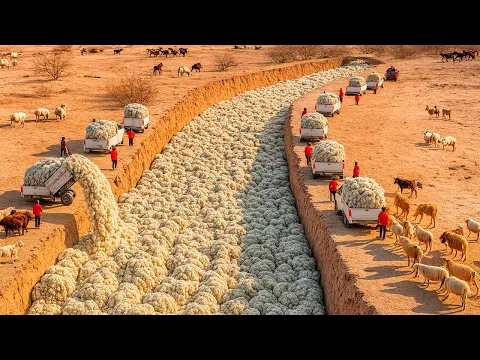

The first tests in New South Wales were simple and revealing. Researchers spread a thin layer of residual wool over degraded soils and began to monitor the behavior of water. Surface evaporation dropped by about 35%, keeping moisture where it matters, in the layers where roots seek water. At the same time, the density of microorganisms in the soil increased by 30% to 50% in just a few months, a clear sign that biology was starting to operate again.
But there was a practical problem: you can’t just throw raw wool in the field and expect uniformity. The fiber tangles, blows away with the wind, clogs machinery, and is difficult to dose precisely. That’s when industrial engineering came in to transform waste into product: dirty wool is shredded into homogeneous particles and then compressed under high pressure and heat into steel molds, producing wool pellets.
Every ton of residual wool generates about 900 kilograms of agricultural pellets, dense, dry, and easy to spread. In practice, each pellet acts as a biological water battery. When buried in dry soil, it remains dormant. With rain or irrigation, it quickly absorbs water, swells, and gradually releases it directly into the root zone.
This is how these pellets recover soils, reduce losses from evaporation, and create a humid microclimate around the plants.
What Happens In The Soil When The Pellets Come Into Action
The effect of the pellets is not just physical; it is ecological. Moisture retention in the soil increases by about 25% to 40%, allowing farmers to irrigate less frequently or survive longer intervals between rains. Each pellet, as it decomposes slowly over months, releases nitrogen, sulfur, and organic carbon, feeding microorganisms and rebuilding soil structure instead of just providing a chemical shock of fertilizer.
In areas previously described as “red concrete,” the texture becomes more crumbly, the color darkens, and roots can penetrate deeper. The soil starts to function as a sponge, recovering some of its capacity to hold water and resist erosion.
In practice, this means that heavy rains no longer wash away large volumes of soil, and dry periods no longer kill crops within weeks.
By combining water retention, organic matter supply, and physical surface protection, wool pellets attack exactly the points where erosion has been winning: lack of carbon, compaction, structural loss, and extreme exposure to wind and sun. In simple terms, they recover soils, reduce losses of water and productivity at the same time.
From Expensive Waste To High-Value Product: The New Wool Industry
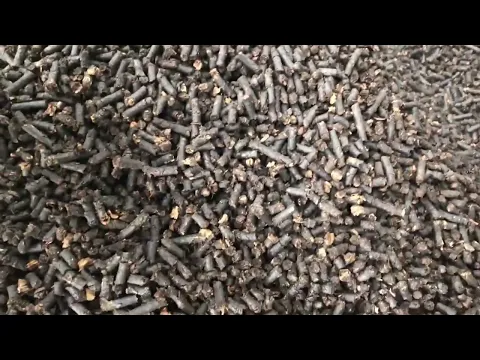
The economic transformation is as dramatic as the ecological one. Previously, producers paid to store or try to dispose of residual wool. Now, this same wool is raw material for a high-value agricultural input, sold at a price that can reach three times the value of the original raw wool.
From a ton of wool with no market, factories extract nearly a ton of pellets that can be packaged, stored, and transported easily. This creates a new value chain around something that was treated as a problem.
In regions like Victoria, dozens of startups have emerged in a short time to shred, press, package, and distribute wool pellets to farms looking to protect their soils and reduce climate risks.
This turnaround changes the financial logic of the field: what was a disposal cost becomes revenue, and what was collapsing soil now has a concrete recovery tool. At the same time, the country reduces the pressure for synthetic fertilizers and improves the image of an agriculture that can now demonstrate results measured in productivity, as well as ecosystem regeneration.
Pellets That Recover Soils, Reduce Losses And Keep Farms On The Map
When looking at the big picture, it is clear that this is not just a new agricultural product, but a regenerative business model. The wool, once a symbol of wealth and later a liability, now closes a virtuous cycle: it comes from the sheep, becomes waste, transforms into pellet, recovers soils, reduces losses of water, nutrients, and production, and finally feeds the microbiology that returns fertility to the land.
For farms threatened by erosion, this means gaining time and margin to continue producing. Instead of abandoning land that cracked and dried, producers now have a simple, biological, and scalable technology to hold the soil in place and rebuild the structure from the ground up. It is a kind of ecological insurance made of wool, operating grain by grain in every centimeter of degraded soil.
More importantly, this solution arises from a marriage between science and waste, without relying on gigantic machines or aggressive chemistry. In a world of finite resources, the idea that waste is merely a lack of imagination finds a concrete example in Australian wool pellets.
And you, if you were a farmer in an area that is losing land year after year, would you bet on wool pellets that recover soils, reduce losses, and create a new income or would you still resist trusting a solution that came from the waste of the farms themselves?




I do agree, not all what you’re saying about sheep losing ground. We are losing more ground with wind farms, and solo panel farms. 1,.2 million acres we’ve lost already in Australia from wind farms and solar panels. For the last 20 years, they’ve been telling us earth is getting hotter. We’ve been putting these electric cars, electric bikes, wind and solar powering and they’re still telling us that earth is getting hotter. Maybe we’re looking at the wrong picture. There’s no reduction in the earth getting cooler in the late 90s early 2000s they were screaming about the ozone layer. What happened to that?