





 Portuguese
  English
  Spanish
  5 min of reading
  0 comments


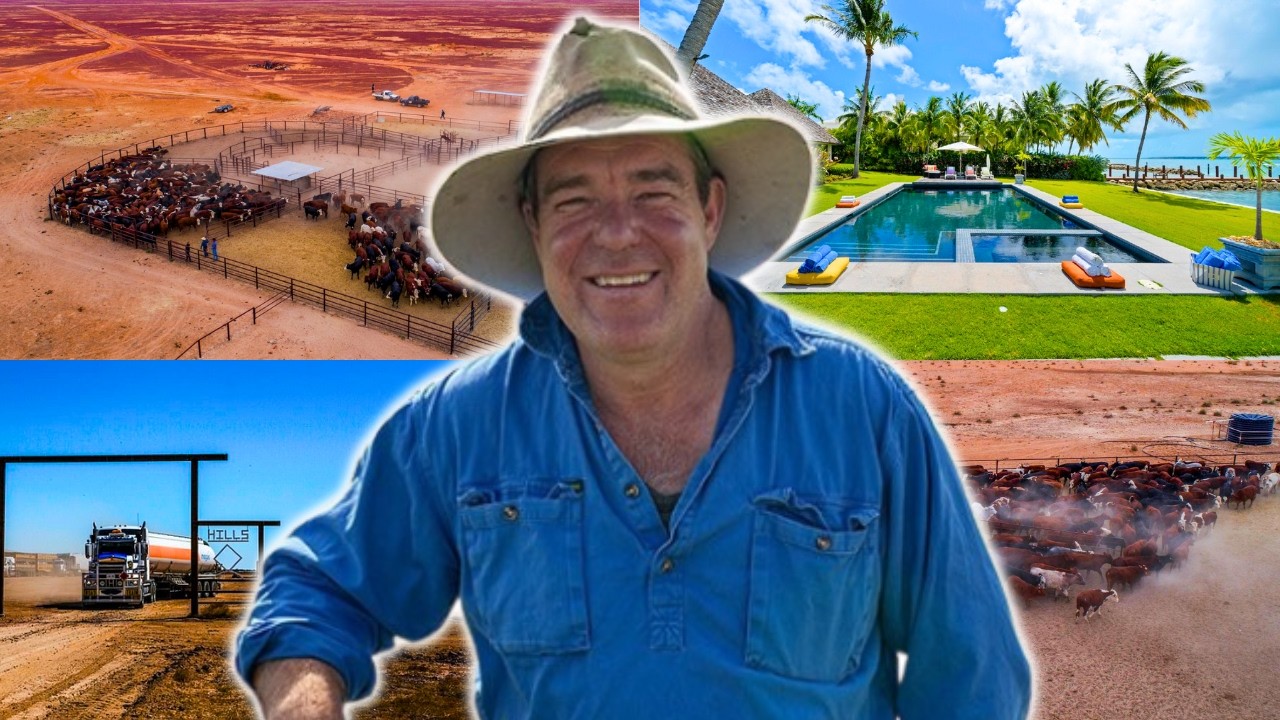
Australian Farms Like Anna Creek Occupy Up to 23,600 km², Surpass European Countries, and Use Satellites, Remote Management, and Extreme Logistics to Produce Meat in the Desert.
In the arid interior of Australia, in regions where the population density is less than one person per tens of square kilometers, there are rural properties whose scale defies any traditional agricultural reference. Cattle stations such as Anna Creek Station, located in the state of South Australia, and Clifton Hills Station, situated in the northeast of the same state, occupy areas so vast that they surpass the territory of entire European countries. Anna Creek, for example, covers approximately 23,600 km², an area larger than Slovenia, Israel, or El Salvador. This data is documented by the Australian Bureau of Statistics (ABS), the Government of South Australia, and historical records from S. Kidman & Co, a traditional Australian cattle company founded in 1899.
These farms did not emerge recently. The consolidation of large Australian cattle stations dates back to the late 19th and early 20th centuries when vast areas of the interior were occupied for extensive cattle breeding in semi-arid and desert environments. Unlike the intensive model in Europe or North America, Australian cattle ranching developed over large tracts of land, with low animal density and a strong reliance on logistical, climatic, and remote monitoring technology.
Where the Largest Farms in the World Are Located and Why They Exist
The Anna Creek Station is located along the Oodnadatta Track, an old exploration route in the interior of South Australia. The region is characterized by a desert climate, with average annual rainfall of less than 200 mm, temperatures that often exceed 45 °C in summer, and nutrient-poor soils. In these conditions, intensive farming is unviable.
-
The sugar-energy sector advances with agricultural technology, but agricultural productivity still raises concerns.

-
The eggshell that almost everyone throws away is made up of about 95% calcium carbonate and can help enrich the soil when crushed, slowly releasing nutrients and being reused in home gardens and vegetable patches.

-
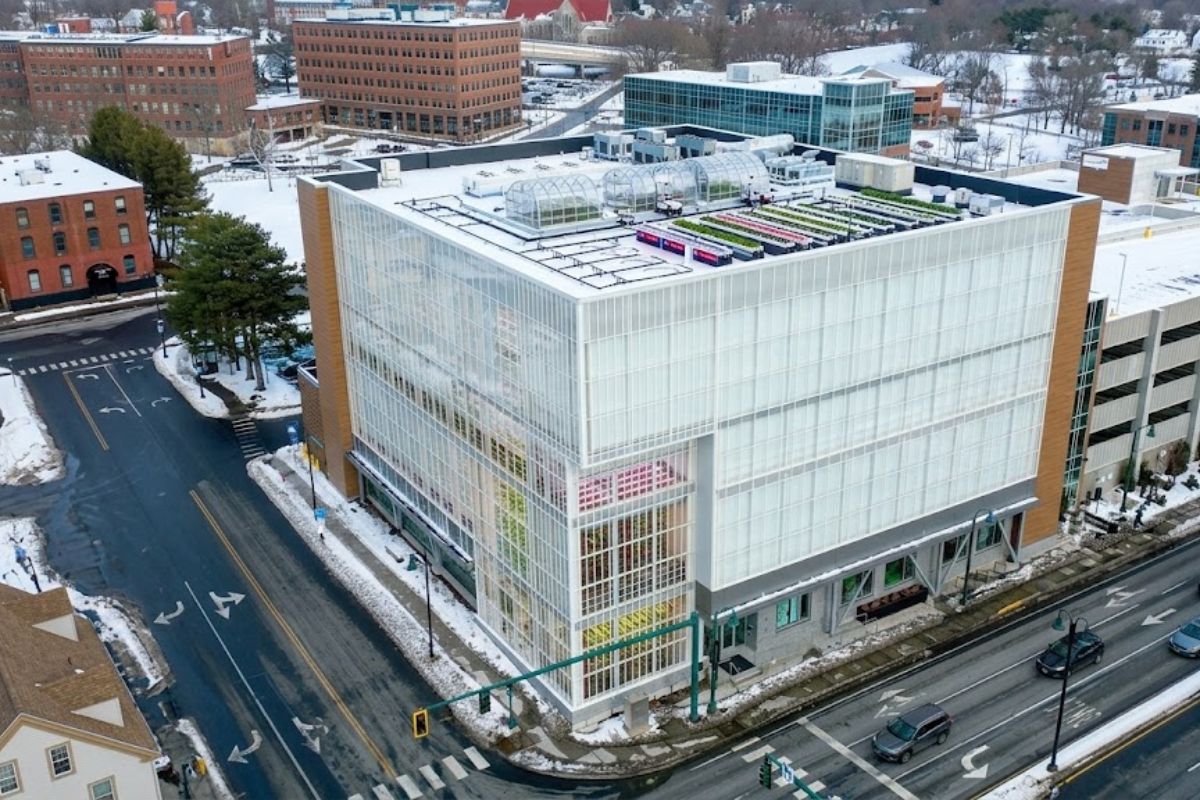
This farm in the United States does not use sunlight, does not use soil, and produces 500 times more food per square meter than traditional agriculture: the secret lies in 42,000 LEDs, hydroponics, and a system that recycles even the heat from the lamps.
-
The water that almost everyone throws away after cooking potatoes carries nutrients released during the preparation and can be reused to help in the development of plants when used correctly at the base of gardens and pots, at no additional cost and without changing the routine.


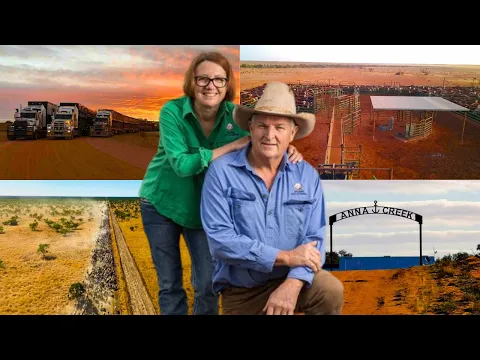

The only economically feasible model is that of extensive continental-scale grazing, where each head of cattle can occupy dozens of hectares.
Meanwhile, Clifton Hills Station, covering around 16,500 km², operates in a transitional area between desert and endorheic basin zones, such as the Lake Eyre Basin, one of the largest internal basins in the world.
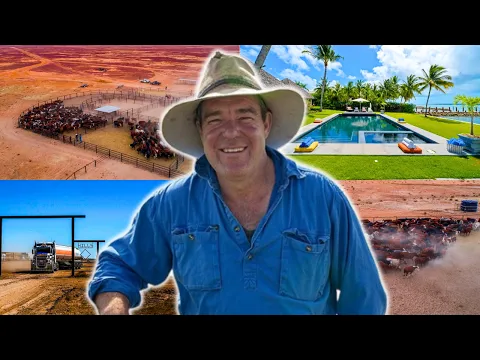
These areas can remain dry for years, and during rare events of extreme rainfall, they temporarily transform into vast green fields, allowing for rapid fattening of the herd. This irregular cycle has shaped the entire logic of Australian cattle ranching.
Cattle Production in Areas Larger Than Countries
While entire European countries operate with fragmented agricultural areas, Australia concentrates cattle herds on unique properties with continental dimensions. According to data from the Australian Bureau of Statistics, some stations maintain herds between 10,000 and 20,000 head, numbers that may seem modest at first glance but reflect the region’s extreme environmental limitations.
Productivity is not in density but in logistical and operational resilience. Each animal may require 10 to 20 hectares, depending on the climatic season. This explains why areas of over 20,000 km² are necessary to maintain herds that would fit in much smaller areas in other countries.
Remote Management, Satellites, and Technology in Isolated Areas
The operation of these farms would be impossible without technology. Since the 2000s, Australian cattle ranching has incorporated satellite remote sensing, real-time climate monitoring, GPS tracking of herds, and radio and satellite communication.
According to reports from the CSIRO – Commonwealth Scientific and Industrial Research Organisation, the use of satellite imagery allows for the identification of pasture growth, water availability, and animal movement in areas where physical displacement can take days.
Human management is also unique. Many of these properties have fewer than 20 permanent staff, responsible for areas larger than several European countries. The routine includes the use of light aircraft, helicopters, and more recently, drones, for cattle counting, fence inspection, and locating isolated animals.
Invisible Infrastructure: Water, Fences, and Extreme Logistics
One of the biggest challenges these farms face is water. There are no permanent rivers in most of these regions. The historical solution has been the drilling of deep artesian wells, connected to the Great Artesian Basin, one of the largest underground aquifers on the planet.
According to data from the Department of Climate Change, Energy, the Environment and Water of Australia, thousands of kilometers of underground piping were installed throughout the 20th century to bring water to strategic points on the farms.
Fences, when they exist, can stretch for hundreds of kilometers. In many sections, confinement is natural, defined by geographical barriers, impassable areas, or simply by the impossibility of cattle traveling long distances without water.
Production Aimed at the Global Market
Despite the isolation, these farms are part of a highly integrated global chain. The cattle raised on these stations are primarily destined for export, whether as processed meat or live cattle shipped to countries in Asia and the Middle East.
Australia is among the largest beef exporters in the world, according to data from the FAO – Food and Agriculture Organization of the United Nations.
Transporting cattle involves long journeys to processing centers, using specialized trucks and, in some cases, rail transport. The entire system depends on precise logistical planning, as errors can result in significant losses due to heat stress and distance.
Comparison with European Countries
To size the scale of these properties, just compare official numbers. Anna Creek Station, with its 23,600 km², is larger than:
– Slovenia (20,273 km²)
– Israel (22,145 km²)
– El Salvador (21,041 km²)
– Historical Eastern Belgium
These numbers are not symbolic; they illustrate a productive model that is only possible in countries with vast territory, low population density, and a tradition of extensive occupation, like Australia.
Risks, Criticism, and Future Challenges
The model also faces criticism. Researchers from the Australian National University (ANU) and the University of Adelaide warn of the environmental impacts of extensive cattle ranching in fragile areas, including soil compaction, degradation of native pastures, and excessive dependence on underground aquifers.
Extreme weather events, such as prolonged droughts, have become more frequent in recent decades, increasing the economic risk of these operations.
In response, many stations have been adopting regenerative management practices, reducing livestock density during critical periods, and continuous environmental monitoring. The goal is to maintain economic viability without collapsing the ecosystems of the Australian interior.
An Impossible Model to Replicate
The giant farms of Australia are not just geographical curiosities. They represent an extreme agricultural model, shaped by geography, climate, history, and technology.
It is a system impossible to replicate in most countries around the world but continues to operate with surprising efficiency in one of the most hostile environments on the planet.










-

-

6 pessoas reagiram a isso.