





 Portuguese
  English
  Spanish
  7 min of reading
  0 comments


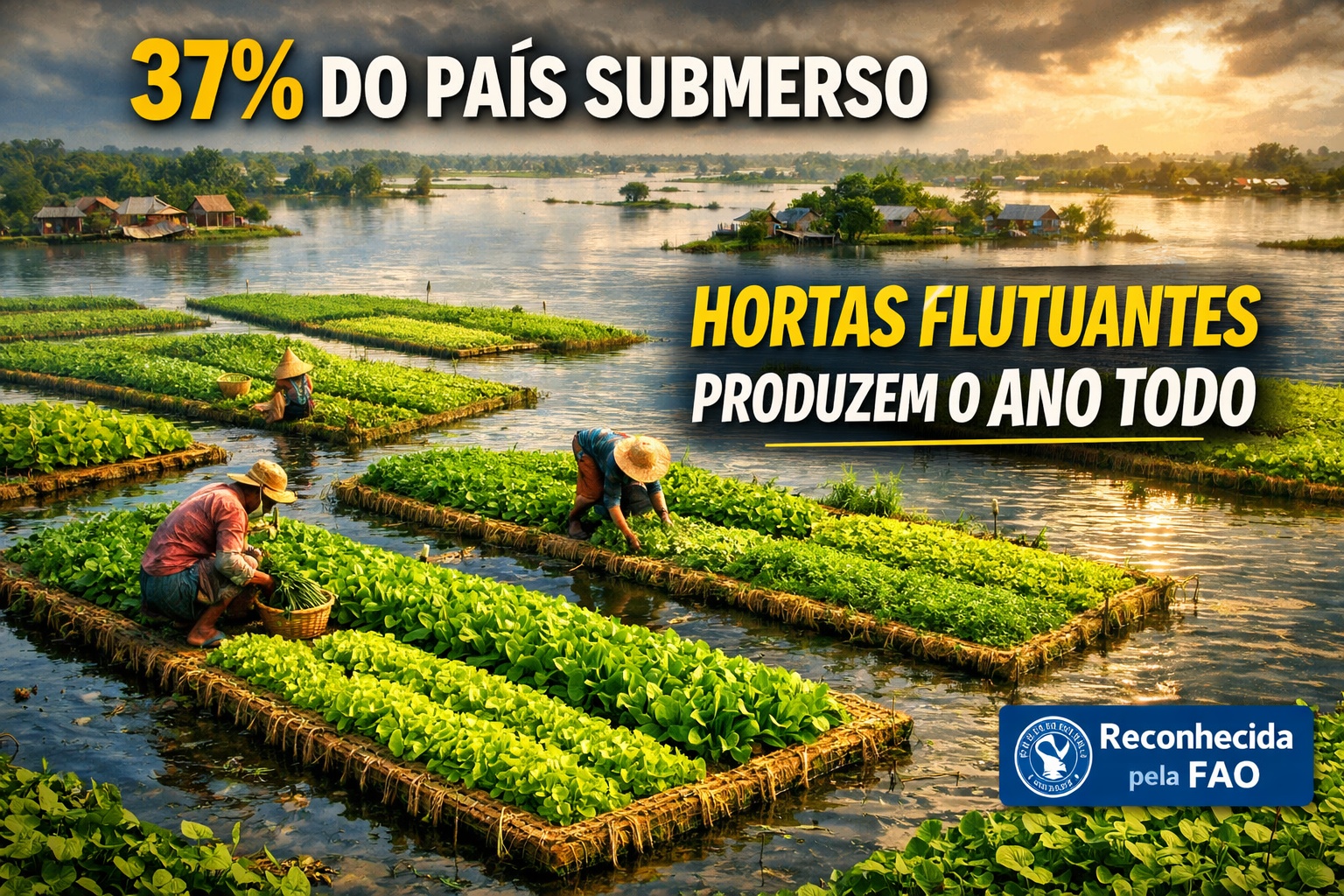
Baira Technique, Practiced for Over 400 Years in Bangladesh, Creates Floating Gardens Up to 55 Meters Long and Ensures Agricultural Production Even During Six Months of Flooding.
In regions of Bangladesh where floodwaters remain for six months each year, farmers have developed an agricultural system that seems to defy physics: gardens that float. The Baira technique, also known as Dhap, uses layers of water hyacinths and other decomposing aquatic plants to form floating platforms up to 55 meters long where vegetables, spices, and even rice seedlings grow without touching the soil.
The method has been practiced for over 400 years in the floodplains of southern Bangladesh and gained global recognition in 2015 when the Food and Agriculture Organization of the United Nations (FAO) designated it as a Globally Important Agricultural Heritage System (GIAHS). Between 60% and 90% of residents in flood-affected areas have adopted the technique, which ensures continuous production even during the most severe monsoons.
When Land Disappears Under Water
Bangladesh is a deltaic country where more than half of the territory consists of floodplains. Located in the lowest region of the basins of the Ganges, Brahmaputra, and Meghna rivers, the country faces annual floods that cover vast stretches of arable land.
-
The sugar-energy sector advances with agricultural technology, but agricultural productivity still raises concerns.

-
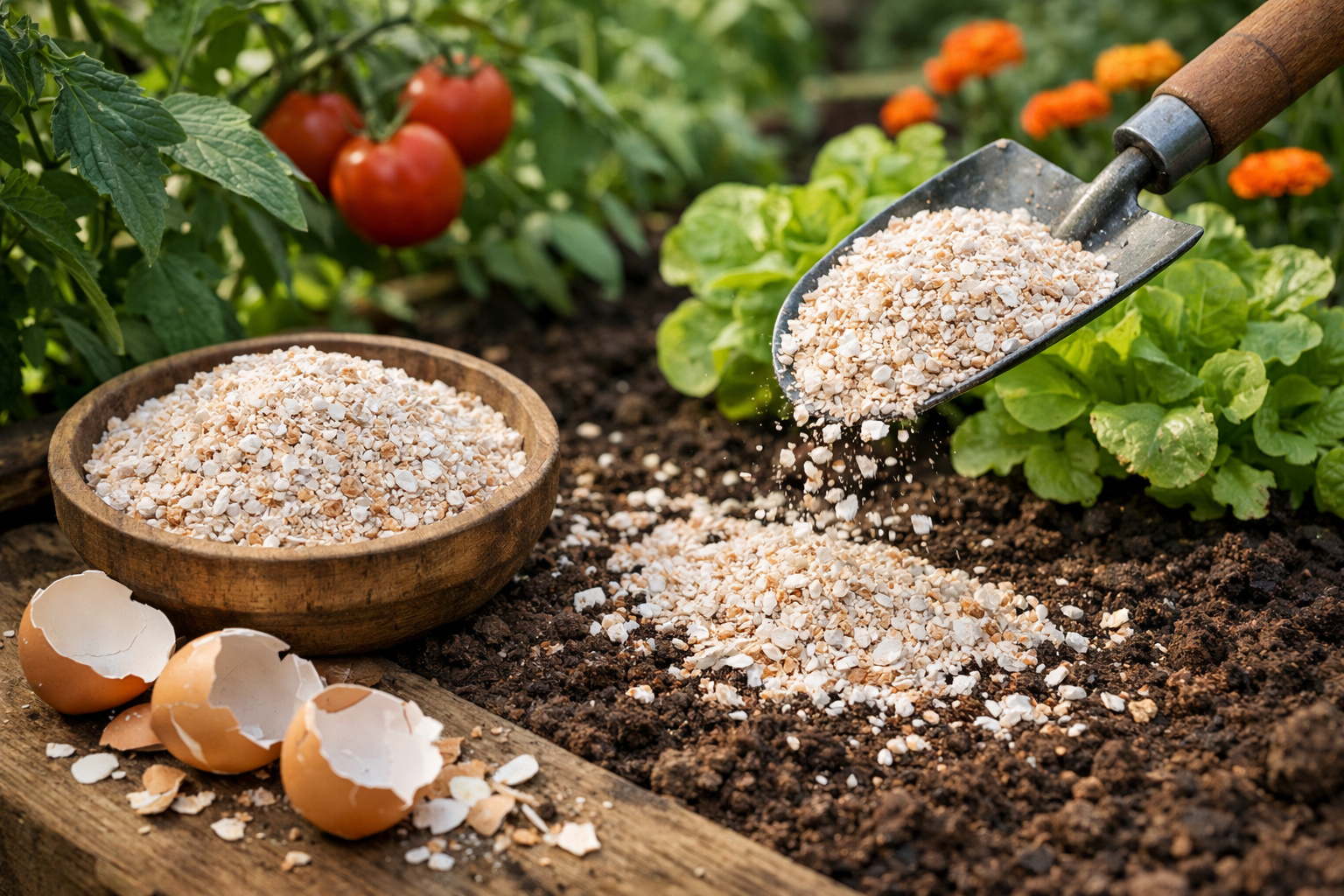
The eggshell that almost everyone throws away is made up of about 95% calcium carbonate and can help enrich the soil when crushed, slowly releasing nutrients and being reused in home gardens and vegetable patches.
-
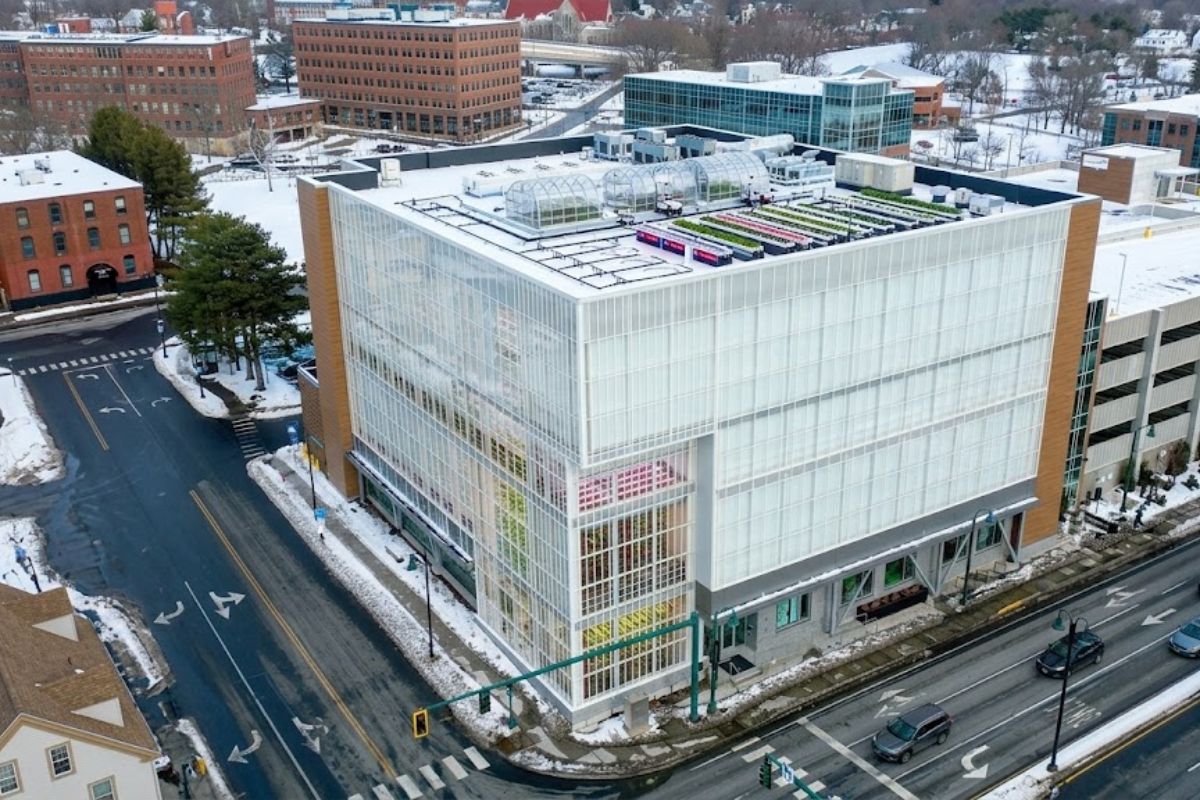
This farm in the United States does not use sunlight, does not use soil, and produces 500 times more food per square meter than traditional agriculture: the secret lies in 42,000 LEDs, hydroponics, and a system that recycles even the heat from the lamps.
-
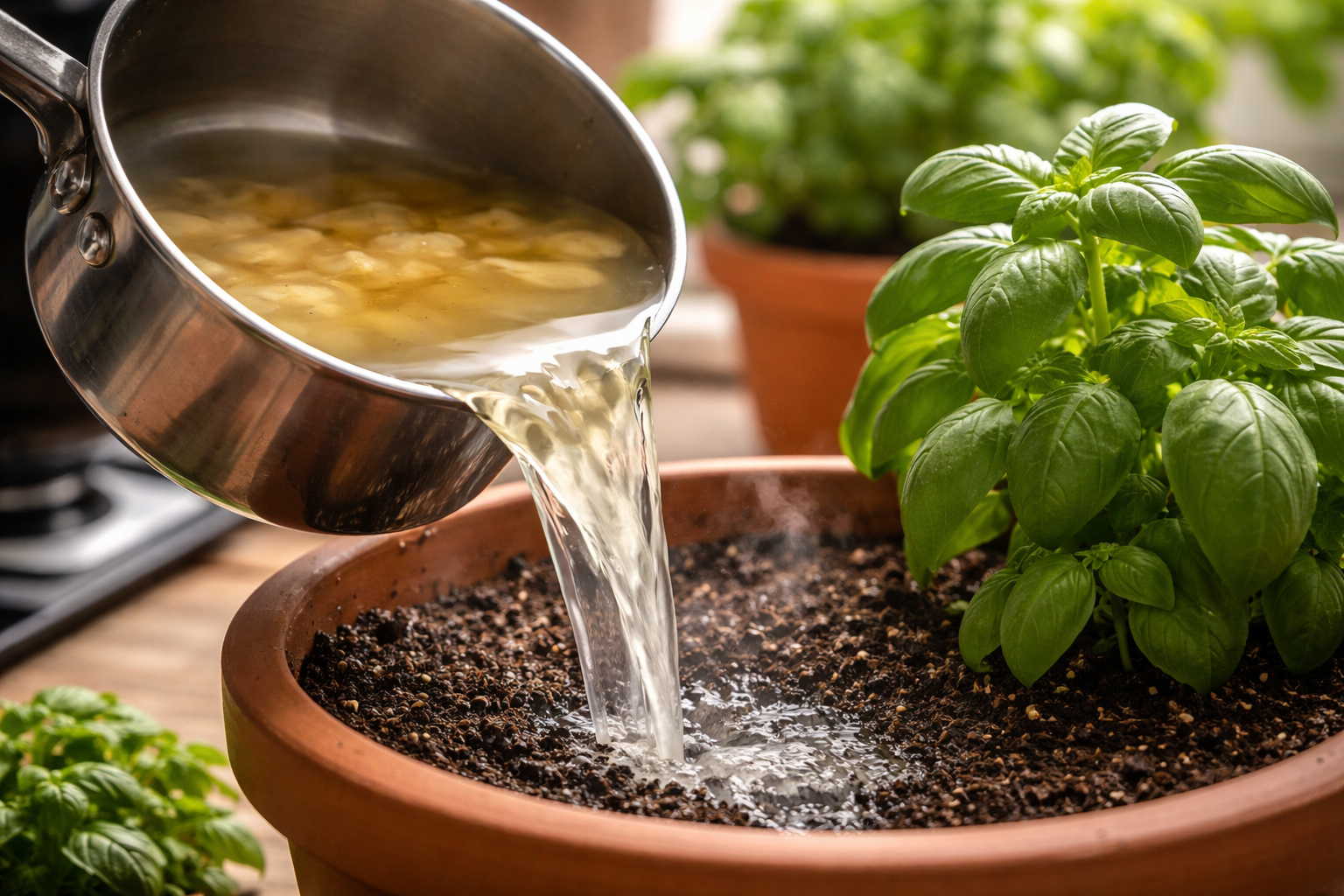
The water that almost everyone throws away after cooking potatoes carries nutrients released during the preparation and can be reused to help in the development of plants when used correctly at the base of gardens and pots, at no additional cost and without changing the routine.

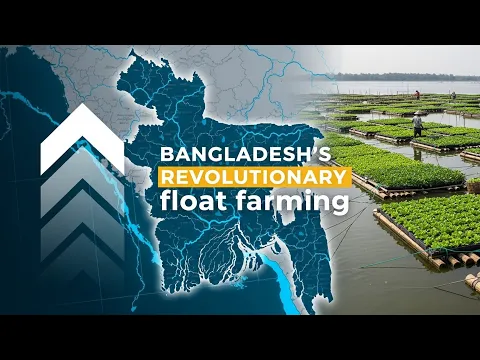

In the districs of Gopalganj, Pirojpur, and Barisal in the south of the country, waters remain accumulated from June to October, making conventional farming impossible during the monsoon season, precisely when rains would allow for greater plant growth.
For rural communities that depend on agriculture for survival, this annual flooding represented a lethal dilemma: either abandon the land for half the year and migrate to cities or go without food production.
The solution that emerged four centuries ago was radical: if solid land disappeared beneath water, farmers would transform the water itself into cultivable land.
The Construction of a Floating Island
The construction of a floating bed begins between June and July when the monsoon waters start to rise.
Farmers collect water hyacinth, an invasive aquatic plant that grows abundantly in the rivers and canals of Bangladesh.
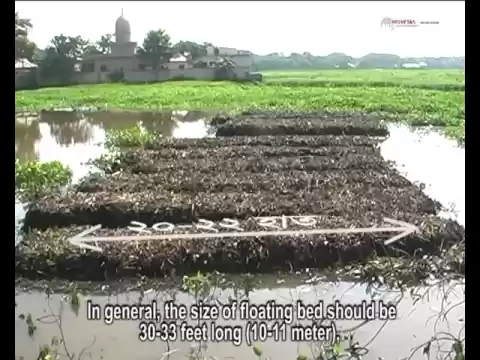
The hyacinths are stacked in successive layers with 8 to 10 days between each layer, allowing the lower vegetation to begin decomposing while the upper one maintains structural integrity.
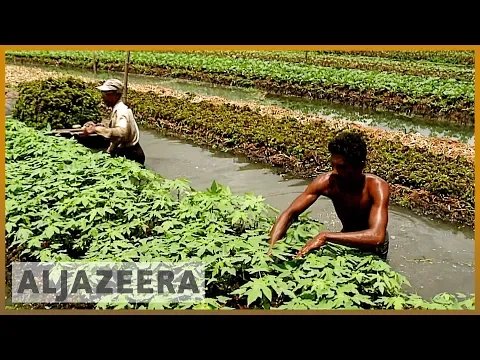
A typical platform is about 1 meter wide, 10 to 15 meters long, and approximately 0.5 meters thick, although some experienced farmers build structures up to 55 meters long.
On top of the water hyacinth base, layers of decomposing organic matter are added: cow dung, compost, rice straw residues, wheat, ashes, and coconut fibers. Some regions also use other aquatic plants such as water lettuce, water lentils, aquatic moss, and submerged herbs.
All this decomposed plant material forms a nutrient-rich substrate that functions as soil, yet floats naturally. Bamboo stakes are driven into the edges to anchor the platforms and prevent them from being swept away by currents.
The average cost to build a complete floating platform is about 8,000 Bangladeshi taka, equivalent to approximately US$ 94.
What is Grown on the Water in Floating Gardens
On floating platforms, farmers cultivate an impressive variety of vegetables and spices: tomato, okra, pumpkin, cucumber, eggplant, spinach, kale, cauliflower, cabbage, radish, carrot, bell pepper, onion, garlic, ginger, turmeric, and papaya. During the monsoon season, rice seedlings are also produced and then transplanted to the fields when the waters recede.
The production is remarkably reliable. According to FAO reports, yields on floating beds are stable enough to ensure that the system is the best form of food production for 60% to 90% of people in flood-prone areas of southern Bangladesh.
The average profit for farmers is US$ 140 per 100 square meters of garden during the monsoon season.
A study in Jessore showed that 10 floating platforms generated a total revenue of US$ 280 against a cost of US$ 74.60, resulting in a net profit of US$ 205.40 just during the monsoon period.
Since the technique does not require chemical fertilizers or pesticides and uses abundant local materials, operating costs remain low while organic products receive special attention from buyers in local markets.
Navigating Between Islands of Vegetables
During the monsoons, farmers move between the floating platforms using small boats. They work by immersing the lower part of their bodies in the water to harvest, plant, water, and care for the plants. When the platforms are in deeper water, farmers pull them closer to the banks for easier management.
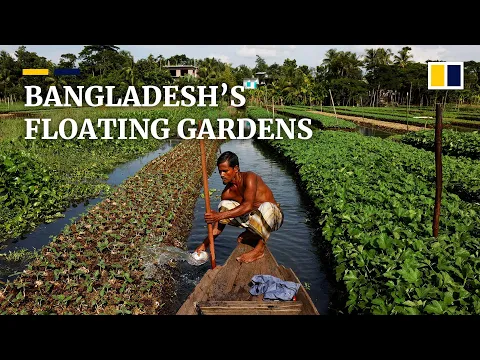
The light purple flowers of the water hyacinth contrast with the deep green leaves and cultivated vegetables, creating a unique landscape that attracts the attention of visitors. During peak season, it is possible to see hundreds of colorful floating islands scattered across the channels and floodplains, forming a green and purple mosaic over the brown waters.
The Fate of the Platforms After Harvest
When the dry season begins and the monsoon waters recede, the floating platforms are no longer needed to float. At that point, farmers dismantle them and transfer all the decomposed material to the fields where they cultivate their winter crops.
The decomposing organic mass acts as an extremely rich fertilizer in nitrogen, phosphorus, and potassium, dramatically improving soil fertility for growing tomatoes, cauliflower, spinach, potatoes, carrots, and other dry season vegetables.
This integrated cycle transforms what would be waste into a valuable resource. The water hyacinth, considered an invasive pest that clogs channels and reduces oxygen levels in water, is removed from the aquatic system and converted into human food and then into organic fertilizer. The system is completely biodegradable and leaves no waste at the end of the season.
Global Recognition and International Expansion
On December 15, 2015, the FAO officially designated Bangladesh’s floating agriculture as a Globally Important Agricultural Heritage System (GIAHS), placing it alongside only 36 agricultural systems recognized worldwide at that time for their combination of agricultural biodiversity, resilient ecosystems, and valuable cultural heritage.
The FAO emphasized that the technique provides real solutions for food security, conservation of natural resources, and sustainable rural development in a context of climate change and economic challenges.
Maria Helena Semedo, deputy director-general of the FAO, stated that small-scale farmers and traditional agriculture can offer concrete answers when proper policies and investments are directed toward them.
Since 2005, the FAO had identified floating agriculture as a good practice for climate change adaptation. The Intergovernmental Panel on Climate Change (IPCC) included the technique in its Fifth Assessment Report as an example of sustainable farmer-led technology. The United Nations Framework Convention on Climate Change (UNFCCC) highlighted work with floating gardens in Bangladesh as an example of agricultural adaptation.
Organizations such as Practical Action, IUCN, CARE, and the Bangladesh Center for Advanced Studies (BCAS) have worked for years to document, improve, and disseminate the technique. In 2015, the government of Bangladesh and UNDP launched training programs to expand the technique through the Community-Based Adaptation to Climate Change project.
Variations of floating gardens are already used in Myanmar (where they are called kaing), Cambodia, Mexico (chinampas), India (radh in Kashmir and pontha in the southeast), and even in Vietnam, where pilot projects have been implemented by the FAO, UNDP, and Practical Action.
Contemporary Challenges and Innovations
Despite its proven success over centuries, floating agriculture faces modern obstacles. The technique is labor-intensive, especially in the initial phase of building the platforms and harvesting. The younger generation shows less interest in such physically demanding work, preferring to migrate to cities in search of less arduous jobs.
Market access is limited in many remote areas where the technique is practiced. In Pirojpur, farmers reported devastation due to low vegetable prices, impacting income and the sustainability of the practice.
Extreme weather events, such as intense tropical cyclones or storm surges, can destroy floating platforms or sweep them away.
To address these challenges, innovations are being developed that combine traditional knowledge with modern technology. Solar irrigation systems are being integrated to provide water during periods of lower precipitation.
Mobile apps provide agricultural advice, weather forecasts, and market information directly to farmers. Some communities are experimenting with air chambers from car tires and reinforced bamboo structures to create more resilient and durable platforms.
The Bangladesh Agricultural Research Institute and the Agricultural Extension Department maintain research and development projects focused on improving the production system and transferring technology to similar wetland ecosystems in other regions.
A System That Feeds Millions
The total area covered by floating agriculture in Bangladesh is estimated to be around 2,500 hectares, with potential for expansion to up to 2 million hectares in similar regions. The technique does not require additional water, external nutrients, or chemical fertilizers, making it one of the most ecological forms of intensive agricultural production.
Floating agriculture offers multiple social, economic, and ecological benefits. Economically, it generates income for landless farmers who would otherwise have no means of subsistence during the monsoons.
Ecologically, it controls the proliferation of water hyacinth, reduces soil erosion, improves water quality, and creates micro-habitats that support aquatic biodiversity. Socially, it strengthens food and nutritional security for vulnerable communities, keeping families on their ancestral lands instead of forcing them to migrate.
The technique is deeply rooted in Bengali culture. The Nabanna festival, a Hindu celebration of the rice harvest that occurs between November and December, honors the goddess Lakshmi, who symbolizes wealth and fertility.
Local communities organize their lives around agricultural seasons and water cycles, maintaining culinary traditions based on regional varieties of rice and vegetables cultivated in floating gardens.
Lessons from a People Who Learned to Float
Bangladesh’s floating agriculture demonstrates a simple yet profound truth: the most effective solutions to complex environmental problems often come from the very communities that experience these problems daily. Without university degrees or sophisticated laboratories, Bangladeshi farmers have developed a complete hydroponic system that has functioned seamlessly for four centuries.
In a world where climate change intensifies flooding patterns and millions of people face food insecurity in flood-prone regions, floating gardens provide a replicable model of resilience and adaptation.
When land disappears beneath water, the response is not to give up on farming but to learn to cultivate on the water itself. And if you need building material, use the invasive pest that clogs your rivers. Turn a problem into a solution. Float.









-

-

3 pessoas reagiram a isso.