





 Portuguese
  English
  Spanish
  7 min of reading
  4 comments


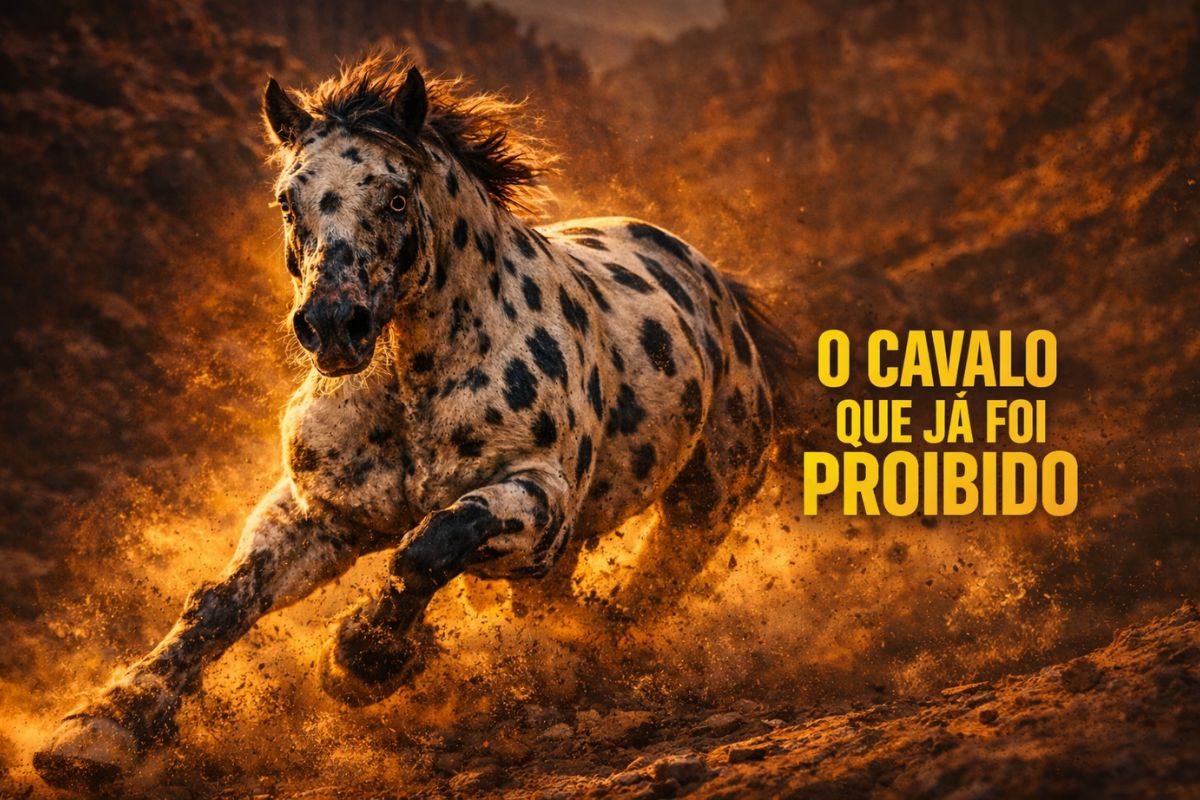


With Unique Coat, The Appaloosa Horse Is A Painted Horse Marked By The Complex Leopard, Appaloosa Ancestral Symbol And Prohibited Horse In Brazil.
The Appaloosa is not just a painted horse with an exotic appearance. It is the result of a rare genetic code, forged by millennia of evolution, by a decisive Iberian heritage, and by a rigorous selection made by the Nez Perce people in the northwest of the United States. Its history includes science, war, near extinction, and rebirth.
And there is a modern contrast that has amplified the fascination: in Brazil, the Appaloosa has become perceived by many as a “prohibited horse,” but what actually existed was an administrative controversy involving official genealogical registration (SRG). In 2022, MAPA canceled an authorization for the execution of this service; in 2023, a new ordinance authorized an entity to carry it out throughout the national territory, a technical detail that ended up becoming legend out of context.
The Ancient Gene That Colors The Appaloosa
The story of the Appaloosa begins long before modern America. Research with DNA extracted from fossils of European horses shows that the gene responsible for the painted coat was already present in prehistoric populations over 18,000 years ago.
-
He started running at 66 years old, broke records at 82, and is now a subject of study for having a metabolic age comparable to that of a 20-year-old, in a case that is intriguing scientists and inspiring the world.

-
Oldest tree on the planet reappears after 130 years of searches: Wattieza, 385 million years old, was 10 meters tall and had no leaves or seeds; Gilboa fossils in New York solved the mystery in 2007.

-
A 48-square-meter house assembled in hours with 4,000 bricks made of recycled plastic that does not absorb moisture, has natural thermal insulation, and costs less than 90,000 reais in a complete kit.

-
Luciano Hang revealed that Havan’s air fleet has already accumulated more than 20,000 landings, 10,000 flight hours, and 6 million kilometers traveled, and he says that without the planes, the company would never have grown so quickly.


In cave paintings, such as those at Lascaux, scientists identify patterns reminiscent of the spotted coat that we now associate with the Appaloosa.
This dominant gene, known as leopard complex (LP), is a silent code that remained in nature for millennia until it found the ideal setting to flourish once more.
The leopard complex not only changes the color of the coat, it alters skin, hooves, and even the appearance of the eyes, creating the set of characteristics that make the Appaloosa recognizable from a distance.
For a long time, this genetic potential remained hidden. It was necessary for horses with this inheritance to be taken to another continent, cross with new lineages, and undergo a very particular type of selection for the painted phenotype, the mottled skin, and the striped hoof to regain prominence.
From Iberian Heritage To The Nez Perce Vision

After the extinction of native horses in the Americas, it was the Spanish who reintroduced the species to the continent.
In the 16th century, explorers brought robust, compact, and resilient Iberian horses, carrying lineages that traced back to the Old World. With them, the spotted DNA crossed the ocean and returned to America.
A turning point occurred in 1680, with the Pueblo people’s revolt against Spanish rule. Thousands of horses were liberated and spread across the plains of New Mexico, leading the Iberian lineage deeper into the continent.
This dispersal opened the way for tribes of the Great Plains and the northwest to coexist with horses of varied genetic backgrounds.
Along the banks of the Palouse River, in a region that today encompasses parts of Idaho and Washington, a people in particular saw something beyond strength and speed.
The Nez Perce (or Nimíipuu, “the people”) did not settle for just domesticating horses; they decided to refine them.
Through meticulous selection, they chose animals that combined courage in buffalo hunting, quick thinking in ambushes, and endurance on long, cold journeys.
The selection was ruthless. Breeders that did not meet the standard were set aside, and the goal was not only performance but also the painted coat that would become the tribe’s hallmark.
This process, even without scientific language, functioned like an open-air genetics laboratory, fixing the leopard complex in the population.
From the “horses of the Palouse River” emerged the animals that traders began to call The Palouse Horses, until the name evolved into Appaloosa.
The Science Behind The Coat, Skin, And Hooves
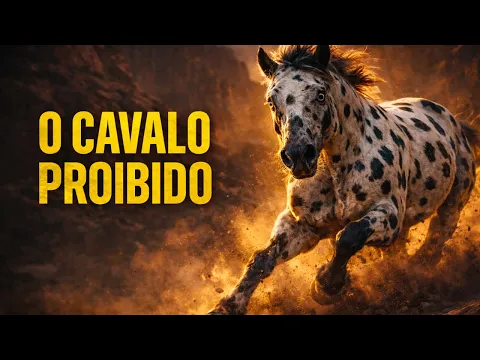

The coat of the Appaloosa is not an aesthetic whim, but the result of a precise genetic architecture.
At the center of it all is the dominant LP gene, a pleiotropic gene, that is, capable of influencing several traits simultaneously. It does not act in isolation in the color of the coat, but also in the skin, the hooves, and the appearance of the eyes.
Three signs stand out as the typical “signature” of the Appaloosa:
- Visible Sclera: the white rim around the iris resembles that of humans and makes the gaze appear more expressive.
- Mottled Skin: pigment spots appear in areas such as eyes, nostrils, and genitals.
- Striped Hooves: light and dark vertical stripes mark the surface of the hooves.
In addition to these markings, the leopard complex creates different coat patterns. The leopard pattern spreads white all over the body, punctuated by dark spots, like an inverted night sky.
The blanket deposits a large white area over the rump, sometimes with spots, sometimes smooth. Other designs, such as Nevado, Snowflake, and varnish roan, make the base color seem to “peel” with age, revealing white hairs.
Without the expression of the LP gene, a horse may even carry the lineage, but it does not display the classic aesthetics that made the Appaloosa known worldwide.
It was the selective rigor of the Nez Perce that stabilized this set of characteristics and consolidated the breed as a visual icon.
Morphologically, the Appaloosa is a working horse. It generally stands about 1.50 m tall at the withers, has a compact body, a short back, and a strong, sloping croup.
This structure provides explosiveness, agility, and the ability to turn under pressure, essential qualities for hunting, warfare, and daily tasks on the plains. It is a body shaped by function, not just by beauty.
War, Near Extinction, And Rebirth In 1938
The partnership between the Nez Perce and their horses reached its limit in 1877, when the government of the United States ordered the tribe to be confined to a reservation.
Refusing submission, the Nez Perce, led by Chief Joseph, initiated an epic retreat toward Canada, traveling over 1,800 kilometers mounted on their Appaloosa.
These horses proved to be swift, resilient, and intelligent, capable of challenging the U.S. Army in tactics and endurance. For some time, the combination of experienced warriors and Appaloosas almost allowed for a successful escape.
However, the final capture of the tribe dealt a deep blow. As a means of breaking not only the people but also their culture, military forces destroyed or dispersed a large portion of the horses.
Even though the goal was not officially to extinguish the breed, the effect on the Appaloosa was devastating. The herd that represented pride and identity was dissolved.
The genetics that sustained the painted coat spread across the territory, mixed with indiscriminate crossbreeding with other farm horses. For decades, the Appaloosa became almost a ghost, reduced to a few isolated animals, without the selective rigor of the Nez Perce.
It was not until 1938 that a group of ranchers and horse enthusiasts in Oregon decided to change this story. They founded the Appaloosa Horse Club (ApHC) with an audacious goal: to reconstruct, from genetic fragments, the painted horse that was once the treasure of the Nez Perce.
To do this, they sought the best available material, combining the athleticism of the Quarter Horse, the speed of the Thoroughbred, and the endurance of the Arabian horse.
From this union was born the modern Appaloosa, a horse that retains ancestral courage while incorporating contemporary athletic characteristics.
The breed emerged from the brink of extinction to once again become a protagonist in arenas, farms, and trails.
The Modern Appaloosa And The Prohibited Legacy In Brazil
Today, the Appaloosa is known worldwide for its versatility. In the rings, it stands out in reining, Working Cow Horse, Western Pleasure, and in activities that demand agility, focus, and quick responses.
In farms and trails, it is valued for its hardiness and balanced temperament, a result of centuries of selection.
Many breeders and families see in the Appaloosa a reliable partner for leisure and work. It is not just a beautiful horse; it is a living archive of genetic and cultural history, having traversed extinctions, migrations, wars, and policies of erasure. Every spot on its coat tells a tale of peoples, territories, and human decisions.
In Brazil, however, the breed has gained a reputation as “prohibited” due to a topic that rarely makes headlines: genealogical registration. On February 14, 2022, an act from the Ministry of Agriculture (MAPA) canceled the authorization of the entity that executed the Genealogical Registration Service (SRG) of the breed.
Later, on April 10, 2023, another ordinance from MAPA authorized the Brazilian Association of Appaloosa Horse Breeders (Tatuí-SP) to carry out the SRG of the Appaloosa throughout the national territory, effective from the date of publication.
In other words: what existed was a period of noise and transition regarding who could officially register the breed, something very different from a prohibition on breeding, ownership, or existence of the Appaloosa in the country. The “prohibited” became more of an internet myth than a faithful portrayal of the norm.
The horse that was once pursued by an army now gallops freely in arenas, farms, and trails around the globe, and in Brazil, it remains a perfect example of how a technical issue can turn into a narrative when context is lacking.
For those who follow the story of this painted horse: does it make sense that doubts about genealogical registration become “public legend,” or should the topic be addressed with more transparency and communication to avoid confusions like that of the Appaloosa?








Lindo Cavalo, gostaria de ser dono de um.
Para quem gosta de trote seco é bom. Porém eu prefiro o manga larga marchador.
E um cavalo pra ter orgulho na fazenda, perfeito, mão e montaria pra toda honra do fazendeiro #mulhersacopreto