





 Portuguese
  English
  Spanish
  5 min of reading
  0 comments


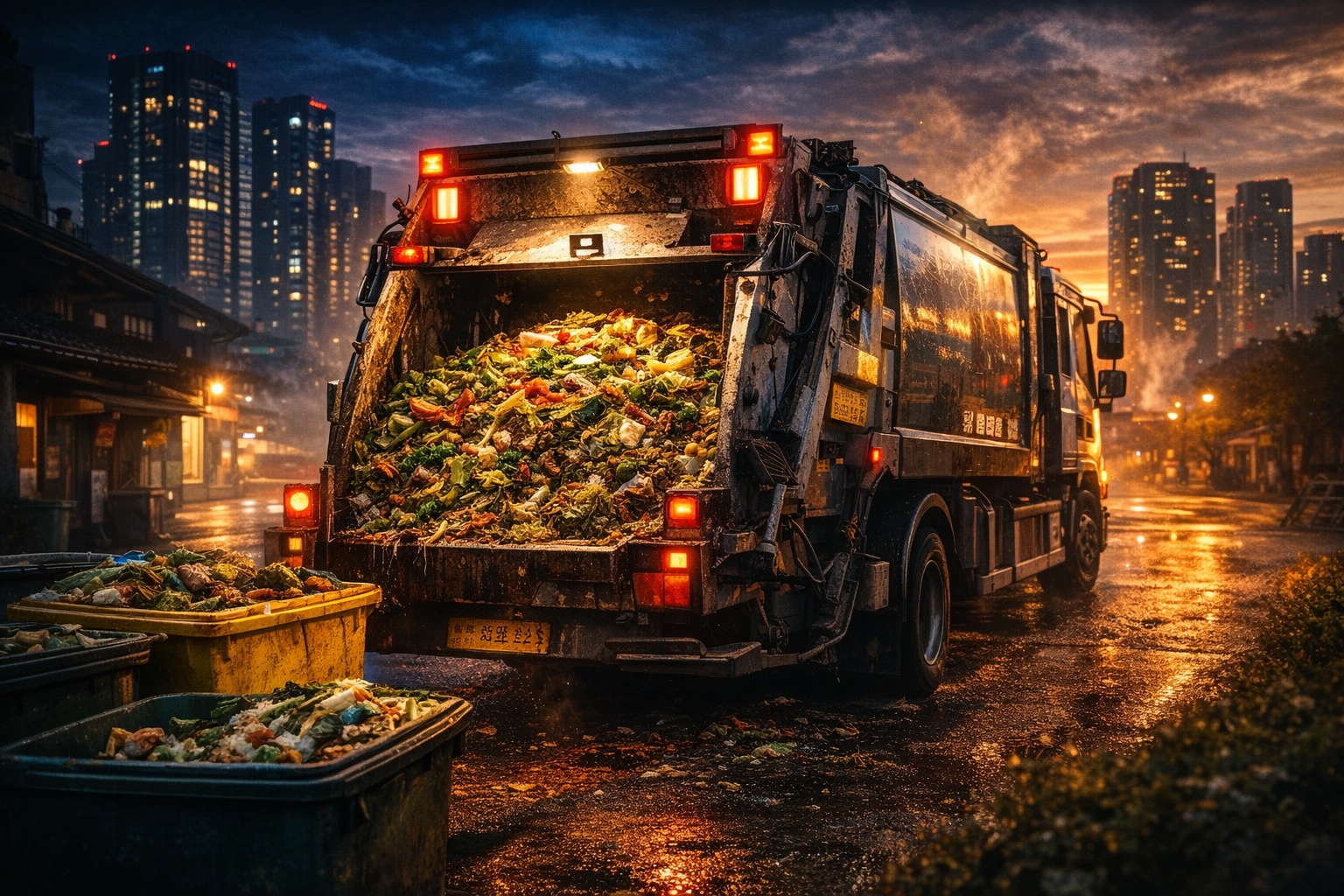
South Korea Recycles More Than 95% Of The 5 Million Tons Of Annual Food Waste, Turning Food Scraps Into Biogas And Fertilizer.
It is still dark when trucks begin to circulate through residential neighborhoods and commercial areas of Seoul. What disappears from the smart bins throughout the night is not common trash. It is part of the more than 5 million tons of food waste produced annually in South Korea, according to data from the country’s Ministry of the Environment and international reports on urban waste management. Instead of going to landfills, these scraps follow an industrial route that ends in anaerobic reactors, mechanical separation systems, and gas purification units. The result is biogas, energy, and agricultural fertilizer.
The South Korean system has become a global reference after the country achieved recycling rates above 95% for food waste. This transformation did not happen by chance. It was the result of a combination of strict legislation, weight-based charging, traceability technology, and industrial infrastructure dedicated exclusively to treating organic matter.
How South Korea Jumped From 2% To Over 95% Food Recycling
In the late 1990s, South Korea recycled only a fraction of its food waste. Rapid population growth and intense urbanization put pressure on landfills. In 2005, the government banned sending food waste to landfills.
-
Motorola launched the Signature with a gold seal from DxOMark, tying with the iPhone 17 Pro in camera performance, Snapdragon 8 Gen 5 that surpassed 3 million in benchmarks, and a zoom that impresses even at night.

-
Satellites reveal beneath the Sahara a giant river buried for thousands of kilometers: study shows that the largest hot desert on the planet was once traversed by a river system comparable to the largest on Earth.

-
Scientists have captured something never seen in space: newly born stars are creating gigantic rings of light a thousand times larger than the distance between the Earth and the Sun, and this changes everything we knew about stellar birth.

-
Geologists find traces of a continent that disappeared 155 million years ago after separating from Australia and reveal that it did not sink, but broke into fragments scattered across Southeast Asia.

Later, it reinforced the policy with a “pay as you throw” system, in which citizens pay for the volume or weight disposed of.

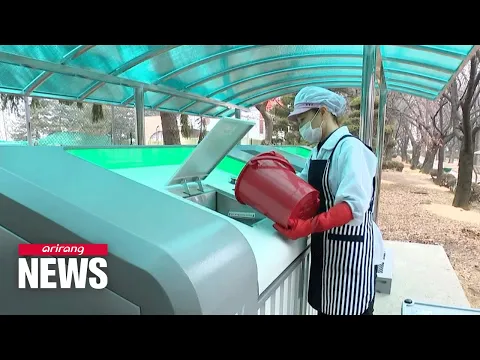
In Seoul, containers equipped with RFID technology identify the user and register the weight of the disposal. The resident is charged based on the amount of food waste generated. This measure significantly reduced waste and increased proper separation at the source.
From that moment on, waste ceased to be a logistical problem and began to be treated as industrial raw material.
What Happens Inside The Anaerobic Digestion Plants With Food Scraps
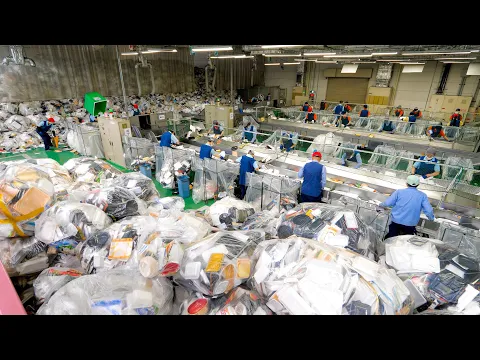
After collection, food waste is taken to processing centers where it undergoes mechanical sorting to remove packaging, metals, and impurities. Subsequently, the organic fraction is sent to anaerobic digesters.
These reactors operate in an oxygen-free environment and controlled temperature, where microorganisms decompose the organic matter. The process generates biogas composed mainly of methane and carbon dioxide. Methane is captured, purified, and used as a source of thermal energy or converted into electricity.
The solid waste resulting from the process, known as digestate, is rich in nutrients such as nitrogen and phosphorus. After additional treatment, it is used as agricultural fertilizer.
This model creates a closed loop: what comes off the table returns to the field as productive input.
Urban Technology And Digital Traceability
One of the differentiators of the South Korean system is the integration between urban technology and industrial infrastructure. The smart containers with RFID allow real-time monitoring of the volume disposed of.
The government can map waste generation patterns by region, adjusting logistical routes and sizing the capacity of treatment plants.
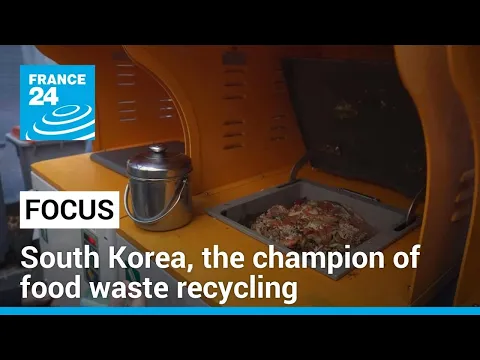
Additionally, digital traceability reduces fraud and improves the efficiency of the billing system. The weight control also created a cultural effect: the population began to reduce waste to pay less.
This combination of urban engineering and regulatory discipline explains why South Korea was able to transform an environmental liability into an energy asset.
Industrial Scale And Economic Impact Of Food Scraps
The more than 5 million tons of annual food waste do not only represent a logistical challenge. They equate to a huge energy and agricultural reserve.
The biogas produced in the digestion plants contributes to the local energy matrix. Although it does not replace large plants, it reduces dependence on fossil fuels and decreases emissions associated with decomposition in landfills.
In the agricultural sector, the fertilizer derived from digestate reduces the need for importation of chemical fertilizers. In a country with limited land and intensive agriculture, this advantage is strategic.
The economic impact also extends to reduced municipal costs with landfills and mitigation of methane emissions, a greenhouse gas significantly more potent than carbon dioxide.
Technical Challenges And Limits Of The Model
Despite the impressive results, the system faces challenges. Contamination from plastics and packaging still requires complex mechanical sorting. The transport of wet waste increases logistical costs. Additionally, the microbiological balance in the digesters needs to be strictly controlled to avoid loss of efficiency.
Another critical point is odor. Organic waste treatment plants require advanced systems for controlling atmospheric emissions to avoid impact on neighboring communities.
There are also energy limits. The production of biogas depends on the composition of the waste and does not fully replace conventional sources of electrical generation.
Still, the South Korean model demonstrates that public policies combined with process engineering can drastically change a society’s relationship with its waste.
A Silent Transformation That Happens While The City Sleeps
What occurs before dawn in Seoul is not just garbage collection. It is the operation of an invisible infrastructure that connects homes, restaurants, digital technology, and chemical engineering in a continuous cycle.
The more than 5 million tons of annual waste cease to be an environmental problem and become energy and agricultural resources. The over 95% food recycling rate is not just a statistic. It is the result of an integrated system that combines regulatory discipline, traceability technology, and highly efficient industrial processing.
While most cities still struggle to reduce the disposal of organic waste in landfills, South Korea has transformed food scraps into a strategic input.
And it all begins before the sun rises when tons of waste disappear from the streets and reappear as energy and fertilizer at the heart of one of the world’s most advanced urban systems.








-

-

-

-

12 pessoas reagiram a isso.