





 Portuguese
  English
  Spanish
  4 min of reading
  0 comments


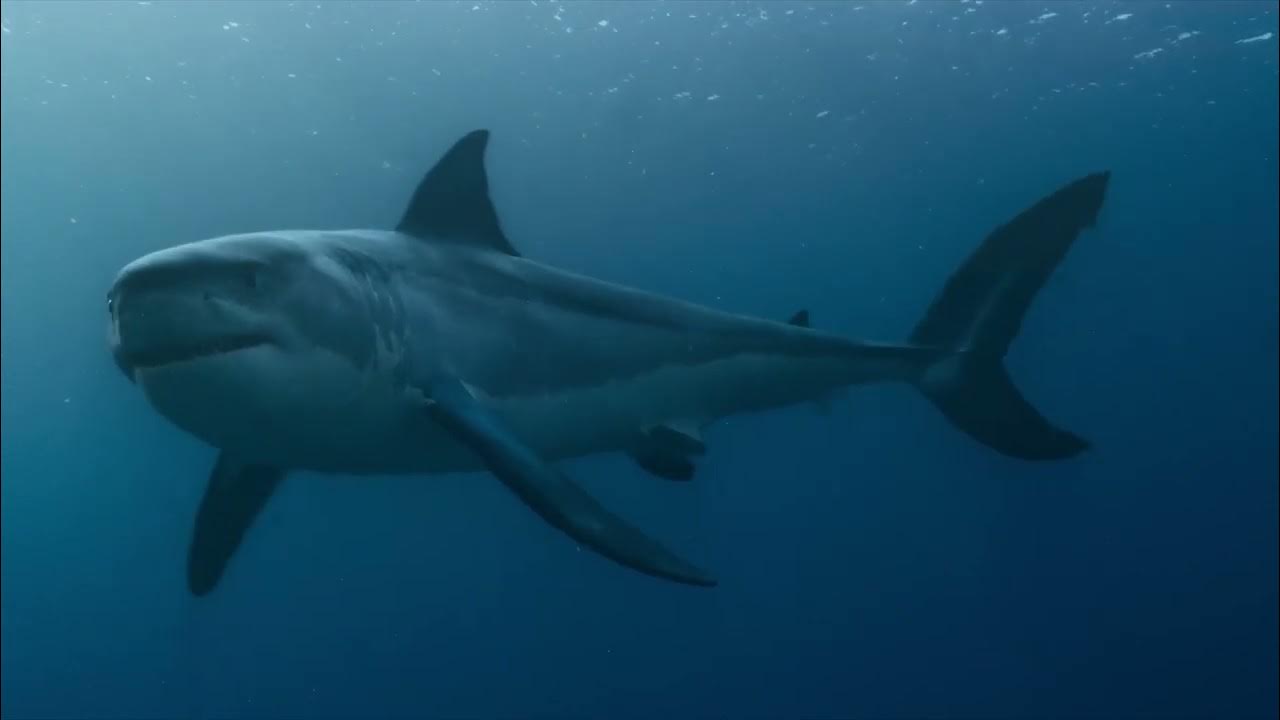
Before the Megalodon, the Otodus Obliquus Dominated the Oceans 60 Million Years Ago, With Over 10 Meters, Giant Teeth, and a Decisive Role in the Evolution of Marine Superpredators.
Long before the famous megalodon became the ultimate symbol of giant sharks, the planet’s oceans were already dominated by an equally impressive predator, now lesser known to the general public, but extremely relevant to the evolutionary history of marine superpredators. This predator was the Otodus obliquus, a prehistoric shark that lived between approximately 60 and 45 million years ago, during the Paleocene and early Eocene, shortly after the extinction of the dinosaurs.
The Scenario of the Oceans After the Extinction of the Dinosaurs
During this period, the seas were undergoing a full ecological reorganization. Large marine reptiles had disappeared, making room for giant sharks to occupy the absolute top of the food chain.
It was in this scenario that the Otodus obliquus emerged as the largest and most feared marine predator of its era.
-
The Himalayas continue to grow to this day, with tectonic plates advancing 5 cm per year, mountains rising up to 10 mm annually, and the 2015 earthquake that killed 9,000 people may have increased the risk of an even larger seismic mega-event.

-
At an altitude of 400 km by astronauts from the International Space Station, Paris transforms at night into a golden mesh so precise that it reveals the outline of the Seine River, avenues, and entire neighborhoods like a luminous map drawn over the Earth.

-
iPhone 17 reaches historic low price with 256 GB, 120 Hz display, and drops to R$ 5,703 on Shopee, featuring A19 chip, dual 48 MP cameras, battery life of up to 30 hours, and advanced AI features.

-
Trip to Mars getting closer: Pulsar Fusion, from the UK, advances with plasma ignition in fusion engine and could drastically reduce space travel time, making crewed missions faster, safer, and economically viable.




Fossil records indicate that the Otodus obliquus could exceed 10 meters in length, placing it in a category similar to an urban bus.
Its body was robust, hydrodynamic, and designed for long pursuits in open water, something essential for hunting large prey in oceans that were warmer and richer in life than they are today.
The Giant Teeth That Reveal the True Size of the Animal
The main evidence of its colossal size comes from its fossilized teeth, found on several continents.
These teeth could exceed 10 centimeters in length, with a triangular shape, sharp edges, and small lateral cusps, a striking feature that differentiates the Otodus from its more famous descendants.
The ratio of these teeth, when compared to modern sharks, allows for reliable estimates of a gigantic animal, much larger than any shark alive today.
Jaws Capable of Crushing Bones
The jaws of the Otodus obliquus were true biological weapons. It is estimated that its bite could easily crush bones, allowing it to attack large bony fish, primitive sea turtles, and even early marine mammals, which were beginning to diversify after the extinction of giant reptiles.

Unlike smaller sharks, it did not need to avoid large prey — on the contrary, its size gave it an absolute advantage.
The Evolutionary Link That Led to the Megalodon
Another point that makes the Otodus obliquus so important is its direct role in the evolutionary line that would culminate in the megalodon.
Most paleontologists agree that it belongs to the group of so-called “megatooth sharks,” direct or very close ancestors of the Otodus megalodon.
Over millions of years, this lineage underwent gradual changes in tooth shape, body size, and bite specialization, continually progressing towards ever-larger predators.
The First Great Leap Toward Extreme Gigantism
While the megalodon, millions of years later, would reach estimated lengths between 15 and 18 meters, the Otodus obliquus represents the first great evolutionary leap toward extreme gigantism in sharks. Without it, the history of marine superpredators would have been completely different.
From an ecological standpoint, the impact of this animal on primitive oceans was profound. A predator of this size regulates entire populations, influences migration routes, and shapes the behavior of prey.
The Otodus obliquus likely helped define which species thrived and which disappeared in the early Cenozoic Era, acting as a stabilizing force — albeit brutal — on marine ecosystems.
Global Distribution and Dominance of the Seas
Fossils of its teeth have been found in North America, Europe, Africa, and Asia, indicating a global distribution.
This reinforces the idea that it was not a regional predator, but rather a true dominator of the planet’s oceans, adapted to warm, shallow waters where marine life was abundant.
When compared to modern sharks, the contrast is striking. The great white shark, now considered the apex predator among living sharks, rarely exceeds 6 meters in length.

Meanwhile, the whale shark, although much larger, is not a predator and feeds through filtration. The Otodus obliquus combined the worst and best of both worlds: colossal size and active predatory behavior.
The Disappearance of the Giant of the Seas
Its extinction, around 45 million years ago, is still a topic of debate. Climate changes, alterations in ocean currents, and the evolution of new prey and competitors may have contributed to the species’ disappearance, making way for even more specialized and larger forms — within the same lineage.
Today, the Otodus obliquus occupies a fundamental place in marine paleontology. It is not just “a giant shark of the past,” but the link that explains how the oceans came to be dominated by increasingly extreme superpredators, culminating in the legendary megalodon.
When looking at its fossilized teeth, we are faced not only with the remains of an extinct animal but with clear evidence that, long before any modern legend, the seas of Earth had already been the stage for creatures capable of completely redefining the meaning of the word “giant.”









-

-

-

5 pessoas reagiram a isso.