





 Portuguese
  English
  Spanish
  3 min of reading
  1 comment


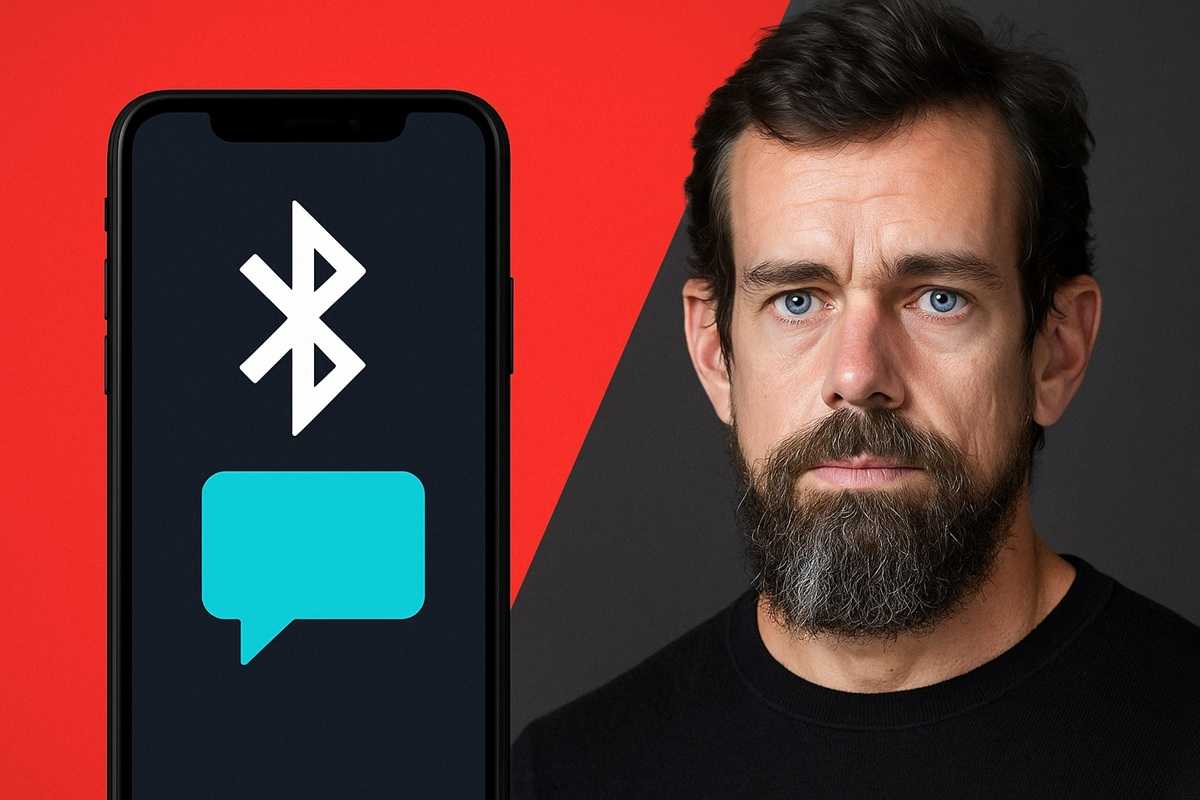


A New App Created By Jack Dorsey, Co-Founder Of Twitter, Is Getting Noticed For Allowing Messages To Be Sent Totally Offline. Without The Need For Internet, A Sim Card, Or Server, The Tool Promises Maximum Privacy And Could Become An Alternative To WhatsApp In Situations Of Censorship And Connection Failures
The Twitter co-founder, Jack Dorsey, created a messaging app that works without the internet. Called Bitchat, the system uses a mesh network to connect people via Bluetooth, without the need for Wi-Fi or mobile data.
Messages Without Internet
Dorsey announced the project on X (formerly Twitter) and stated that he developed a basic version of Bitchat over the past weekend.
The initial goal was to learn about decentralized technologies. The app allows sending messages to nearby people, within a radius of up to 300 meters.
-
Japan is transforming dirty diapers from babies and the elderly into an ambitious and surprising project that could forever change the way the world deals with one of the most difficult types of waste to dispose of.

-
Goodbye to waste: a Brazilian created a revolutionary brick that uses construction debris, has already entered the markets of the United Kingdom and the USA, and promises to shake up the global construction industry.

-
China has created a mass-produced hypersonic missile that costs the same as a Tesla, and this is changing everything in modern warfare because the United States cannot defend itself without spending millions.

-
100% Brazilian technology transforms agricultural waste into a meat-scented ingredient using fungi from the Amazon rainforest. The process does not use excessive water or chemicals, and it also increases the nutritional value of the final product.


If the contact is out of direct reach, the system uses other connected devices to relay the message to its destination.
Everything happens without central servers. This ensures that messages are not stored on any server.
Old Style, Modern Technology
Bitchat operates similarly to IRC, a chat system created 36 years ago. Users can communicate through chat rooms on specific topics or send private messages.
However, the new app has modern differentiators. It offers end-to-end encryption, passwords to protect rooms, and temporary storage of messages only in the device’s memory.
Another highlight is that the app does not require a phone number or email to be used. Additionally, the user’s activity within the system is not tracked.
Limited Testing On iOS
Currently, a test version of Bitchat has been made available through TestFlight, Apple’s testing system. However, all spots for new testers are already filled.
Even so, Dorsey made it clear that the system can be used independently of the platform. This means that the app could be integrated with other systems in the future.
Inspiration From Protests And Blackouts
The concept of Bitchat is not entirely new. Apps like FireChat and Bridgefy, which also used Bluetooth and mesh networks, gained popularity during the 2019 protests in Hong Kong. At that time, there were reports of internet restrictions and digital espionage.
These apps were also useful in situations like festivals and events with many attendees, where traditional connections fail. Bitchat could serve the same type of use.
Future Support For Wi-Fi Direct
According to CNBC, a future version of Bitchat will include support for Wi-Fi Direct, which would increase message speeds and the range of connection between devices.
Although similar solutions have been created before, Jack Dorsey’s involvement—known for his advocacy for freedom of speech—is noteworthy. He has already founded Bluesky and supports Nostr, a decentralized social network standard.
For now, Bitchat seems more like a personal experiment of Dorsey than a commercial project. Still, the name behind the app might be enough to attract attention.
In times of increasing censorship and tension between governments, the proposal for an offline, private, and untracked app promises to gain traction in discussions about digital freedom.








Privacidade e Twitter. Aham, tá bom.