





 Portuguese
  English
  Spanish
 5 min of reading
  0 comments


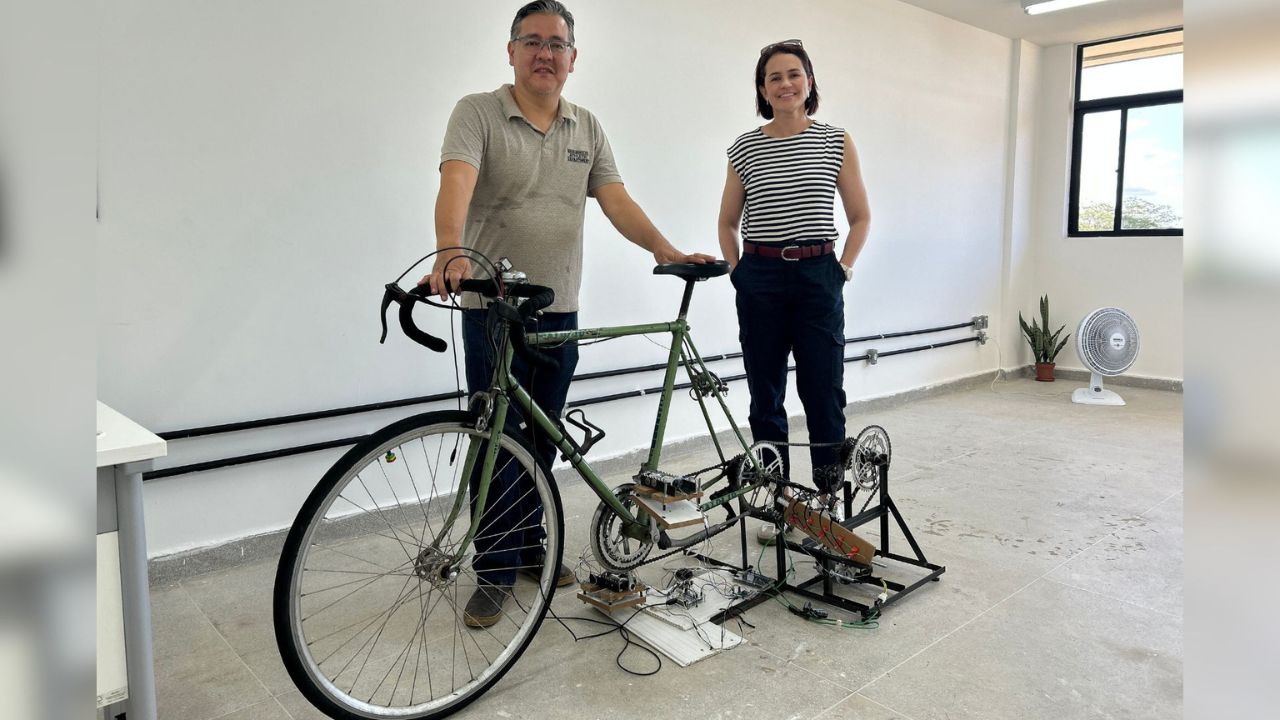
CEAR/UFPB Presents Innovative Bicycle That Turns Pedaling Motion into Clean Energy, Highlighting the Advancement of Sustainable Technology Developed at the Federal University of Paraíba.
This Wednesday (8), The Federal University of Paraíba published an article about the project Green&Healthy Power, developed by researchers from the Center for Alternative and Renewable Energies (CEAR/UFPB), which represents a significant advancement in the integration of health, clean energy, and sustainable technology.
The initiative, conducted at the Environmental and Energy Assessment Laboratory (LavAE), adapts stationary bicycles to generate electricity during physical exercise, promoting an innovative solution for microgeneration of energy in Brazil.
Bicycle and Clean Energy: How CEAR/UFPB’s Innovation Works
Turning physical effort into electricity is now an accessible reality. The project combines physical activities with clean energy generation, using the concept of Energy Harvesting— a process that captures and converts small amounts of residual energy, typically wasted in the environment.
-
The lost continent beneath Europe: separated from North Africa about 240 million years ago, comparable in size to Greenland, Greater Adria was crushed over 40 million years and left geological marks from the Alps to the Balkans.

-
A cold front advances through the South this Saturday and reaches the Southeast on Easter Sunday with heavy rain and a drop in temperature, while the North and Northeast face the risk of storms and flooding throughout the holiday.

-
Brazil is about to inaugurate the largest maritime surveillance system in its history, with radars, infrared cameras, and autonomous sensors installed on Ilha Grande to monitor the entire Brazilian coast in real time.

-
Archaeologists discover in China a 5,000-year-old tomb with over 350 artifacts, nearly 200 jades, and signs of intentional destruction, in a discovery that could be the gateway to a lost prehistoric kingdom.


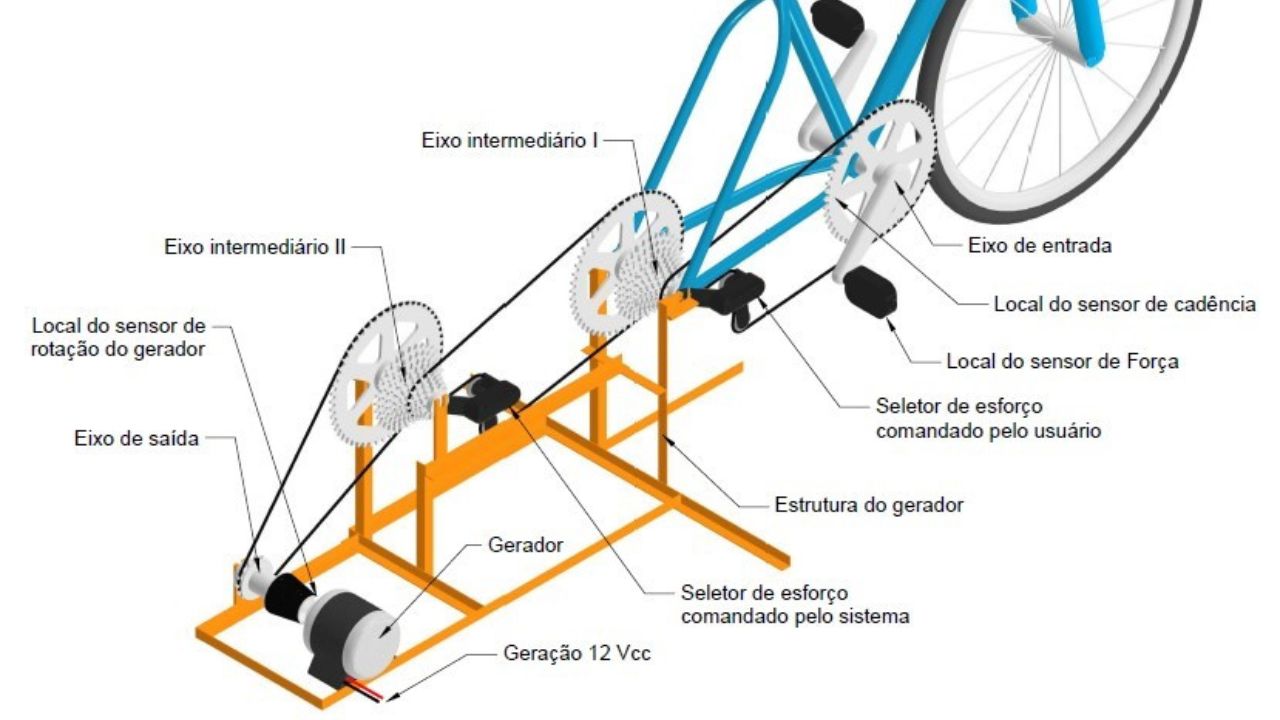
The adapted stationary bicycle uses a forklift alternator, chosen after various tests for its efficiency in combining force, rotation, and electrical generation. This component is capable of converting the kinetic energy from pedaling into electricity, which can be stored or used directly.
According to calculations by researcher Herwin Saito Schultz, a doctoral student in Mechanical Engineering (PPGEM/UFPB), a person who pedals for 150 minutes weekly—as recommended by the World Health Organization (WHO)—can generate approximately 12.6 kWh per year. This amount of energy is sufficient to power small appliances, such as LED lights, fans, or charge mobile devices.
Furthermore, the system was designed to be modular and adaptable, allowing for installation on different types of stationary bicycles and in environments such as gyms, schools, and homes.
CEAR/UFPB: Sustainable Technology with a Focus on User Experience
Unlike previous projects that do not quantify the energy generated or offer monotonous experiences, the system developed by CEAR/UFPB provides a realistic pedaling simulation, with climbs and variations in effort. This is made possible thanks to the integrated app, which adjusts resistance levels and monitors user performance.
The application developed by the researchers allows for:
- Adjusting resistance levels and simulating different terrains.
- Monitoring user performance in real time.
- Calculating energy generated during each session.
- Sharing data with health and wellness platforms.
Sustainable technology with integrated intelligence. This functionality transforms the user experience, making exercise more dynamic and rewarding.
Federal University of Paraíba as an Innovation Hub
The Federal University of Paraíba has stood out as a center of excellence in research focused on renewable energies. CEAR/UFPB, through its Graduate Program in Renewable Energies (PPGER), has invested in solutions that unite science, technology, and social impact.
The Green&Healthy Power project is a clear example of this mission. In addition to contributing to the training of highly qualified researchers, such as Herwin Schultz, the initiative reinforces the institution’s commitment to sustainability and the development of clean technologies.
The energy-generating bicycle is more than an innovation: it is a symbol of transformation.
Clean Energy and Positive Environmental Impact
The adoption of microgeneration systems based on bicycles can have positive effects on several fronts:
- Reduction of greenhouse gas emissions by replacing conventional sources with clean energy.
- Promotion of public health by encouraging physical exercise.
- Energy autonomy, especially in communities with limited access to the electrical grid.
- Environmental education by raising awareness of responsible energy use.
Every pedal is a step towards a cleaner future. The integration of physical exercise and energy generation represents a viable and accessible alternative to promote real changes in people’s daily lives.
Data and Statistics Reinforcing the Relevance of Sustainable Technology
According to data from ANEEL published in 2022, over 1.8 million consumer units were already using distributed microgeneration systems, mainly solar.
The CEAR/UFPB generating bicycle fits into this context as a complementary innovation, capable of broadening access to clean energy and promoting awareness about energy consumption.
Furthermore, recent studies indicate that Brazil has one of the largest potentials for distributed generation in the world, particularly in regions with favorable climates and high solar incidence. The inclusion of technologies such as the generating bicycle can further diversify this scenario.
Technical Challenges and Solutions Found by CEAR/UFPB Researchers
During the project’s development, researchers faced challenges in finding a generator compatible with the physical effort of an amateur cyclist. After several attempts, the forklift alternator proved ideal due to its good balance between torque, rotation, and electrical efficiency.
Additionally, a control system needed to be developed to simulate different pedaling conditions, such as climbs and irregular terrains. The application created by the team addressed this challenge, making the experience more realistic and motivating.
Innovation arises from overcoming technical obstacles. The Green&Healthy Power project is the result of applied research and precision engineering.
Practical Applications of the Clean Energy Generating Bicycle
The clean energy generating bicycle can be used in:
- Gyms and sports centers as a way to reduce energy costs.
- Schools and universities for educational and awareness purposes.
- Parks and public squares as communal equipment.
- Homes as an alternative for domestic microgeneration.
The democratization of energy begins with simple and effective solutions. The CEAR/UFPB project demonstrates that it is possible to unite innovation, accessibility, and social impact.
Moreover, installation in public spaces can encourage community participation in sustainable actions, promoting a culture of energy responsibility.

Bicycle, Clean Energy and Sustainable Future
The Green&Healthy Power project, developed by researchers at CEAR/UFPB, represents a convergence of health, sustainable technology, and clean energy generation.
By transforming stationary bicycles into electric generators, the initiative promotes healthy habits, reduces carbon emissions, and contributes to energy autonomy.
The energy-generating bicycle is more than an innovation: it is a tool for social and environmental transformation. With the support of the Federal University of Paraíba, the project reinforces the role of science in building a cleaner, fairer, and more sustainable future.
The dissemination of this technology can inspire other institutions and communities to adopt similar solutions, broadening the positive impact of microgeneration in Brazil. With initiatives like this, the country takes steps towards a more diversified, resilient energy matrix aligned with sustainability principles.




Seja o primeiro a reagir!