





 Portuguese
  English
  Spanish
  5 min of reading
  0 comments



Bill Advances to Ensure Free Driver’s License for People with Disabilities Throughout Brazil, Guaranteeing Exemption from Fees, Exams, and Extra Classes for Obtaining the CNH in 2025
The right to the National Driver’s License (CNH) is essential for ensuring autonomy, mobility, and social inclusion for people with disabilities (PWD). However, many face financial and bureaucratic difficulties in obtaining or updating their licenses. To address these barriers, an important bill regarding CNH for PWD is being processed in the Chamber of Deputies, aimed at ensuring a free CNH for PWD throughout Brazil, eliminating all fees, exams, and extra classes.
Today, we will explain in detail the most relevant aspects of this bill, its social impact, and how it can transform the reality of people with disabilities seeking their licenses in 2025.
What Does the CNH Bill for PWD Propose?
Bill No. 312/2025 proposes that obtaining the CNH for people with disabilities be officially recognized by national law, guaranteeing exemption from costs for CNH PWD.
-
The largest Anglo-Saxon treasure ever found was discovered by a worker with a metal detector in a field in England and revealed more than 4,600 pieces of gold and silver from the 7th century, a collection with 5 kg of gold valued at £3.285 million.

-
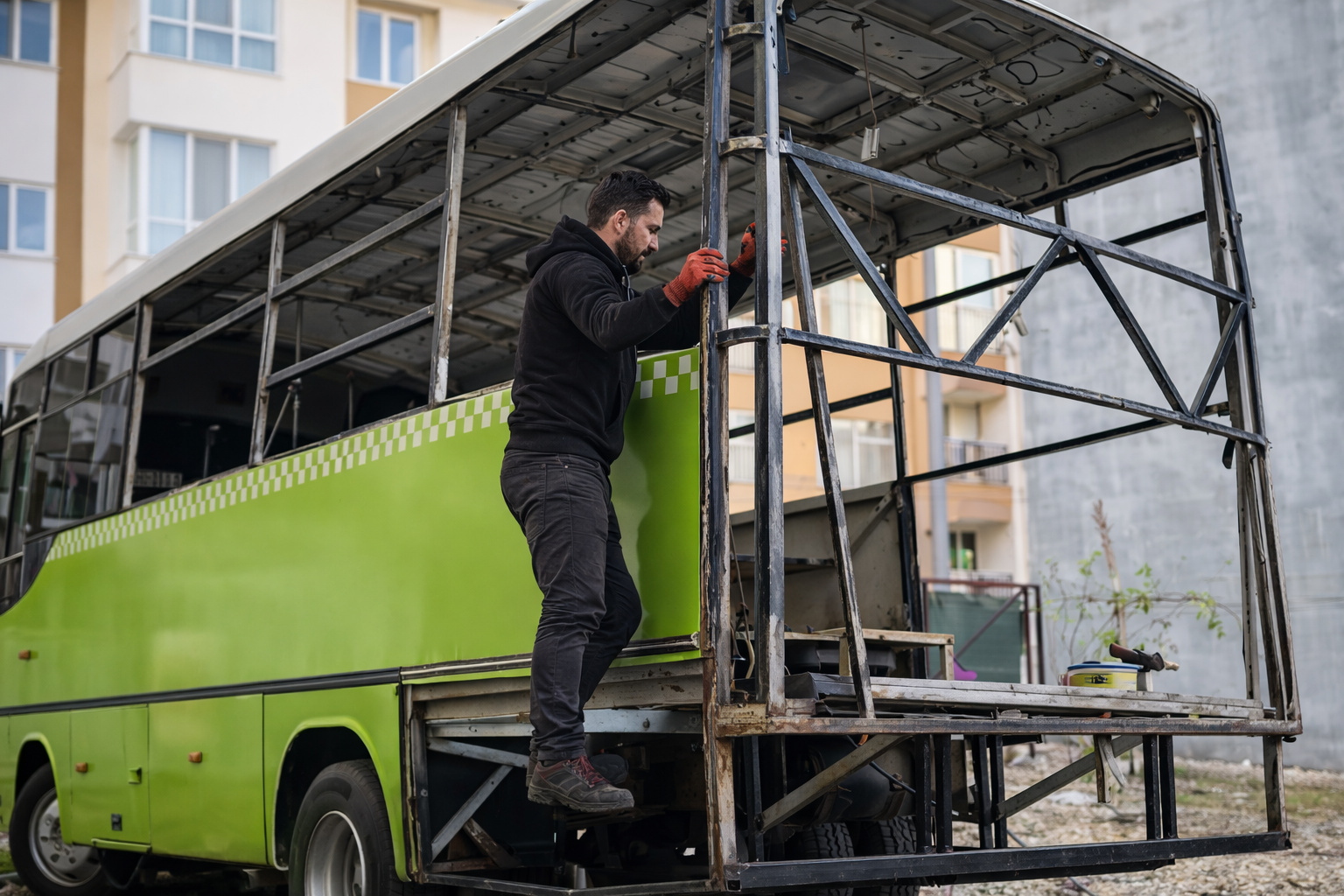
Man transforms old bus into a house on wheels with wooden furniture, rooftop terrace, and solar power system.
-
Since the Aztecs, farmers in Mexico have built artificial islands surrounded by canals and maintain a highly productive system that still challenges the logic of conventional agriculture today.

-
Scientists are looking for volunteers to live for free for a month in a refuge in the Italian Alps at an altitude of 2,300 meters, with accommodation, food, and a payment of 400 euros to participate in a health study.


Currently, the right to exemption is not uniform and depends on internal norms of each State Department of Transit (Detran), which results in inequalities and even undue charges.
Main Points of the Proposal for CNH with Total Exemption
- Exemption from CNH Fees for PWD: the proposal eliminates all extra fees charged for medical exams, practical adaptation classes, and other procedures.
- Individualized Medical Assessment: each person will be evaluated by a specialized medical board, which will determine their capacity to drive and indicate necessary vehicle adaptations.
- Update for Those Already Holding a CNH: for a person who acquires a disability after obtaining their license, the process will be simplified with only a new medical evaluation and adapted classes when necessary, without the requirement for a new theoretical exam.
- Prohibition of Extra Charges by Detrans: the bill prohibits state traffic agencies from charging additional fees related to processes involving adapted vehicles.
Why is the Free CNH for PWD So Important?
Mobility is a key factor for social inclusion and personal development. According to IBGE, approximately 24% of the Brazilian population has some type of disability, making it essential that these citizens are guaranteed the right to safe and accessible mobility.
Social and Economic Impacts of the Free Driver’s License
- Autonomy and Independence: the CNH allows people with disabilities to move freely, reducing dependence on family members or public transport.
- Inclusion in the Job Market: many jobs require a license for transportation or operation of adapted vehicles, increasing employability.
- Improvement in Quality of Life: with greater autonomy, self-esteem rises, and access to essential services, leisure, and social activities increases.
- Reduction of Inequalities: the exemption from costs and bureaucracy helps overcome financial barriers that limit PWD’s access to the CNH.
CNH for PWD in 2025: What Changes with the Approval of the Bill
With the approval of the bill, Brazil will have national legislation that ensures the CNH for PWD in 2025 with clear and uniform rules across the country.
Simplified and Accessible Process for PWD
Personalized Assessment: each candidate will undergo an individual medical assessment, ensuring that decisions respect the specific needs of the disability.
Authorized Adapted Vehicles: the medical report will indicate the necessary adaptations for the vehicle, at no additional cost.
Complete Exemption from Extra Fees: no extra costs can be charged for exams, adapted classes, or related processes.
Benefits for Traffic Agencies
Standardization of Norms: the bill makes the exemption mandatory, eliminating regional variations that create legal insecurity.
Efficient Supervision: Detrans will be held accountable to ensure compliance with the law.
Reduction of Bureaucracy: the process for updating the CNH after acquiring a disability will be simplified, speeding up service.
Exemption from CNH Fees for PWD: Current Legislation vs. Bill
Currently, the right to exemption from fees for PWD varies by state and often does not include total exemption, especially for medical exams and adapted classes.
Current Scenario of Cost Exemption for CNH PWD
- Partial exemption in some states.
- Common extra charges for specific processes.
- Lack of uniformity and legal security for citizens.
How the CNH Bill for PWD Will Correct These Flaws
- Legal guarantee of exemption from CNH fees for PWD throughout the country.
- Express prohibition of additional charges for adapted vehicles.
- Clear and protected rights, facilitating access to licensing.
Individualized Assessment: The Differential of the Free CNH for Disabled Individuals
The individualized assessment is one of the pillars of the project, as it respects the particularities of each person and ensures that the CNH is granted safely and fairly.
Why is the Personalized Medical Assessment Essential?
- Each disability presents distinct needs.
- Prevents standardizations that may limit rights or compromise safety.
- Allows for the diagnosis of which adaptations are truly necessary.
Vehicle Adaptations Contemplated in the Project
- manual controls for acceleration and braking.
- Assisted or electric steering.
- Adapted control systems for different motor limitations.
- Other devices recommended by the medical board.
Processing of the Bill and Expectations for 2025
The PL 312/2025 has already been approved by the Commission on the Defense of the Rights of Persons with Disabilities and is under review in the commissions of Transportation and Land Use and of Constitution and Justice (CCJ). If approved, it may go directly to the Senate, accelerating its transformation into law.
What to Expect from Implementation?
- Increased access to licensing for PWD throughout Brazil.
- Improvement in the quality and transparency of Detran services.
- Reduction of inequality and promotion of social inclusion.
A New Milestone for the CNH with Total Exemption: The Impact on Society
Ensuring a free driver’s license for PWD is not just a bureaucratic issue, but a significant social advancement. By facilitating access to the CNH, Brazil reaffirms its commitment to equality and inclusion, promoting autonomy and respect for differences.
Broad Benefits of the Free CNH for Disabled Individuals
- Lower dependence on public transport, which often is not accessible.
- Increased inclusive urban mobility.
- Encouragement of active participation by PWD in the economic and social life of the country.
The Importance of the CNH for PWD Bill
The bill that seeks exemption from costs for CNH PWD is an essential initiative to correct historical inequalities in access to licensing. By guaranteeing the CNH with total exemption, Brazil can promote a fairer, more inclusive, and accessible society, where the rights of people with disabilities are clearly and uniformly assured.
The approval of PL 312/2025 represents a victory for human rights and a fundamental step towards full mobility for all.







Seja o primeiro a reagir!