





 Portuguese
  English
  Spanish
 3 min of reading
  0 comments


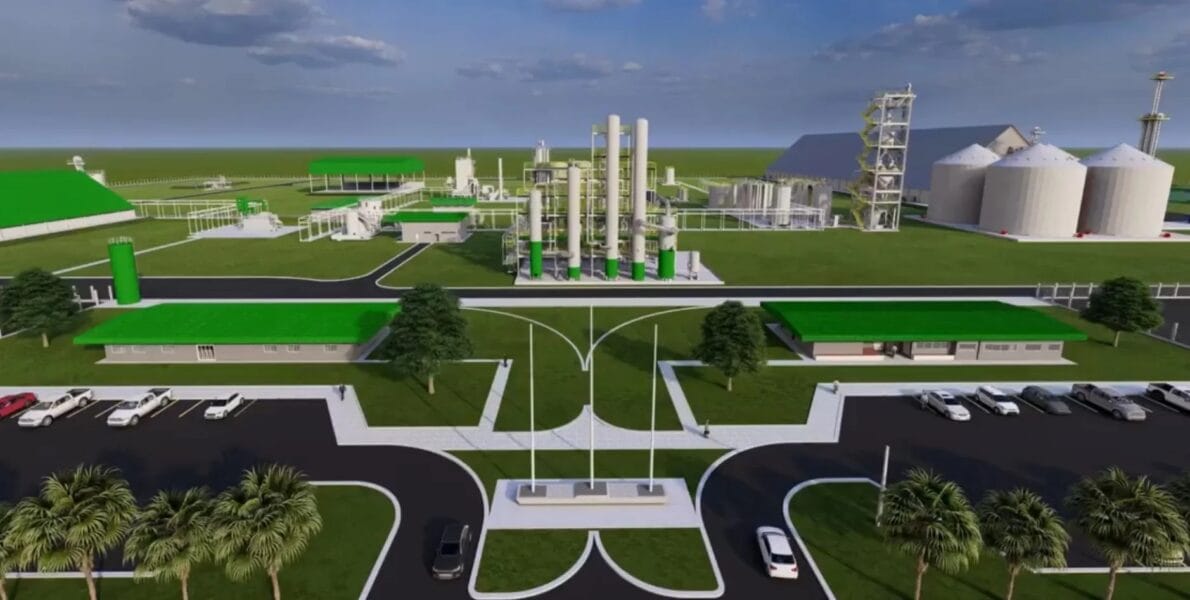
A Bioethanol Plant Will Be Installed in Bahia, Generating Hundreds of Jobs and Bringing New Opportunities to the Region. With Million-Dollar Investments, The New Plant Promises to Boost the Local Economy and Strengthen The Renewable Energy Sector in The State.
Bahia will receive another industrial investment with the construction of a new bioethanol plant from the processing of corn and sorghum in Santa Rita de Cássia, in the West of the state, generating hundreds of jobs. The Lida Group reported that the new plant in Bahia will have low water consumption featuring Zero Liquid Discharge (ZLD) technology and that the bioindustry will be self-sufficient in electricity generation, through the burning of grass produced within its own operation.
New Bioethanol Plant Promises to Generate Thousands of Jobs
In addition to bioethanol, the new plant in Bahia will also produce two high-value coproducts: DDGS, or distillers dried grains with solubles, and crude corn oil. DDGS stands out as a highly palatable product with a high protein content, achieving excellent results in animal nutrition.
The mayor, Zezo Aragão, wrote on the social media platform Instagram that the new bioethanol plant represents a significant milestone for development in the municipality. According to Aragão, the construction permit for the beginning of this great project that will revolutionize the city is already signed.
-
With 74% of companies facing difficulties in hiring, technicians and engineers in renewable energy are becoming scarce in Brazil and are essential to support the expansion of solar, wind, and green hydrogen projects.

-
Historic bankruptcy of Centauro shocks the market, and the century-old company puts more than 500,000 products, machines, and complete infrastructure up for online auction.

-
New shoe factory in Ceará is expected to create 400 jobs and strengthen the local economy.

-
No one imagined it, but a mixture of sawdust with a mineral that fights fires surprises scientists with a result that changes the course of fire-resistant construction.


According to the Lida Group, in the construction and implementation phase of the investment, the expectation is that the company will indirectly generate around 300 jobs, involving various areas such as construction, logistics, mechanical assembly, electrical work, and automation. In the operational phase, Lida Bioenergia will create around 80 direct jobs and approximately 20 indirect jobs, such as service providers.
Lida Energia Comments on Investment in the New Plant in Bahia
The CEO of Lida Energia, Diogo Turra, attended the meeting alongside Guilherme Sales, COO of the company, Ueslei Silva, project coordinator, and Célia Cerrato, owner of Trevo Ambiental, responsible for the environmental consultancy of the project. All emphasized the importance of this investment to promote a sustainable economy and boost local development with jobs.
The arrival of the new bioethanol plant places Santa Rita de Cássia on the map of sustainable development, aligning with the demands for renewable energy and strengthening the regional economy. The plant in Bahia in Santa Rita, led by Lida Bioenergia, will have a significant impact locally. In addition to generating direct and indirect jobs, the project will contribute to increasing the municipality’s revenue, enabling more works and investments.
Inpasa Also Announces Investments in a New Plant in Bahia
Inpasa announced last week a new biorefinery factory in Luís Eduardo Magalhães, with operations set to begin in the first quarter of 2026. The new factory of Inpasa promises to boost the local economy, especially with job creation. During construction, around 2,500 direct jobs will be created, further boosting the region’s economy.
According to Inpasa’s vice president in Brazil, Rafael Ranzolin, Luís Eduardo Magalhães was chosen for the new plant in Bahia due to its infrastructure and industrial potential. According to Ranzolin, at the unit, in addition to ethanol, the company will produce electricity for both internal consumption and export.
The new factory of Inpasa, which will create thousands of jobs, will have an investment of R$ 1.3 billion and will allow Bahia to stop importing 700 million liters of ethanol per year, ensuring the state’s self-sufficiency.
The new plant will have the capacity to process one million tons of vegetable oil and 200 GWh of electricity. Governor Jerônimo Rodrigues emphasized the importance of the new Inpasa factory for the state, highlighting that Bahia will transition from an importer to an exporter of biofuels.








-

Uma pessoa reagiu a isso.