





 Portuguese
  English
  Spanish
  3 min of reading
  0 comments


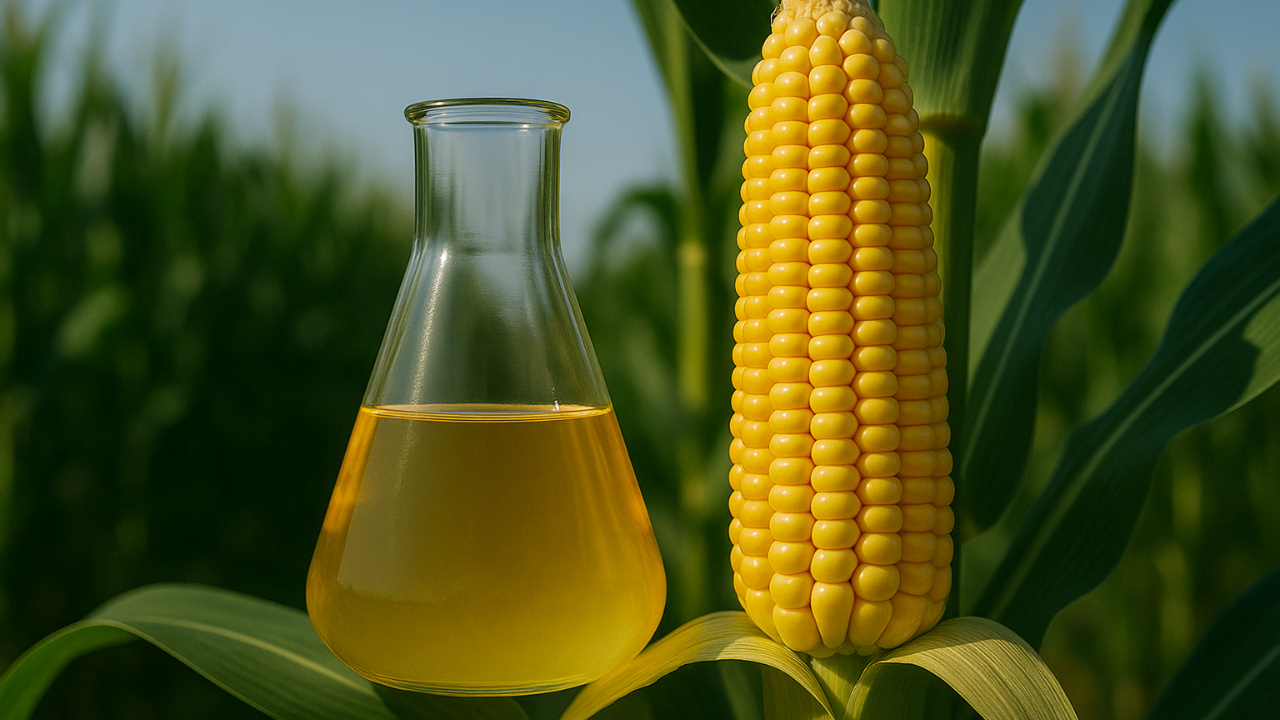
BioMilho Brazil 2026 Is Coming, Focusing on Strengthening Flex Plants and the Record Corn Ethanol Production Predicted for 2025.
The biofuels sector is at a turning point in Brazil, especially after the authorization granted in the first half of November for Pagrisa to operate the first flex plant in the North region.
The release, given by the National Agency of Petroleum, Natural Gas and Biofuels (ANP), comes precisely when the country prepares to deepen the discussion on the future of corn ethanol.
The initiative arises at a time when BioMilho Brazil 2026 is on the horizon, an event that promises to bring together experts, producers, and investors to discuss new market opportunities and technological innovation.
-
Revolution in public transport: Goiânia puts into circulation the first articulated buses powered by biomethane in Brazil and promises to drastically reduce pollution on the Anhanguera Corridor.

-
From the field to the pipelines: Mato Grosso do Sul accelerates the energy transition and consolidates a new axis in renewable energy with the arrival of a giant biogas plant.

-
The Economist states that Brazil has a “secret weapon” against expensive oil and highlights how the country can reduce economic impacts even in international scenarios of high volatility.
-
Brazil accelerates decarbonization in the South: International forum in Foz do Iguaçu gathers leaders to discuss the advancement of biomethane in the energy matrix and the potential of “caipira pre-salt.”


The Pagrisa plant is expected to begin its corn ethanol production in December, strengthening the presence of this biofuel in previously underexplored regions.
This movement reinforces the consolidation of so-called flex industrial plants, capable of alternating production between sugarcane and corn, ensuring greater efficiency, competitiveness, and continuous operation.
Corn Ethanol Grows Beyond Expectations and Expands Market Share
According to data from the Union of Sugarcane Industry and Bioenergy (Unica), corn ethanol recorded a significant growth of 30.7% in the 2024/25 harvest, reaching 8.19 billion liters.
For 2025, projections indicate that production could reach 10 billion liters, representing more than a quarter of the national volume.
This advance occurs alongside the strengthening of flex plants, which allow production to be maintained even during the off-season for sugarcane.
Thus, industrial models that combine raw materials become strategic for ensuring supply, attracting investments, and reducing costs.
What Makes Flex Plants So Important?
Continuous Production Without Downtime
Flex plants can alternate between sugarcane and corn, keeping production active all year round. This avoids operation stoppages during the off-season for sugarcane and enhances industrial profitability.
Flexibility in the Market
The ability to choose the raw material with the best supply and price allows for greater operational balance.
As a result, the sector gains predictability and competitiveness.
Thus, utilizing existing structures
Many sugarcane plants have adapted their facilities to incorporate corn processing, reducing implementation costs and speeding up return on investment.
Generation of New Products
Thus, in addition to ethanol, flex plants produce DDG, a byproduct intended for animal feed, and vegetable oil, expanding revenue sources.
With the strong performance of the sector, more flex units are emerging across the country, and expansion or adaptation projects are gaining strength in the market.
BioMilho Brazil 2026 Is Coming: Event Delving into Sector Opportunities
Thus, to meet the growing demand for technical and strategic knowledge, BioMilho Brazil 2026 is coming, organized by JornalCana.
The meeting will be a day of immersion, bringing together experts and sector leaders.
According to Josias Messias, CEO of PróUsinas, “It will be a day of immersion on this topic.”
The event will connect production, industry, and markets, featuring specialized panels on:
Strategic Economic Modeling – Competitiveness and sustainability of the business.
Raw Materials – Experiences with sorghum, soy, and wheat, in addition to integration with sugarcane.
Inbound Trading – Guarantee of volume and quality of biomass.
Industrial Processing – Technologies, yields, and integration with agro-industries.
Outbound Trading – Access to Markets and opportunities for DDG/DDGS and corn oil.
Calendar Reinforces Sector’s Protagonism in 2026
Thus, BioMilho Brazil 2026 officially opens the calendar of events for JornalCana in the coming year.
The meeting will take place on February 26, at Hotel JP, in Ribeirão Preto (SP).
Then, subsequently, the sector will also have:
March: UAPNE26 – North–Northeast High-Performance Plants Congress and MasterCana North and Northeast.
May: SINATUB.
June: CANABIO.
August: MasterCana Center-South and Social.
October: MasterCana Brazil & Award.









Seja o primeiro a reagir!