





 Portuguese
  English
  Spanish
 3 min of reading
  7 comments


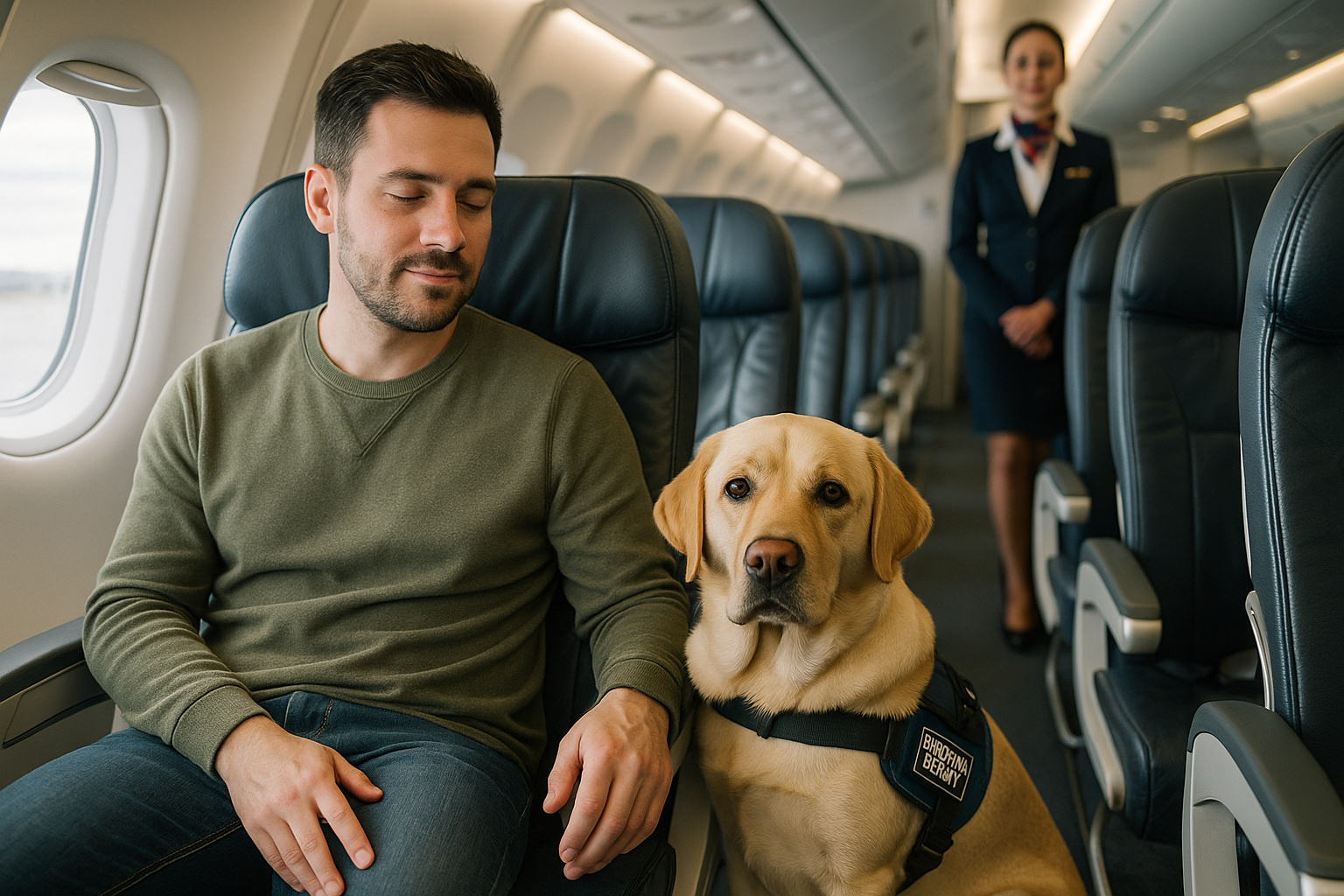


The Suspension of Law 10.489 by the Supreme Court Rekindles a National Debate on Inclusion, Accessibility, and Limits of State Legislation Amid Divergent Decisions Among Ministers, Direct Impacts on Air Transportation, and Questions About the Status of Passengers Who Depend on Emotional Support Animals
The Supreme Federal Court (STF) made a decision that reignited sensitive discussions about accessibility, inclusion, and air transportation in Brazil. On Wednesday (November 19, 2025), the Court’s plenary suspended the Law 10.489 of 2024, which allowed the transport of emotional support animals in the cabin on national and international flights departing from or landing at airports in Rio de Janeiro. The information was disclosed by Poder360, which highlighted the divergences among the ministers and the direct impacts on passengers and airlines across the country.
Context of the Law and Change in Air Transportation
The legislation authorized emotional support animals to be transported free of charge in the cabin, as long as backed by a report issued by a psychiatrist. The rule classified assistance animals not only as guide dogs but also hearing dogs, alert dogs, and service dogs, addressing different types of specific needs. However, it still imposed exceptions for animals that were very large, sick, or posed safety risks to passengers.
Although the law aimed to expand forms of accessibility, Minister André Mendonça — the case’s rapporteur — had already suspended its application through a preliminary injunction. According to him, there was strong evidence of unconstitutionality, since it was exclusively the Union’s responsibility to regulate air transportation, not the States. Mendonça emphasized that Anac (National Civil Aviation Agency) already has established rules regarding the transport of emotional support animals, and any additional regulation would have to respect this federal competence.
-
The new Civil Code could revolutionize marriages in Brazil with “express divorce” and changes that could exclude spouses from inheritance.

-
Banco do Brasil sues famous influencer for million-dollar debt and intensifies debate on delinquency, risks of seizure, and direct impact on Gkay’s credibility.

-
The Senate approves a bill that criminalizes misogyny, hatred, or aversion towards women, and includes the crime in the Racism Law with a penalty of up to 5 years.
-
Chamber Approves Bill That Allows Pepper Spray for Women Over 16 and Imposes Strict Rules for Purchase, Possession, and Use as Self-Defense

The Different Interpretations Within the STF
The trial, however, exposed divergent interpretations among the ministers. André Mendonça argued that the central issue of Law 10.489 was formal: a State could not legislate on air transportation, a matter exclusive to the Union. He classified the law as “manifestly unconstitutional”, stating that its existence violated administrative competences and rules already established at the federal level.
However, Alexandre de Moraes presented a different understanding. For him, the sensitive point was not the dispute over who can legislate air transportation, but rather the practical effect of the law on the rights of people with disabilities. Moraes argued that the legislation, instead of expanding rights, imposed restrictions, such as limiting the presence of only 1 animal per passenger and instituting terms of responsibility that were more stringent than those stipulated in federal regulations and in the New York Convention, to which Brazil is a signatory.
According to Moraes, the States can indeed legislate on issues related to accessibility and inclusion, as long as the rules expand and do not reduce rights. “It is about ensuring that any person with a physical disability can board accompanied by their support animal on the plane,” the minister stated, emphasizing that the discussion goes beyond the technical field of civil aviation and touches on constitutionally guaranteed fundamental rights.
Impacts and Outcome of the Trial
Despite acknowledging different approaches, Moraes sided with Mendonça on the merit, arguing that Law 10.489 did not expand rights and, therefore, could not be maintained. For him, the rule represented a setback by establishing limitations that had already been overcome by federal legislation and even by the Chicago Convention, which governs international aviation standards.
As a consequence, Mendonça’s understanding of formal unconstitutionality did not prevail, but the final outcome was the same: the state law remained suspended, and the authority over rules for boarding emotional support animals remains under the jurisdiction of the Union and Anac.
The decision directly impacts the routine of passengers who rely on assistance animals for mobility, emotional stability, and accessibility. Furthermore, it brings to the forefront the need for a clearer national regulatory framework that provides legal certainty for airlines, passengers, and health professionals.









Lei é lei, não cabe a nos contestar. se ela for inconstitucional deve ser anulada, tenho um pet e também gostaria de que ela viajasse junto. As pessoas tem que pararem de serem imbecis e julgar o fulano e o ciclano por tudo q acontece.
Não tem que deixar **** nenhum viajar em cabines de avião. Agora tudo é Mimi, agora é um tal de precisar de apoio de ****..tem dó! As pessoas estão cada vez mais ****.
Na estamos falando de luxo e sim de pessoas que precisam de seus cães e fazem tratamentos psiquiátricos e psicológicos . Vc nunca vai entender entender até passar por um problema desse .
Infeliz
Nossa constituição virou papel de **** para esses políticos, o povo não sabe votar da nisso só pessoas zelando pelo seu próprio benefício e bolso e o povo que aguarde 4 anos para mudar . Brasil sem lei regras e ordem só corrupção, medo, e pavor se sair na ruas pode volta no caixão se ficar em casa é furtado pela esferas malditas do Brasil.