





 Portuguese
  English
  Spanish
 6 min of reading
  26 comments


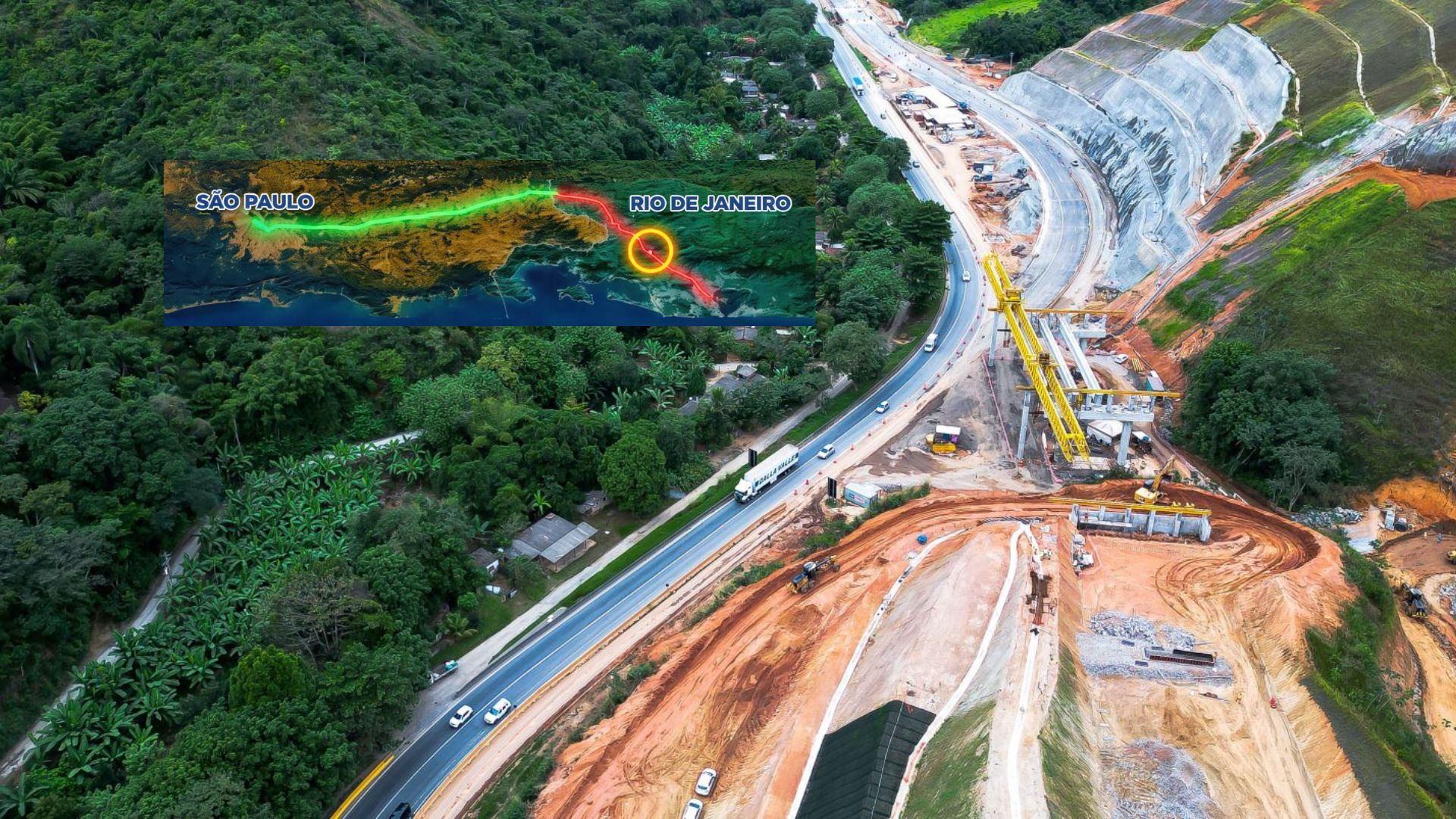


Strategic Work in Serra das Araras Surpasses Half of Execution, Foresees Eight Lanes and 24 Overpasses to Eliminate Historical Bottleneck Between Rio and São Paulo, While Government and Concessionaire Diverge on Completed Percentage and Definitive Delivery Date.
The duplication of Serra das Araras, a section of Via Dutra between Piraí and Paracambi, in southern Rio de Janeiro, has entered the consolidation phase with the work showing over 60% physical progress, according to the concessionaire RioSP, while the Ministry of Transport reported execution around 52%.
At the center of the project is the complete reconfiguration of approximately 16 kilometers, between kilometers 225 and 233 of the highway, to eliminate the historical bottleneck that slows down the main connection between São Paulo and Rio, especially when trucks concentrate the flow on the uphill.
Besides the execution stage, the schedule has returned to the debate because there are two public references: the more conservative contractual forecast, which points to staggered deliveries until 2028 and 2029, and the more optimistic expectation, suggested in 2025, to complete everything by 2027.
-
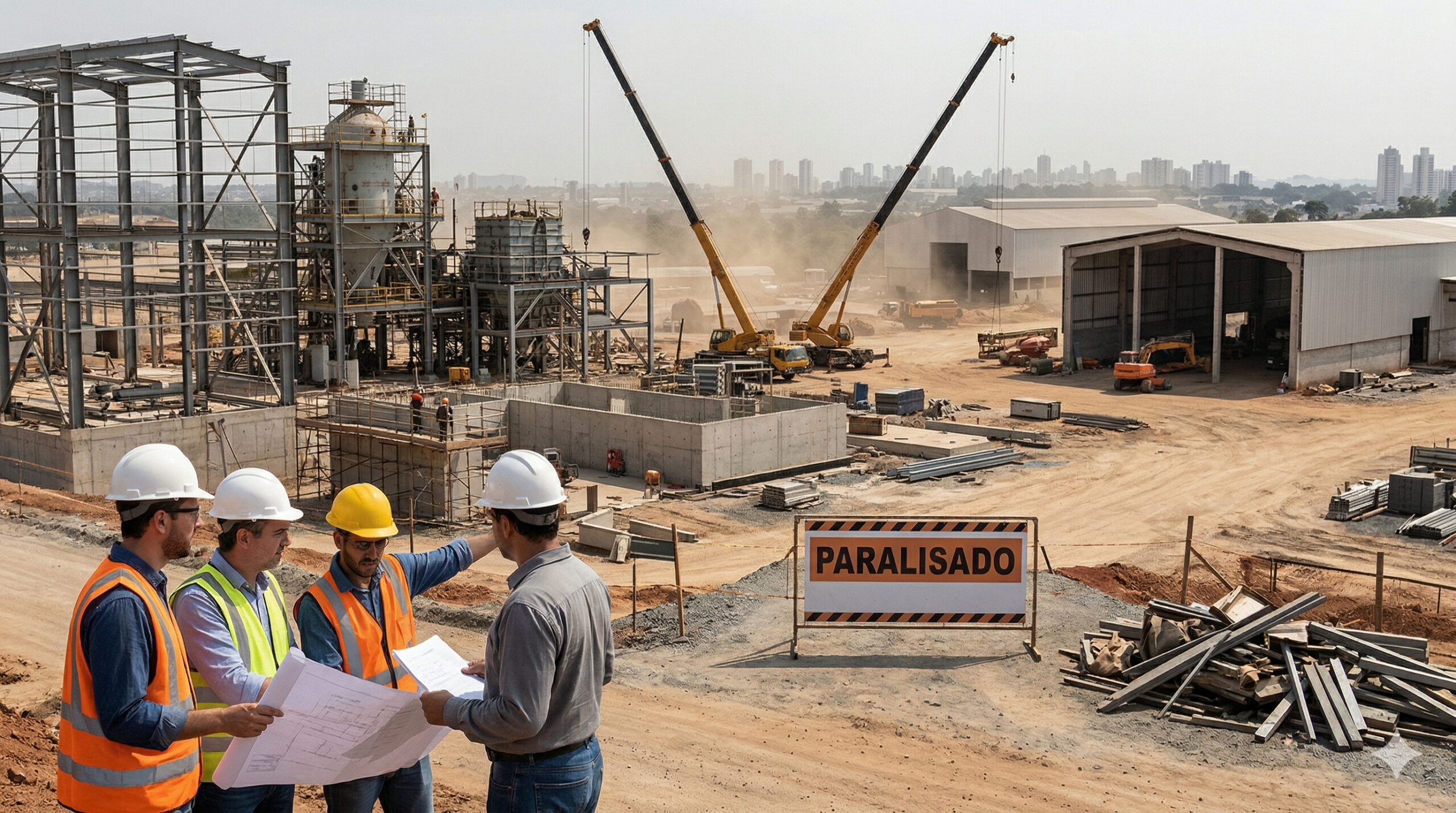
The lack of welders, electricians, and operators becomes a structural threat in 2025, with the construction industry and manufacturing already suffering from delays, cost pressures, and labor shortages in Brazil.
-
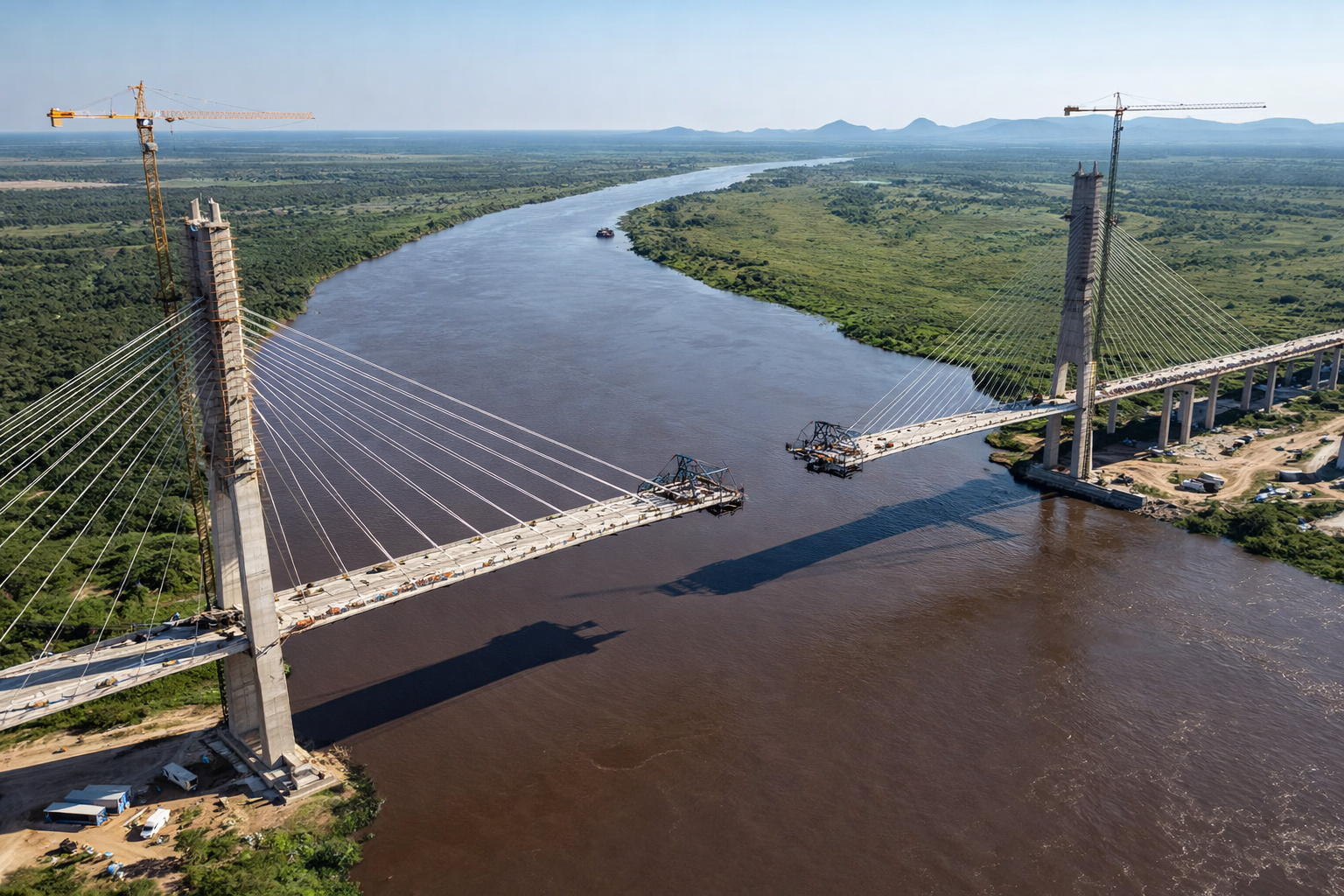
Brazil and Paraguay are just 46 meters away from a historic union on the bioceanic bridge that promises to revolutionize trade between the Atlantic and the Pacific.
-
With 55 km over the sea, a cost of US$ 20 billion, and enough steel to build 60 Eiffel Towers, China’s largest project has connected Hong Kong, Zhuhai, and Macau in a colossal bridge that defies the logic of engineering.

-
A trick with joint compound transforms a Styrofoam ceiling into a plaster-like ceiling: leveled panels, wires and mesh at the joints, sand, paint, and change the environment while spending little today.


Historical Bottleneck in Rio–São Paulo Connection
Upon entering the mountain, the highway changes pace because the old layout compresses a height difference of nearly 400 meters in sharp curves and long hills, a combination that reduces average speed, limits overtaking, and increases the risk of sequential congestion.
This layout began to be implemented in 1928, when the automobile was still an exception and traffic volume was incomparably lower, which helps explain why the corridor became undersized in light of the urban and industrial expansion of the Rio–São Paulo axis.

Over the decades, trailers, articulated trucks, buses, and light vehicles have begun to compete for space in the same mountain fit, and any simple interference, such as a slow vehicle or a breakdown, quickly transforms into a queue that stretches beyond the mountainous area.
Data released by sources related to the project indicate that about 390 thousand vehicles cross Serra das Araras monthly and that more than one-third of this flow is from trucks, a proportion that aggravates the drop in performance on the uphill and puts pressure on the operation during the descent.
When curves are added to prolonged declines, the strain on brakes and the difficulty of maintaining steady speed increase, especially in heavy vehicles, raising the chance of blockages and accidents that resonate throughout Dutra.
What Changes With the Duplication: Eight Lanes and 24 Overpasses
According to the ongoing project, the highway will have eight lanes, four in each direction, with continuous shoulders and safety lanes, a design intended to increase capacity, expand overtaking opportunities, and accelerate the response to incidents in the segment.
Along the route, 24 overpasses are planned, with a total length disclosed of about 4.5 kilometers, a solution that allows crossing valleys and height differences with gentler geometry, reducing slopes and avoiding the sequence of sharp curves of the old layout.
The package also includes two escape ramps for heavy vehicles, three pedestrian overpasses, a marginal road toward São Paulo, and the reorganization of access points and stopping areas, measures aimed at separating local flows and reducing interference on the main lane.

In operational terms, the plan includes LED lighting, monitoring by cameras, variable message panels, and incident detection systems connected to the control center, to reduce response time when something interrupts traffic.
Engineering Challenges in Serra do Mar
From a construction perspective, the site operates on multiple fronts that combine earthworks, rock blasting, containment structures, and special artworks, with the peculiarity of executing critical services while keeping Dutra open and absorbing the daily flow.
The geology of Serra do Mar requires constant attention because it alternates between resistant rocky masses and stretches of unstable soil, and estimates associated with the project indicate total blasting in the hundreds of thousands of cubic meters over the contract period.
Between 2024 and 2025, communications from the project reported hundreds of controlled blasts and a large volume of material removed, which is not discarded, as it goes for crushing on-site and returns as input for embankments and structural layers of the pavement.
Since each blast requires a temporary closure window, operations are subject to cancellation in case of heavy rain or ground instability, and the concessionaire has even extended the calendar to include Saturdays, aiming to maintain the pace of the schedule.
In the stabilization of the slopes, the scope includes dozens of containment structures, with techniques such as soil nailing, anchored curtains, and walls, forming a continuous protection to reduce block falls and mass movements typical of mountainous areas.
The artworks focus part of the engineering effort, with overpasses that require deep foundations, large volumes of concrete and steel, and assembly in stages, often supported by operational detours that maintain traffic while the new layout takes shape.
Execution Percentage and Impasse on the Final Date


In an official inspection conducted in January 2026, the Ministry of Transport informed execution close to 52% and mentioned the expectation of releasing the first kilometers of the new uphill track in the second quarter of that year, a milestone seen as the start of the definitive layout in operation.
On the other hand, RioSP began to report progress higher than 60% during the same period, a difference explained by distinct measurement methods, as some indicators incorporate fronts like containment, foundations, and blasts, which evolve before appearing on the surface.
The delivery horizon also presents public divergence, as the concessionaire itself maintains in its channels the expectation of completing the uphill track in 2028 and the downhill track in 2029, aligned with the total deadline disclosed of 52 months of work.
However, reports published in 2025 recorded statements about the possibility of advancing the completion to 2027, with references to March of that year, a scenario conditioned to the performance of the work fronts and the limitations imposed by weather and operational logistics.
Another point that shows different numbers is the total investment, cited in some communications and reports as R$ 1.5 billion, while institutional pages of the project also recorded the figure of R$ 1.2 billion, a variation that may reflect budget cuts and contractual updates.
Promise of Speed Gain and Logistical Impact
When the new layout is completed, the most noticeable change should be the predictability of the flow, as more lanes and gentler curves reduce interference between trucks and light vehicles, especially uphill, where today speed easily drops.
Information released about the future operation indicates an increase in the regulated speed on the stretch, citing the shift from a historically lower standard to 80 km/h on the new lanes, which supports the promise of practically doubling the average speed under normal conditions.
The same estimates indicate a time reduction that can reach around 25% on the uphill and up to 50% on the downhill, depending on traffic volume, and the expected effect goes beyond the individual driver, as it improves logistical reliability on the country’s main corridor.
With escape ramps, continuous shoulders, and corrected geometry, the expectation is to reduce occurrences related to braking failures and rollovers, decreasing blockages that today spread beyond the mountain and affect long stretches of the connection between Rio and São Paulo.
If physical progress continues at an accelerated pace, the project is likely to remain one of the largest roadworks in operation in Brazil, but the lingering question is which date will prevail, the contractual or the advanced, when the new lanes are ready for use?








Muito bom mesmo!
O Brasil precisa investir mais em ferrovias por todo o Brasil para melhorar a LOGISTICA do BRASIL que é péssima, pequena e que encarece TODA a distribuição de produtos no.Brasil.
No Brasil parece que ninguém da atenção e analisa os custos que envolva uma LOGISTICA cara, que encarece os produtos em.geral que no Brasil.prevalece o Rodoviário.
Por que levaram tantos anos para realizar esse projeto??? A concessionária lucrou por 30 anos e só depois disso começou essas obras. Vergonha. Assim é muito fácil privatizar. Primeiro o lucro, 30 anos depois o investimento. Quantas vidas perdidas neste período!!!!
Quem exigiu a obra e está banhando, é o Governo Federal. A concessionária vai fazer a manutenção da nova estrutura.