





 Portuguese
  English
  Spanish
  6 min of reading
  0 comments


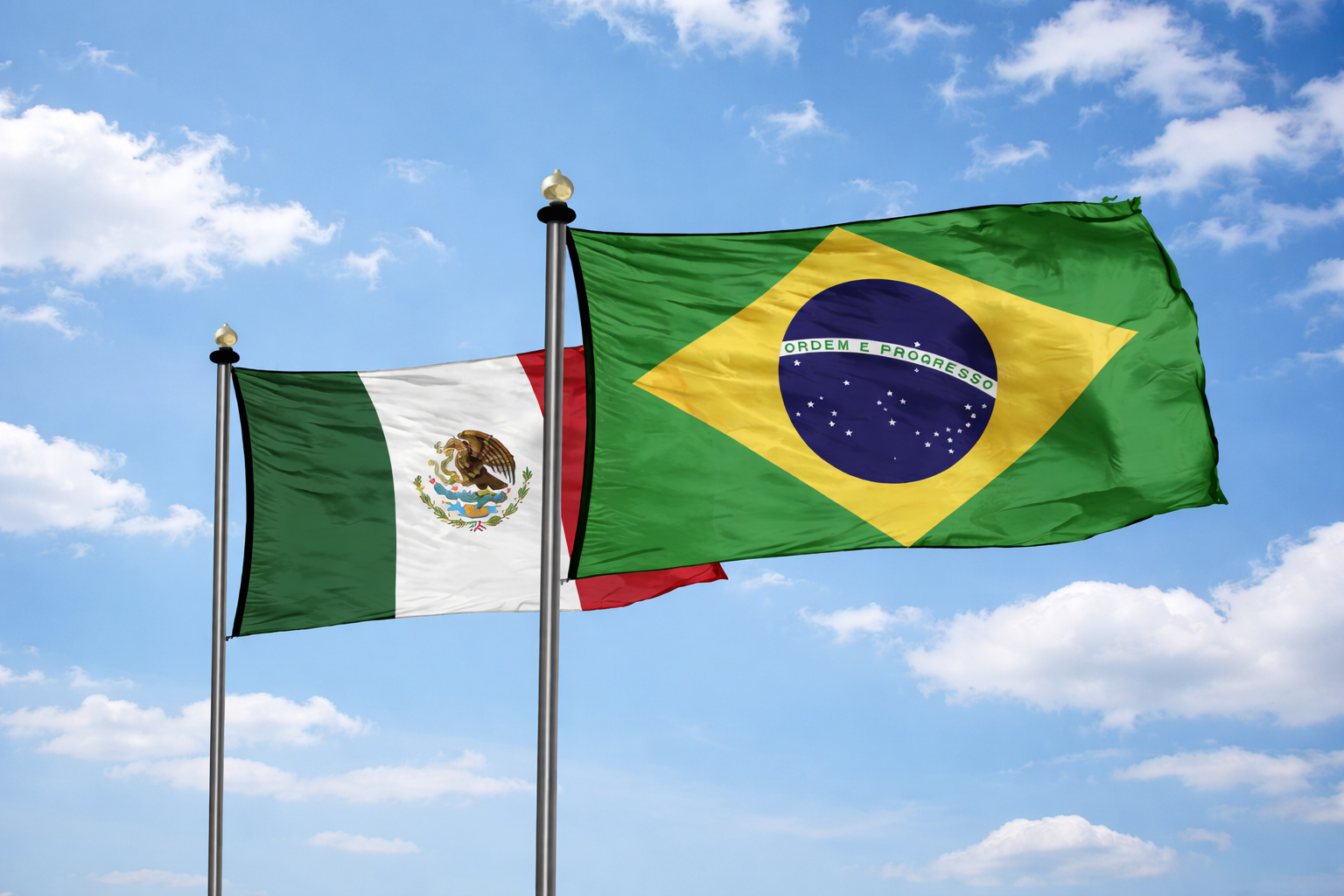
The Brazil-Mexico Agreement Strengthens Energy Cooperation by uniting, above all, Brazilian Experience in Renewables and, at the same time, Mexican Transition Goals, expanding investments, regional integration and sustainable development.
The Brazil-Mexico agreement gains increasing relevance in the Latin American scene.
This occurs mainly when the topic involves energy cooperation.
In this sense, the two largest economies in the region face similar challenges.
Among them, the highlights are the expansion of the clean energy supply, the strengthening of energy security and the attraction of sustainable investments.
Moreover, over the past decades, Brazil and Mexico have built a diplomatic relationship based on gradual and constant approaches.
-
A Canadian retiree creates a hydroelectric system on a real river, generating energy continuously throughout the day and demonstrating how the power of water can supply a house with stability even in a simple structure.

-
Petrobras reaffirms its commitment to the market and ensures that it will carry out the energy transition safely to maintain national sovereignty.

-
Researchers discover a possible hydrogen deposit of up to 46 million tons beneath an ancient coal basin, and the volume could exceed half of the entire global production.

-
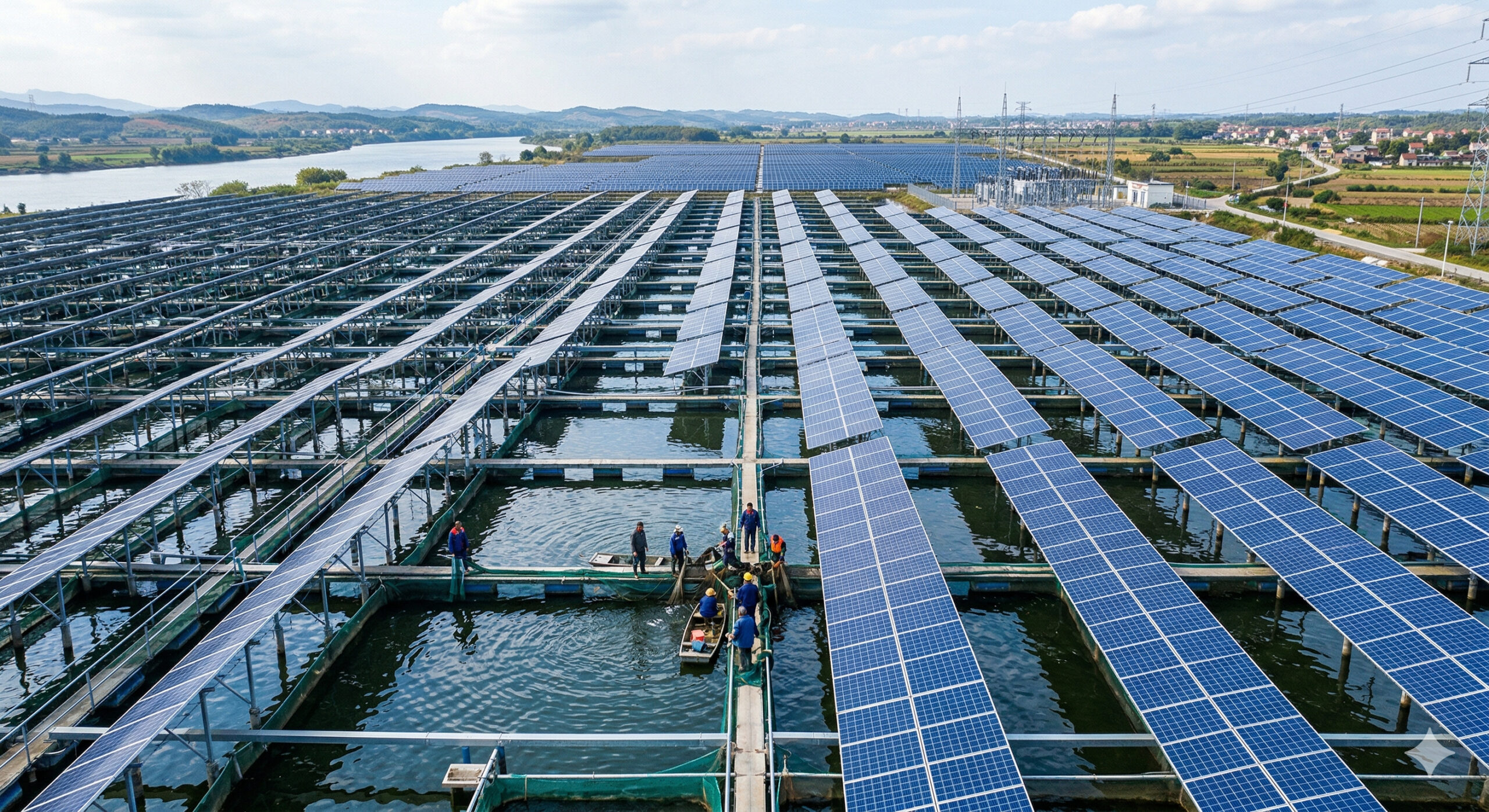
China bets on the Fishery-PV model and transforms fish farms into giant solar plants, covering ponds with panels that generate energy while utilizing the same space for large-scale aquaculture production.

Currently, therefore, this relationship advances in the face of global transformations in the energy sector.
Historically, Brazil and Mexico occupy strategic positions in Latin America. Thus, with diversified economies and large population weight, the two countries together account for over 320 million inhabitants.
Consequently, they concentrate around two-thirds of the region’s Gross Domestic Product. Therefore, this economic dimension makes any bilateral initiative relevant not only for the parties involved.
It also influences the political and commercial balance of the continent.
In this context, the Brazil-Mexico agreement consolidates itself as an essential instrument to enhance cooperation in priority areas.
Among these areas, energy, trade and long-term investments stand out. The energy cooperation between the two countries, in turn, did not arise recently.
However, it has taken on new contours with the acceleration of the global energy transition. For much of the 20th century, both Brazil and Mexico structured their energy sectors with strong state presence.
During this period, the focus was on traditional sources, such as oil and hydropower. Over time, however, governments began to treat the diversification of the energy matrix as an essential strategy.
Thus, they opened space for renewable sources, biofuels and new technologies. These initiatives began to align with the international climate goals.
Energy History and the Role of Transition to Renewable Sources
In the Brazilian case, experience with clean energy stands out within the Brazil-Mexico agreement. Over decades, the country built a predominantly renewable power matrix.
Initially, this model relied on hydropower. However, in recent years, it rapidly incorporated solar, wind, and bioenergy.
By 2025, for example, Brazil surpassed 215 gigawatts of monitored installed capacity. Furthermore, over 84% of this capacity originated from renewable sources. Thus, this history provides the country with relevant technical and regulatory knowledge.
This knowledge strengthens international partnerships in the energy sector. In addition to electricity generation, Brazil has developed extensive experience in energy planning.
The country has also advanced in the integration of interconnected systems. In this context, this learning becomes even more valuable with the expansion of intermittent sources.
Among them, solar and wind energy stand out. These sources require efficient management, transmission, and storage solutions.
Therefore, cooperation with Mexico allows for the adaptation of these practices. This adaptation considers different regulatory and geographic contexts.
Mexico, on the other hand, is undergoing a consistent energy reconfiguration process. Traditionally associated with oil production, the country has gradually prioritized the diversification of its matrix.
Additionally, it has sought to reduce dependence on fossil fuels. In this sense, the National Electric System Development Plan (PLADESE 2025-2030) defines clear goals.
These goals aim to increase the share of renewable sources. They also seek to expand the installed capacity of clean energy.
By 2025, therefore, Mexico already had around 34 gigawatts of renewable capacity. This volume includes hydropower, solar energy, wind energy, bioenergy, and geothermal energy.
In light of this scenario, the Brazil-Mexico agreement creates favorable conditions for the exchange of experiences. Additionally, it stimulates technical cooperation between the two countries.
On one hand, Brazil contributes its expertise in energy auctions. It also shares knowledge in electric sector regulation.
Another relevant aspect involves the integration of intermittent sources into the grid. On the other hand, Mexico offers a relevant market. The country has high energy demand and growth potential. Furthermore, it maintains strong integration with the North American economy.
Trade, Investments and Sectoral Agreements
Despite advances in relations, Mexico opted not to enter into a broad free trade agreement with Brazil.
This choice, however, reflects Mexico’s strong interdependence with the United States and Canada. This relationship occurs through the USMCA.
Still, the two countries are advancing in sectoral agreements. These agreements are considered more flexible. They also prove to be more suited to the economic realities of each country.
Thus, in the energy sector, this strategy facilitates specific cooperations. At the same time, it does not compromise existing agreements.
Bilateral trade between Brazil and Mexico reached about 13.6 billion dollars in 2024. Even though this figure is modest considering the size of the two economies, it indicates ample growth potential.
Thus, strategic areas such as energy, biofuels, and technology gain prominence. In this context, the Brazil-Mexico agreement stimulates investments and partnerships.
These initiatives can expand the trade flow sustainably and equitably. Cooperation in biofuels, for example, emerges as one of the most promising axes of this relationship.
Brazil leads global production of ethanol and biodiesel. Moreover, it has a consolidated production chain. The country also possesses advanced technology in this segment.
Mexico, in turn, seeks to reduce emissions. At the same time, it aims to diversify its energy matrix. Therefore, it can leverage Brazilian experience.
As a result, these partnerships reduce dependence on fossil fuels. They also promote rural development, agricultural innovation, and the generation of skilled jobs.
Innovation, Industry, and Regional Integration
Another central point of the Brazil-Mexico agreement involves innovation and technology. The energy transition requires constant investments in research and development.
It also demands advanced digital solutions. Among them, smart grids, energy efficiency, and storage systems stand out.
Thus, cooperation among universities, research centers, and companies accelerates the adoption of these technologies.
Additionally, it creates a favorable environment for innovation in the energy sector. The industrial and automotive integration also directly connects to the energy agenda.
The electrification of vehicles gains traction in this context. The use of biofuels also strengthens. Furthermore, the pursuit of greater energy efficiency permeates these production chains. In this way, by aligning strategies, Brazil and Mexico strengthen their industries.
As a consequence, they increase international competitiveness. They also enhance participation in global value chains related to the low-carbon economy.
From a geopolitical perspective, the Brazil-Mexico agreement in the energy sector reinforces the importance of regional cooperation.
The global scenario presents instabilities in energy markets. Additionally, geopolitical disputes influence the sector.
In this context, the rapprochement between the largest Latin American economies contributes to greater autonomy.
It also strengthens the energy security of the region. Furthermore, this cooperation expands the actions of both countries in international forums. In these spaces, the climate and energy agenda occupies a central position.
An Agreement with a Long-Term Vision
By prioritizing strategic sectors and long-term interests, the Brazil-Mexico agreement takes on a structural character.
It is, therefore, a lasting initiative. Building a cleaner, more diversified, and resilient energy matrix represents a permanent challenge.
For this reason, it is independent of political or economic cycles. Consequently, this factor keeps the cooperation between the two countries relevant over time.
Finally, the Brazil-Mexico agreement goes beyond the expansion of isolated partnerships. In practice, it expresses a shared vision of the role of energy in economic development.
It also reinforces the commitment to environmental sustainability. Additionally, it strengthens regional integration. Thus, by uniting experiences, capacities, and markets, Brazil and Mexico establish solid foundations.
These foundations support a lasting energy cooperation. The positive impacts benefit not only the two countries but all of Latin America.










Seja o primeiro a reagir!