





 Portuguese
  English
  Spanish
  5 min of reading
  0 comments


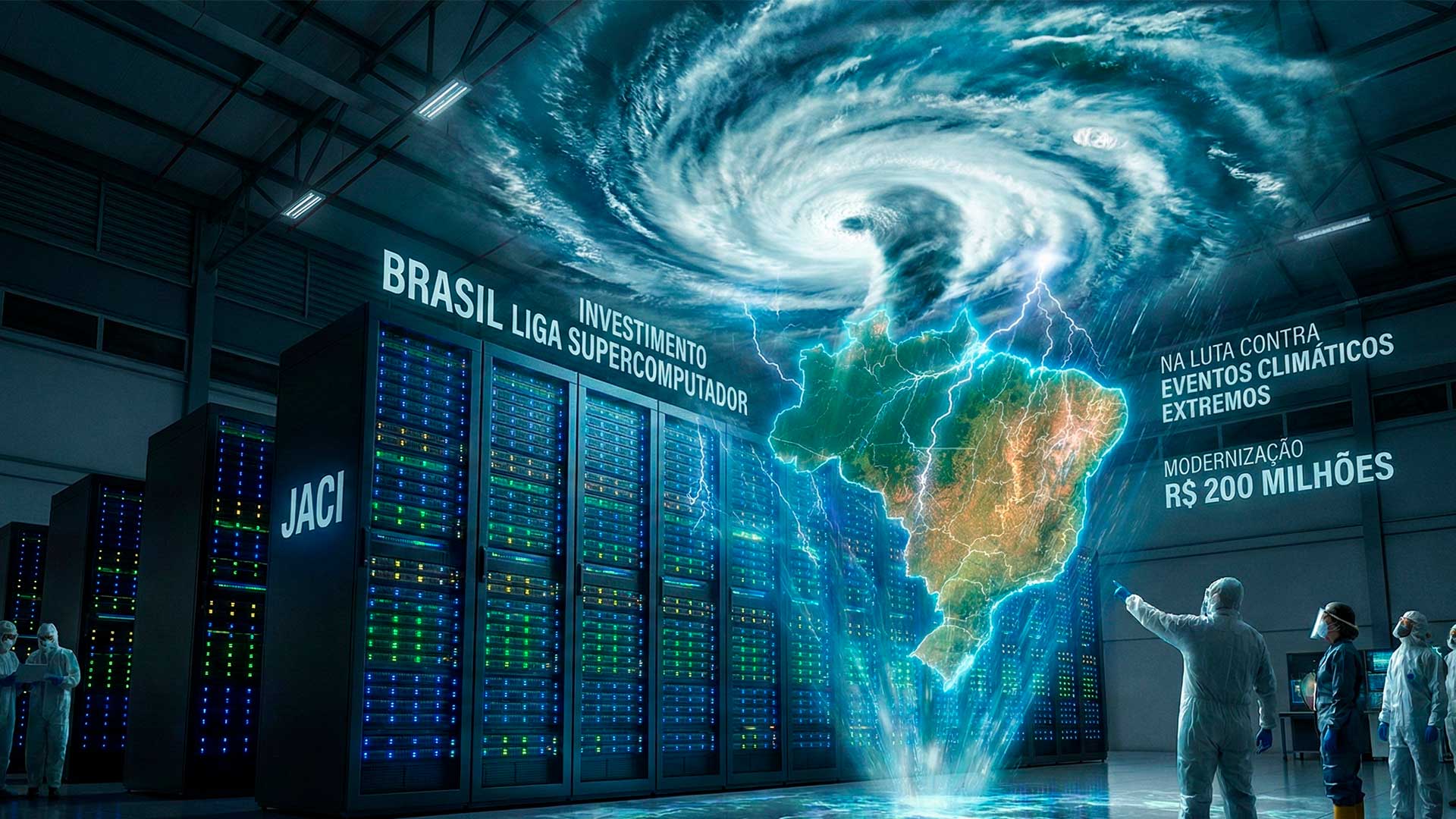
New System Was Inaugurated in Cachoeira Paulista (SP) and Integrates a Modernization Plan Estimated at R$ 200 Million Until 2028, According to the MCTI and the INPE
The INPE and the MCTI inaugurated the supercomputer Jaci in Cachoeira Paulista (SP), with an investment of about R$ 30 million via Finep. The machine replaces the Tupã and integrates the Risc Project, which foresees modernization estimated at R$ 200 million until 2028. The promise is to accelerate weather forecasts, refine climate models, and support disaster alerts.
Brazil has taken a significant step in its scientific infrastructure by putting the supercomputer Jaci into operation, installed at the unit of the National Institute for Space Research (INPE) in Cachoeira Paulista (SP). The inauguration took place on Thursday, December 11, 2025, with participation from the Minister of Science, Technology, and Innovation, Luciana Santos, and the director of INPE, Antônio Miguel Vieira Monteiro.
The equipment is aimed at tasks that require a massive volume of calculations, such as weather forecasting, climate modeling, and environmental monitoring. The official expectation is that the new capacity will improve the detail of simulations and help the country respond better to risks associated with extreme events.
-
While the world looks at oil, the war with Iran is already disrupting helium supply from Qatar, affecting car and iPhone chips, threatening AI expansion, and putting pressure on aluminum packaging at the highest value in four years.

-
Global warming will expose a treasure hidden under the ice of Antarctica and may spark an international dispute over gold and valuable minerals.

-
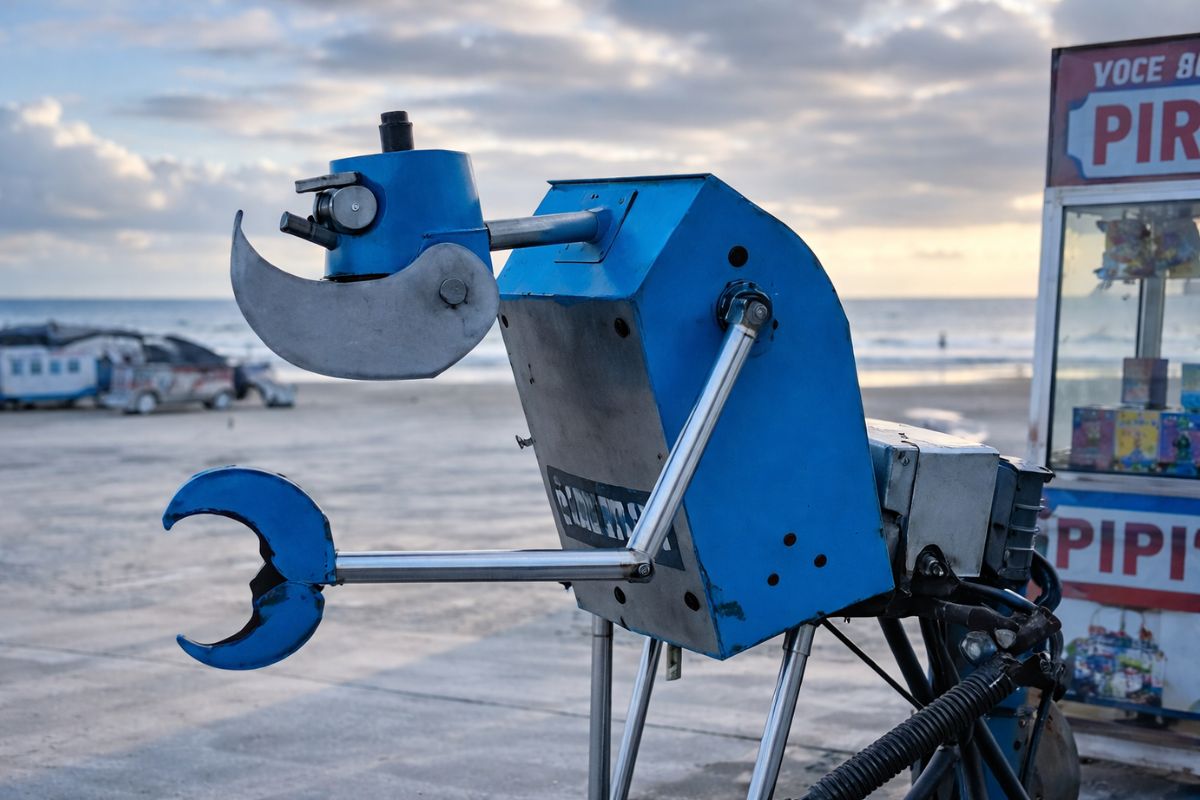
A street vendor from Praia Grande built a robot made of scrap from scooters and washing machines that pulls his popcorn cart on the beach, emits sounds, and interacts with customers, becoming an attraction on the coast of São Paulo.
-
The specifications of the Xiaomi 18 Pro Max have been leaked, and the highlight is a dual 200 MP camera with a new 22-nanometer technology that promises to consume less energy and capture details in shadows and bright areas using LOFIC HDR.


The topic gained traction because meteorology has a direct impact on sectors such as agriculture, energy, and Civil Defense. The INPE’s own communication indicates a growing demand for more accurate information in light of the intensification of extreme events.
The announcement also carries a political and institutional message. The MCTI argues that modernization combines applied science and protection for the population, citing the ability to support natural disaster alerts.
Jaci Debuts in Cachoeira Paulista and Replaces the Tupã
The supercomputer Jaci was inaugurated as the new computational “heart” of INPE for weather and climate forecasts. It replaces the old Tupã, which no longer met the increase in complexity required by current models.
The name was chosen by popular vote, according to the official release. The strategy helps bring a technical topic closer to the public, but the function of the equipment is quite objective: to process more data and deliver faster results.
The ceremony in Cachoeira Paulista also marked the appointment of Antônio Miguel Vieira Monteiro as the head of the institute, in an event that combined scientific agenda and management. The MCTI described the change as part of a repositioning of INPE in response to contemporary climate and environmental challenges.
What Changes in Weather Forecasting and Disaster Alerts
In terms of capacity, INPE states that the new system has processing 5 to 6 times greater than the Tupã. The gain in storage, according to the same source, reaches about 24 times.
This is not a technical detail for “experts.” More processing and more storage open up space to run heavier models, with greater frequency and more input data, which tends to improve the quality of forecasts.
In practice, INPE reports that a 10-day forecast that previously took about three hours can now be obtained in less than two hours. This type of gain makes it easier to run multiple simulations and produce more useful probabilistic scenarios for decision-making.
The leap is also evident in what is called spatial resolution. The global grid, according to INPE, goes from 20 km to 10 km, and can reach 3 km in forecasts focused on South America.
With more detail, the chances of detecting local phenomena with greater advance increase, such as severe storms, heatwaves, or topographical effects in specific regions. INPE cites the goal of making forecasts more localized and “hourly,” bringing the information closer to what the population actually perceives in their daily lives.
R$ 30 Million Now, R$ 200 Million on the Horizon: The Risc Project by 2028
The MCTI states that the R$ 30 million investment, via Finep, enabled the acquisition of the new system and paved the way for a broader modernization of the data center. In the statement released by the ministry, this modernization is referred to as a project of about R$ 200 million, with improvements in electrical infrastructure, cooling, and a photovoltaic plant.
From INPE’s perspective, the Risc Project is described as a renewal program that goes beyond a single machine. The plan includes, in addition to Jaci, the installation of three more supercomputers by 2028, alongside modernizations in energy and cooling.
The figures add up with an important detail: INPE reports that the total investment anticipated for the project is approximately R$ 200 million. And it asserts that, in the end, the computational capacity could reach at least 8 petaflops, a level associated with modern supercomputing.
The promise is to combine performance with operational sustainability. In supercomputing centers, energy and cooling are part of the real cost and often the bottleneck that limits growth.
MONAN and Technological Sovereignty: Why Running a Brazilian Model Matters
One of the central arguments from MCTI and INPE is that the expanded capacity will allow full operation of the MONAN, described as a Brazilian model for ocean, land, and atmosphere forecasts. The bet is that it will represent environmental conditions in South America more accurately, which has strategic value for Brazil.
INPE also presents MONAN as a community and open-source effort, integrating atmospheric, oceanic, and surface data. In the institute’s view, this enhances the potential for research and cooperation, without relying solely on external solutions.
The anticipated impact goes beyond daily meteorology. The MCTI itself cites gains for climate studies and applications such as agriculture, land planning, and support for protection agencies.
Energy Efficiency and Infrastructure: The Challenge of Keeping Supercomputing Alive in Brazil
The debate about supercomputing often focuses on “how fast” the machine is. But in the real world, the continuity of service depends on a stable power supply, efficient cooling, and constant maintenance, which the Risc Project places at its core.
By including electrical modernization, cooling, and a photovoltaic plant, the plan seeks to reduce operational risks and costs over time. This is a sensitive point because the country has seen technological projects falter when supporting infrastructure becomes a bottleneck.
In the end, the Jaci arrives as a symbol of scientific capacity and also as a test of execution: will Brazil be able to sustain and expand this structure by 2028, or will the investment fall short? Share your opinion in the comments and let us know if you think R$ 200 million is too high, too low, or just the minimum for a country that wants reliable forecasts and alerts.








-

-

-

5 pessoas reagiram a isso.