





 Portuguese
  English
  Spanish
  5 min of reading
  0 comments


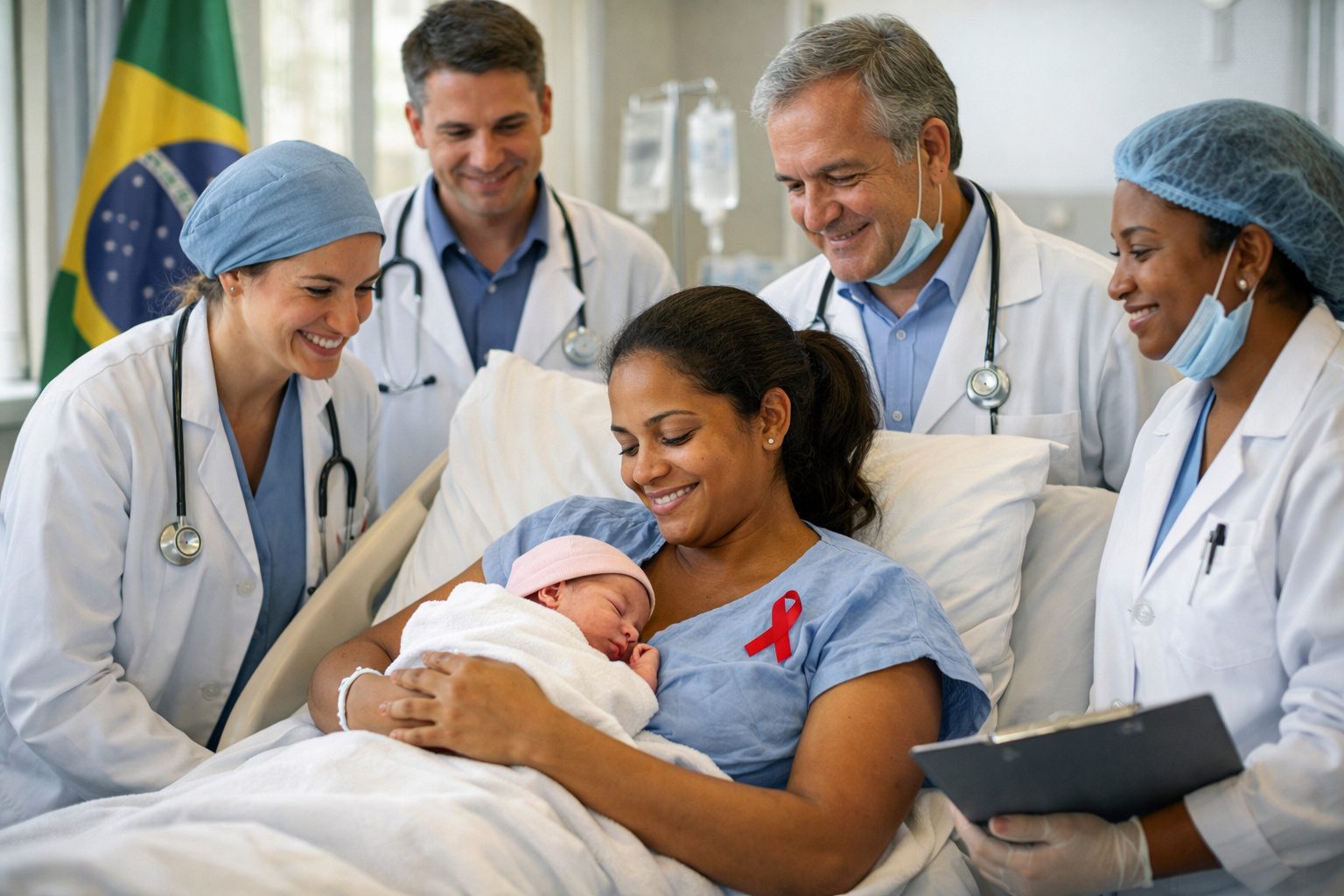
Advances in SUS Expand Testing, Ensure Modern Therapies and Enable the Country to Meet International Goals by Reducing Deaths, New Cases and Sustained Interruption of Child Infection
Brazil has achieved a historic milestone in the fight against HIV and AIDS by eliminating vertical transmission of the virus, which occurs from mother to baby, and recording the lowest mortality rate for the disease in the last 32 years. This result is a direct consequence of the expansion of testing, the strengthening of prenatal care, and the free provision, by the Unified Health System (SUS), of modern treatments capable of making the virus undetectable and untransmittable.
According to official data, the country recorded a 13% decrease in AIDS-related deaths between 2023 and 2024, which represents more than a thousand lives saved in just one year. For the first time in over three decades, the total number of deaths fell below ten thousand, decreasing from over 10 thousand in 2023 to 9.1 thousand in 2024, consolidating an unprecedented trend of sustained reduction.
The information was disclosed by the Ministry of Health, through a new epidemiological bulletin presented on Monday (1st), detailing the advances made by the country in the areas of prevention, diagnosis, and treatment of HIV. According to the ministry, the results align Brazil directly with the criteria set by the World Health Organization (WHO).
-
This small town in Germany created its own currency 24 years ago, today it circulates millions per year, is accepted in over 300 stores, and the German government allowed all of this to happen under one condition.

-
Curitiba is shrinking and is expected to lose 97,000 residents by 2050, while inland cities in Paraná such as Sarandi, Araucária, and Toledo are experiencing accelerated growth that is changing the entire state’s map.

-
Tourists were poisoned on Everest in a million-dollar fraud scheme involving helicopters that diverted over $19 million and shocked international authorities.

-
Hidden beneath the dense forest of the Sierra Nevada, Betoma emerges in a neighbor of Brazil as the greatest archaeological discovery of the century, revealing a colossal ancestral city covering over 18 km², with 8,334 stone structures and the potential to rewrite the history of South American civilizations.


In addition to the significant reduction in mortality, the number of AIDS cases also decreased during the period. Between 2023 and 2024, reports dropped by 1.5%, from 37.5 thousand to 36.9 thousand cases, reinforcing the impact of public policies adopted in recent years.
Advances in Prenatal Care Allow for the Interruption of Vertical Transmission of HIV
In the maternal-infant component, the data reveals even more significant advances. Brazil registered a reduction of 7.9% in the cases of pregnant women living with HIV, totaling 7.5 thousand, as well as a decrease of 4.2% in the number of children exposed to the virus, which summed 6.8 thousand in the last survey.
One of the most relevant indicators was the decrease of 54% in the late initiation of neonatal prophylaxis, highlighting substantial improvements in prenatal monitoring and care provided in maternity wards. This advance was decisive for the country to achieve the elimination of vertical transmission of HIV as a public health problem.
Brazil managed to keep the rate of vertical transmission below 2% and the incidence of infection in children below 0.5 cases per thousand live births, in addition to achieving over 95% coverage in prenatal care, HIV testing, and treatment offered to pregnant women living with the virus. These indicators fully meet the international goals set by the WHO.
In practice, this means that the country has sustained the interruption of infections in babies during pregnancy, childbirth or breastfeeding, consolidating one of the greatest advances in Brazilian public health in recent decades.
Combined Prevention, PrEP and Modern Treatment Explain the Results
The advances are also directly linked to the strategy of Combined Prevention adopted by Brazil. Previously focused almost exclusively on the distribution of condoms, the policy began to integrate methods such as Pre-Exposure Prophylaxis (PrEP) and Post-Exposure Prophylaxis (PEP), significantly expanding the possibilities for protection.
To engage with young audiences, who show a decrease in condom use, the Ministry of Health launched textured and sensitive condoms, with the acquisition of 190 million units of each model. At the same time, access to PrEP has been significantly expanded: since 2023, the number of users has increased by over 150%, currently reaching 140 thousand people who use PrEP daily.
In diagnosis, there was a robust expansion of testing. The SUS acquired 6.5 million duo tests for HIV and syphilis, a 65% increase compared to the previous year, in addition to the distribution of 780 thousand self-tests, which facilitate early detection and rapid initiation of treatment.
The public system also maintains the free provision of antiretroviral therapy for all diagnosed individuals. More than 225 thousand patients currently use the single tablet that combines lamivudine and dolutegravir, a regimen recognized for its high efficacy, better tolerability, and lower risk of long-term adverse effects. The single daily dose facilitates adherence to treatment and significantly improves the quality of life.
These advances bring the country closer to the global 95-95-95 goals, which stipulate that 95% of people living with HIV know their diagnosis, 95% are in treatment, and 95% of those treated achieve viral suppression. Brazil has already met two of the three goals, establishing itself as an international reference.
Social Investment and Memory Mark a New Phase in the Fight Against AIDS
To strengthen governance and social participation in the response to HIV, the Ministry of Health launched unprecedented announcements totaling R$ 9 million, directed to civil society organizations. This measure recognizes the historical role of these entities in social control and the construction of public policies to combat AIDS.
Additionally, the ministry has gathered the largest number of advisory commissions and committees ever established in the field and led the creation of an interministerial committee aimed at eliminating socially determined infections and diseases, with a special focus on the vertical transmission of HIV, an unprecedented initiative in the field of health.
As part of awareness actions, the Ministry of Health opened to the public in Brasília the exhibition “40 Years of Brazilian Response to AIDS History”, installed at SESI Lab. The exhibition is part of the campaign “Born Without HIV, Live Without AIDS” and marks the beginning of December Red 2025, a month dedicated to raising awareness on the topic.
The exhibition brings together life stories, documents, artworks, and content that reflect four decades of public policies, scientific production, and social mobilization, reinforcing Brazil’s role as a global reference in the fight against HIV and AIDS. Visitation remains open until January 30, 2026.
Do you believe that the elimination of HIV transmission from mother to baby is one of the greatest recent achievements of Brazilian public health?








-

Uma pessoa reagiu a isso.