





 Portuguese
  English
  Spanish
  4 min of reading
  0 comments


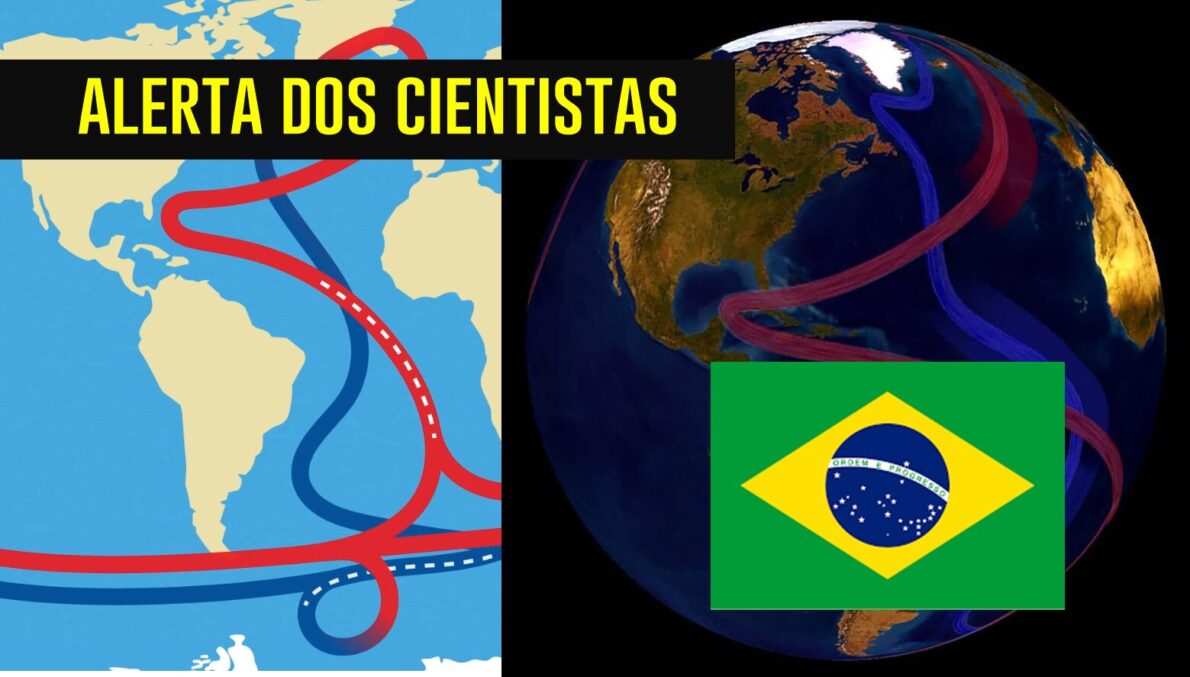
The Atlantic Current, Essential for Global Climate, May Collapse Soon, Warn Scientists. Learn What the Impacts of This Threat May Be for Brazil and the World in the Coming Centuries!
In an open letter published on October 21, a group of 44 of the world’s leading climate scientists, including Michael Mann from the University of Pennsylvania, drew attention to the imminent risk of the collapse of the Atlantic Meridional Overturning Circulation (AMOC) — a system of currents in the Atlantic Ocean that plays a vital role in regulating global climate.
The letter, addressed to Nordic authorities, emphasizes that the slowdown of ocean currents in the Atlantic has been underestimated and that its consequences could be devastating and irreversible.
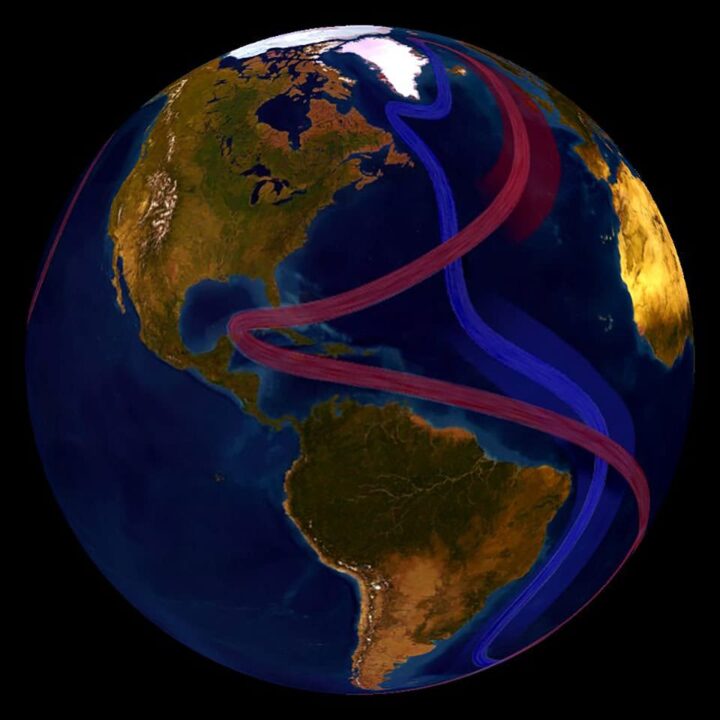
The AMOC, composed of currents that include the well-known Gulf Stream, transports heat to the Northern Hemisphere and is crucial for maintaining moderate climate in the region. According to scientists, this “conveyor belt” of heat is decreasing its flow, driven by global warming. Continued slowdown could push the system to a breaking point, significantly altering the climate not only in Europe but across the Northern Hemisphere.
-
Motorola launched the Signature with a gold seal from DxOMark, tying with the iPhone 17 Pro in camera performance, Snapdragon 8 Gen 5 that surpassed 3 million in benchmarks, and a zoom that impresses even at night.

-
Satellites reveal beneath the Sahara a giant river buried for thousands of kilometers: study shows that the largest hot desert on the planet was once traversed by a river system comparable to the largest on Earth.

-
Scientists have captured something never seen in space: newly born stars are creating gigantic rings of light a thousand times larger than the distance between the Earth and the Sun, and this changes everything we knew about stellar birth.

-
Geologists find traces of a continent that disappeared 155 million years ago after separating from Australia and reveal that it did not sink, but broke into fragments scattered across Southeast Asia.

Potential Impacts of AMOC Collapse
The threat of AMOC collapse is not just an issue for scientists; it poses a real risk to the daily lives of millions of people. The consequences of such a collapse include:
- Extreme Weather and Cooling in Nordic Countries
If the AMOC stops functioning, Nordic countries — Denmark, Iceland, Norway, Finland, and Sweden — could experience a sharp drop in temperatures and extreme weather events. A “cold spot” over the North Atlantic, resulting from the slowdown, is already being observed, and its growth could make Nordic winters even harsher, as well as affecting economic and social activities in the region. - Changes in Monsoon Systems
Another expected catastrophic effect is the displacement of tropical monsoon systems, which would have severe impacts on agriculture in tropical countries. The monsoons, essential for agricultural production in regions such as Southeast Asia and India, would shift position, causing extreme droughts and insufficient harvests. These effects would have global repercussions on food supply and food security. - Rising Sea Levels Along the U.S. Atlantic Coast
The collapse of the AMOC could cause sea levels to rise along the American Atlantic coast, increasing risk for coastal communities. This rise in sea level occurs because ocean currents keep the average water level in coastal regions balanced, and a sudden disruption would increase water volume at the shoreline, putting cities and infrastructure at risk. - Impact on Marine Life and the Fishing Industry
Ocean circulation is also essential for maintaining water temperature and nutrient distribution, which are fundamental conditions for marine life. The collapse of the AMOC would bring a sudden redistribution of nutrients, severely affecting ecosystems and fisheries in the Atlantic. Populations of fish and marine species, such as cod and lobster, could collapse, directly impacting economies that depend on fishing.
The Role of Global Warming and the Risk of Climate Catastrophe
Scientists explain that the acceleration of climate change, largely fueled by greenhouse gas emissions, is the primary driver of the AMOC slowdown. With rising global temperatures, large volumes of freshwater are being poured into the North Atlantic due to the melting of glaciers, particularly in Greenland. This freshwater alters the salinity and density of ocean water, disrupting heat circulation. According to the latest report from the Intergovernmental Panel on Climate Change (IPCC), there is “medium confidence” that the AMOC will not abruptly collapse until 2100, but the signatory scientists consider this forecast a dangerous underestimation.
“The medium confidence that the AMOC will not collapse is not reassuring. We need to understand that a possibility, even if low, of a collapse this century must be taken very seriously,” the scientists assert.
The letter was sent to the Nordic Council of Ministers, an intergovernmental body that coordinates cooperation actions among Nordic countries. The scientists urge policymakers to seriously consider the risks that AMOC collapse may pose, both for Northern countries and for the world. Furthermore, they recommend that the Council increases pressure on international partners to move toward the goals of the Paris Agreement, which aims to limit global temperature increase to a maximum of 1.5 degrees Celsius above pre-industrial levels.
The Need for Immediate Climate Action
Without a robust and coordinated global response to curb carbon emissions and other practices that exacerbate global warming, the collapse of the AMOC could materialize in the coming decades. While the exact timing is uncertain, experts agree that acting now is the only way to mitigate catastrophic risks to the planet. This action includes carbon emission reduction policies, investments in clean energy sources, and global initiatives that encourage environmental protection.
The scientific community is calling for substantial changes in how countries approach global warming, and this recent warning reinforces the urgency of preserving climate balance.







Seja o primeiro a reagir!