





 Portuguese
  English
  Spanish
  5 min of reading
  0 comments


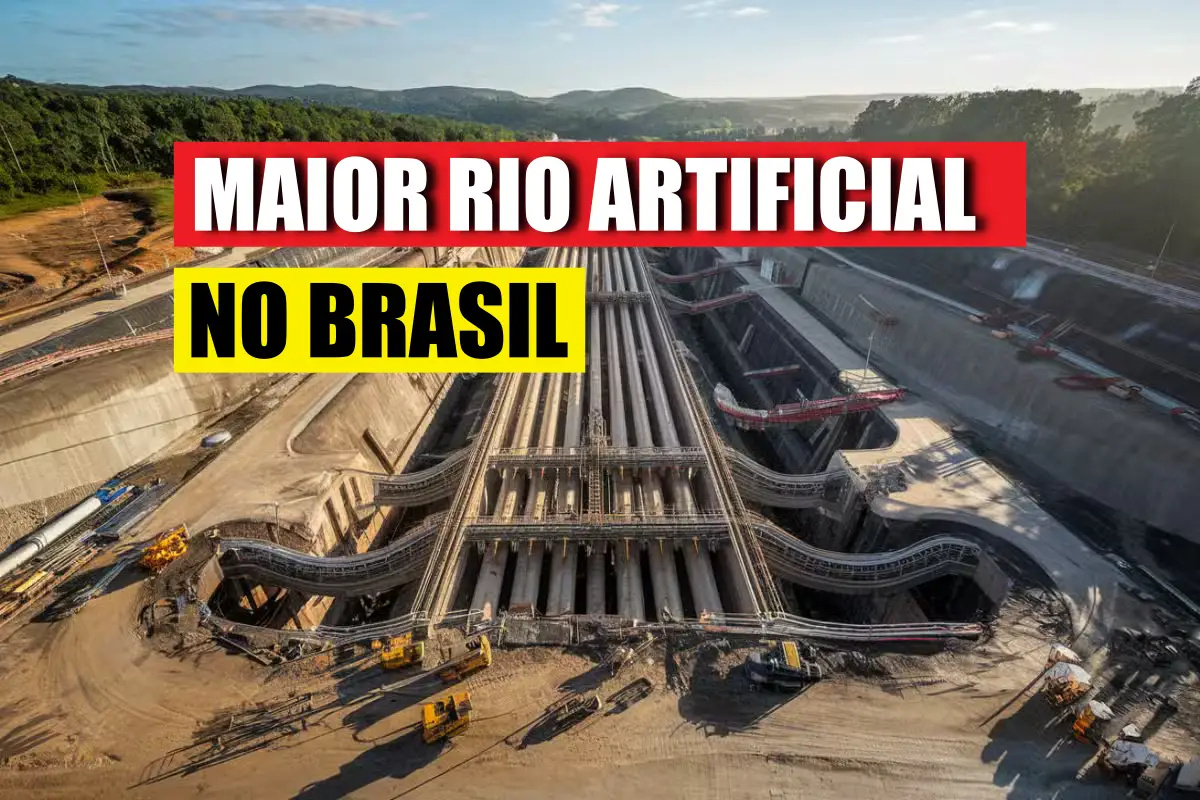
Mega Billion-Dollar Project to Divert the São Francisco River Is Revolutionizing Brazil’s Infrastructure and the Future of Northeast Brazil
Imagine turning one of the biggest challenges in the Northeast into one of the greatest victories of Brazilian engineering. That is exactly what is happening with the diversion of the São Francisco River: an audacious, billion-dollar project that is already benefiting millions of people. The idea of creating a true “artificial river” in the northeastern semi-arid region started as an old dream and is now fully operational, with new phases on the way that promise to expand this impact even further. Additionally, there are plans under consideration to extend this diversion to over 10,000 km, making it the largest in the world!

The Harsh Reality of Drought in the Northeast and the Birth of a Historic Project
Those who live in the Northeast know well the drama of drought. In regions where rainfall barely reaches 800 mm per year, agricultural production and family life have always been marked by uncertainties. For decades, reliance on water trucks and sporadic reservoirs limited development and increased vulnerability for millions of Brazilians.
It was in this scenario that the São Francisco River diversion project was born. The proposal: to bring water from one of Brazil’s most important rivers to the states most affected by drought, such as Ceará, Pernambuco, Paraíba, and Rio Grande do Norte. More than just an engineering feat, the diversion became a symbol of hope for the hinterlands.
-
With 74% of companies facing difficulties in hiring, technicians and engineers in renewable energy are becoming scarce in Brazil and are essential to support the expansion of solar, wind, and green hydrogen projects.

-
Historic bankruptcy of Centauro shocks the market, and the century-old company puts more than 500,000 products, machines, and complete infrastructure up for online auction.

-
New shoe factory in Ceará is expected to create 400 jobs and strengthen the local economy.
-
No one imagined it, but a mixture of sawdust with a mineral that fights fires surprises scientists with a result that changes the course of fire-resistant construction.


North and East Axes: The Channels That Are Already Changing Lives
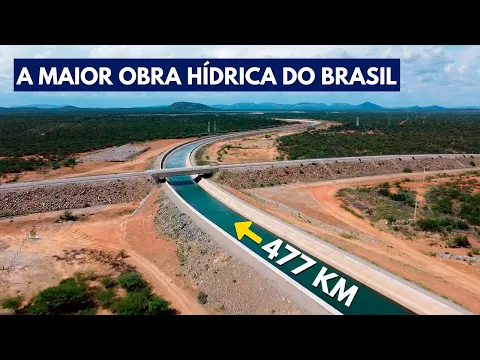
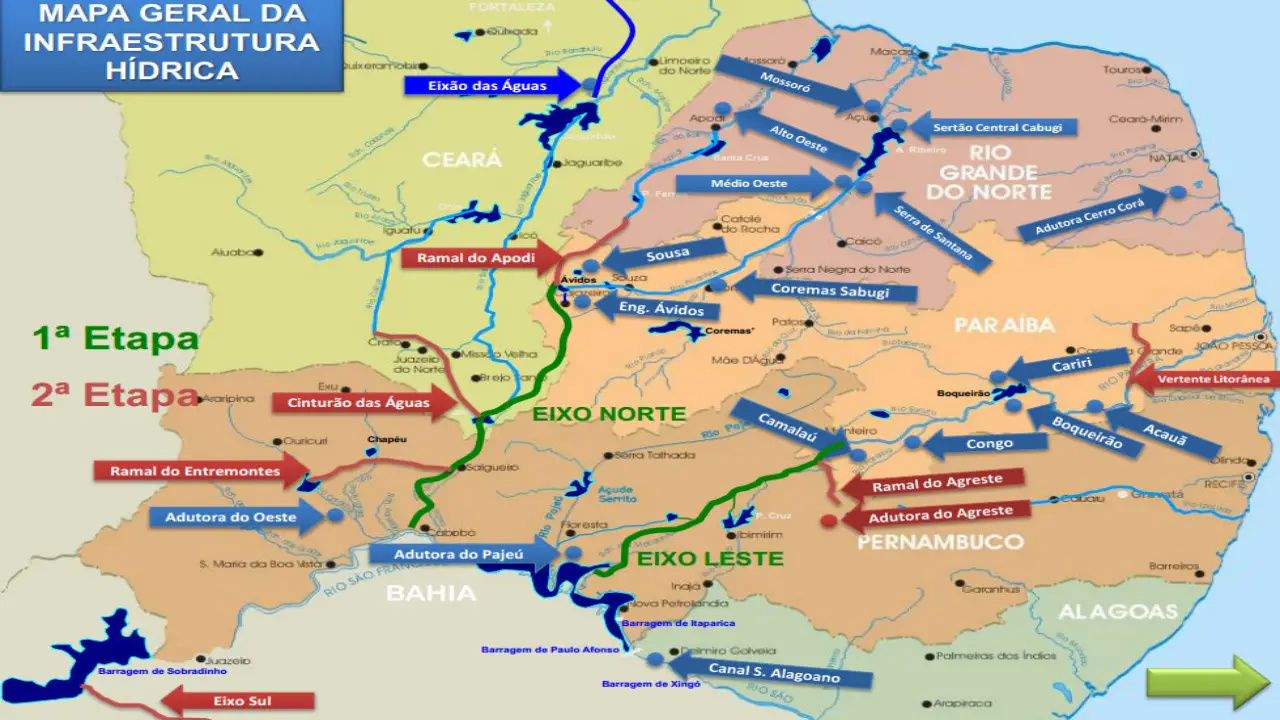
Officially started in 2007, the São Francisco River Integration Project (PISF) envisioned two main axes: North and East. Today, both are fully completed, with a total extension of 477 km — consisting of 260 km in the North Axis and 217 km in the East Axis.
These channels deliver water to about 390 municipalities spread across four northeastern states. According to the Ministry of Integration and Regional Development, over 12 million people are already directly benefiting from this system.
Along the way, pumping stations, aqueducts, reservoirs, and tunnels were constructed. Among the highlights is the Cuncas I Tunnel, with a 15 km extension, considered the largest water transport tunnel in Latin America.
Agreste Branch: A Tailored Solution for Pernambuco
Another significant section is the Agreste Branch, which spans 71 km and is vital for supplying the central region of Pernambuco. The work has been completed and is already operational, ensuring water supply to cities that previously suffered from frequent supply collapses.
New Fronts Under Construction: More Water for the Semi-Arid Region
Although the main axes are already functioning, the project’s expansion hasn’t stopped there. The Apodi Branch is underway, which will have a 115 km extension and is expected to benefit over 750,000 people in 54 municipalities in Rio Grande do Norte, Ceará, and Paraíba. The project is 74.8% completed, with delivery scheduled for October 2026, according to the MDR itself.
In addition, in May 2025, President Luiz Inácio Lula da Silva signed the service order for the duplication of the pumping capacity of the North Axis, which will double the water volume from 25 m³/s to 49 m³/s and benefit an additional 8.1 million people in 237 municipalities. The investment is approximately R$ 491 million, as detailed on the official government site of Ceará.
Future Expansion: South and West Axes Are Planned
The original project also envisioned the South and West axes, which are currently in the study phase. The South Axis, about 400 km, is expected to serve Bahia and Sergipe, while the West Axis targets regions in Piauí. There is no official date for the start of construction yet, but the federal government has already confirmed that preparatory phases are underway.
If these expansions materialize, the diversion system could reach over 10,000 km in extension, surpassing even the Chinese south-north transfer project — currently the largest water diversion system in the world.
Projects with Social Impact but Also Criticisms
Despite the advances, the diversion project is not free from criticism. Some organizations and experts warn about the risk of withdrawing water from areas with high demand as well, and highlight a supposed favoritism towards agribusiness and shrimp farming at the expense of vulnerable communities. On the other hand, supporters emphasize the direct impact on health, education, family agriculture, and water security, in addition to job creation throughout construction.
In an interview with Agência Brasil, Minister Waldez Góes stated:
“The diversion of the São Francisco is a project of national integration. Water must arrive fairly and efficiently. The next step is to ensure that management and distribution are done with quality.”
Public-Private Partnership Expected by the End of 2025
As part of the new phase of operation and maintenance, the federal government intends to implement a public-private partnership (PPP) to manage the channels of the North and East axes.
The auction is scheduled for the end of 2025, with a concession model. The goal is to ensure greater efficiency in the operation of the system and reduce costs for the government.
One of the Largest Artificial Rivers in the World Continues Under Construction in the Northeast
The diversion of the São Francisco River is no longer just a paper promise. It is a reality that has already transformed the daily lives of millions of people and still promises much more. With ongoing construction, new branches being built, and ambitious expansion plans, the project is on track to become the largest water redistribution system in the world.
The hope now is that the next phases advance swiftly and with respect for the needs of local populations, ensuring water where there was once only thirst.
Now it’s your turn! What do you think of this historic advancement? Do you believe that the diversion will finally solve water issues in the Northeast? Leave your opinion in the comments and share this article with others who also need to know about this incredible transformation!








-

-

-

-

-

-

617 pessoas reagiram a isso.